Tag

Planetary Formation

All articles tagged with #planetary formation

One-Molecule Carbon Layer Dictates Charging of Identical Particles
science21 days ago

One-Molecule Carbon Layer Dictates Charging of Identical Particles

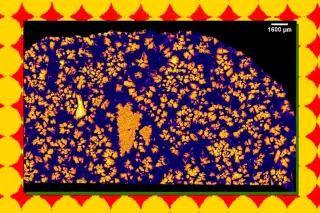
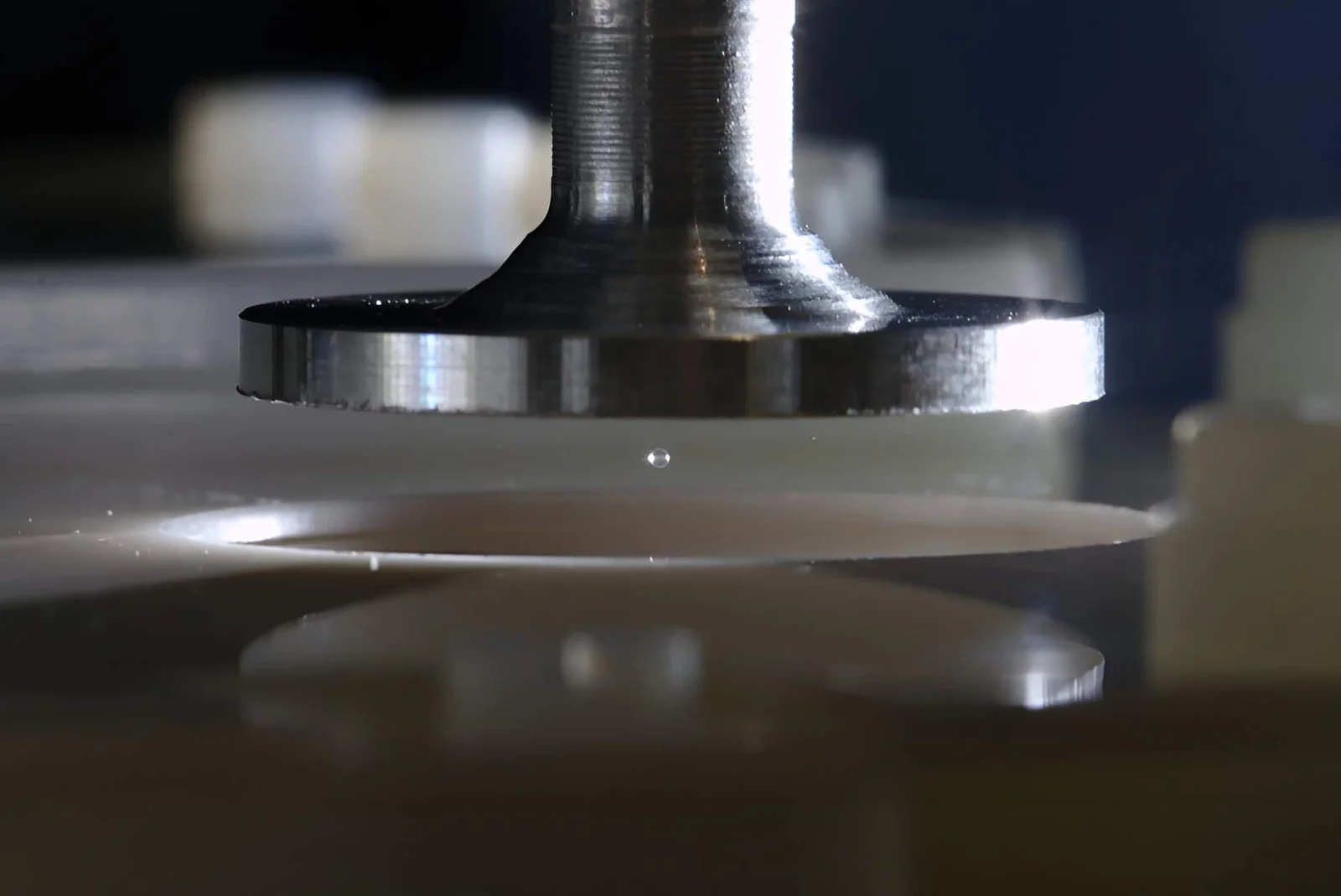
Scientists used acoustic levitation to study charge transfer between identical silica grains and found that a microscopic adventitious carbon layer on surfaces governs the charging behavior. Removing this carbon eliminates charging; allowing the layer to reform restores and even flips the charge. This resolves the symmetry problem for identical materials and has implications for natural phenomena like dust storms and volcanic lightning, as well as for theories of planetary formation and the origin of life. The findings were published in Nature.

Astronomers Catch a Planetary Collision in Action, Leaving a Hot Debris Glow
space24 days ago

Astronomers Catch a Planetary Collision in Action, Leaving a Hot Debris Glow

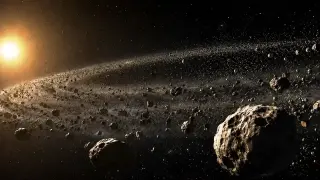
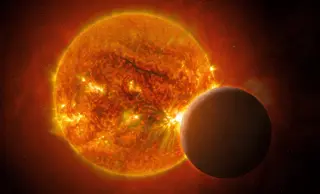
Astronomers studying Gaia20ehk (Gaia-GIC-1) observed a star whose visible light dimmed while infrared emission surged, consistent with a hot debris cloud from a recent collision between two planetesimals about 1.1 AU from the star, roughly 11,000 light-years away. The infrared glow persisted for years, offering a rare live glimpse into rocky-planet formation; future monitoring with JWST and the Rubin Observatory could reveal more such impacts.

Distant Star Hints at Clash of Baby Planets
space26 days ago

Distant Star Hints at Clash of Baby Planets

Astronomers studying Gaia-GIC-1, a Sun-like star about 11,600 light-years away, observed dramatic brightness dips (up to 25%) starting in 2016 with an opposite infrared brightening later, suggesting a hot dust cloud heated to ~900 K. Modeling indicates a collision between planetesimals near 1 AU, with dust mass around half that of Ceres, providing a rare glimpse into early planetary formation and a potential parallel to the Earth–Moon formation event.

Inside-Out Exoplanet System Upends Formation Theory
world1 month ago

Inside-Out Exoplanet System Upends Formation Theory

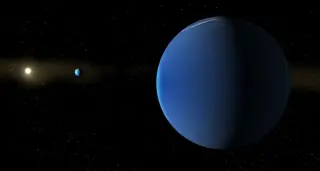
CHEOPS observations reveal four planets orbiting the red dwarf LHS 1903 far closer to their star than Mercury is to the Sun: two rocky super-Earths and two gaseous mini-Neptunes. The outermost planet, surprisingly rocky, challenges standard models that predict rocky worlds close in and gas giants farther out, suggesting an 'inside-out' assembly in which gas was depleted by inner planets or the atmosphere was stripped after formation. With a mass of about 5.8 Earth masses and a surface temperature around 60°C, it could be marginally habitable, and future JWST studies could probe its atmosphere.

Jupiter Found to Be 1.5x Oxygen-Rich Compared to the Sun
space2 months ago

Jupiter Found to Be 1.5x Oxygen-Rich Compared to the Sun

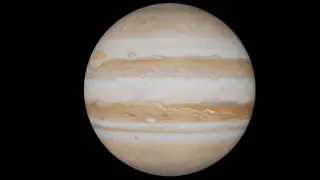
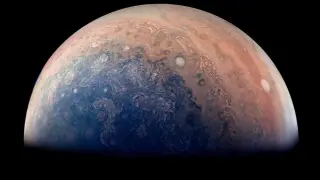
Using data from NASA's Juno and Galileo missions, researchers built a combined chemistry–hydrodynamics model of Jupiter's atmosphere. They find Jupiter may contain about 1.5 times the Sun's oxygen—far more than earlier estimates of roughly one-third—much of which is in water. The study also shows gas diffusion in Jupiter's atmosphere could be 35–40 times slower than previously thought, a result that informs theories about how the planet formed from icy material near the frost line.

Oxygen Clues Rewrite Jupiter’s Formation Story
space2 months ago

Oxygen Clues Rewrite Jupiter’s Formation Story

New 1D chemistry and 2D hydrodynamic models suggest Jupiter contains about 1.5 times more oxygen than the Sun and that its atmospheric circulation is slower than previously thought, refining theories of gas-giant formation; the work builds on NASA’s Juno data revealing complex weather and a possible fuzzy core, as the mission continues through 2025 with a planned end that preserves the moons from Earth microbes.

New simulations suggest Jupiter harbors 1.5 times the Sun’s oxygen
space2 months ago

New simulations suggest Jupiter harbors 1.5 times the Sun’s oxygen

A detailed set of simulations modeling Jupiter’s interior atmosphere finds the gas giant contains about 1.5 times more oxygen than the Sun, likely due to Jupiter’s early accretion of icy material beyond the snow line. The models couple atmospheric chemistry with hydrodynamics, explaining why deep oxygen (mostly in water) is hidden from direct measurement and suggesting slower deep atmospheric circulation (gas movement taking weeks). The findings support formation scenarios for Jupiter and offer insight into the solar system’s history, with the study published Jan 8 in the Planetary Science Journal.

NASA's Hubble Reveals Violent Collisions and a Vanishing Planet
science3 months ago

NASA's Hubble Reveals Violent Collisions and a Vanishing Planet

Astronomers observed what they thought was a planet around star Fomalhaut, but it vanished due to a collision between asteroid-sized bodies, creating a debris cloud. A second similar object appeared nearby, indicating violent impacts rather than a new planet, challenging existing models of planetary formation and raising concerns for future exoplanet detection methods.

Scientists Discover Massive Water Reservoir Hidden Deep Within Earth's Mantle
science3 months ago

Scientists Discover Massive Water Reservoir Hidden Deep Within Earth's Mantle

Scientists have discovered evidence suggesting that Earth's lower mantle may contain a massive, hidden water reservoir, potentially larger than all surface oceans combined, stored within mineral structures like bridgmanite, which could significantly impact our understanding of Earth's water cycle, planetary formation, and geological processes.