Tag

Metal Poor Stars

All articles tagged with #metal poor stars

Hidden Clues in the Milky Way: Remnant of a Small Galaxy Unearthed
space3 days ago

Hidden Clues in the Milky Way: Remnant of a Small Galaxy Unearthed

Astronomers have identified a group of 20 ancient, very metal-poor stars in the Milky Way's disk with mixed prograde and retrograde orbits and nearly identical chemistry, suggesting they are remnants from a long-ago dwarf galaxy dubbed Loki, potentially swallowed about 10 billion years ago; while not definitive, the finding supports the view that the Milky Way grew through mergers, a conclusion increasingly supported by Gaia data and galactic archaeology.
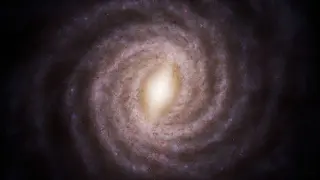

Milky Way's Ancient Meal: Loki's Remains Hint at a Dwarf Galaxy It Devoured
science6 days ago

Milky Way's Ancient Meal: Loki's Remains Hint at a Dwarf Galaxy It Devoured

Astronomers using Gaia data have identified 20 metal-poor stars near the Milky Way's disk whose shared chemistry and orbital patterns suggest they originated in a now-destroyed dwarf galaxy nicknamed Loki. If confirmed, Loki would be a major building block in the Milky Way's history, accreted about 10 billion years ago, with both prograde and retrograde orbits indicating a complex merger that could revise our picture of the Galaxy’s growth alongside events like Gaia-Sausage-Enceladus.

Bones of Loki Reveal Ancient Milky Way Merger in Its Disk
space15 days ago

Bones of Loki Reveal Ancient Milky Way Merger in Its Disk

Astronomers identified 20 old, very metal-poor stars orbiting close to the Milky Way’s disk whose chemistry and motions suggest they originated in a dwarf galaxy nicknamed Loki that merged with the Milky Way more than 10 billion years ago. The inferred Loki had about 1.4 billion solar masses, and the study shows how ancient mergers can leave detectable stellar signatures in the inner Galaxy; further observations are needed to confirm Loki and map similar remnants.

Hidden Loki Inside the Milky Way Signals Ancient Dwarf Galaxy
space26 days ago

Hidden Loki Inside the Milky Way Signals Ancient Dwarf Galaxy

Scientists contend that an ancient dwarf galaxy, dubbed Loki, is embedded in the Milky Way and was absorbed billions of years ago. By studying 20 metal-poor stars in the galactic plane, they found chemical traces of past supernovae and neutron star mergers but no white-dwarf signatures, implying Loki formed quickly and contributed stars with mixed orbital directions—evidence of an early accretion event. The findings appear in Monthly Notices of the Royal Astronomical Society.

Scientists Identify the Most Pristine Star in the Universe, Offering Insights into the Early Cosmos
science7 months ago

Scientists Identify the Most Pristine Star in the Universe, Offering Insights into the Early Cosmos

Astronomers may have identified the most pristine star to date, likely formed from gas originating from the universe's first stars, Population III, which are theorized to be massive, hot, and metal-free. The star, SDSS J0715-7334, is the most metal-poor star observed in our galaxy, providing insights into the early universe, although it is not a direct detection of Population III stars. The search for these primordial stars continues with advanced telescopes like James Webb.

science1 year ago

Revolutionary Supernova Discovery Alters Cosmic Understanding

Astronomers have observed Supernova 2023ufx, the most metal-poor stellar explosion ever recorded, in a distant dwarf galaxy, offering insights into the early universe's conditions shortly after the Big Bang. This discovery provides a unique opportunity to study the formation of the first stars and galaxies, which were primarily composed of hydrogen and helium. The findings, facilitated by the James Webb Space Telescope, could reshape our understanding of cosmic evolution and the distribution of elements in the universe.

Ancient Stars Discovered in the Core of Our Galaxy
astronomy2 years ago

Ancient Stars Discovered in the Core of Our Galaxy

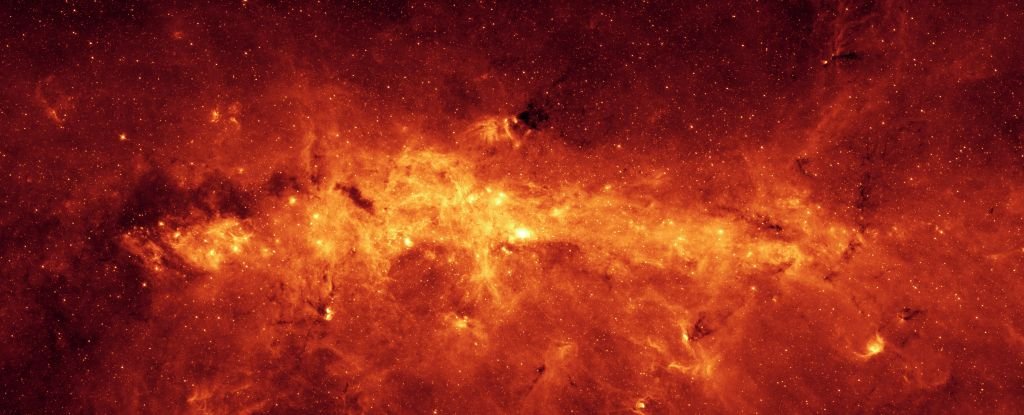
Ancient stars, born during the Cosmic Dawn, have been discovered in the center of the Milky Way through the Pristine Inner Galaxy Survey (PIGS). These stars, which likely formed less than a billion years after the Big Bang, have low metal content and chaotic orbits, but still orbit the galactic center. The findings provide insights into the early phases of the Milky Way and offer exciting prospects for further discoveries about the first stars in our galaxy.

Metal-Poor Stars: Better for Life?
astronomy3 years ago

Metal-Poor Stars: Better for Life?

Metal-poor stars, which contain comparatively large amounts of heavy elements, provide more favorable conditions for the emergence of complex life than metal-rich stars, according to a study by scientists from the Max Planck Institutes for Solar System Research and for Chemistry as well as from the University of Göttingen. The study shows how the metallicity of a star is connected to the ability of its planets to surround themselves with a protective ozone layer, which is crucial for the emergence of complex life. As the universe ages, it becomes increasingly unfriendly to the emergence of complex life on new planets.

Astronomers discover 200,000 metal-poor stars.
astronomy3 years ago

Astronomers discover 200,000 metal-poor stars.

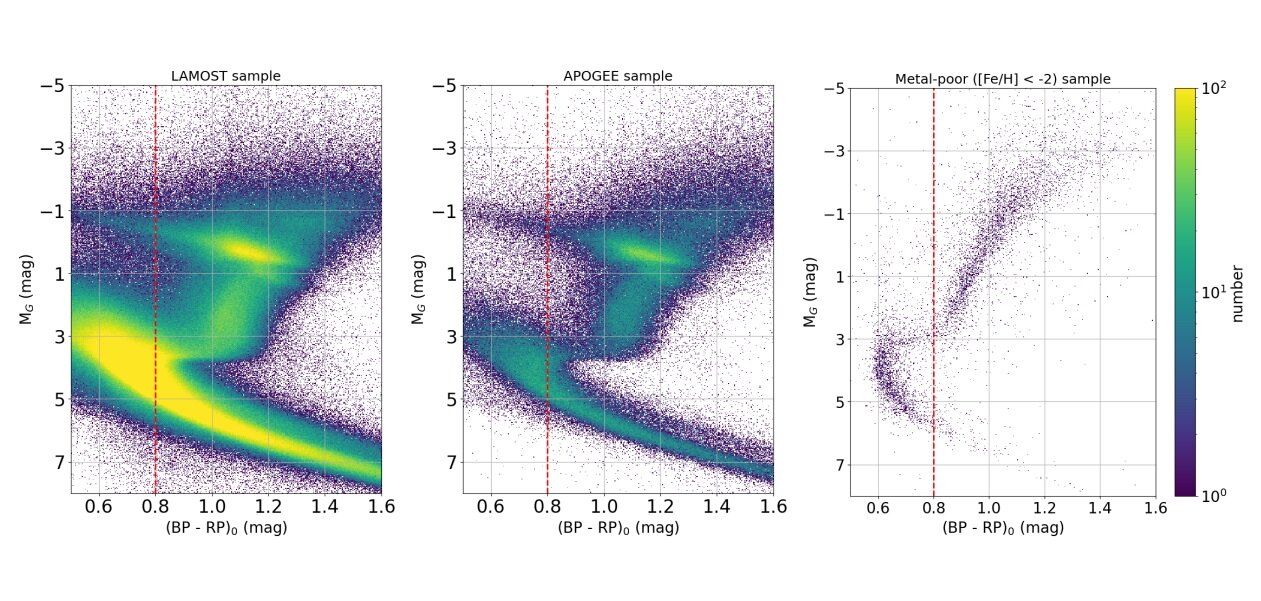
Astronomers have identified 188,002 candidate metal-poor stars by analyzing data from various astronomical surveys, including the Gaia satellite, LAMOST, and APOGEE. The discovery may help us better understand the chemical evolution of the universe. The team used the XGBoost algorithm to identify metal-poor stars in Gaia DR3 and obtained three corresponding candidate metal-poor star catalogs. The researchers managed to identify 127,096 bright and 60,906 faint candidate metal-poor stars in the Milky Way galaxy, which is around an order of magnitude larger than that from previous studies.

New study reveals surprising insights about early stars.
astronomy3 years ago

New study reveals surprising insights about early stars.

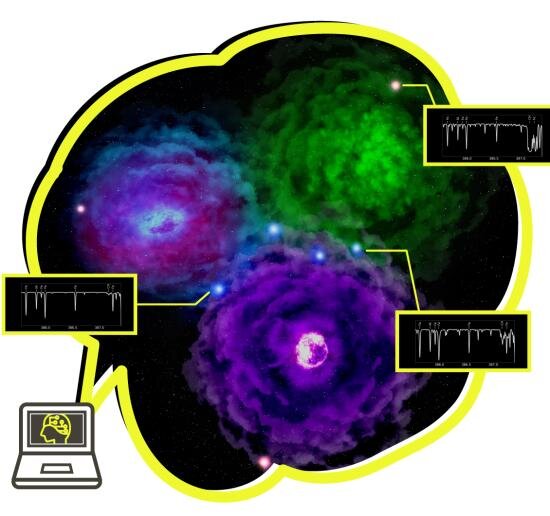
Researchers have used machine learning and supernova nucleosynthesis to find that the majority of observed second-generation stars in the universe were enriched by multiple supernovae. The team analyzed elemental abundances in more than 450 extremely metal-poor stars observed to date and found that 68% of them have a chemical fingerprint consistent with enrichment by multiple previous supernovae. This suggests that most first stars formed in small clusters or multiple star systems, rather than as isolated single stars. The new algorithm invented in this study opens the door to make the most of diverse chemical fingerprints in metal-poor stars discovered by the Prime Focus Spectrograph.