Tag

Protein Restriction

All articles tagged with #protein restriction

Fruit Fly Study Identifies Lsp2 Protein as Carrier of Early-Life Nutritional Memory
science10 days ago

Fruit Fly Study Identifies Lsp2 Protein as Carrier of Early-Life Nutritional Memory

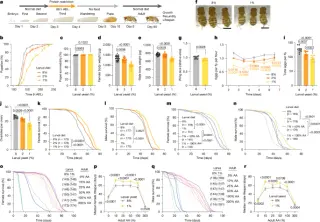
A new study in Nature reveals that restricting protein intake in fruit fly larvae extends adult lifespan by reducing the production of larval serum protein 2 (Lsp2). This protein acts as a nutritional memory, carrying dietary information from the larval stage into adulthood. Lower Lsp2 levels lead to fewer ribosomes and slower protein production, which improves cellular health and longevity. While the mechanism is clear in flies, translating this to humans is complex due to differences in protein structures and the lack of a direct Lsp2 equivalent.

Fruit Fly Protein Lsp2 Links Early Diet to Adult Lifespan
science16 days ago

Fruit Fly Protein Lsp2 Links Early Diet to Adult Lifespan

Researchers at Nature have identified larval serum protein 2 (Lsp2) as the molecular mechanism linking early-life diet to adult lifespan in fruit flies. By restricting protein intake during the larval stage, scientists found that Lsp2 levels drop, which reduces ribosomal protein abundance and translational activity in early adulthood. This reduction extends lifespan without compromising reproduction, suggesting that Lsp2 acts as a 'nutritional memory' carrier across developmental transitions.

science2 months ago

Could Eating Less Protein Help You Live Longer? A New Review Suggests Yes

A comprehensive review of more than 350 studies suggests that reducing overall protein intake or limiting certain amino acids may improve metabolic health, reduce inflammation, and slow aging processes in animals, with early human trials showing weight loss and improved insulin sensitivity. The evidence points to a potential need for personalized protein guidelines, since older adults, pregnant individuals, and those recovering from illness may require more protein, while many sedentary adults could benefit from lower intake, especially when paired with appropriate exercise.

Amino-Acid Restrictions Linked to Longer Healthy Lifespan, Review Finds
science2 months ago

Amino-Acid Restrictions Linked to Longer Healthy Lifespan, Review Finds

A comprehensive review of over 350 studies finds that lowering total dietary protein or restricting specific essential amino acids—especially isoleucine and methionine—may promote longevity and better metabolic health by activating repair pathways (FGF21, autophagy) and dampening growth signals (mTORC1, GCN2). Benefits observed in animals and some human data; however, protein needs vary with age and activity, and excessive restriction could harm older adults by raising sarcopenia risk. The authors stress optimizing amino-acid balance rather than simply eating less protein, and more human research is needed.

Longevity tip: trim protein, not calories, new review suggests
health2 months ago

Longevity tip: trim protein, not calories, new review suggests

A Cell Press Blue review of over 350 studies finds that restricting protein intake—without cutting total calories—may boost metabolism and cellular maintenance via the FGF21 hormone, offering a potential path to longer, healthier lives for sedentary adults. Active individuals still need protein for muscle, and the review cannot prove causation in humans; long-term, tailored protein guidelines by age and activity level are needed.

Protein restriction linked to longer healthspan for inactive adults, review finds
health2 months ago

Protein restriction linked to longer healthspan for inactive adults, review finds

A scientific review of 350+ studies suggests that lowering protein intake, rather than calories, can improve metabolism, reduce inflammation, and trigger the hormone FGF21 to boost energy expenditure—potentially extending lifespan in sedentary adults. The review notes benefits for metabolism and cellular maintenance but emphasizes it is not a causal human trial and protein needs should be tailored to age and activity; active individuals still require sufficient protein. More long-term human studies are needed.

Lower Protein Intake Could Extend Healthy Aging, Large Review Suggests
health-and-medicine2 months ago

Lower Protein Intake Could Extend Healthy Aging, Large Review Suggests

A review of more than 350 studies finds that eating less protein can improve metabolic function, reduce inflammation and cellular damage, and activate pathways linked to healthier aging and longer life, especially for sedentary adults who may consume more protein than they actually need. While protein supports muscle with exercise, higher intake isn’t universally beneficial, and certain amino acids (like methionine, isoleucine, and valine) may drive aging when consumed in excess. The hormone FGF21 rises when protein is restricted and is thought to aid energy expenditure and glucose regulation. Protein needs vary by age and activity, suggesting personalized guidelines rather than a one-size-fits-all approach. The findings complement existing ideas about calorie restriction and highlight the importance of tailoring protein intake to individual lifestyles.

Protein restriction could improve health and extend lifespan, review finds
health-and-science2 months ago

Protein restriction could improve health and extend lifespan, review finds

A comprehensive review of 350+ studies links lower protein intake to healthier aging and possible lifespan extension by boosting metabolism and the hormone FGF21; amino acids such as methionine, isoleucine, and valine may drive these effects, though protein remains essential for muscle and certain groups, suggesting more personalized protein guidelines rather than a universal high-protein approach.

Liver Signal Bypasses the Hypothalamus to Rewrite Diet and Metabolism
science5 months ago

Liver Signal Bypasses the Hypothalamus to Rewrite Diet and Metabolism

A study identifies a specific hindbrain neuron population (NTS-KLB) that directly responds to the liver hormone FGF21 to orchestrate changes in food intake, food choice, and energy expenditure during dietary protein restriction, challenging the idea that metabolism is controlled mainly by the hypothalamus and suggesting targeted brain circuits could improve FGF21-based obesity and diabetes therapies.

Protein-lean diet slows liver cancer in diseased livers, mouse study suggests
science8 months ago

Protein-lean diet slows liver cancer in diseased livers, mouse study suggests

Rutgers-led scientists in Science Advances show that in mice with liver impairment, reducing dietary protein slowed liver tumor growth and extended survival. By impairing ammonia disposal, ammonia increased and was redirected into amino acids and nucleotides that tumors use for growth, suggesting ammonia metabolism fuels cancer in diseased livers. The findings imply that a low-protein diet could lower liver cancer risk or progression for people with liver disease—but doctors caution against self-prescribing such diets, since protein also supports strength during treatment and liver function varies. More research is needed to translate to humans.