Tag

Re Entry

All articles tagged with #re entry

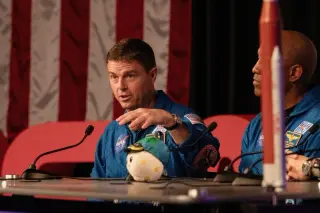
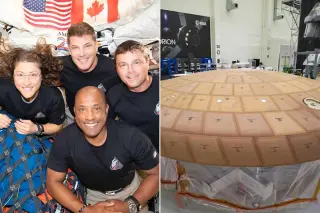
Artemis II Braces for Reentry as Heat Shield Flaws Loom
science1 day ago

Artemis II Braces for Reentry as Heat Shield Flaws Loom

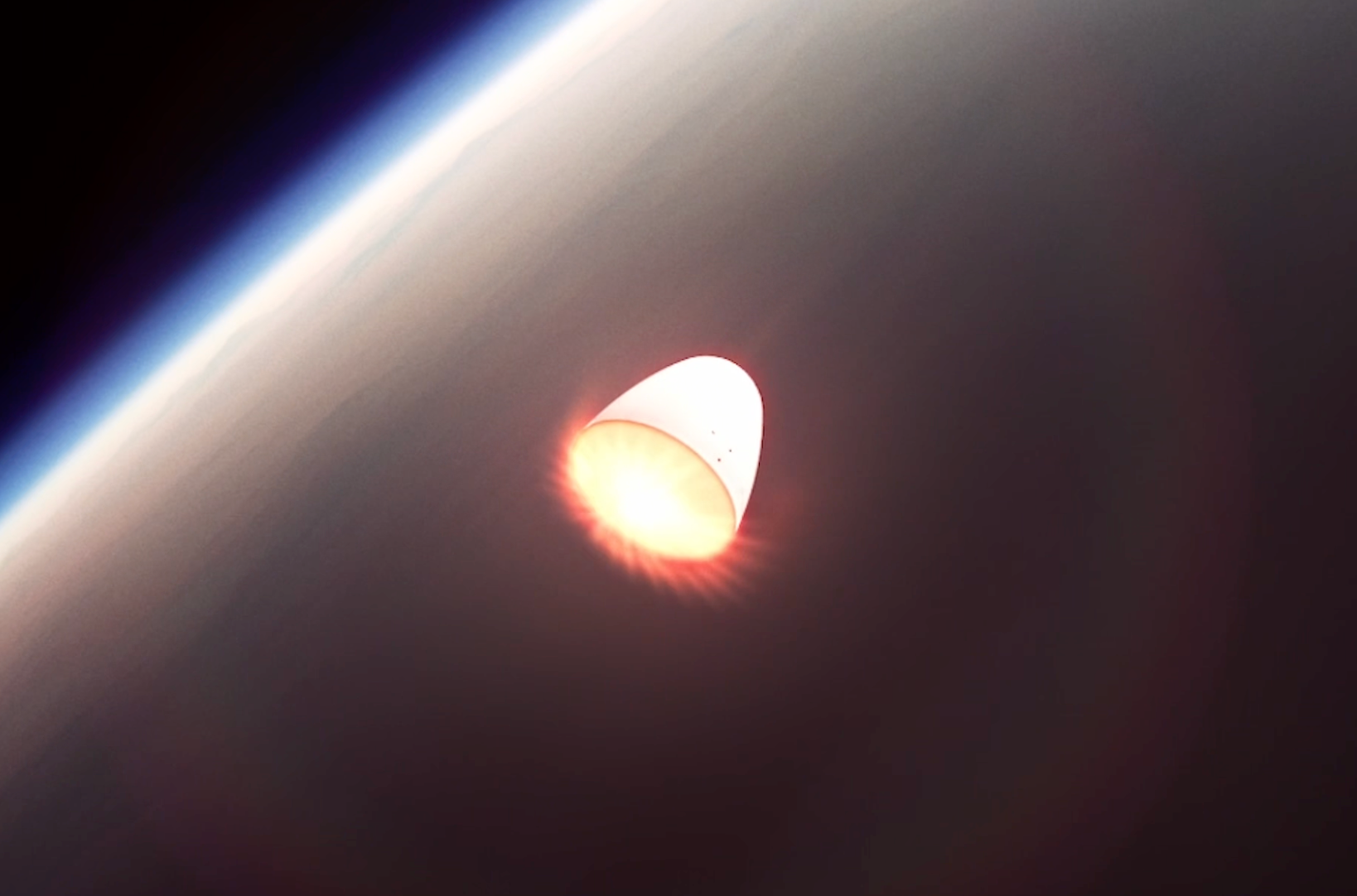
Ahead of Artemis II’s planned California splashdown, NASA acknowledges known flaws in the capsule’s heat shield—a design linked to Artemis I’s crack, and lacking a backup shield. Officials say a modified reentry path and crew safety measures will mitigate risk during the 5,000-degree-F heat, which makes the final ~13 minutes of flight the mission’s most perilous phase. Experts including Charlie Camarda warn of possible catastrophe, while NASA asserts the shield’s overall thermal performance has met or exceeded expectations; the four astronauts have been sending personal messages home as they approach splashdown.

NASA’s Van Allen Probes Begin Final Descent Toward Earth
space1 month ago

NASA’s Van Allen Probes Begin Final Descent Toward Earth

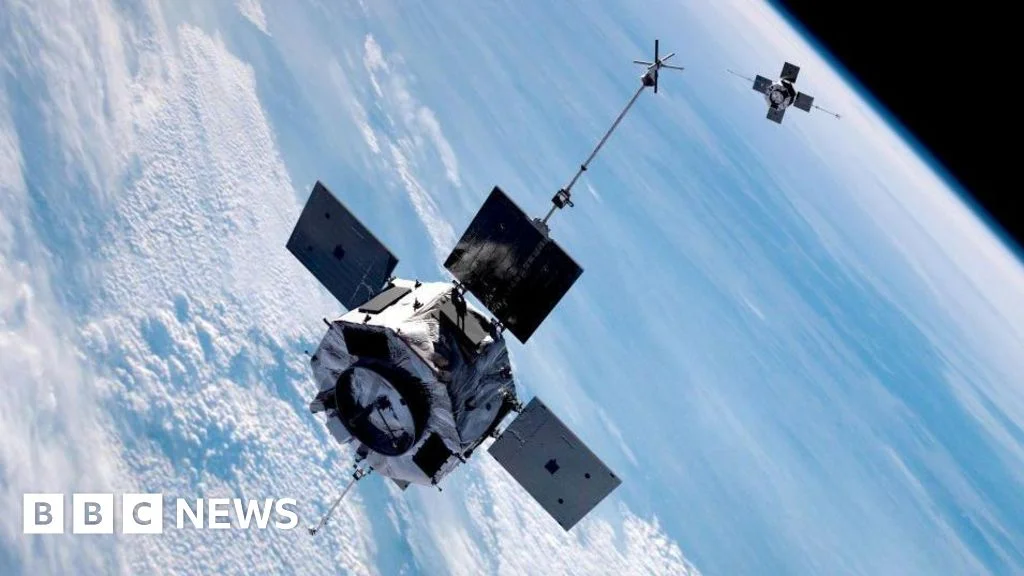
NASA says the 1,300-pound Van Allen Probe from the 2012 mission is due to re-enter Earth’s atmosphere around 7:45 p.m. ET (00:45 GMT) with a 24-hour uncertainty; it will mostly burn up, with a 1 in 4,200 chance of debris causing harm. The mission, which outlasted its planned two-year life by seven years, studied Earth’s radiation belts and helped identify a transient third belt; Van Allen Probe B isn’t expected to re-enter until about 2030, and NASA/US Space Force will monitor the descent.

Uncontrolled re-entry: NASA's Van Allen Probe A poses small debris risk
science1 month ago

Uncontrolled re-entry: NASA's Van Allen Probe A poses small debris risk

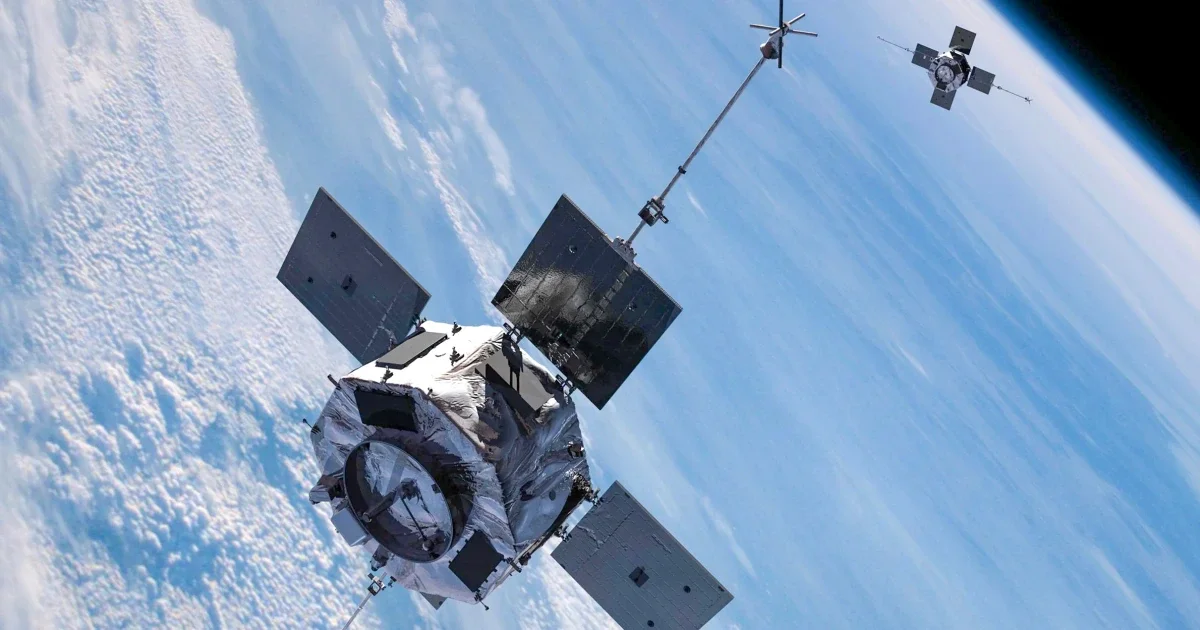
A defunct NASA satellite, Van Allen Probe A (launched in 2012 to study Earth's radiation belts), is expected to re-enter Earth's atmosphere in an uncontrolled descent around 7:45 p.m. EDT; most of the 1,323-pound craft should burn up, but some components may survive, with an estimated risk to people on Earth of about 1 in 4,200. Predictions carry roughly 24 hours of uncertainty. The probe's twin, Van Allen Probe B, remains in orbit, and this event underscores ongoing space-debris concerns as launches increase; debris typically falls over oceans due to most of Earth's surface being water.

Van Allen Probe A Heads Toward Re-Entry After Pioneering Belt Study
space1 month ago

Van Allen Probe A Heads Toward Re-Entry After Pioneering Belt Study

NASA's Van Allen Probe A is on a planned re-entry into Earth’s atmosphere after a mission to study the planet’s radiation belts. The 1,323-pound satellite, launched in 2012 with Van Allen Probe B, is expected to re-enter around 7:45 p.m. EDT on March 10, 2026 (±24 hours); most of it will burn up, but some debris could survive. The mission, originally two years, ran for about seven years and yielded important insights into radiation belts and space weather forecasting, including evidence of a transient third belt. Van Allen Probe B isn’t expected to re-enter until around 2030. The risk to people on Earth remains very low, about 1 in 4,200, and predictions will be updated as conditions change.

Lithium Trail in Upper Atmosphere Traced to SpaceX Re-entry
science1 month ago

Lithium Trail in Upper Atmosphere Traced to SpaceX Re-entry

Researchers using sensitive lasers detected a rapid lithium plume in the mesosphere–lower thermosphere and traced it to the February 2025 re-entry of a discarded SpaceX Falcon 9 upper stage, marking the first ground-based observation that re-entering space debris leaves a detectable chemical fingerprint. With orbital activity rising and megaconstellations planned, the study underscores the need for monitoring networks and regulatory action to understand and manage potential impacts on the upper atmosphere and ozone.

science1 year ago

Astronauts Share the Fear of Returning to Earth

Astronauts describe re-entering Earth's atmosphere as the most perilous part of space travel, due to extreme physical, technical, and psychological challenges. The process involves navigating hypersonic speeds and intense heat, with spacecraft relying on advanced thermal protection systems to prevent disaster. Despite technological advances, the psychological toll remains significant, with astronauts needing to maintain focus amidst sensory overload. This experience often leads to a profound shift in perspective, highlighting Earth's fragility and the importance of global collaboration.

Spectacular Fireball Over Southwest US Likely Satellite Debris
science-and-technology1 year ago

Spectacular Fireball Over Southwest US Likely Satellite Debris

A SpaceX Starlink satellite re-entered Earth's atmosphere, creating a fireball spectacle over the Southwest U.S., with sightings reported in Texas, Oklahoma, and Kansas. The satellite, launched in 2022, was designed to burn up upon re-entry to prevent space debris. This event coincided with ongoing meteor showers, leading to initial confusion among skywatchers.

NASA Confirms SpaceX Debris Found in North Carolina
science-and-technology1 year ago

NASA Confirms SpaceX Debris Found in North Carolina

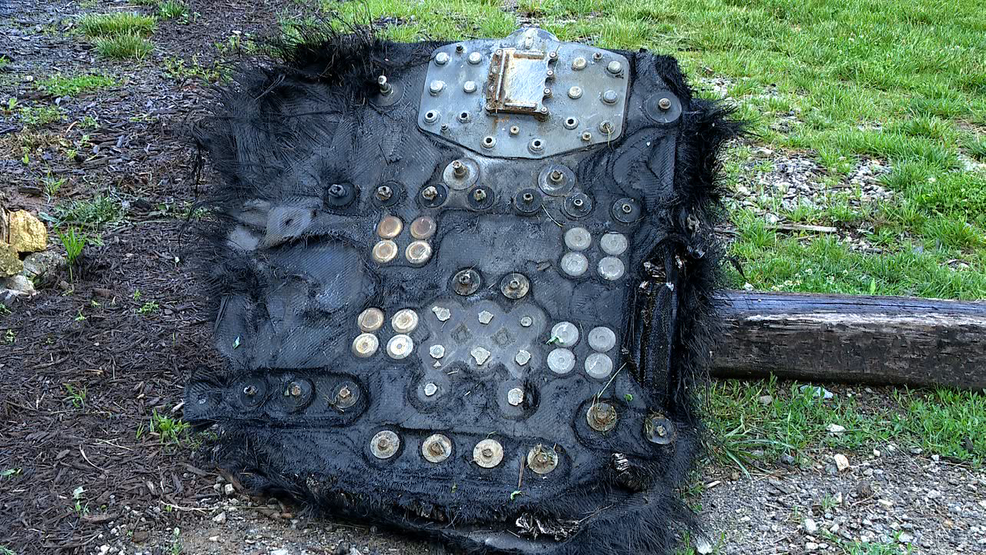
Debris found in Western North Carolina has been confirmed by NASA to be from a SpaceX Dragon spacecraft that broke apart during re-entry. The debris, which was expected to burn up, was discovered by local residents, prompting NASA and SpaceX to use the findings to improve debris modeling. Residents are advised not to handle the debris and to contact SpaceX for recovery.

"NASA Confirms Space Station Debris Crashes into Florida Home"
space2 years ago

"NASA Confirms Space Station Debris Crashes into Florida Home"

NASA has confirmed that the mysterious object that crashed into a Florida home last month came from the International Space Station, specifically a stanchion from the NASA flight support equipment used to mount batteries on a cargo pallet. The 1.6-pound metallic alloy piece survived re-entry and impacted the home. NASA plans to investigate why the batteries and pallet, which were expected to burn up in Earth's atmosphere, did not do so. The incident highlights the dangers of space junk, with Earth's orbit hosting thousands of pieces, and may have financial consequences for both NASA and the homeowner.

"Chinese Space Junk Creates Mysterious Light Show Over California"
science-and-technology2 years ago

"Chinese Space Junk Creates Mysterious Light Show Over California"

Mysterious streaks of light seen over California were identified as remnants of Chinese space junk, specifically the orbital module of China’s Shenzhou 15 spacecraft, re-entering the Earth's atmosphere. The debris, which had been in orbit for over a year after a mission to China’s Tiangong space station, caused a dazzling light show visible from Sacramento to San Diego. Initially mistaken for a meteor shower or UFOs, the spectacle was ultimately attributed to the re-entry of the space debris, captivating residents and sparking widespread speculation.

"Chinese Space Junk Creates Spectacular Fireball Over Southern California"
spacescience2 years ago

"Chinese Space Junk Creates Spectacular Fireball Over Southern California"

The U.S. Space Command confirmed that the fireball seen across Southern California was not a meteor, but the re-entry of a Chinese module used to launch astronauts in 2022. The module's heat shield burned away, giving it the appearance of a meteor shower, and it was expected to break up over the Pacific Ocean. This incident highlights the issue of space junk in low-Earth orbit, as the increasing number of satellites and defunct spacecraft pose a risk of collisions and contribute to the growing amount of debris orbiting Earth.