Tag

Red Dwarf

All articles tagged with #red dwarf

Nearby quiet red dwarf hides the second-closest habitable-zone planet
space2 hours ago

Nearby quiet red dwarf hides the second-closest habitable-zone planet

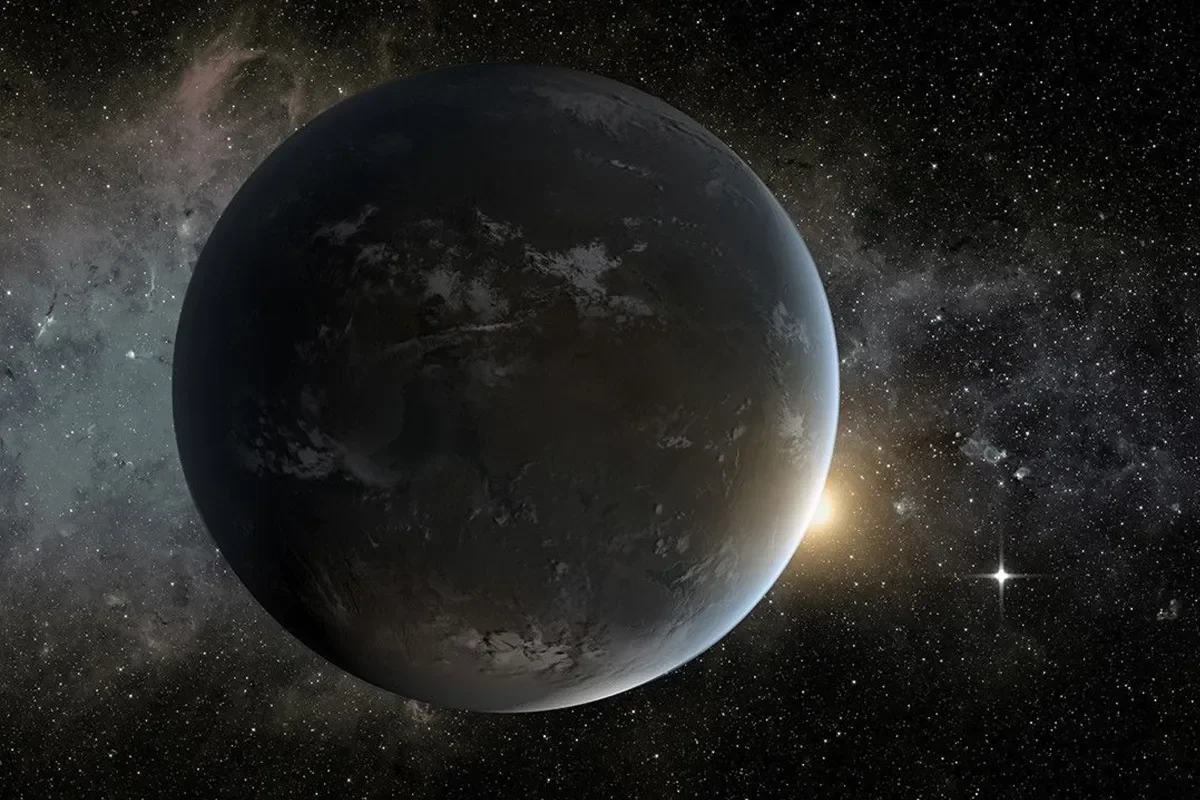
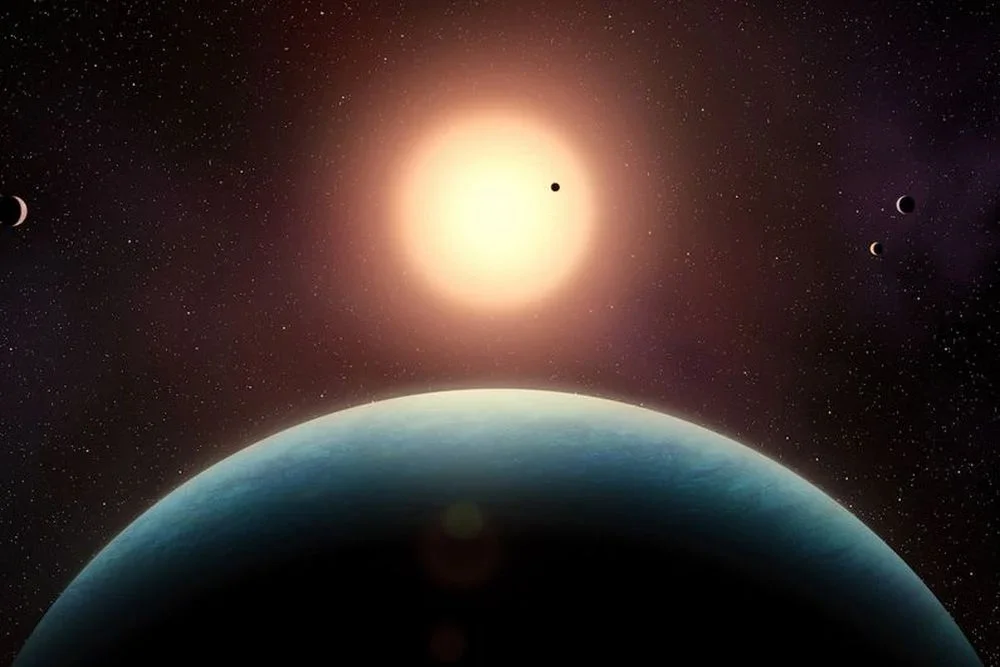
In 2026, astronomers confirmed GJ 887 d, a planet in the habitable zone of the nearby red dwarf GJ 887 (about 10.7 light-years away), orbiting every 50.77 days with a minimum mass around six Earths, making it the second-closest such world after Proxima Centauri b. The detection, based on 277 HARPS radial-velocity measurements plus ESPRESSO data and Gaussian-process modeling to separate stellar activity, provides strong evidence for a real planet rather than stellar noise, though the planet does not transit, so its radius and atmosphere are unknown. Its equilibrium temperature is ~241 K, and it receives ~81% of Earth’s insolation. While GJ 887 is relatively magnetically quiet for a red dwarf, flares can occur; future direct-imaging efforts with missions like Habitable Worlds Observatory or LIFE could probe the planet, but current data只能 constrain mass and orbit. The system likely hosts at least four planets, with a fifth signal still unconfirmed.

Nearby Earth-Sized World in Red Dwarf’s Habitable Zone Prompts Life Talk
space14 days ago

Nearby Earth-Sized World in Red Dwarf’s Habitable Zone Prompts Life Talk

A reanalysis of exoplanet GJ 3378b, 25 light-years away, shows it has about twice Earth’s mass and lies in its red dwarf’s habitable zone, making it a strong nearby candidate for life-supporting conditions. Its atmosphere and pressure are still uncertain, and debates about red-dwarf habitability—along with potential tidal locking and stellar flares—mean more data are needed before confirming its ability to support life.

Cold Milky Way Objects Might Be Alien Dyson Swarms Around Small Stars
science15 days ago

Cold Milky Way Objects Might Be Alien Dyson Swarms Around Small Stars

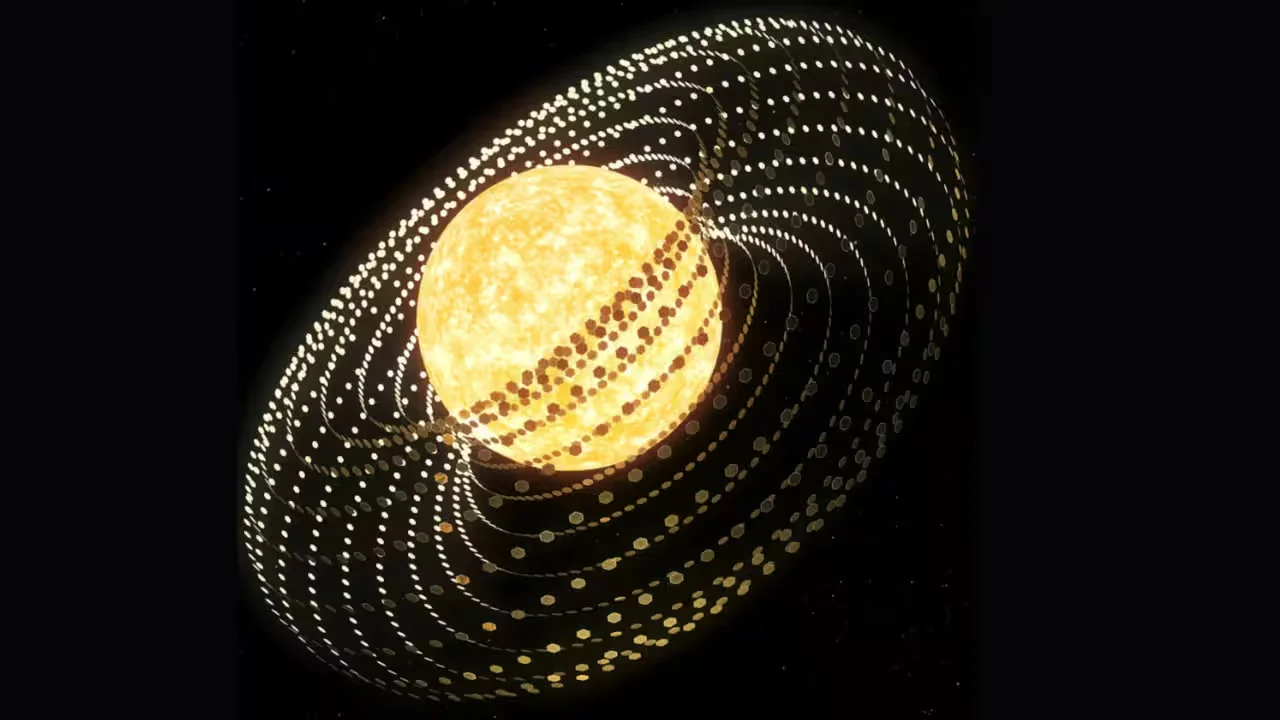
A new study proposes that some of the Milky Way’s coldest objects, currently catalogued as stars, could be Dyson swarm energy collectors built by advanced civilizations around red and white dwarfs. Such systems would absorb visible light and re-emit heat as infrared, altering their position on the Hertzsprung–Russell diagram and creating distinctive, cleaner infrared spectra and irregular brightness changes. Astronomers are using JWST and projects like Hephaistos to search for these signatures and distinguish them from natural dust clouds.

Proxima Centauri b: the nearest habitable-zone world under a harsh red-dwarf glare
science17 days ago

Proxima Centauri b: the nearest habitable-zone world under a harsh red-dwarf glare

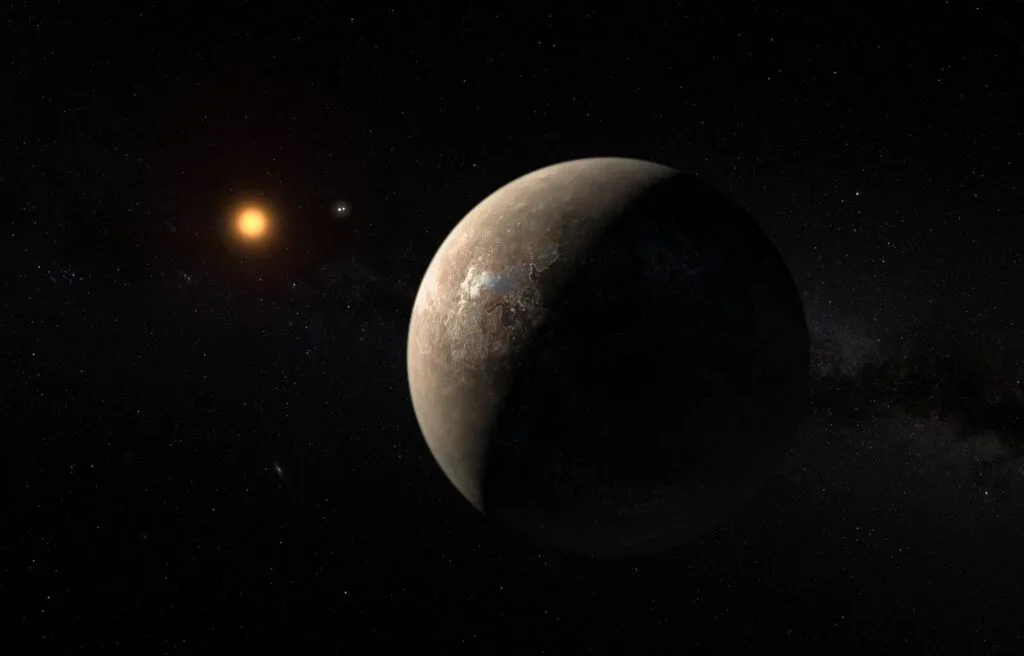
Proxima Centauri b sits in the habitable zone of the nearest star, but its true habitability depends on whether it retains a substantial atmosphere, which could be stripped by intense X-ray/UV radiation and stellar winds from Proxima Centauri. Models show liquid water is possible only with a suitable atmosphere, making this nearby world a key test case for whether rocky planets around red dwarfs can keep air and water, and a prime target for future atmospheric observations.

Nearby rocky super-Earth found in habitable zone around a red dwarf
science19 days ago

Nearby rocky super-Earth found in habitable zone around a red dwarf

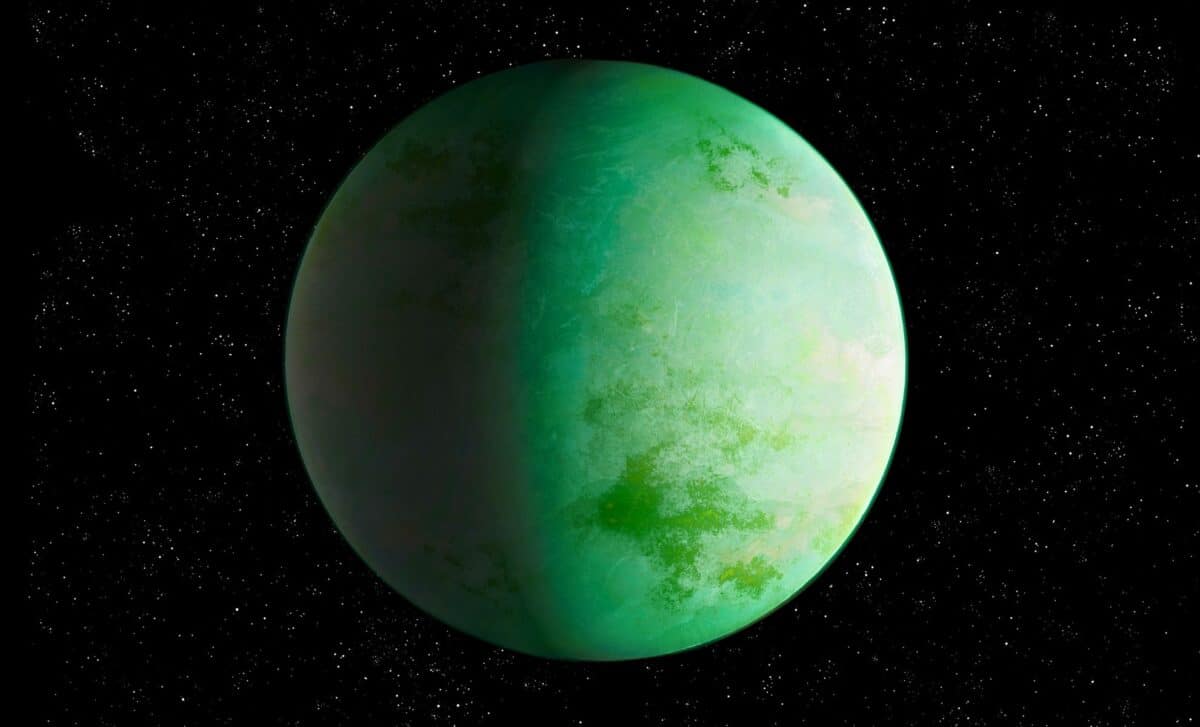
Astronomers refined the mass and orbit of the nearby exoplanet GJ 3378b, a rocky super-Earth about 2.3 Earth masses that orbits a red dwarf every 21 days at roughly 25 light-years away, placing it in the habitable zone where liquid water could exist if it retains an atmosphere; however, stellar winds from the red dwarf may strip the atmosphere, and the planet does not transit, limiting atmospheric study and pushing biosignature confirmation to future observatories such as NASA's Habitable Worlds Observatory planned for the 2040s.

Nearby 25-light-year world could host oceans in its star’s habitable zone
science22 days ago

Nearby 25-light-year world could host oceans in its star’s habitable zone

Astronomers refine the mass of exoplanet GJ 3378b to about 2.3 Earth masses, placing it in the rocky super-Earth category and locating it in the habitable zone of a nearby red dwarf 25 light-years away. It orbits its star every 21 days, suggesting temperatures that could support liquid water, but the planet’s atmosphere remains uncertain due to intense stellar radiation; since it does not transit, atmospheric confirmation may have to wait for future missions like NASA’s Habitable Worlds Observatory in the 2040s.

Nearby Habitable-Zone Exoplanet Sparks Life-Hopes
space23 days ago

Nearby Habitable-Zone Exoplanet Sparks Life-Hopes

Astronomers refined the mass and orbit of GJ 3378b, a 2.3‑Earth-mass exoplanet around a nearby red dwarf about 25 light-years away in Camelopardalis. With a 21-day orbit, it sits in the star’s habitable zone and could be rocky, but its atmosphere and true habitability remain uncertain because it does not transit its star. Atmosphere confirmation awaits future instruments like the Habitable Worlds Observatory (targeted for the 2040s) and JWST observations, all while red-dwarf radiation poses challenges—yet this nearby world is one of our best chances to study potentially habitable exoplanets.

Nearby GJ 251 c emerges as a prime target for future direct imaging of a temperate world
space28 days ago

Nearby GJ 251 c emerges as a prime target for future direct imaging of a temperate world

A nearby red-dwarf system hosts GJ 251 c, a candidate 3.8-Earth-mass super-Earth in the star’s habitable zone detected by radial-velocity methods; its radius and atmosphere remain unknown, but at ~18 light-years away its geometry could let future 30-meter telescopes directly image it and probe for water, air, and possible biosignatures—though no definitive signs exist yet.

JWST finds a 'Forbidden Planet' with a metal-poor atmosphere that defies theory
science3 months ago

JWST finds a 'Forbidden Planet' with a metal-poor atmosphere that defies theory

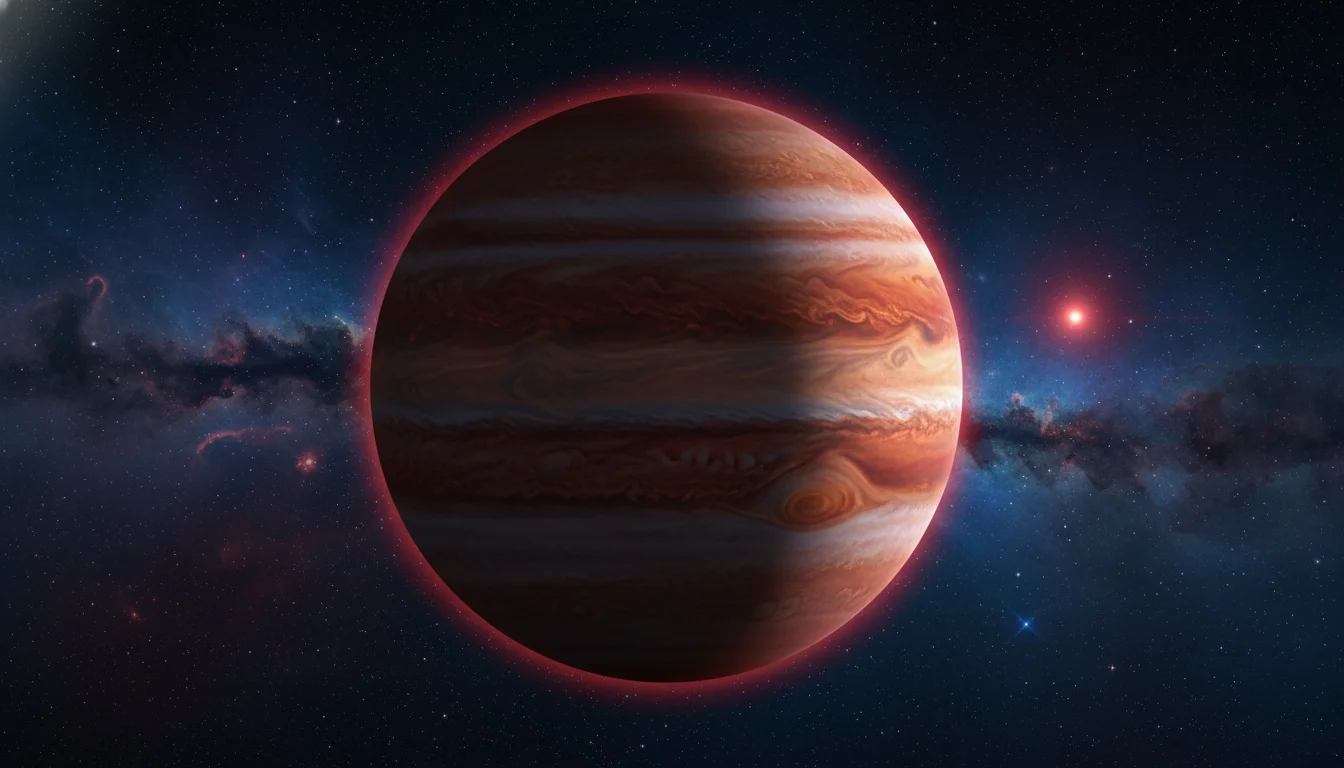
JWST's transit spectroscopy of TOI-5205 b—a Jupiter-sized planet orbiting a 0.4-solar-mass red dwarf about 280 light-years away—reveals an atmosphere unexpectedly poor in metals, even less metal-rich than its host star. This contradicts core accretion models and the assumed link between star and planet metallicity, earning the world the moniker 'forbidden planet' and raising questions about how giants form around low-mass stars. Results are based on three transits and require further observations and refined modeling to confirm and fully interpret.

Inside-Out Exoplanet System Upends Formation Theory
world5 months ago

Inside-Out Exoplanet System Upends Formation Theory

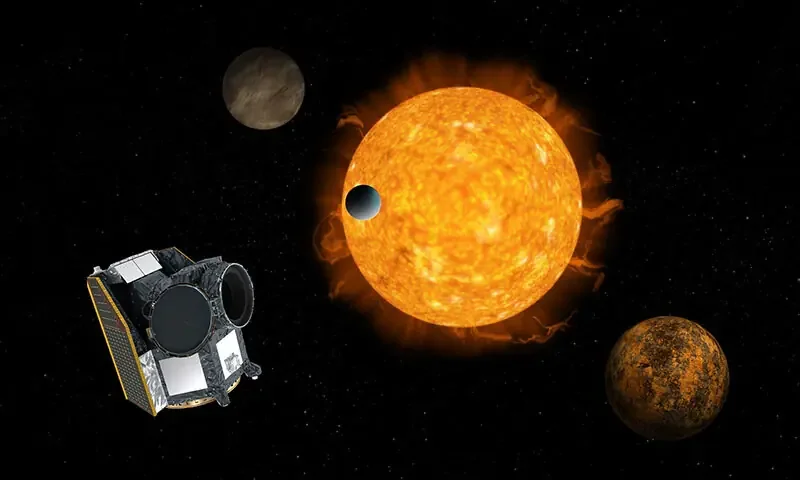
CHEOPS observations reveal four planets orbiting the red dwarf LHS 1903 far closer to their star than Mercury is to the Sun: two rocky super-Earths and two gaseous mini-Neptunes. The outermost planet, surprisingly rocky, challenges standard models that predict rocky worlds close in and gas giants farther out, suggesting an 'inside-out' assembly in which gas was depleted by inner planets or the atmosphere was stripped after formation. With a mass of about 5.8 Earth masses and a surface temperature around 60°C, it could be marginally habitable, and future JWST studies could probe its atmosphere.