Tag

Metallicity

All articles tagged with #metallicity

JWST Finds the Most Metal-Poor Galaxy Yet, a Fossil from Cosmic Dawn
science13 days ago

JWST Finds the Most Metal-Poor Galaxy Yet, a Fossil from Cosmic Dawn

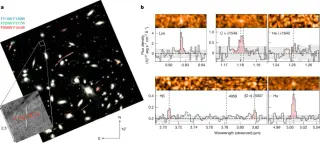
James Webb Space Telescope spectroscopy of LAP1-B, a strongly lensed galaxy at zspec ≈ 6.63, reveals an ultra-faint, chemically primitive star-forming system with gas-phase oxygen abundance of ~4×10⁻³ Z☉—the lowest yet for a high-redshift galaxy. It hosts a hard ionizing radiation field inconsistent with enriched populations, shows an elevated C/O ratio suggesting metal-free/poor stellar origins, and has a stellar mass <3,300 M⊙ while its dynamical mass exceeds baryons, implying a dominant dark-matter halo. LAP1-B is a direct high-redshift progenitor of local ultra-faint dwarfs, providing a rare window into early galaxy formation.

Ancient Immigrant Star Offers Glimpse of the Universe's First Generations
astronomy1 month ago

Ancient Immigrant Star Offers Glimpse of the Universe's First Generations

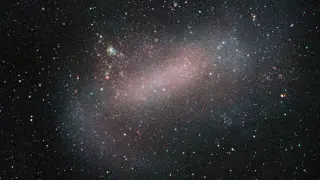
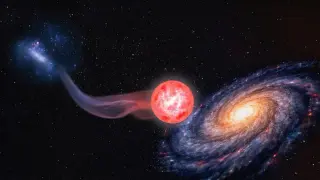
Astronomers report that SDSS J0715-7334 is an extraordinarily metal-poor star—almost pure hydrogen and helium—likely formed from a primordial cloud polluted by a Population III supernova. Found ~80,000 light-years away near the Large Magellanic Cloud, its metal content is about 0.005% that of the Sun, making it the closest analogue to the first stars. Follow-up observations with the Sloan Digital Sky Survey and Magellan telescope suggest its Population III progenitor had at least 30 solar masses and an unusually energetic explosion, earning it the nickname “Ancient Immigrant.” The discovery, published in Nature Astronomy, helps illuminate the early chemical evolution of the cosmos.

JWST finds a 'Forbidden Planet' with a metal-poor atmosphere that defies theory
science1 month ago

JWST finds a 'Forbidden Planet' with a metal-poor atmosphere that defies theory

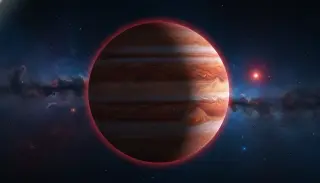
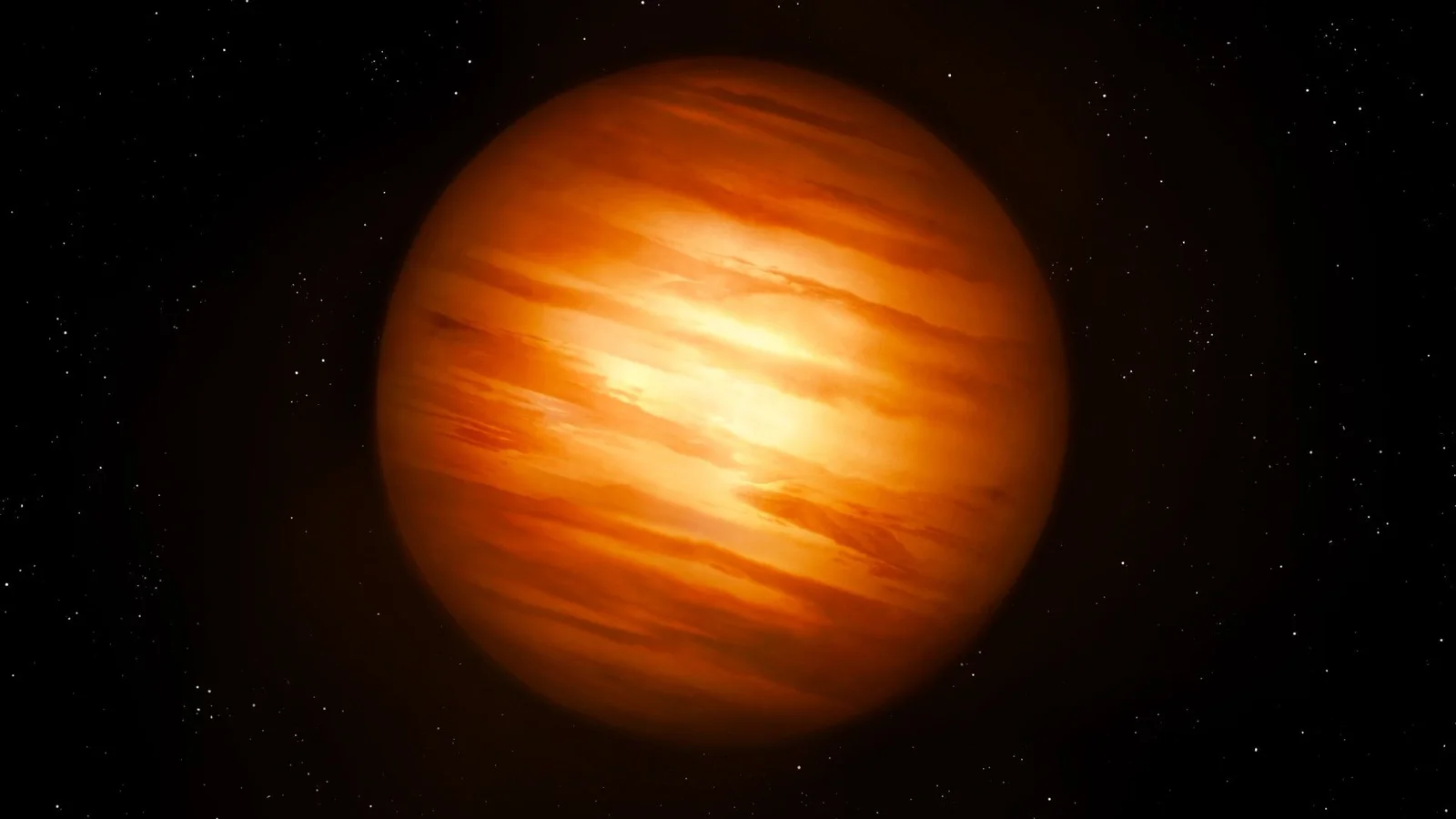
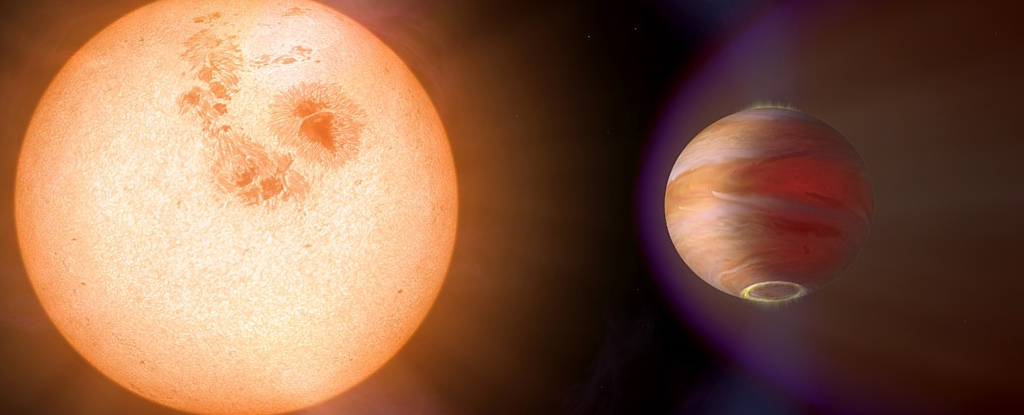
JWST's transit spectroscopy of TOI-5205 b—a Jupiter-sized planet orbiting a 0.4-solar-mass red dwarf about 280 light-years away—reveals an atmosphere unexpectedly poor in metals, even less metal-rich than its host star. This contradicts core accretion models and the assumed link between star and planet metallicity, earning the world the moniker 'forbidden planet' and raising questions about how giants form around low-mass stars. Results are based on three transits and require further observations and refined modeling to confirm and fully interpret.

Nearby Pristine Star Carries Clues to the Universe's First Stars
space1 month ago

Nearby Pristine Star Carries Clues to the Universe's First Stars

Astronomers identified SDSS J0715-7334, a Sun-like star now a red giant, as the most metal-poor star known (about 0.005% of the Sun) with an unusually low carbon content. Its chemistry implies it formed through a rare cooling pathway aided by tiny cosmic dust from Population III supernovae, possibly born in the Large Magellanic Cloud — a fossil of the early Universe that could guide the search for more ultra-metal-poor stars.

Interstellar Comet 3I/ATLAS Survives Solar Flyby, Revealing Planet-Building Clues
space3 months ago

Interstellar Comet 3I/ATLAS Survives Solar Flyby, Revealing Planet-Building Clues

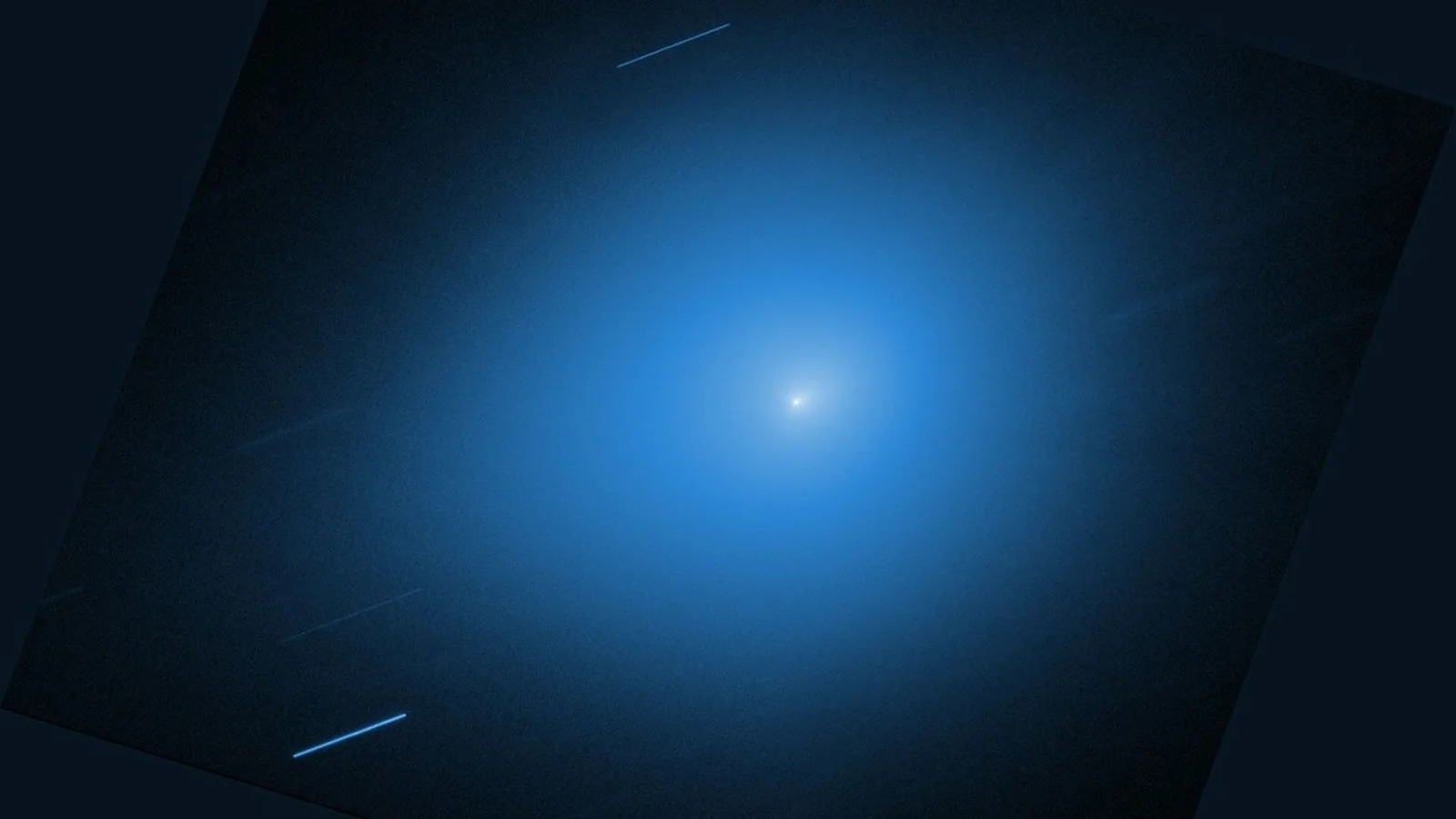
NASA’s Hubble reobserved interstellar comet 3I/ATLAS during its close solar approach, allowing scientists to track nickel and iron emissions before and after perihelion with unprecedented precision. The study found the observed outer layers are sun-baked crust rather than pristine material, complicating direct measurements of its original metallicity, but SPHEREx data showing dust, water, and organics in the coma, along with the metal measurements, provide valuable insights into how heavy elements behave in other star systems and what this implies about planet formation.

One-Third of Stars May Harbor Earth-Like Planetary Remains
science1 year ago

One-Third of Stars May Harbor Earth-Like Planetary Remains

New research suggests that stars engulfing ultra-short-period (USP) rocky planets may explain the pronounced differences in metallicity observed among sibling stars. These planets, which orbit very closely to their stars, can be consumed, leading to metal pollution in the stars. The study, by Christopher E. O'Connor and Dong Lai, indicates that between 3 to 30 percent of Sun-like stars may have engulfed such planets. The research highlights the potential for USP engulfment as a natural consequence of low-e migration scenarios in compact, multi-planet systems.

Study Reveals Dual Stellar Populations in Globular Cluster Gran 5
science1 year ago

Study Reveals Dual Stellar Populations in Globular Cluster Gran 5

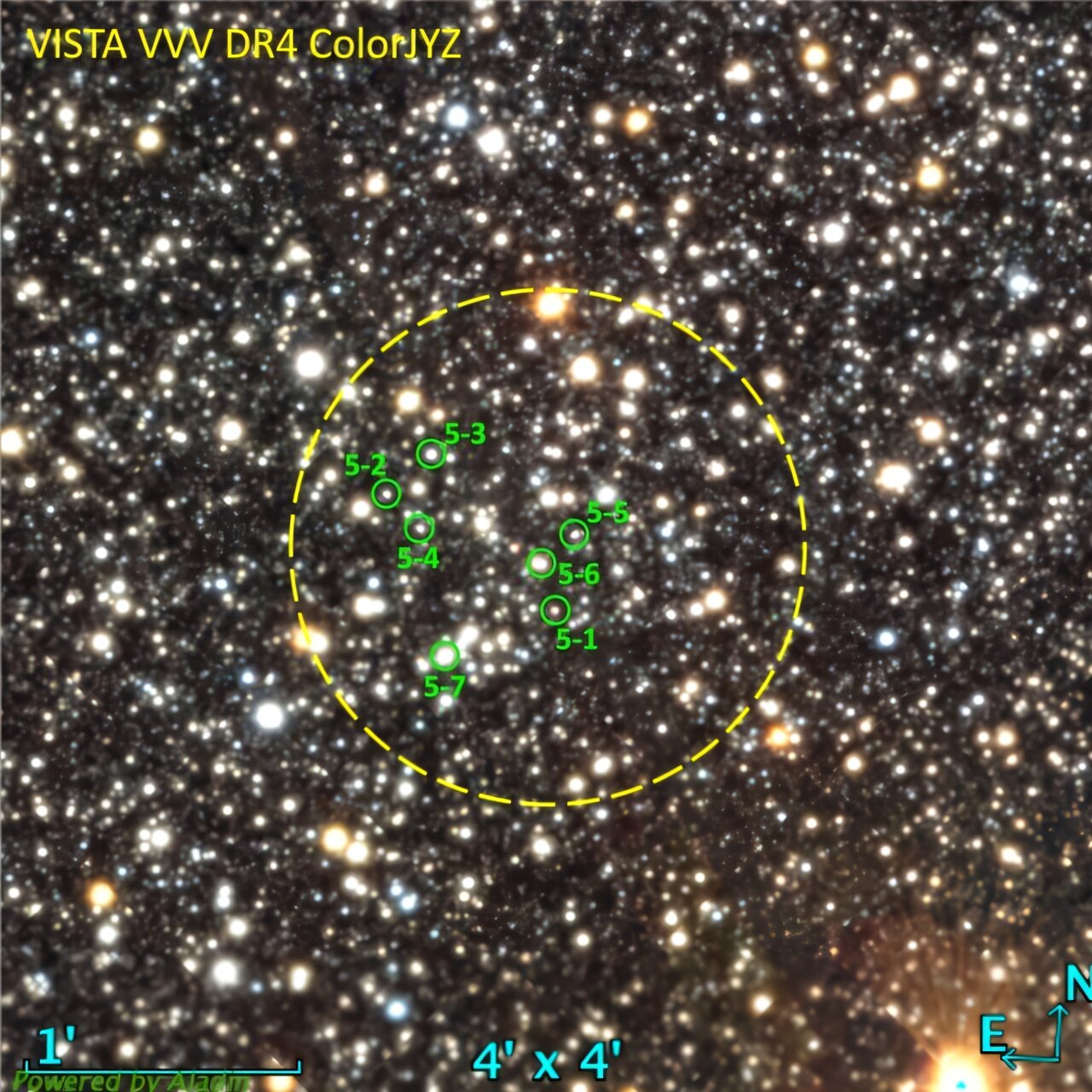
Astronomers using the Gemini-South telescope have discovered that the globular cluster Gran 5, located near the Galactic center, contains two distinct stellar populations with different metallicities. This finding, based on high-resolution near-infrared spectroscopy of seven stars, marks the first detection of such diversity in a low-mass globular cluster. The study suggests that Gran 5 is not linked to the Gaia–Enceladus–Sausage structure but is part of the Galactic bulge or disk, with its metallicity variation possibly due to different evolutionary processes or mass loss.

"Video Shows Scientists Transforming Pure Water Into Metal"
science2 years ago

"Video Shows Scientists Transforming Pure Water Into Metal"

Scientists have successfully transformed pure water into a metallic state by bringing it into contact with an electron-sharing alkali metal, inducing conductivity and a golden sheen. This breakthrough, achieved without the need for extremely high pressures, provides insight into the phase transition of water and could facilitate the study of extreme high-pressure conditions within large planets. The research, published in Nature, offers potential for replicating conditions inside planets like Neptune and Uranus, where metallic hydrogen is thought to exist.

"Unprecedented Barbenheimer Star Explosion Baffles Scientists"
astronomy2 years ago

"Unprecedented Barbenheimer Star Explosion Baffles Scientists"

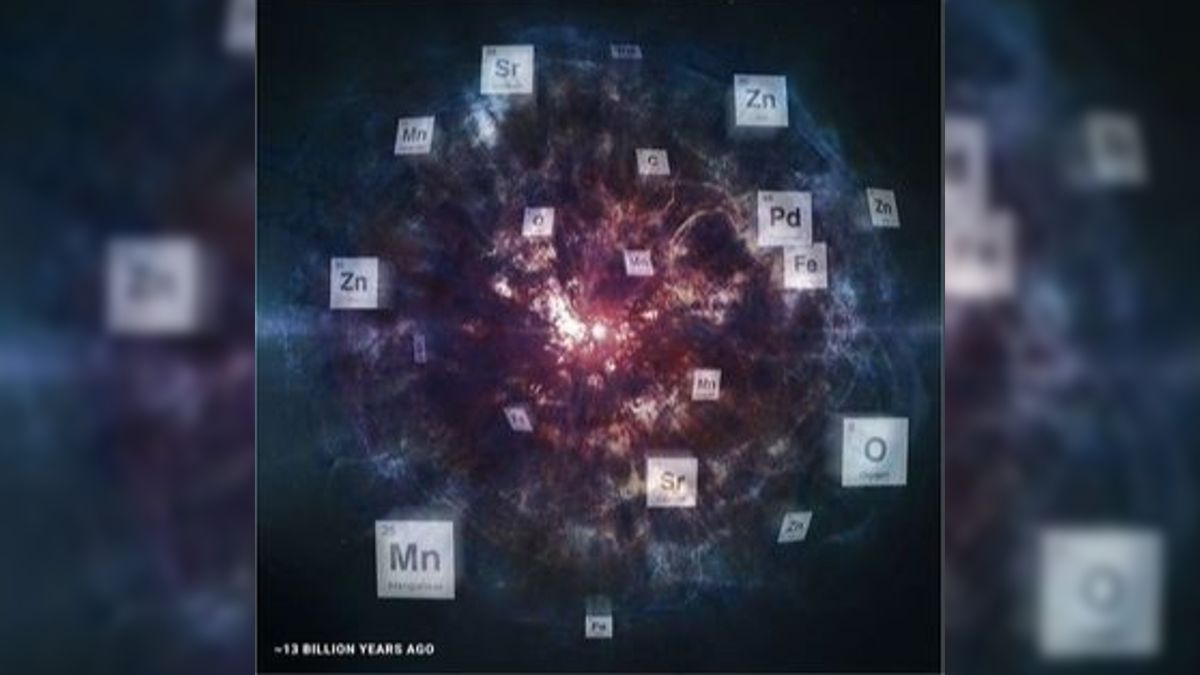
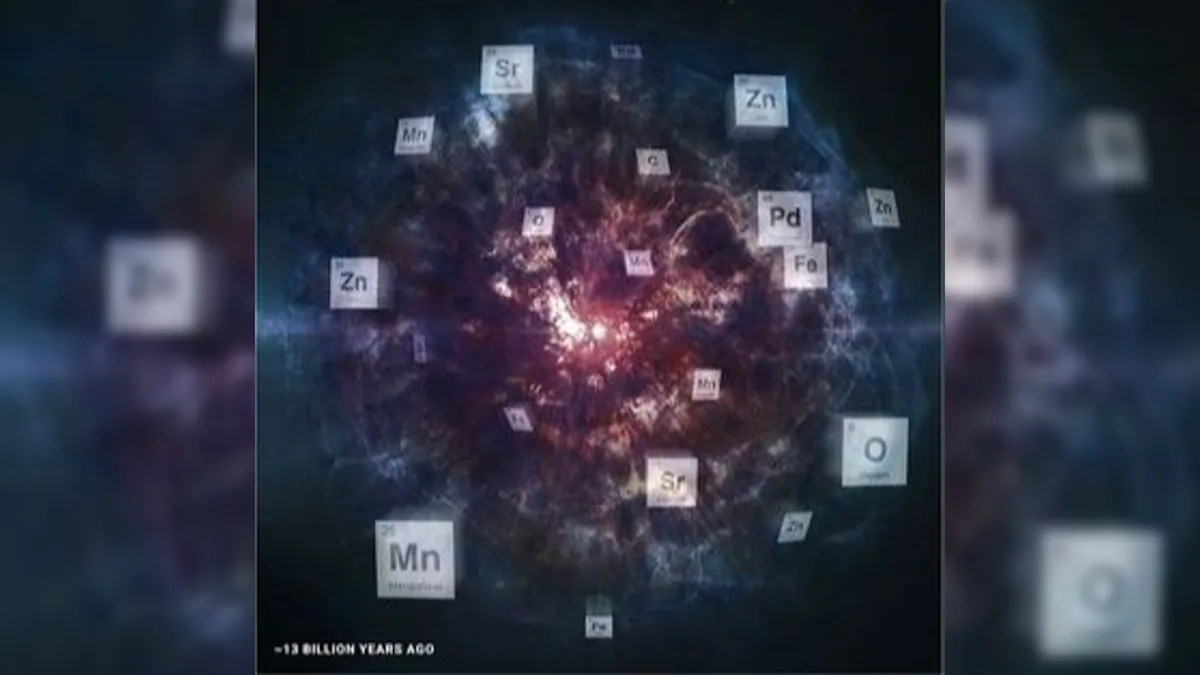
Scientists have discovered an ancient star, dubbed the "Barbenheimer Star," that defies current understanding of the cosmos. The star, which exploded in a supernova 13 billion years ago, left behind a cloud of unusual elements and birthed a puzzling star in its place. Its chemical composition, revealed through stellar archaeology, is unlike any other known star from the early universe, with an inverted metallicity and an overabundance of heavy elements. This discovery challenges existing models of element formation and supernova behavior, leaving scientists baffled and eager to uncover more cosmic oddities to piece together this cosmic puzzle.

"Unexplained Explosion: Ancient 'Barbenheimer Star' Baffles Scientists"
astronomy2 years ago

"Unexplained Explosion: Ancient 'Barbenheimer Star' Baffles Scientists"

Scientists have discovered an ancient star, dubbed the "Barbenheimer Star," with a unique mix of elements and a seemingly impossible death, baffling researchers. The star's unusual metallicity challenges current understanding of the early universe, as it had high concentrations of heavy elements and low levels of lighter ones. Its parent star, which should have collapsed into a black hole, also defies explanation. Further research is needed to uncover more cosmic oddballs and solve this stellar mystery.

The Surprising Power of Tiny Galaxies: Unveiling the Largest Star Factories
science-and-astronomy2 years ago

The Surprising Power of Tiny Galaxies: Unveiling the Largest Star Factories

Scientists have discovered that some of the largest and most intense regions of star formation are found in the smallest of galaxies, known as dwarf galaxies. This is because stars in dwarf galaxies are more likely to turn into black holes rather than explode in supernovas, resulting in a delay in blowing away their star-forming material. This delay allows star-forming regions in dwarf galaxies to grow in size and intensity, producing more stars. The presence of metals in stars also plays a role in their evolution, with high-metallicity stars more likely to produce powerful supernovas. These findings provide insights into star formation in early galaxies and the conditions during the "Cosmic Dawn" period after the Big Bang.

"Surprising Metal Content Found in Young Galaxies"
astronomy2 years ago

"Surprising Metal Content Found in Young Galaxies"

Astrophysicists using the James Webb Space Telescope (JWST) have discovered a surprising amount of metal, including carbon, in a galaxy only 350 million years after the Big Bang. This finding challenges our understanding of metal-free population III stars and sheds light on the formation of metals in the early universe. The detection may be attributed to the first generation of supernovae or the presence of a supermassive black hole in the galaxy. Further research and larger sample sizes are needed to provide a more definitive explanation.