Breast cancer diagnoses among women under 50 are rising at twice the rate of older cohorts. Experts link this to lifestyle factors, while new genetic tools aim to identify high-risk individuals earlier.
Medical experts warn that bowel incontinence, often dismissed as embarrassing or unrelated to cancer, can signal advanced colorectal cancer, particularly when involving the rectum. While less common than other symptoms like bleeding or fatigue, this sign indicates that a tumor may have grown large enough to obstruct stool or disrupt nerve signals. Early detection remains critical, as colorectal cancer is the second leading cause of cancer death in the U.S., and rates in young people are rising. Doctors emphasize that while incontinence is rarely the first symptom, it requires immediate medical evaluation to rule out serious conditions.
Medical experts warn that bowel incontinence, though often dismissed as embarrassing or unrelated to cancer, can indicate advanced colorectal cancer. While not a primary symptom, it may result from tumors disrupting nerve signals or causing obstruction. Early detection through screening and lifestyle changes remains critical, as colorectal cancer rates are rising, particularly among younger populations.
Chance Osborne, a 24-year-old BRCA1 carrier, developed triple negative breast cancer two weeks after a clear MRI. The tumor doubled in size within two weeks of discovery. She underwent chemotherapy, surgery, and a hysterectomy, surviving five years. She now advocates for genetic testing and regular circulating tumor DNA monitoring.
Dr. Akshay Syal, an internal medicine physician and NBC News contributor, outlines four key indicators in family medical history that may signal elevated health risks. These include diseases diagnosed at unusually young ages, multiple relatives on the same side of the family sharing a condition, specific cancer patterns, and known genetic mutations. Identifying these factors allows doctors to adjust screening schedules and prevention strategies, though they do not guarantee the development of a disease.
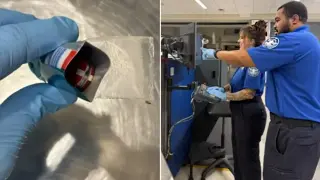
TSA officers at Dallas Love Field discovered a pocketknife hidden inside a toothpaste tube during a routine carry-on screening. The married couple traveling with the item admitted their son suggested the concealment method. After voluntarily surrendering the knife, the passengers were permitted to continue to their flight. TSA leadership praised the officers for their attention to detail and teamwork in identifying the concealed item.
The Winship Cancer Institute of Emory University is deploying a mobile screening bus across Georgia to offer free prostate cancer blood tests, aiming to counter rising late-stage diagnoses. During National Prostate Cancer Awareness Month, the initiative targets high-risk groups, including Black men, who face significantly higher mortality rates. Recent data shows new cases are climbing, but experts emphasize that early detection through simple blood tests can lead to manageable treatment outcomes without the need for chemotherapy or radiation.
USA TODAY highlights five signs of scoliosis to watch for: back pain (which isn’t always present), visible asymmetry in shoulders or waist, a rib hump when bending forward, difficulty with the forward-bend screening test, and clothes fitting unevenly; many adolescents can have a notable curve with few or no symptoms, making routine screening and medical evaluation key to catching progression early.
Oncologists warn that cancer signs can be subtle and easily overlooked. Key indicators to watch for include unexplained weight loss, persistent fatigue, changes in urination or bowel habits, difficulty swallowing, new or changing skin spots, and night sweats. Because early diagnosis improves prognosis, seek medical evaluation for persistent or worrisome symptoms and advocate for yourself if your concerns aren’t addressed. Maintain regular cancer screenings (like mammograms and colonoscopies) and healthy lifestyle choices to lower risk.
Colorectal cancer is highly preventable with early detection; the article spotlights bowel incontinence as a possible sign—though not common—when rectal cancer affects sensing or stool passage, often appearing after other symptoms like rectal bleeding or weight loss. It also notes many incontinence cases are non-cancerous and urges timely medical evaluation for persistent GI changes, since early detection improves outcomes. Prevention centers on regular screenings (colonoscopy) starting around age 45, plus healthy lifestyle; treatments vary by stage and can include surgery, chemo, radiation, and immunotherapy.
A 47-year-old New York mom, Cathy Brockhoff, was diagnosed with stage 3 ovarian cancer after a severe stomachache and underwent major surgery to remove the tumor, uterus, ovaries, and part of her colon, followed by six rounds of chemotherapy and targeted therapy; she is now cancer-free on scans. The piece emphasizes that ovarian cancer can affect younger women and that its symptoms are vague and easy to misinterpret as indigestion or other common issues. It lists key warning signs to watch for—persistent bloating, abdominal or pelvic pain, feeling full quickly, urinary changes, constipation or bowel changes, unusual vaginal bleeding, and fatigue or back pain or pain during sex—and notes there is no routine screening test for ovarian cancer, underscoring the importance of paying attention to persistent symptoms and seeking medical advice.
DC has the highest prostate cancer mortality rate in the U.S. (27.5 per 100,000), a disparity linked to a larger Black population; experts emphasize that earlier, easier screening—now often via a blood test—leads to early detection and highly treatable outcomes, with some low-risk cases managed through active surveillance.
Whole-body MRIs and multi-cancer blood tests are investigational for asymptomatic people: they can detect cancers but often cause false positives, unnecessary procedures, and high costs; Busy Philipps’ Prenuvo MRI, which found a malignant brain tumor, underscores how personal risk and privilege shape demand, while experts stress sticking to evidence-based screenings and demanding clear FDA status, costs, and follow-up requirements to avoid widening healthcare inequities.
Prostate cancer screening is becoming more personalized: PSA remains the starting point, but MRI and new biomarkers help avoid unnecessary biopsies by focusing on PSA trends over time. Guidance is age-based and risk-adjusted (average risk ~50, higher risk 45, BRCA carriers 40–45), and many early cancers are asymptomatic, with active surveillance often viable; primary care doctors play a central role in early detection.
The American Cancer Society projects 333,830 new prostate cancer cases in 2026, with cases rising about 3% annually from 2014–2022 and a rise in advanced-stage diagnoses; experts say increased screening largely drives the rise, but late detection remains a concern. Early detection improves survival and expands treatment options, with PSA testing as the typical first step and risk-based screening conversations starting around ages 40–50 depending on risk. Prostate cancer affects about 1 in 8 men, with higher incidence in Black men, and more than 3.5 million men living with the disease today.