Tag

Seasons

All articles tagged with #seasons

OPLA Could Stretch Beyond Three Seasons as Netflix Bets on One Piece's Long Run
entertainment19 hours ago

OPLA Could Stretch Beyond Three Seasons as Netflix Bets on One Piece's Long Run

Netflix’s live‑action One Piece (OPLA) is planned for at least three seasons, but a longer run is being debated. The article notes OPLA’s high production cost and manga-length scope, with showrunners hinting at a multi‑year future depending on audience retention and economics. Season 1 covered East Blue, Season 2 ended at Drum Island, and Season 3 will complete Alabasta and may set up Jaya. An eight‑season plan could reach Jaya, Sky Island, Water 7, Enies Lobby, Thriller Bark, and Sabaody, potentially pushing into post‑time-skip arcs and a possible ninth season. The series will skip anime‑only filler and stick to the manga, while renewal beyond Season 3 will hinge on performance—S1 drew over 60M views in 40 days, and S2’s retention sits at about two‑thirds of S1. In short: three seasons are currently on the books, but a longer adaptation is plausible if popularity and cost allow.

Marathon Unveils Three-Month Seasons with Fresh Starts and Evolving Content
gaming1 month ago

Marathon Unveils Three-Month Seasons with Fresh Starts and Evolving Content

Marathon will run three-month seasons that reset gear, contracts, faction progress, and level, but keep cosmetics and Codex progress; each season adds free new content (zones, weapons, implants, events) and evolves Tau Ceti, with Ranked mode arriving in Season 1's second half and Season 2 introducing Nightfall and the Cradle system to give players more control over builds.

Earth's Perihelion and the Year's Largest Sun on January 3, 2026
science3 months ago

Earth's Perihelion and the Year's Largest Sun on January 3, 2026

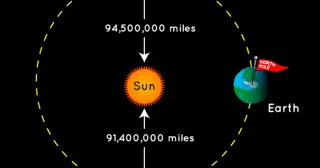
Earth reaches perihelion, its closest point to the sun, on January 3, 2026, but this event has minimal impact on seasons, which are primarily driven by Earth's axial tilt. Perihelion slightly increases solar energy and affects Earth's orbital speed, influencing season length and climate trends over long timescales, but does not cause significant weather changes.

Earth's Farthest Point from the Sun and Its Impact on Weather and Seasons
science9 months ago

Earth's Farthest Point from the Sun and Its Impact on Weather and Seasons

On July 3, 2025, Earth will reach its farthest point from the Sun, called aphelion, at about 152 million kilometers away, but this distance does not determine seasons, which are caused by Earth's axial tilt. The Earth's orbit is elliptical and influenced by gravitational forces from planets like Jupiter and Saturn, causing cyclical changes over thousands of years. Currently, Earth's orbit is nearly circular, affecting the length of seasons, with summer in the Northern Hemisphere being slightly longer than winter.

"Understanding the Symbolism of the 2024 Spring Equinox"
astronomy2 years ago

"Understanding the Symbolism of the 2024 Spring Equinox"

The spring equinox, also known as the vernal equinox, is set to occur on March 19, 2024, marking the transition from winter to spring in the Northern Hemisphere and from summer to autumn in the Southern Hemisphere. This celestial event symbolizes balance and renewal, with day and night being nearly equal in length. Cultures worldwide celebrate the spring equinox with festivals and rituals focused on themes of fertility, growth, and the changing of seasons. The term "vernal equinox" emphasizes the seasonal aspect, while "spring equinox" is more generic, both referring to the same astronomical event.

Seasons Beyond Earth: A Comparative Look at Planetary Variations
astronomy2 years ago

Seasons Beyond Earth: A Comparative Look at Planetary Variations

Earth's regular seasons are unique due to its slight tilt on its rotational axis, causing variations in sunlight throughout the year. This phenomenon, known as obliquity, can lead to drastic seasonal changes on other planets, with high obliquity resulting in extreme temperatures and reversed zonation. Spin-orbit resonances and the presence of moons can also influence a planet's obliquity and stability. Research on exoplanets, such as Kepler-186f, aims to understand the diversity of seasonal patterns across the universe.