Tag

Social Networks

All articles tagged with #social networks

Two-Way Growth: The Stoic Call to Learn by Teaching
philosophy4 days ago

Two-Way Growth: The Stoic Call to Learn by Teaching

Seneca’s line about associating with those who can improve you is shown as a two-way rule: strive to be better company for others by teaching what you know, so both learner and teacher grow together; modern studies on social influence offer cautious support but also highlight subtle limits, and the full message is mutual growth rather than a one-sided pursuit.


Choosing when to leave work shapes long-term happiness, study finds
science26 days ago

Choosing when to leave work shapes long-term happiness, study finds

A 2020 Hungarian study found that retirees who left work voluntarily reported higher life satisfaction than those who were forced out, and the gap persisted for eight to eleven years. Related research suggests that building a new role identity and maintaining multiple active social groups aid long-term adjustment, whereas over-reliance on the old workplace identity can hinder wellbeing. The voluntariness effect may vary by country and context, so it’s not a universal rule, but the findings highlight the lasting impact of control over retirement and social structure on happiness.

Networks Over Time: Why Neanderthals Declined While Humans Spread Across Ice Age Europe
science4 months ago

Networks Over Time: Why Neanderthals Declined While Humans Spread Across Ice Age Europe

A Quaternary Science Reviews study uses ecological modeling and archaeological data from 60,000–35,000 years ago to show Neanderthals disappeared through fragmented populations and weaker connectivity, while Homo sapiens benefited from more interconnected networks that enabled mobility and resource sharing during environmental shifts. Extinction varied by region, framed as a mosaic outcome driven by social structure and climate variability rather than a single catastrophe.

Six Degrees as a Universal Pattern in Social Networks
science4 months ago

Six Degrees as a Universal Pattern in Social Networks

A new study argues that six degrees of separation is a universal pattern in social networks, arising from individuals balancing influence with the effort of maintaining relationships. A mathematical model shows average path lengths settle near six, matching Milgram’s classic results and observations from Facebook, email, and other networks; the pattern explains rapid information spread and potential disease transmission, driven by self-organizing link formation by individuals.

Fiji bull sharks form surprising social networks
science5 months ago

Fiji bull sharks form surprising social networks

A six-year study of 184 bull sharks at Fiji’s Shark Reef Marine Reserve shows they have active, complex social lives. Researchers documented stable associations, lead-follow interactions, and parallel swimming, with adults forming the core of the network. Males tended to have more social connections than females, and social ties were strongest among similarly sized individuals. While socializing is common among adults, younger sharks are more represented in social activity likely to avoid predation, and older sharks appear less social overall. The researchers emphasize many questions remain about whether these sharks hunt or mate cooperatively, and more studies are needed to fully understand their social dynamics.

Online Social Networks and the Rise of Dysfunctional Group Behaviors
science11 months ago

Online Social Networks and the Rise of Dysfunctional Group Behaviors

The article explains how online social networks facilitate the spread of bizarre behaviors and conspiracy theories, such as the false belief linking 5G to COVID-19, due to complex interactions of cognitive biases, group dynamics like groupthink and polarization, and the rapid dissemination of misinformation, which is difficult to combat and can lead to social unrest.

Primate Memory: Apes Recall Long-Lost Connections Decades Later
animal-behavior2 years ago

Primate Memory: Apes Recall Long-Lost Connections Decades Later

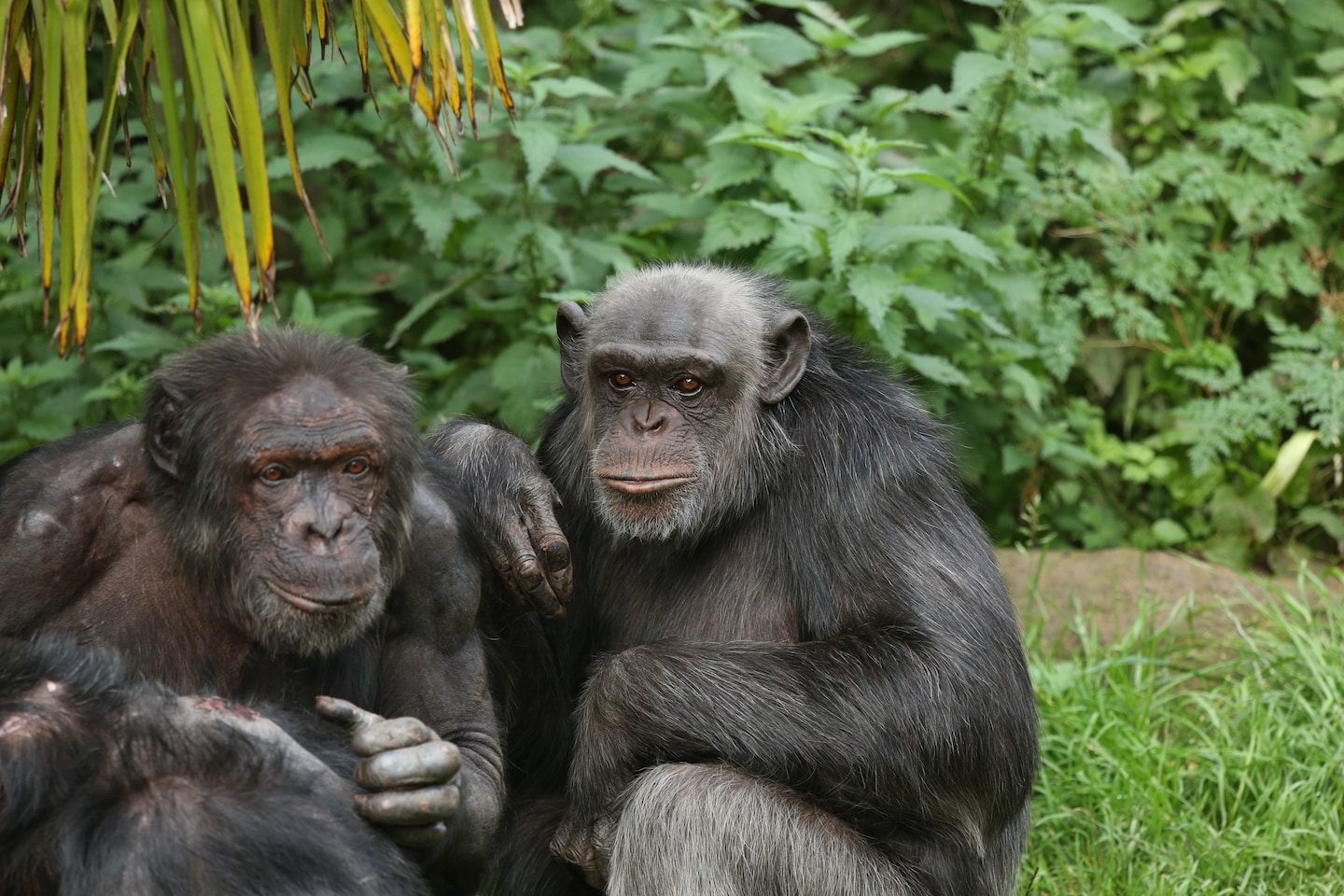
A study published in the Proceedings of the National Academy of Sciences reveals that bonobos and chimpanzees have the ability to remember old friends, family members, and groupmates even after decades of separation. The research suggests that long-term memory is a trait shared by humans, chimps, and bonobos, indicating deep evolutionary roots in complex social networks. Using eye-tracking technology, the study found that the apes showed a greater interest in images of familiar individuals compared to strangers. The results provide insight into the cognitive abilities and social relationships of our closest living relatives.

"Zenly Founder's Amo App Aims to Revive Social Interactions in Social Media"
technology2 years ago

"Zenly Founder's Amo App Aims to Revive Social Interactions in Social Media"

Amo, a Paris-based team of former Zenly members, has launched a new social app called ID that aims to bring back the social aspect of social networks. ID provides users with an empty canvas and creative tools to express themselves, allowing them to create personalized profiles and interact with their friends' profiles. The app focuses on fostering creativity and community engagement, offering a unique and visually appealing experience. Amo, backed by an $18 million funding round, aims to prioritize scale and create an indestructible company by addressing the loneliness epidemic and providing a more meaningful social experience.

Reviving Social Interaction on Social Networks with A.I. Visuals
technology2 years ago

Reviving Social Interaction on Social Networks with A.I. Visuals

Social networking apps like Instagram, Facebook, Snapchat, and new platforms are incorporating artificial intelligence (A.I.) into their image capabilities to bring back the fun and interactivity of creating and sharing images. By using A.I. imagery, these apps aim to rejuvenate the social aspect of their platforms and encourage meaningful connections among users. Features such as A.I. selfies, image transformation filters, and A.I.-generated stickers are being introduced to make social media more engaging and whimsical. The integration of A.I. into image-sharing apps is seen as the future of social media, allowing users to interact with each other and create personalized content.

Adapting Strategies for Dynamic Network Games
science-and-technology3 years ago

Adapting Strategies for Dynamic Network Games

A study on strategy evolution in dynamic networks explores the impact of network structure on cooperation. The research examines various factors such as burstiness, tie strengths, and temporal patterns in spreading processes. It highlights the importance of understanding the hidden structure of dynamic ecological networks and the co-evolution of behavior and social network structure. The study also emphasizes the role of partner selection, switching costs, and the ability to alter ties in promoting cooperation. Overall, the findings contribute to our understanding of how strategies evolve and cooperation prevails in complex and changing network environments.

The Key Personality Traits for Expanding Social Networks in Older Adults
social-science3 years ago

The Key Personality Traits for Expanding Social Networks in Older Adults

A study published in the Personality and Social Psychology Bulletin suggests that extraversion and agreeableness are key personality traits that predict larger social networks in older adults. The research, based on data from the English Longitudinal Study of Ageing, found that individuals who are more outgoing and kind tend to have more friends, family members, and close relationships. Verbal communication skills were not significantly related to social relationships. The study highlights the importance of considering individual differences in social network research and understanding the factors that predict network size in later life.