Tag

Tasmania

All articles tagged with #tasmania

Tasmania’s 43,600-Year-Old King’s Holly Remains a Genetic Enigma
science1 month ago

Tasmania’s 43,600-Year-Old King’s Holly Remains a Genetic Enigma

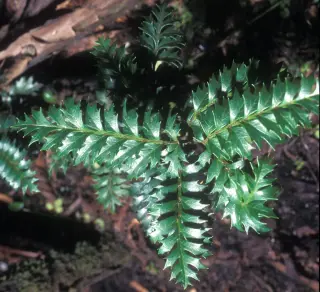
King’s holly, a shrub in southwest Tasmania, is among Earth’s oldest clonal organisms, with fossil evidence dating back 43,600 years. Despite producing flowers, it is sterile due to triploid chromosomes and reproduces only through cloning. Its survival is precarious, with populations confined to small areas and threatened by fire and pathogens, though a new colony was recently discovered.

Tasmanian Coroner Rules Belgian Hiker’s Wilderness Death an Accident After Three-Year Investigation
world2 months ago

Tasmanian Coroner Rules Belgian Hiker’s Wilderness Death an Accident After Three-Year Investigation

Tasmanian coroner Madeleine Wilson ruled the 2023 death of Belgian tourist Celine Cremer an accident, concluding she became lost and hypothermic after deviating from a trail near Cradle Mountain. Her remains were found in 2026, three years after her disappearance, following a breakthrough in late 2025 when her phone was located. The investigation determined she died between June 17 and 21, 2023, due to a confluence of errors including inadequate clothing and disorientation.

Boy's Curiosity on Remote Island Leads to New Spider Species Named in His Honor
science3 months ago

Boy's Curiosity on Remote Island Leads to New Spider Species Named in His Honor

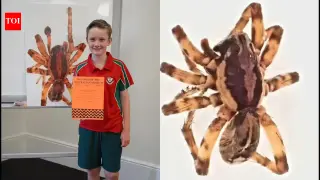
In 2020, ten-year-old Murphy Widdowson collected a small spider on Deal Island, off the northeast coast of Tasmania, while his parents worked there. Instead of discarding the specimen, he contacted the Queen Victoria Museum and Art Gallery in Launceston for identification. Arachnologist John Douglas could not identify the spider with certainty and forwarded it to taxonomist Dr. Volker Framenau in Western Australia. Experts determined the specimen was a previously unknown species of wolf spider, distinct from similar genera due to microscopic differences in its sexual organs. The species was formally named Artoriopsis murphyi in recognition of Murphy’s contribution. The spider is approximately five millimeters in size and is not considered dangerous to humans. A celebration was held for Murphy, featuring a cake decorated with the species' scientific name. The discovery highlights the potential for citizen science and the vast amount of Australia's ecosystem that remains undocumented.

Tasmania's 1,000kg seal celebrity tests crowds and safety rules
environment4 months ago

Tasmania's 1,000kg seal celebrity tests crowds and safety rules

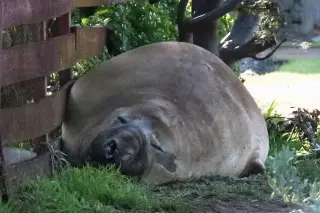
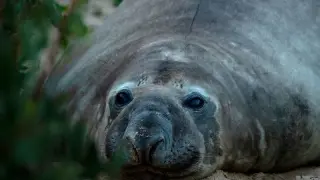
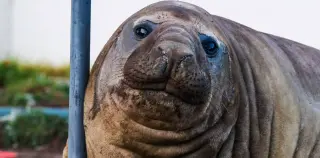
Neil the southern elephant seal, about 1,000 kg, hauls out on Tasmanian beaches twice a year, attracting crowds and a viral following; he can dive to 2,000 metres and stay underwater for hours, but as he grows toward a possible 3,500 kg, authorities emphasize a 20-metre safety buffer, keeping sea access open, and reporting misbehavior while welfare plans for large predators are developed (with euthanasia a remote possibility if he harms someone).

Tasmania's 2,000-pound celebrity seal returns to shore, leaving officials with a wildlife puzzle
world4 months ago

Tasmania's 2,000-pound celebrity seal returns to shore, leaving officials with a wildlife puzzle

Neil, a massive southern elephant seal, returned to Tasmania and has become a local celebrity while causing traffic disruptions and surprising residents. Officials warn that his viral fame could threaten safety as he grows larger. Euthanasia is not planned; instead there is 24/7 security and discussion of restricted-access zones to protect both the seal and the public, with scientists noting he may spend the rest of his life in Tasmania rather than returning to Macquarie Island to breed.

From Hobart's Beach to Worldwide Legend: Neil the Seal's Viral Fame
world4 months ago

From Hobart's Beach to Worldwide Legend: Neil the Seal's Viral Fame

Neil the southern elephant seal’s Tasmanian visits drew crowds and a security detail, turning him from a local sighting into a global folk hero as memes and media celebrate his free-roaming, uncontained nature. The piece explores why wild encounters captivate us, comparing him to celebrity wildlife and considering broader themes of freedom and rebellion in popular culture, while noting experts’ cautions about over-interpreting his behaviour amid his possible departure from Tasmania.

Tasmania's 2,200-pound seal star prompts privacy plea from officials
world4 months ago

Tasmania's 2,200-pound seal star prompts privacy plea from officials

Neil, a 2,200-pound male elephant seal returning to Tasmania, has disrupted towns with road-blocking and property damage while amassing a large TikTok following; officials urge fans to give him privacy to prevent dangerous human–seal encounters, noting his behavior is typical juvenile seal practice and emphasizing coexistence, with removal considered if safety is threatened.

Neil the 1,000-kilogram seal turns a Tasmanian town into his playground
environment4 months ago

Neil the 1,000-kilogram seal turns a Tasmanian town into his playground

A five-year-old elephant seal weighing about 1,000 kg has returned to southern Tasmania, repeatedly bypassing barriers, smashing fences, and lounging on roads, becoming a local celebrity. Experts say his behavior is normal for seals during haul-outs, and he’s likely to grow larger (adult males can exceed two tonnes). Wildlife officials advise keeping at least 20 meters away and dogs 50 meters away. Neil is expected to linger for about six weeks, amid broader conservation concerns as southern elephant seals are now classified as vulnerable after bird flu devastated several colonies.

Neil the Tasmanian Seal: The Cone-Crushing Gentle Giant Captivating Hobart
science4 months ago

Neil the Tasmanian Seal: The Cone-Crushing Gentle Giant Captivating Hobart

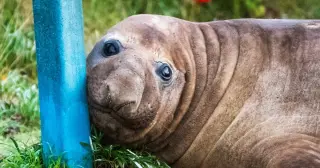
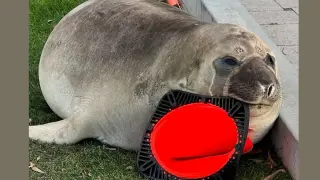
Neil, a five-and-a-half-year-old southern elephant seal in Hobart, Tasmania, now weighs about 1,000 kg and has become a viral sensation with millions following his antics. While shedding, he rubs against surfaces and frequently rests on or knocks over traffic cones placed around him, prompting safety measures. Officials say the behavior is natural during shedding and use non-harmful methods to move him away from hazards, urging onlookers to keep roughly 20 meters away. As he grows bigger, researchers warn he could become more aggressive or territorial, making close observation essential as next year’s growth continues.

Tasmanian births extend humpback calving zone by 1,500 km
science4 months ago

Tasmanian births extend humpback calving zone by 1,500 km

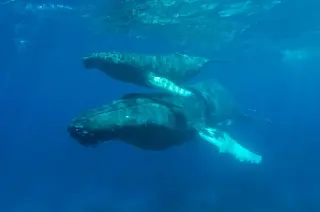
A 2025 UNSW-led Frontiers in Marine Science study analyzed neonate humpback calves across Australia and New Zealand, finding newborns well south of the previously accepted calving limit—up to 43°S in Tasmania—extending the observed calving area by about 1,500 km and showing some mothers birth during migration and continue north with their calves. This challenges the tidy model of migration with a fixed birth zone, has conservation implications due to exposure to ships and fishing along the extended route, and calls for further research on how often mid‑migration births occur and calf survival compared with births in traditional warmer grounds.

Tasmania’s Night and Tide: Meet the 2026 Beaker Street Science Photography Finalists
photography5 months ago

Tasmania’s Night and Tide: Meet the 2026 Beaker Street Science Photography Finalists

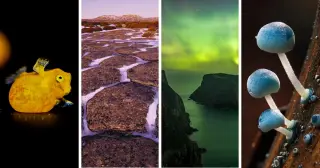
The Beaker Street Science Photography Prize 2026 has announced 16 finalists spanning endangered species, deep-sea life, dark-sky preservation and other natural phenomena. Highlights include Brett Guy’s The Holy Grail (bioluminescent algae, a subtle aurora, and the Milky Way) and Armando Ochoa Aguilar’s First Day (red handfish hatchlings). The lineup also features images exploring Tasmanian geology, wildlife conservation efforts, and atmospheric/oceanic forces. Public voting is open online, with top images to be shown at the Beaker Street Festival’s August exhibition (Aug 6–17, 2026) and winners announced during the event.

Tasmania to Host a 52-Foot Monolith That Records Humanity’s Downfall
climate-change5 months ago

Tasmania to Host a 52-Foot Monolith That Records Humanity’s Downfall

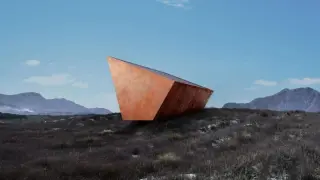
Australian nonprofit Rouser Lab is building Earth’s Black Box, a 52-foot monolith designed to continuously log data on planetary health from space agencies, weather services, and universities and store it as Earth’s Vital Index. Planned for installation at a remote Tasmanian airfield by December, the device aims to provide an objective real-time archive of events leading to environmental collapse to spur accountability and action, though critics note the abundance of open climate data and question its practical usefulness. The project also includes the Climate S.O.S. techno-obelisk concept that would transmit a distress call into space in hopes of attracting help from alien civilizations.