Tag

Core Mantle Boundary

All articles tagged with #core mantle boundary

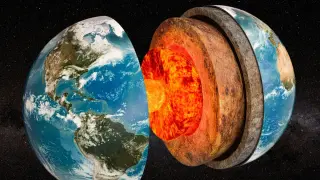
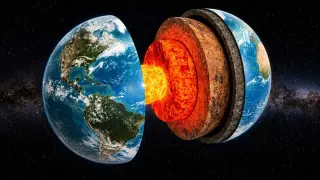
Hawaii rocks reveal a faint signal from Earth’s core crossing into the mantle
science18 days ago

Hawaii rocks reveal a faint signal from Earth’s core crossing into the mantle

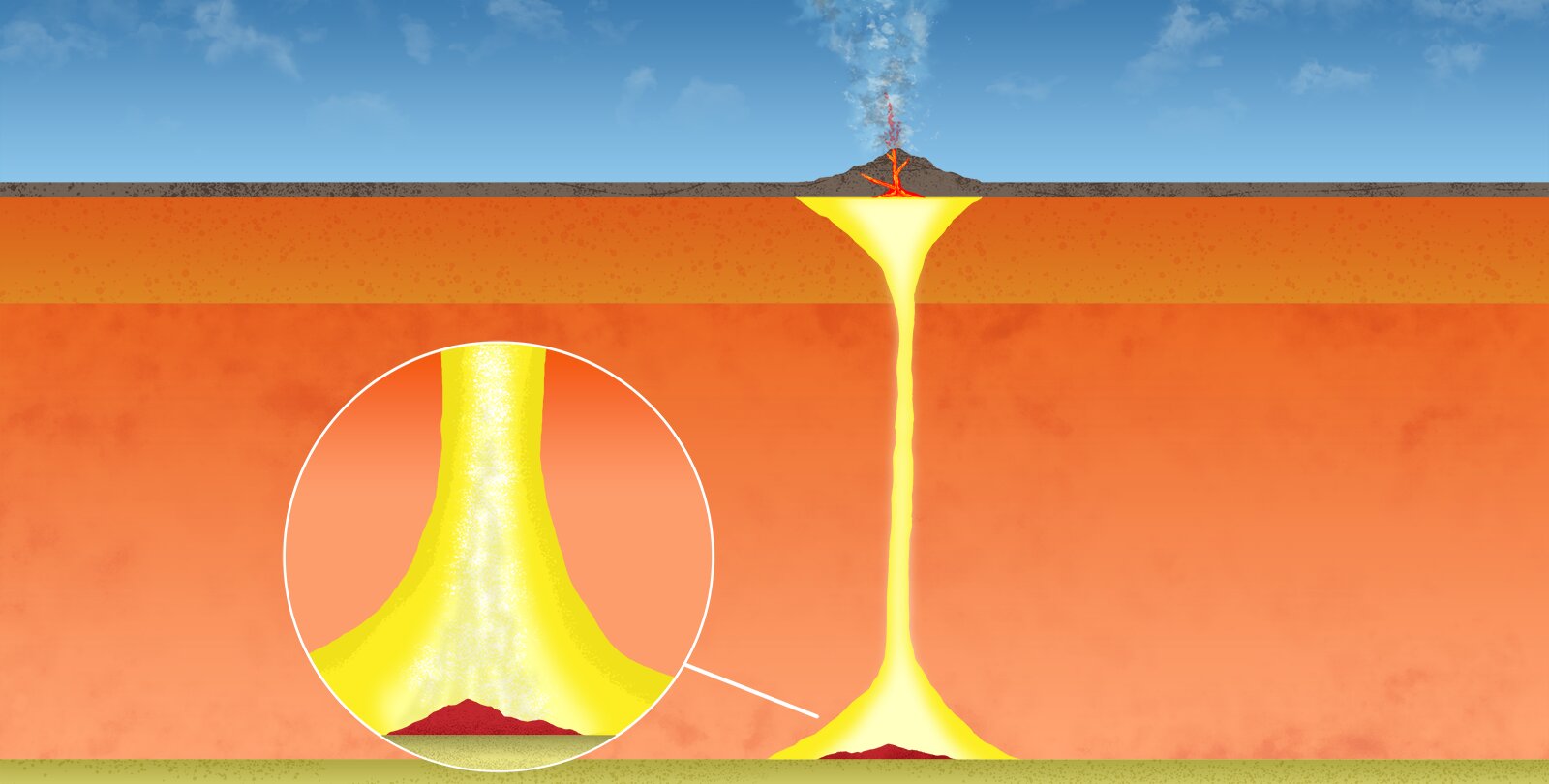
A 2025 ruthenium-isotope study of Hawaiian basalts finds a small core-derived signal in the mantle, suggesting material from Earth’s core can cross the core–mantle boundary and reach surface plume systems. This supports long-standing ideas of core–mantle exchange but does not show direct transport of gold or imply a large, exploitable flux. The finding adds nuance to the notion that the core is sealed, and while it aligns with estimates that the core holds most of Earth’s gold (enough, in old calculations, to coat continents in a 0.5 m layer), the signal is tiny and more measurements from Hawaii and other hotspots are needed to gauge its extent.

Tiny core signal found in Hawaiian lava shows Earth's interior isn't sealed
science1 month ago

Tiny core signal found in Hawaiian lava shows Earth's interior isn't sealed

Geochemists detected a core-like ruthenium-100 isotope signature in Hawaiian basalts, indicating trace amounts of Earth’s core material mix into the mantle plume feeding Hawaii’s volcanism. While this supports the idea that the core is not fully isolated from the mantle, the signal is tiny and gold itself was not enriched in the rocks, so there’s no mining implication. The finding suggests a leaky core–mantle boundary and raises questions about whether similar core-derived signatures appear in other deep-mantle plumes.

Core-reflected seismic pulse may have nudged Japan after the 2011 megathrust quake
science2 months ago

Core-reflected seismic pulse may have nudged Japan after the 2011 megathrust quake

Analysis of Japan’s GNSS data from the 2011 magnitude-9.0 Tōhoku earthquake suggests a seismic wave returning from the core–mantle boundary (ScS) may have triggered a broad, millimeter-to-centimeter fault slip across a large plate boundary, producing tiny but detectable eastward shifts and an energy release comparable to a magnitude 7.5 quake, potentially the first known example of wave-triggered slip from a core-reflected seismic wave; findings published in Science.

Mercury’s Hidden Diamond Layer Redefines Its Inner Story
astronomy3 months ago

Mercury’s Hidden Diamond Layer Redefines Its Inner Story

A study suggests Mercury might contain a 9–11 mile (15–18 km) thick diamond layer at the core–mantle boundary, formed as carbon-rich material crystallized during magma-ocean cooling and core solidification, with sulfur facilitating diamond stability; such a layer could affect heat flow and Mercury’s magnetic field, but the idea awaits confirmation from future missions.

Earth’s Deep Mantle Giants Reshape the Height Chart: 1,000-km Structures Beneath Africa and the Pacific
science5 months ago

Earth’s Deep Mantle Giants Reshape the Height Chart: 1,000-km Structures Beneath Africa and the Pacific

A Utrecht University study using full-planet normal-mode seismology reveals two Large Low Shear Velocity Provinces beneath Africa and the central Pacific, rising about 1,000 kilometers from the core–mantle boundary. These thermochemical structures, billions of years old, appear to anchor mantle flow and influence surface tectonics; they are not surface mountains, but if placed at the surface they would extend high into the atmosphere, effectively redefining what counts as Earth's tallest feature.

Deep-Earth Phase Shift Behind Mysterious Gravity Glitches
science5 months ago

Deep-Earth Phase Shift Behind Mysterious Gravity Glitches

NASA/DLR GRACE data showed a deep mantle gravity anomaly from 2006–2008 stretching across the eastern Atlantic. Scientists traced the signal to a phase transition in bridgmanite near the core–mantle boundary, where mineral structure changes redistribute mass and alter density. This deep-seated gravitational anomaly, not fully explained by surface water, helps explain previous geomagnetic-field–related gravity fluctuations and will guide models of core–mantle dynamics and mantle convection.

Scientists Detect Massive Internal Shift Within the Earth
science10 months ago

Scientists Detect Massive Internal Shift Within the Earth

Scientists analyzing data from NASA's GRACE satellites discovered evidence of a massive shift deep within the Earth's interior near the core-mantle boundary, possibly caused by changes in mantle minerals like perovskite, which may have influenced Earth's magnetic field and caused a geomagnetic jerk around 2007. They plan to use data from the follow-up GRACE-FO mission to further investigate these deep Earth processes.

"New Insights into Earth's Mysterious D” Layer from Ancient Ocean Relics"
science2 years ago

"New Insights into Earth's Mysterious D” Layer from Ancient Ocean Relics"

A new study suggests that Earth's mysterious D” layer near the core-mantle boundary may have formed from a magma ocean created by a massive impact in the planet's early days. This layer's unique composition and heterogeneity could be explained by the presence of iron-magnesium peroxide, formed from water in the magma ocean, which has a strong affinity for iron and contributes to the D” layer's distinct geophysical features.

Unveiling Earth's Mysterious New Layer: A Changing Core Phenomenon
earth-science2 years ago

Unveiling Earth's Mysterious New Layer: A Changing Core Phenomenon

New research reveals that water from Earth's surface can penetrate deep into the planet, causing a chemical interaction at the core-mantle boundary. This interaction creates a thin layer of material, known as the 'E prime' layer, which has puzzled geologists for decades. The study shows that water reacts with silicon in the core, forming silica and creating a top core layer rich in hydrogen. The presence of this layer affects the density and seismic speeds of the outer core, potentially impacting Earth's magnetic field and the global water cycle. The findings suggest a more dynamic core-mantle interaction and a complex water cycle within the planet.

Unyielding Iron Oxide: Surviving Earth's Harshest Conditions
earth-science2 years ago

Unyielding Iron Oxide: Surviving Earth's Harshest Conditions

Scientists have long been intrigued by the ultralow velocity zones (ULVZs) near the core-mantle boundary (CMB) of the Earth, but their composition and behavior have remained a mystery. A recent study led by Caltech researchers has provided evidence that these regions, which slow down seismic waves, may be composed of solid iron oxide. The study used experiments to determine the temperatures and pressures at which iron oxide transitions from a solid to a liquid state, and found that it remains solid even at extreme conditions similar to those at the CMB. The findings shed light on the complex nature of the Earth's deep interior and its influence on geological processes.

Earth's Surface Water Transforms Core's Outer Layer
earth-science2 years ago

Earth's Surface Water Transforms Core's Outer Layer

Researchers have discovered that water from Earth's surface can penetrate deep into the planet, reaching the core-mantle boundary and triggering a chemical reaction that alters the composition of the outermost region of the metallic liquid core. This reaction forms a distinct layer, rich in hydrogen and depleted in silicon, which creates a film-like structure. The discovery suggests a more extensive global water cycle and highlights the dynamic interaction between Earth's core and mantle, with implications for geochemical cycles connecting the surface-water cycle with the deep metallic core.

Unraveling the Enigmatic Secrets of Earth's Core
science2 years ago

Unraveling the Enigmatic Secrets of Earth's Core

Recent studies have revealed surprising discoveries about Earth's core, suggesting that it may be spinning and encased by an ancient ocean floor. The core's magnetic field, crucial for protecting our planet from solar radiation, has been weakening over the past 50 years, particularly in the South Atlantic Anomaly. Scientists are puzzled by this anomaly and its split into two blobs. Additionally, the temperature at the boundary between the mantle and the core shoots up, indicating the presence of an unknown layer or phenomenon. Researchers propose that bits of ancient ocean floors may be wrapped around the core, providing a potential explanation.

Unveiling Earth's Enigmatic Subterranean Giants: Core's Towering Underground 'Mountains'
earth-science3 years ago

Unveiling Earth's Enigmatic Subterranean Giants: Core's Towering Underground 'Mountains'

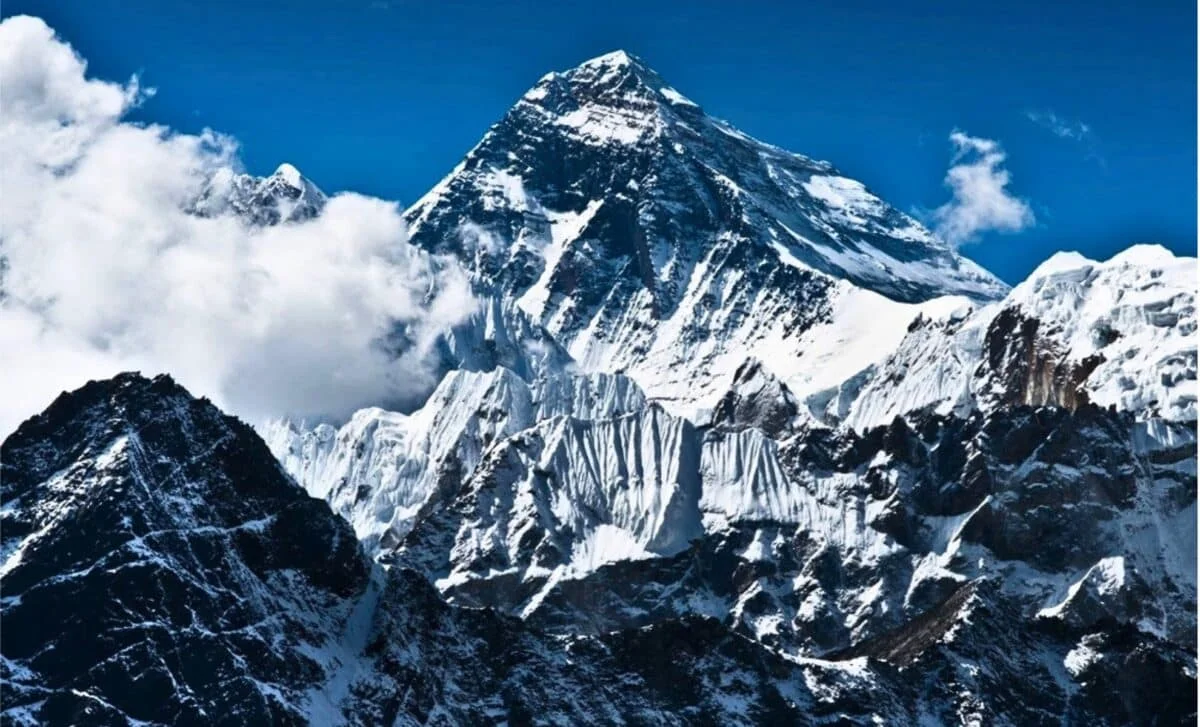
Scientists have discovered an ancient layer between the Earth's core and mantle, known as the Core Mantle Boundary, which could contain underground mountains up to five times taller than Mount Everest. This layer, composed of dense, subducted ocean floor, slows seismic waves and could play a significant role in heat escape from the Earth's core and the generation of magnetic fields and volcanic eruptions. Further research is needed to determine the extent of this layer and its impact on Earth's processes.

Enormous Mountains Discovered Deep Within Earth's Core
science3 years ago

Enormous Mountains Discovered Deep Within Earth's Core

Scientists using seismology centers in Antarctica have identified a set of mountains within a layer inside the Earth, between the core and mantle, that are around four to five times the size of Mount Everest. This boundary was identified in 1996, but new data suggests that this jagged layer has been found to produce "mountain ranges" in many different areas, which remain a complete enigma. It is thought that this layer could be partially made up of the remains of an ancient ocean floor, in which the seabed material was sucked downwards at the border where two tectonic plates meet.

"Seismic imaging reveals ancient ocean floor surrounding Earth's core"
earth-science3 years ago

"Seismic imaging reveals ancient ocean floor surrounding Earth's core"

Seismic imaging has revealed that a massive ocean floor, likely surrounding much of Earth's core, is lodged roughly 2,000 miles below the surface, between the core and the mantle. This thin, dense layer may encompass the entire core-mantle boundary and is made up of underground mountains that allow heat to escape from Earth's molten core. The presence of this layer could buffer heat flow across the core-mantle boundary, which is important because the temperature conditions in this portion of the Earth have been shown to strongly impact the planet's magnetic field.