At Augusta National, the Masters’ food culture is a highlight as storied as the tournament itself—affordable on-course bites like $1.50 pimento-cheese sandwiches sit alongside exclusive private-chef dinners, with ESPN’s Marty Smith illustrating the ritual of oatmeal mornings and post-work beers that frame the week.
A study of 1,647 adults over about 12 years found that closer adherence to the MIND diet (Mediterranean–DASH Diet) is linked to slower brain aging: every 3-point increase in the diet score corresponded to 20% less gray-matter loss (roughly 2.5 years of delay) and 8% less ventricular enlargement (about 1 year). Berries and poultry were key contributors; sweets and fried foods worsened hippocampal health. Unexpectedly, higher whole-grain intake was linked to faster decline, while higher cheese intake was associated with slower gray-matter and hippocampal loss and less ventricular enlargement—a notable exception to the diet’s usual limits. Benefits were stronger among older individuals, those who were physically active, and those not overweight, suggesting diet works with other healthy habits to protect brain structure.
A study analyzing wall-attached gut bacteria from colon biopsies finds dairy foods can have both positive and negative effects on the gut microbiome: higher total dairy and milk intake were associated with greater bacterial diversity and higher levels of beneficial microbes like Faecalibacterium and Akkermansia on the colon lining (with lactose likely driving part of this effect), while higher cheese intake correlated with lower levels of certain bacteria. Yogurt signals were inconclusive due to low consumption. Overall, dairy’s impact depends on the type of dairy, lactose content, fiber intake, and individual microbiome, and more diverse research is needed.
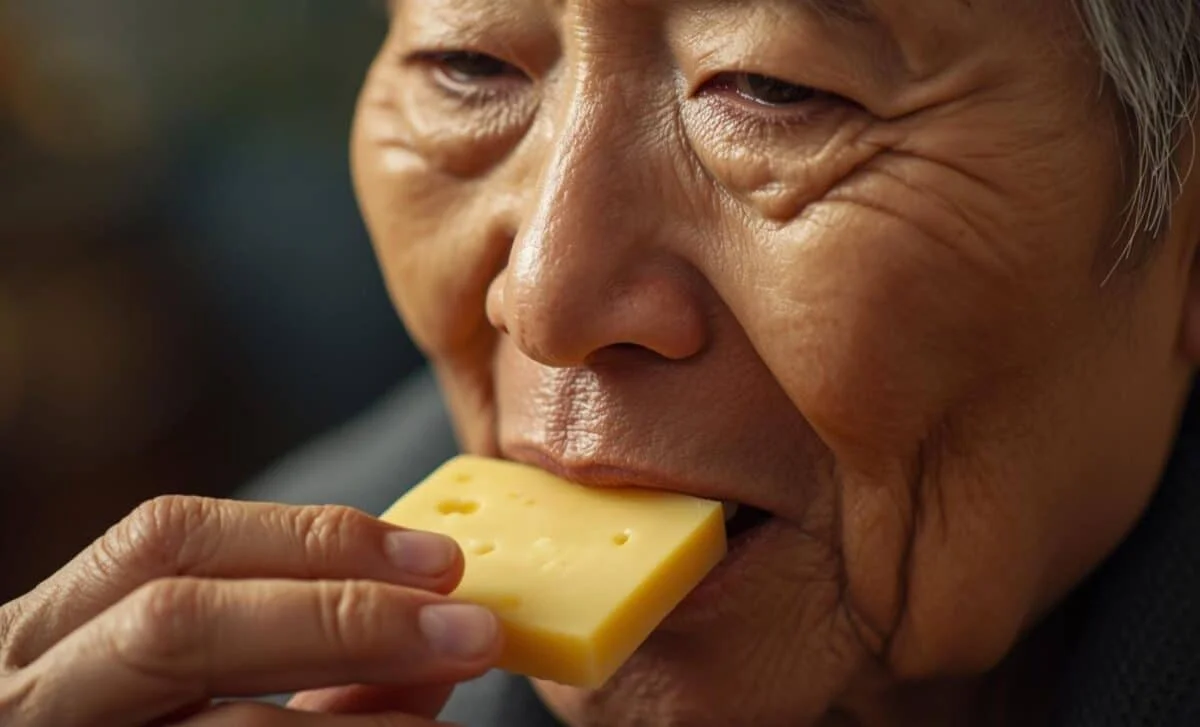
In a three-year Japanese cohort, older adults who ate cheese at least weekly showed a 24% lower risk of dementia (hazard ratio 0.76) versus those who rarely/never ate cheese, based on 3,957 matched pairs from nearly 8,000 participants. The association remained after adjusting for overall diet quality but remains observational and not causal. Most cheese consumed was processed, and researchers note potential biological pathways (e.g., vitamin K2, gut-brain axis) while acknowledging limitations such as baseline-only intake data and dementia measured via long-term care records.
Two senior cats, Xena the orange cat and her 16-year-old sister Cheese, stage a slow-motion face-off that TikTok viewers found endearingly funny, complete with witty captions and a Calico spectator in the background.
A 25-year Swedish study of 27,670 adults found that higher intake of full-fat cheese (>50 g/day) was associated with a 13%–17% lower risk of Alzheimer's in those without a genetic risk, while higher full-fat cream (>20 g/day) was linked to a 16%–24% lower risk of dementia overall; no stronger links were found for low-fat dairy. The findings likely reflect healthier overall diets and lifestyle, possible substitution effects, and population differences, not a causal protective effect of dairy. Researchers also accounted for early dementia by excluding cases at baseline and reanalyzing after removing early incident cases.
A large health study using UK Biobank and FinnGen data finds cheese consumption is associated with a 28% lower risk of sleep apnea, with researchers applying Mendelian randomization to explore causality and identifying several biomarkers potentially mediating the effect; experts caution that correlation is not causation and advise moderation and standard sleep apnea guidance from clinicians.
A 25-year Swedish study of 27,670 adults found that higher consumption of full-fat cheese (>50 g/day) and cream (>20 g/day) was linked to a modestly lower risk of dementia, especially Alzheimer’s, among those without genetic risk, with no similar benefit seen for other dairy. Authors caution the results likely reflect healthier overall dietary patterns and lifestyle, rather than a protective effect of dairy itself, and substitution effects (replacing red/processed meat with dairy) may influence findings. The study reinforces that dietary patterns—such as Mediterranean-style eating—are more important than any single food, and while dairy supplies brain-relevant nutrients, the evidence does not justify large increases in cheese or cream for dementia prevention.
The FDA upgraded a nationwide cheese recall to Class I—the agency’s most serious risk category—after detecting Listeria monocytogenes at The Ambriola Company's New Jersey facility. While no illnesses have been confirmed, the recall’s escalation signals potential serious health risks for vulnerable groups. The affected products span multiple brands and formats (consumer packs and by-the-pound), including Locatelli Pecorino Romano, Boar’s Head, and others, totaling thousands of units recalled across numerous lot numbers.
A Swedish study suggests that higher consumption of full-fat cheese and cream may be linked to a lower risk of dementia, especially among those without genetic risk factors, but results should be interpreted with caution as overall diet and lifestyle factors play a significant role in brain health.
A study published in Neurology found that consuming high-fat cheese and cream is associated with a reduced risk of developing dementia, with those eating such cheeses having up to 16% lower risk. The research analyzed data from over 27,000 people and suggests that moderate intake of certain high-fat cheeses may benefit brain health, though moderation is advised due to potential impacts on cholesterol and heart health.
A 25-year Swedish study found that consuming 50 grams or more of high-fat cheese daily is associated with a 13% lower risk of developing dementia, challenging traditional views on dietary fats and brain health, though more research is needed to understand the mechanisms involved.
A Golden Retriever named Bentley humorously reacts with a sad face when no one pays the 'cheese tax' at a party, capturing hearts online with his expressive disappointment over missing out on cheese treats.
A 25-year Swedish study suggests that consuming higher amounts of high-fat cheese and cream may be linked to a lower risk of dementia, particularly vascular dementia, though the findings are observational and do not establish causation. The benefits were not seen with low-fat dairy or milk, and genetic factors like the APOE ε4 variant may influence individual responses. Experts advise moderation and caution against making major dietary changes based solely on this study.
A Japanese observational study suggests a modest association between cheese consumption and reduced dementia risk, but the effect size is small and influenced by regional dietary habits, with experts cautioning that cheese alone is not a protective factor and emphasizing moderation and overall diet quality.