Tag

Eye Disease

All articles tagged with #eye disease

Johnson & Johnson in Talks to Acquire Ollin Biosciences for Up to $3.4 Billion
business8 days ago

Johnson & Johnson in Talks to Acquire Ollin Biosciences for Up to $3.4 Billion

Johnson & Johnson is reportedly nearing a deal to acquire privately held biotech firm Ollin Biosciences for up to $3.4 billion. The transaction, which could be announced as early as Monday, involves an upfront cash payment of $2.2 billion plus potential milestone payments of $1.2 billion. Ollin is developing a lead drug, OLN324, for wet age-related macular degeneration and diabetic macular oedema, conditions that cause severe vision loss. This acquisition would give Johnson & Johnson a significant entry into the retinal disease market, an area where the company currently has limited presence despite its large contact lens business. The deal is part of a broader trend of bolt-on acquisitions in the biotechnology sector, with 46 biotechs valued over $1 billion sold this year, surpassing the previous annual record. Johnson & Johnson shares have risen 38 percent this year, reaching a market capitalization of nearly $688 billion. While talks are advanced, sources caution that negotiations could still collapse. Ollin, backed by Arch Venture Partners and Mubadala Capital, raised $330 million earlier this year to fund phase 3 trials. Other major pharmaceutical groups, including Merck and Bayer, have also been expanding into eye disease medicines, following the success of Regeneron’s blockbuster drug Eylea.

Seafood Virus CMNV Linked to Emerging Human Eye Disease
science7 months ago

Seafood Virus CMNV Linked to Emerging Human Eye Disease

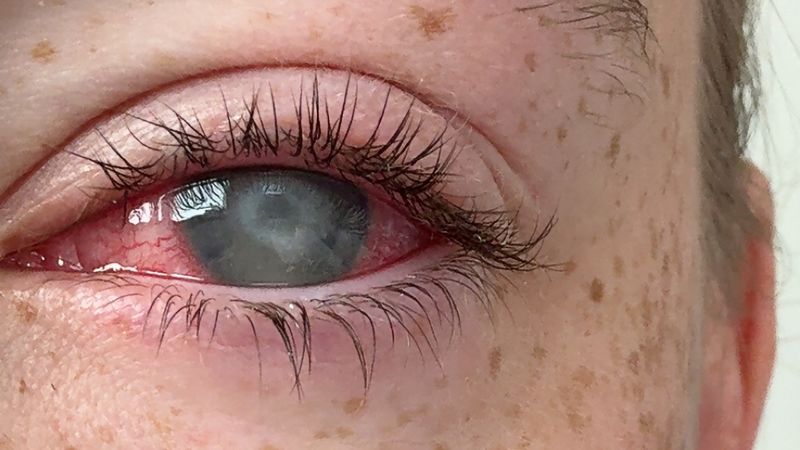
A Nature Microbiology study links the shrimp-associated virus CMNV to an emerging human eye disease called POH-VAU, finding CMNV-like particles and antibodies in patients and showing similar symptoms in CMNV-infected mice; most cases involved direct exposure to raw seafood, but some occurred without clear exposure, raising concerns about potential human transmission and ocean-based zoonoses, with CMNV detected in 49 aquatic species—more research is needed to confirm causality.

Pig semen exosomes shown to shuttle chemo to back-of-eye cancer in mice
health7 months ago

Pig semen exosomes shown to shuttle chemo to back-of-eye cancer in mice

Researchers used semen-derived exosomes from pig semen to deliver a chemotherapy-like payload to the retina in a mouse model of retinoblastoma, via eye drops. The approach successfully reached the back of the eye and reduced tumor size after 30 days, suggesting a potential noninvasive treatment route for this pediatric eye cancer, though safety and effectiveness in humans remain to be tested in trials.

New Insights into Early Detection and Impact of Diabetes on Eye Health
health1 year ago

New Insights into Early Detection and Impact of Diabetes on Eye Health

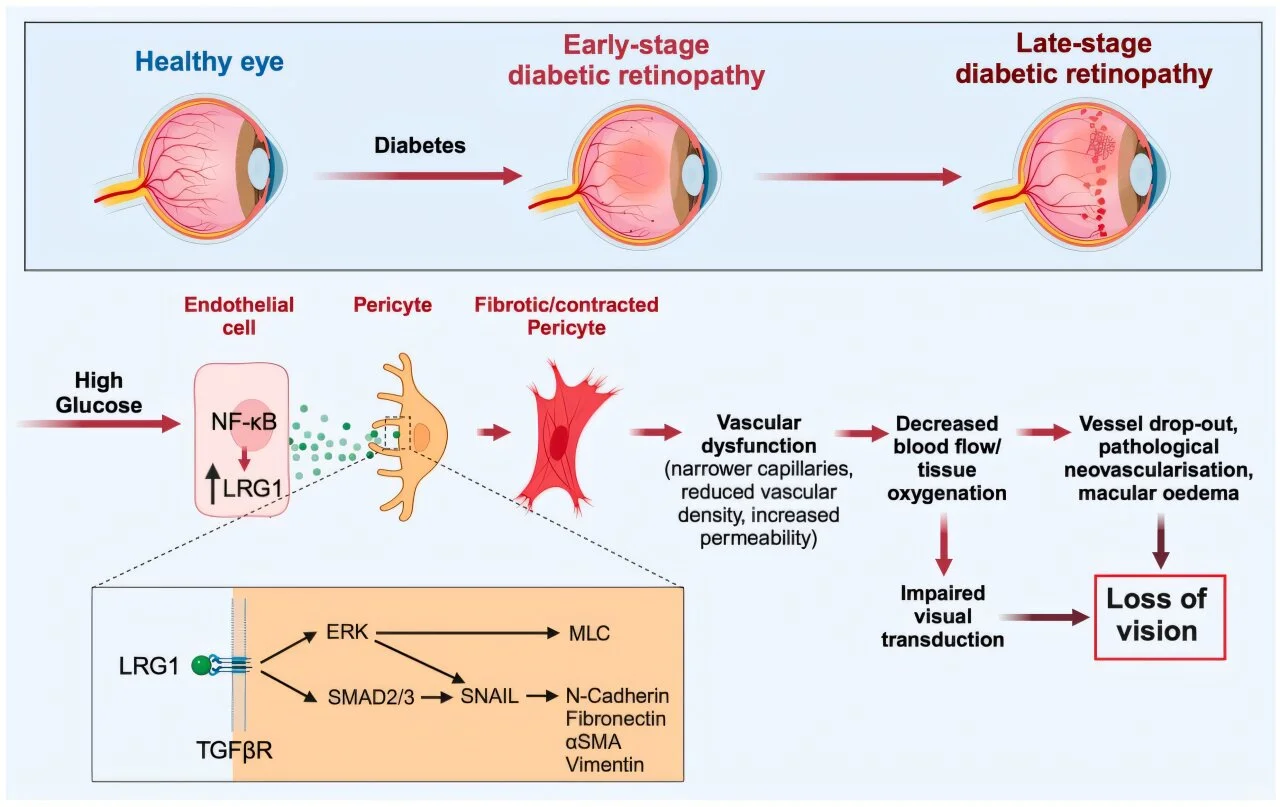
UCL scientists have identified the protein LRG1 as a key early trigger of diabetic retinopathy, suggesting that targeting this protein could prevent vision loss in people with diabetes before irreversible damage occurs. A drug targeting LRG1 is already in pre-clinical development, offering hope for more effective early intervention compared to current treatments.

Vision Scientist Teresa Puthussery Awarded MacArthur Genius Grant
science1 year ago

Vision Scientist Teresa Puthussery Awarded MacArthur Genius Grant

Teresa Puthussery, a UC Berkeley vision scientist, received the 2025 MacArthur 'genius' award for her groundbreaking research on retinal cells, which could lead to new treatments for eye diseases and vision restoration. Her work focuses on understanding how different retinal cells encode visual information and developing innovative therapies for degenerative eye conditions.

GLP-1 Drugs May Increase Risk of Serious Eye Disease in Diabetics
health1 year ago

GLP-1 Drugs May Increase Risk of Serious Eye Disease in Diabetics

A new observational study suggests that GLP-1 drugs, used for diabetes and weight management, may be linked to a doubled risk of developing a serious eye condition called neovascular age-related macular degeneration, which can lead to blindness, especially in older adults. While the absolute risk remains low, the findings raise concerns about eye health and highlight the need for further research and monitoring for patients on these medications.

Eye Clock: A Revolutionary Tool to Assess Disease Risk Based on Age
health3 years ago

Eye Clock: A Revolutionary Tool to Assess Disease Risk Based on Age

Scientists from Stanford University have developed a new tool for determining the age of eye cells without the need for tissue sampling, potentially leading to more personalized and targeted treatments for eye diseases. By analyzing eye fluid, an artificial intelligence system was trained to predict a person's age based on the proteins detected in the fluid. The researchers also identified specific proteins linked to eye aging and found that certain eye diseases could accelerate cell aging. This new approach could provide valuable biomarkers for treating and preventing diseases in various parts of the body, not just the eyes.

Boosting Vision in Preterm Babies with Omega Fatty Acids
health3 years ago

Boosting Vision in Preterm Babies with Omega Fatty Acids

A study conducted in Sweden involving 178 extremely preterm babies found that those given a combination of omega-3 and omega-6 fatty acid supplements showed improved visual function by age two and a half. The supplement not only reduced the risk of a sight-threatening eye disease but also appeared to enhance the brain's ability to interpret visual stimuli. These findings could influence new guidelines for neonatal care regarding the administration of fatty acid supplements to extremely preterm babies.

FDA Approves Higher Dose of Eylea for Eye Disease Treatment
healthcare3 years ago

FDA Approves Higher Dose of Eylea for Eye Disease Treatment

The U.S. Food and Drug Administration (FDA) has approved a higher dose version of Regeneron Pharmaceuticals' drug Eylea for the treatment of wet age-related macular degeneration (AMD), diabetic macular edema (DME), and diabetic retinopathy (DR). The higher dose, known as Eylea HD, is priced at $2,625 per single-use vial in the U.S. and has been shown to be as effective as the lower dose version in late-stage trials. The FDA had previously declined to approve the higher dose version due to outstanding questions regarding a third-party manufacturer, but those issues have now been addressed.

Apellis Eye Drug Safety Review Reveals Link to Rare Blindness Cases
health3 years ago

Apellis Eye Drug Safety Review Reveals Link to Rare Blindness Cases

Five elderly patients have experienced blindness in one eye after receiving injections of Apellis Pharmaceuticals' newly approved eye disease treatment, Syfovre. The cause of this severe side effect, a type of eye inflammation, is still unknown. Apellis conducted its own internal review, finding fewer cases of the severe eye inflammation, but maintains that the rate of occurrence remains very rare and there is no evidence linking the drug or its manufacturing to the side effect.

Henry Winkler on How 'The Fonz' Would React to His 'Barry' Character
entertainment3 years ago

Henry Winkler on How 'The Fonz' Would React to His 'Barry' Character

Henry Winkler, known for his roles in Happy Days, Arrested Development, and HBO's Barry, is partnering with Apellis to raise awareness about geographic atrophy, an advanced form of macular degeneration. He shares his family's experience with the disease and encourages older adults to have their eyes checked. Winkler also discusses his new memoir, Being Henry ... The Fonz and Beyond, and his thoughts on his Barry character, Gene Cousineau. The fourth and final season of Barry premiered on Sunday, and Winkler reflects on the end of the show and his past experiences with Happy Days and Arrested Development.