Tag

Galaxy Cluster

All articles tagged with #galaxy cluster

JWST peeks 4.4-billion-year-old galaxy cluster, a cosmic time machine
space1 month ago

JWST peeks 4.4-billion-year-old galaxy cluster, a cosmic time machine

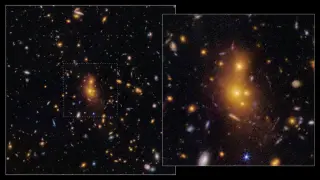
The James Webb Space Telescope captured the galaxy cluster MACS J0553.4-3342, formed about 4.4 billion years ago using its near‑infrared camera (NIRCam). The article highlights JWST’s ability to serve as a time machine by viewing light that has traveled across cosmic distances, revealing a cluster in its formative stages, a capability that extends beyond what Hubble has shown. It also reminds readers that light from stars visible to the naked eye has similarly traveled huge distances to reach us, offering a glimpse into the universe’s past both through advanced telescopes and everyday starlight.
LOFAR maps the magnetic backbone of a galaxy cluster for the first time
astronomy1 month ago

LOFAR maps the magnetic backbone of a galaxy cluster for the first time

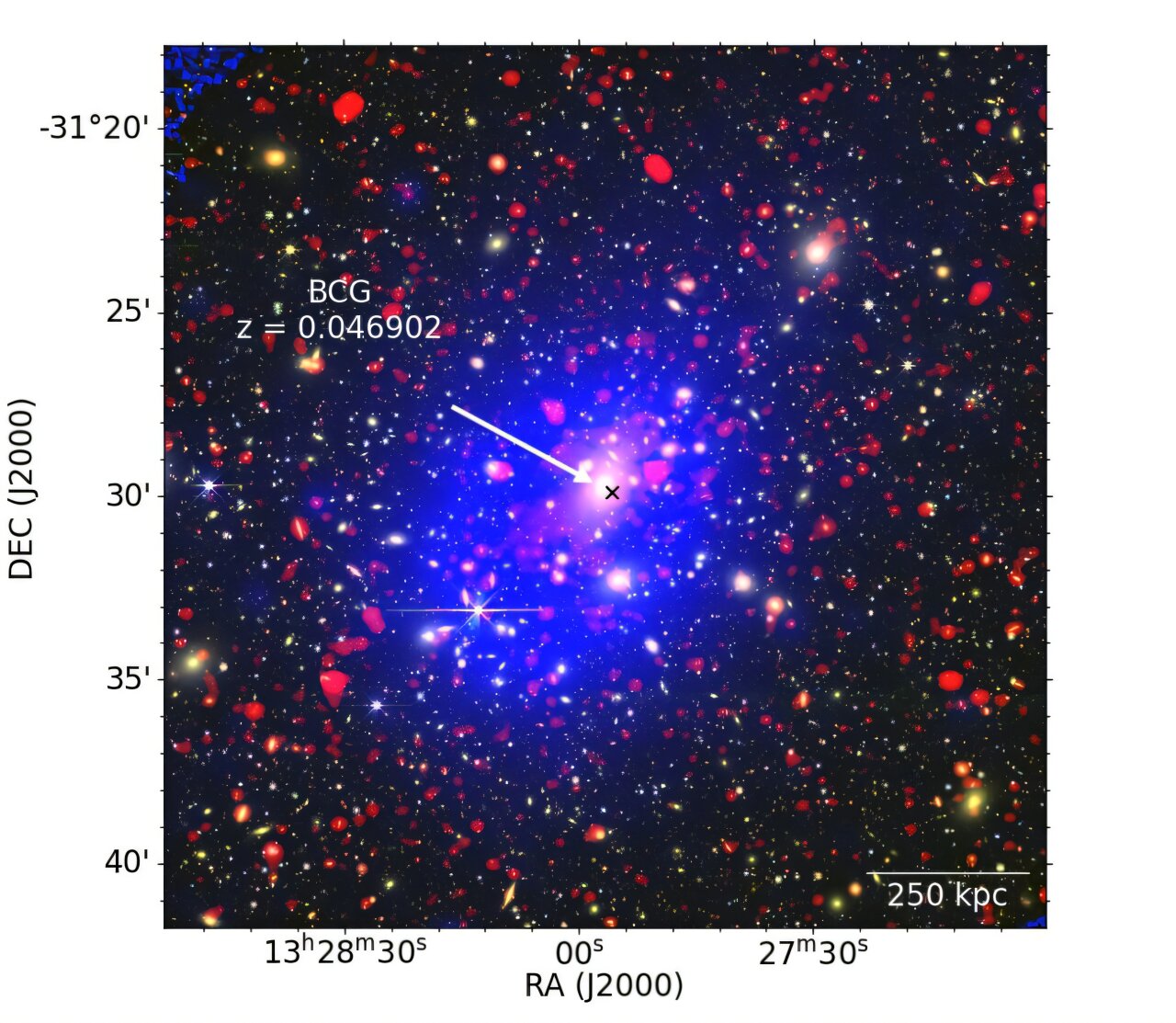
Using 224 hours of LOFAR radio observations, astronomers produced the deepest map yet of the galaxy cluster Abell 2255 and reconstructed its magnetic field from core to outskirts for the first time. The results show the magnetic field is shaped by gas motions during cluster formation, with field lines tracing extended radio emissions and showing tangential orientations in regions affected by shocks, providing new insight into how magnetic fields and the largest cosmic structures grow. The study is accepted for publication in Astronomy & Astrophysics and is available on arXiv.

Dormant supermassive black hole reawakens, unleashing a fresh jet across a million light-years
space1 month ago

Dormant supermassive black hole reawakens, unleashing a fresh jet across a million light-years

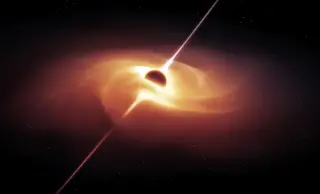
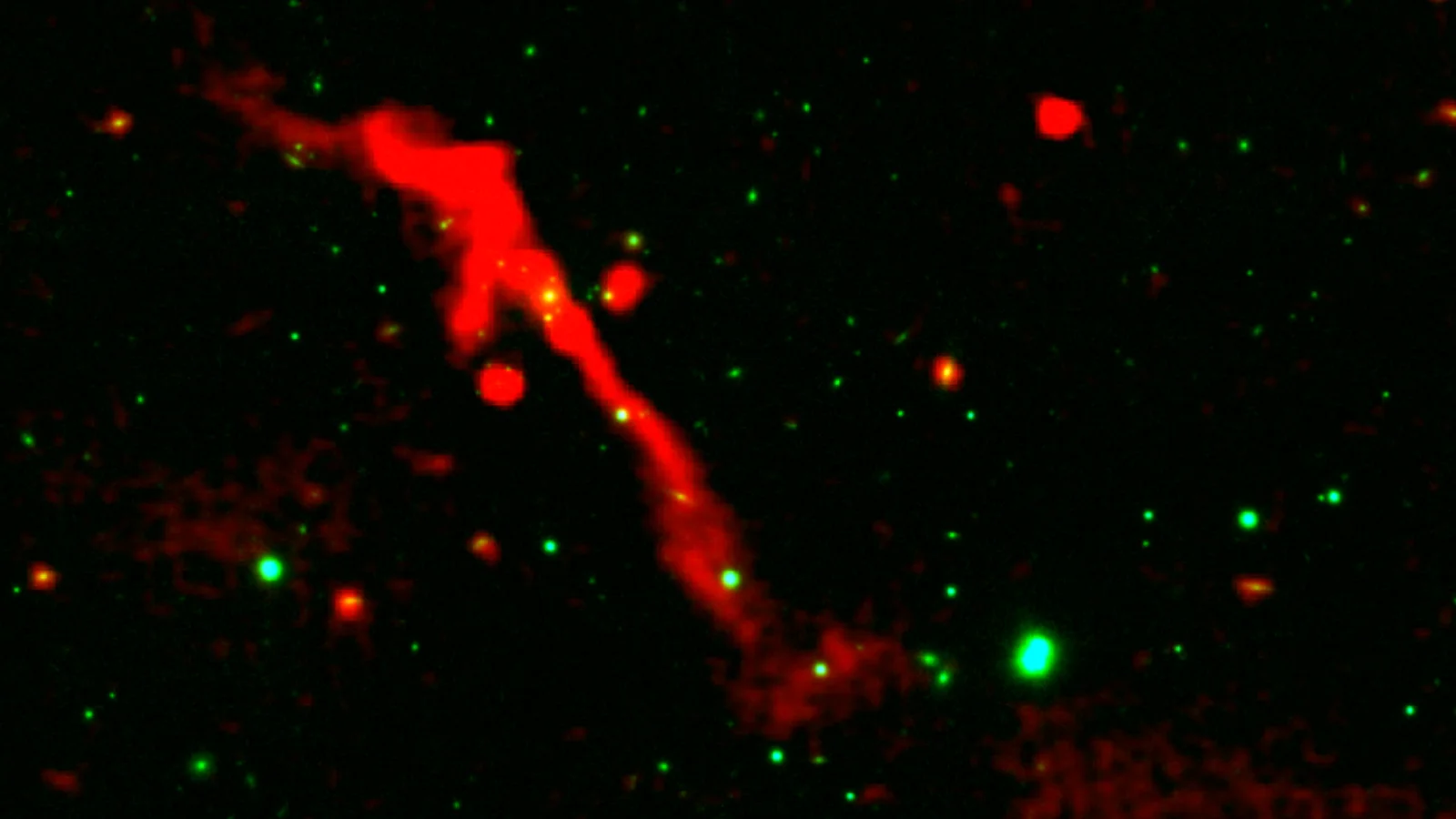
Astronomers observed galaxy J1007+3540 in the WHL 100706.4+354041 cluster, where a supermassive black hole that had been dormant for about 100 million years has restarted activity, producing a new, bright jet alongside older, faded radio lobes from a prior active phase. Using LOFAR and the upgraded GMRT, the team found the outer, low-frequency lobes are ~240 million years old while a younger inner jet is ~140 million years old, indicating episodic AGN activity. The jets are being distorted by the hot intracluster medium, illustrating how environment shapes jet evolution and confirming that some supermassive black holes cycle between active and dormant states on hundreds of millions of years timescales.

Bow-and-Arrow Galaxy BAARG Signals Supersonic Dive into a Galaxy Cluster
space1 month ago

Bow-and-Arrow Galaxy BAARG Signals Supersonic Dive into a Galaxy Cluster

A Himalayan citizen scientist using LOFAR’s LoTSS data spotted BAARG, a colossal radio galaxy spanning about 1.8 million light-years at redshift z≈0.159. Its bow-shaped western arc and bent eastern jet are interpreted as the host elliptical plunging supersonically into a nearby cluster, producing a bow shock that reshapes the jets. BAARG sits in a crowded, multi‑halo environment near Abell 1081, offering the clearest direct radio image yet of this morphology and suggesting many more such systems will emerge with future SKA-era surveys.

James Webb Spots Ancient Galaxy Cluster Acting as a Cosmic Magnifier
space1 month ago

James Webb Spots Ancient Galaxy Cluster Acting as a Cosmic Magnifier

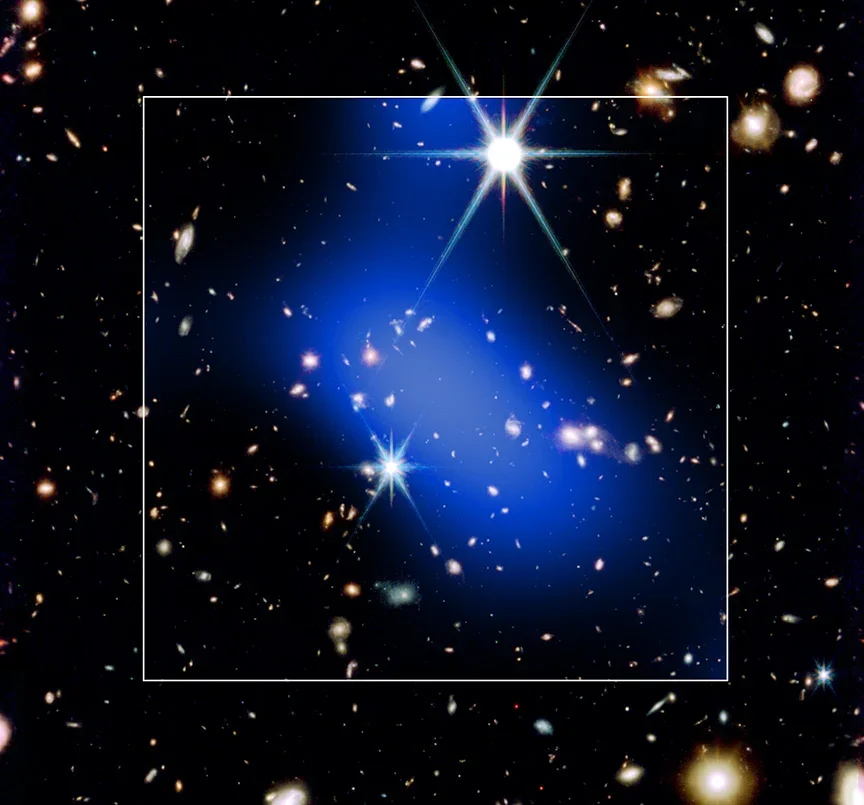
NASA’s James Webb Space Telescope has observed XLSSC 122, a massive galaxy cluster seen as it was about 10.4 billion years ago (roughly 3.4 billion years after the Big Bang). The cluster is unusually evolved, and it serves as a gravitational lens that magnifies distant background galaxies, making XLSSC 122 the most distant cluster observed with strong lensing. This finding could prompt revisions to theories of early structure formation and offers a new way to study dark matter’s distribution. The team presented their results at the 2026 American Astronomical Society meeting, highlighting JWST’s power to probe the distant universe and the potential discovery of many similar lensing clusters in the early cosmos.

Reignited black hole jets spark a million-light-year cosmic plume
space4 months ago

Reignited black hole jets spark a million-light-year cosmic plume

Astronomers observed a reborn supermassive black hole in galaxy J1007+3540, whose renewed jets after nearly 100 million years clash with the surrounding hot cluster gas, bending and compressing into structures spanning about a million light-years. LOFAR and uGMRT radio data reveal a bright inner jet inside older, faded lobes and a long faint tail shaped by the dense environment, marking a rare episodic AGN. This insight helps explain how black holes cycle on and off and how their jets sculpt their host galaxies, with plans for higher-resolution follow-up observations.

Ancient Protocluster Defies Early-Universe Timing
space6 months ago

Ancient Protocluster Defies Early-Universe Timing

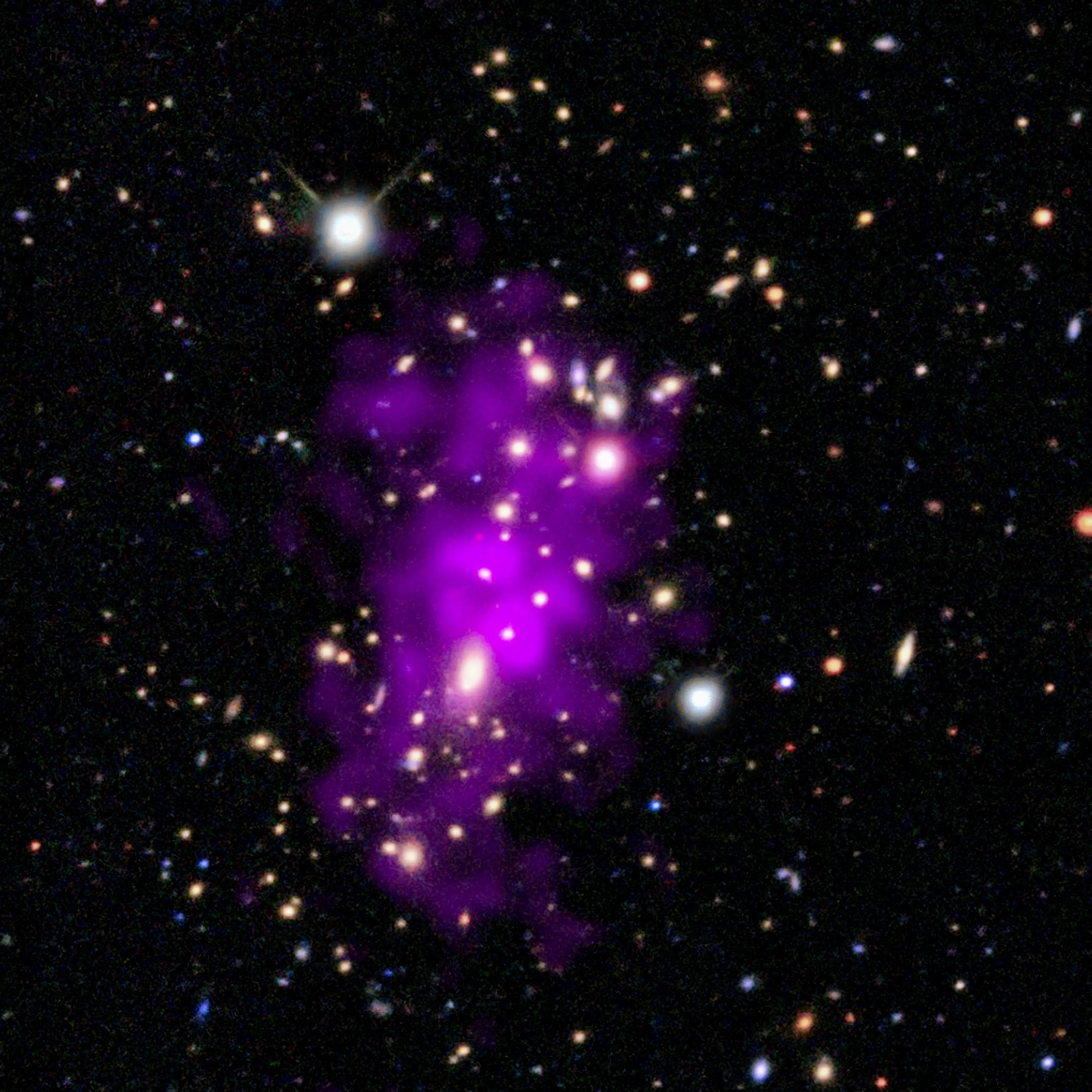
Astronomers using the James Webb Space Telescope and the Chandra X-ray Observatory identified JADES-ID1 as a protocluster with at least 66 galaxies and enveloped in million-degree gas, already amassing about 20 trillion solar masses just one billion years after the Big Bang—far earlier than models predict and prompting questions about how the universe’s largest structures form.

Dormant supermassive black hole erupts into a million-light-year jet
space7 months ago

Dormant supermassive black hole erupts into a million-light-year jet

Astronomers using LOFAR and the upgraded GMRT detected a once-dormant supermassive black hole at the heart of galaxy J1007+3540 reigniting, driving a colossal jet and an aging outer cocoon spanning about 1 million light-years. The radio structures reveal episodic AGN activity influenced by the hot gas in the surrounding galaxy cluster, illustrating how galactic nuclei turn on and off over cosmic timescales (publication: Monthly Notices of the Royal Astronomical Society).

Stunning Images Unveil the Dynamic and Mysterious Nature of Galaxy Clusters
science1 year ago

Stunning Images Unveil the Dynamic and Mysterious Nature of Galaxy Clusters

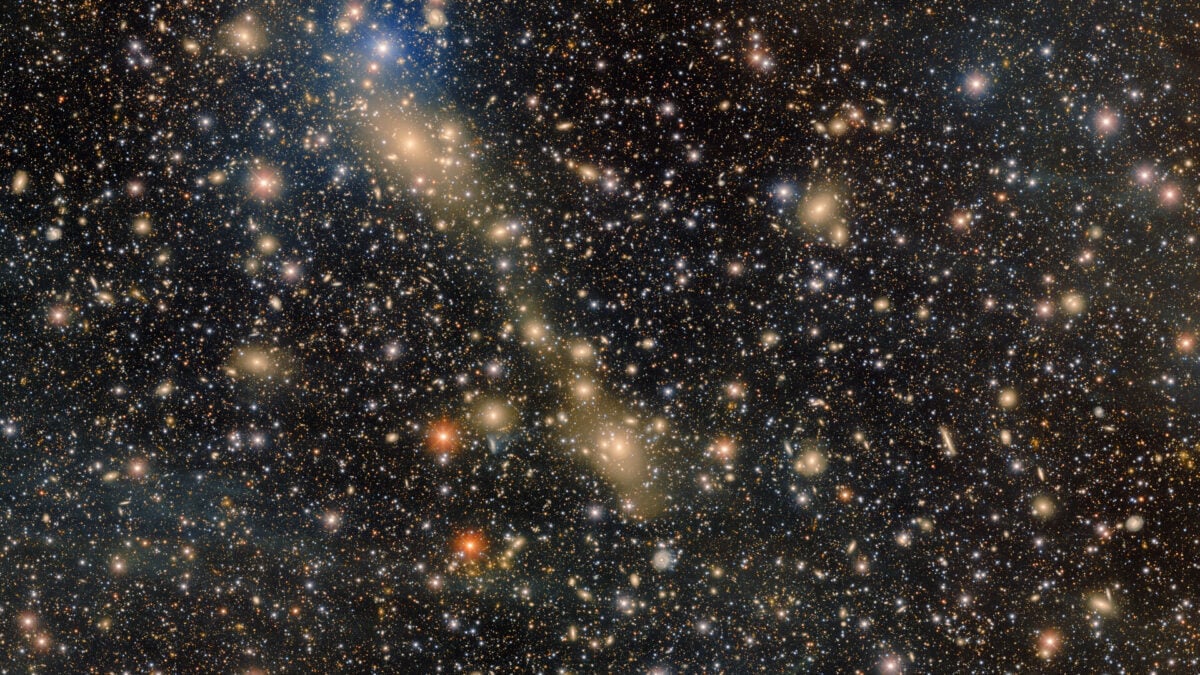
Astronomers captured the deepest-ever image of the galaxy cluster Abell 3667, revealing evidence of past galactic interactions and mergers, and highlighting our cosmic insignificance. The observation, supported by long-term data stacking and future telescopic advancements like the Rubin Telescope, promises to deepen our understanding of galaxy formation and evolution.