Tag

Homo Erectus

All articles tagged with #homo erectus

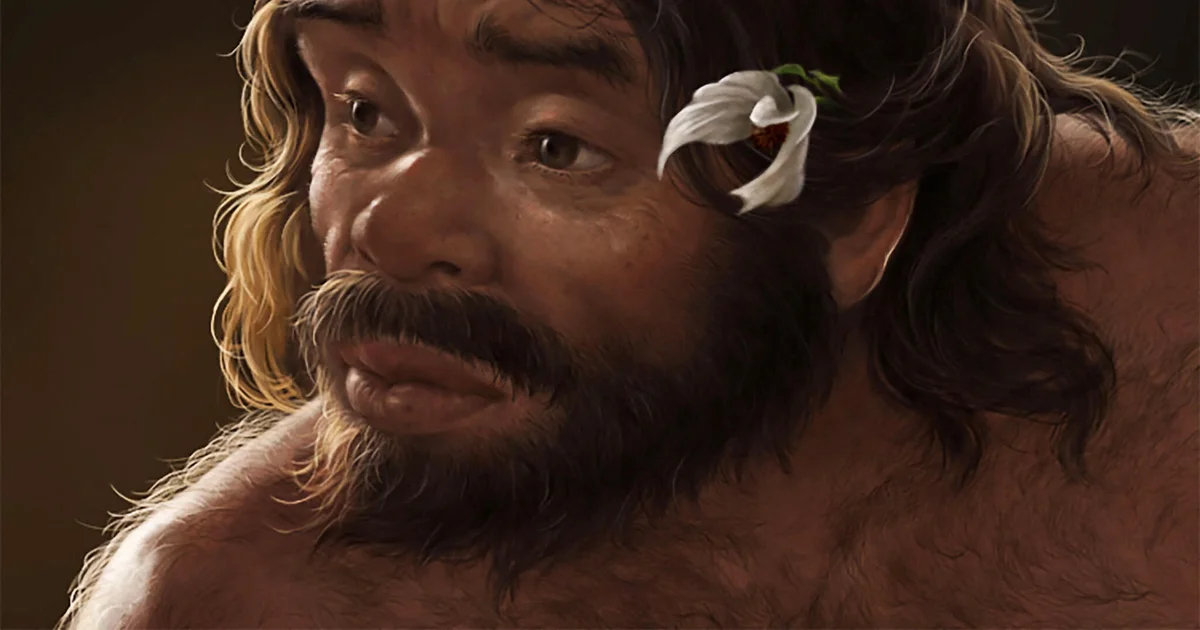
Ancient tooth proteins reveal Homo erectus left a genetic fingerprint in today’s humans
science7 days ago

Ancient tooth proteins reveal Homo erectus left a genetic fingerprint in today’s humans

Proteomic analysis of 400,000-year-old Homo erectus teeth uncovers a unique amino‑acid variant shared with Denisovans and present in modern SE Asian and Oceanian populations (about 21% in the Philippines, ~1% in India), suggesting interbreeding and a mosaic ancestry rather than a single lineage. The study highlights how paleoproteomics can reveal genetic connections from old hominin lineages and points to a broader pattern of admixture among ancient humans.

Enamel clues link Homo erectus to Denisovans in a web-like human tree
science12 days ago

Enamel clues link Homo erectus to Denisovans in a web-like human tree

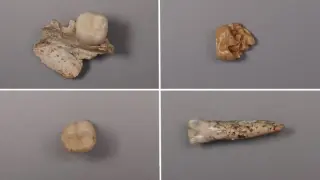
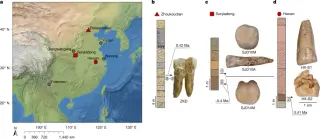
Scientists extracted ancient enamel proteins from six Homo erectus teeth found in three sites in China (about 400,000 years old) using a new, minimally invasive enamel-etching technique. They identified two shared amino acid variants, one of which also appears in Denisovans and some modern humans, suggesting interbreeding between Homo erectus, Denisovans, and Homo sapiens and supporting a networked view of human evolution. The study relied on proteins (not DNA) and analyzed teeth from Hexian and Zhoukoudian, with five males and one female identified, highlighting open questions about how these populations relate to each other.

Enamel proteins link six Chinese H. erectus to Denisovan gene flow
science12 days ago

Enamel proteins link six Chinese H. erectus to Denisovan gene flow

Ancient enamel proteomics recovered endogenous proteins from six Middle Pleistocene Homo erectus teeth across northern and southern China (~0.4 Ma) and a Denisovan tooth. The study identifies two AMBN variants: a novel AMBN A253G found in all six H. erectus samples and not in other hominins, and AMBN M273V shared with Denisovans, suggesting Denisovans may have inherited this region from an H. erectus–related population. The results imply interactions between East Asian H. erectus populations and Denisovans and support the idea that H. erectus contributed to Denisovan DNA, with some signals ultimately reaching modern humans via introgression. Phylogenetic analyses cluster the H. erectus samples together, illustrating the power of enamel proteomics to illuminate deep human evolution and population diversity in East Asia.

Ancient Stone Tools Reveal Early Human Presence in Indonesia
science9 months ago

Ancient Stone Tools Reveal Early Human Presence in Indonesia

Archaeologists discovered the oldest stone tools on Sulawesi, Indonesia, dating back over 1 million years, suggesting early human ancestors may have inhabited the island and possibly influenced the evolution of Homo floresiensis, the 'hobbit' humans. The findings raise questions about how these early humans crossed oceans and their connection to other island populations, with ongoing research aiming to uncover more fossils and understand their origins.

Ancient Footprints Uncover Coexistence of Early Human Species in Kenya
science1 year ago

Ancient Footprints Uncover Coexistence of Early Human Species in Kenya

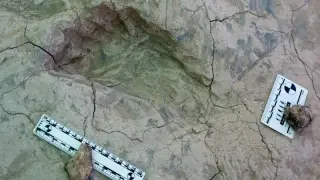
Researchers have discovered fossilized footprints in Kenya's Turkana Basin, indicating that two different hominin species, Homo erectus and Paranthropus boisei, coexisted in the same area about 1.5 million years ago. This finding provides the first direct evidence of these species sharing the same landscape, raising questions about their interactions. The footprints suggest that while Homo erectus is an ancestor of modern humans, Paranthropus boisei, known for its large teeth, is a side branch of the human family tree.

"Prehistoric Near-Extinction Sparked Ancient Human Migration"
science2 years ago

"Prehistoric Near-Extinction Sparked Ancient Human Migration"

New research suggests that a genetic bottleneck occurred among our ancestors, likely Homo erectus, around 900,000 years ago, leading to a significant drop in population and genetic diversity. This event may have been triggered by a severe climate change, forcing the survivors to migrate out of Africa and eventually becoming the ancestors of Neanderthals and Denisovans. The study aims to resolve the debate about the timing of this near-extinction event and its impact on human evolution, shedding light on a crucial period in the human family tree.