ModelCompare asked 12 AI models for controversial views on humanity. Most agreed humans prioritize group belonging over truth. Image models depicted humans as destructive consumers. Researchers warn this reflects training data bias, not objective truth.
New research challenges the popular belief that cynicism is a marker of high intelligence. While Americans report lower trust in one another and global cynicism is rising, studies indicate that cynical individuals often earn less and are less competent than they appear. The concept of 'hopeful skepticism' suggests that approaching the world with a scientific mindset, rather than a defensive legal one, leads to better personal and societal outcomes.
A new study by researchers from the University of Mississippi and the University of Alabama analyzes stone spear points from the Tennessee River Valley to trace changes in human behavior over millennia. The research compares the Clovis people, who arrived around 13,200 years ago, with the later Cumberland group. While Clovis artifacts show signs of extensive resharpening, indicating a need to conserve resources, Cumberland points were often discarded while still usable. This shift suggests that as knowledge of local rock sources became established, the value of carrying spare tools decreased. The findings highlight how environmental familiarity and logistical constraints, such as the lack of pack animals, influenced the decision-making processes of early hunter-gatherers.
A landmark study published in Nature identifies 1,260 genetic variants linked to the Big Five personality traits, with 824 being newly discovered. While these variants explain up to 13% of personality variation, the research confirms that environmental factors remain the primary driver of individual character. The findings reveal that personality genetics are robust across different populations and ages, and that specific genetic profiles correlate with life outcomes such as health, income, and residential choices. However, no single gene determines personality; instead, thousands of variants with tiny individual effects combine to create a modest genetic influence, leaving the majority of personality development to experience and environment.
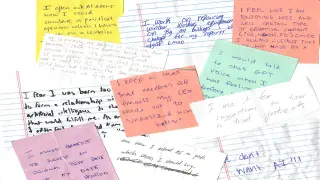
San Francisco artist Olivia Tai launched 'What We Tell AI,' a participatory art project collecting anonymous confessions about artificial intelligence usage. Starting in September 2025, Tai set up makeshift booths in public spaces, gathering over 350 handwritten notes from passersby. The submissions reveal deep personal reliance on AI for emotional support, relationship advice, and professional tasks, often accompanied by feelings of shame or guilt. Tai aims to normalize these conversations to reduce secrecy and encourage broader societal dialogue about AI's impact on human relationships.
A massive study of over 1 million people identified 1,260 genetic variants linked to the 'Big Five' personality traits, but these genes explain only up to 13% of personality differences, confirming that environment and experience play a far larger role.
A new theoretical framework published in AI & Society proposes that frequent interactions with AI chatbots in customer service settings may cause humans to adopt robotic communication patterns. Researchers coined the term 'robotoid humanness' to describe this bidirectional influence, where users adapt to machine logic and pacing, potentially altering their sense of self and reducing human unpredictability.
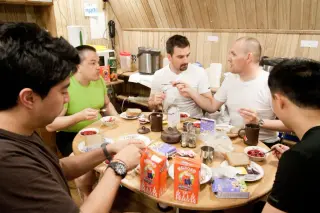
Six healthy men sealed in a Moscow-based simulated Mars spacecraft for 520 days showed a progressive decline in physical activity and an increase in sleep and rest, a pattern researchers termed 'behavioural torpor.' While the group average indicated a slow withdrawal from movement, individual responses varied significantly, with some crew members maintaining high activity levels. The study highlights the risks of prolonged confinement, monotony, and dim lighting on circadian rhythms, though it lacks the microgravity and radiation factors of a real Mars mission.
A new study in Nature Human Behaviour confirms that ticklishness is a distinct, universal sensation with consistent hotspots across Dutch, Greek, and Chinese cultures. Researchers found that areas rarely touched, such as the neck and armpits, are most ticklish, supporting Darwin’s 1872 hypothesis. The study distinguishes 'gargalesis' (playful tickling) from 'knismesis' (itch-like touch), noting that while 98% of participants have experienced tickling, laughter does not always indicate pleasure.
Researchers estimate that at least 196 Indigenous groups remain uncontacted or voluntarily isolated across ten countries, primarily in South America, Asia, and the Pacific. These communities actively avoid interaction with outsiders to protect their cultural integrity and physical safety, often due to historical trauma from disease, forced labor, or conflict. Notable examples include the Sentinelese in India, who reject all contact, and the Kakataibo in Peru, who erase their footprints to remain hidden. Experts emphasize that isolation is a deliberate protective strategy, not a lack of awareness, and argue that forced contact often causes more harm than good.
French-Italian researchers find that allowing AI advice dramatically reduces people’s likelihood to admit ignorance (44% baseline to 3% with AI), while accuracy falls (27% to 9%) and confidence soars (30% to 76%), suggesting AI access can undermine critical thinking and highlighting the need for AI literacy and policy efforts.
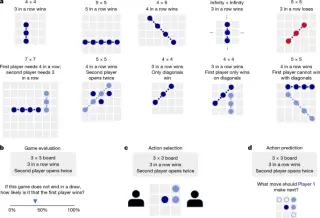
The study introduces the Intuitive Gamer model, showing that people reasoning about entirely new two‑player grid games rely on quick, depth‑limited, goal‑directed probabilistic simulations to evaluate games, choose moves, predict others’ actions, and decide whether to continue playing. Across 121 novel games, the model matches human judgments and gameplay far better than deeper search AI, suggesting a compute‑efficient, task‑general mechanism for pre‑expert reasoning with implications for designing human‑like AI and understanding everyday problem solving.
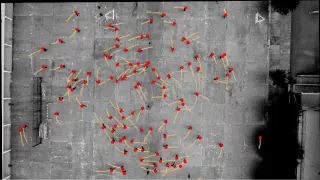
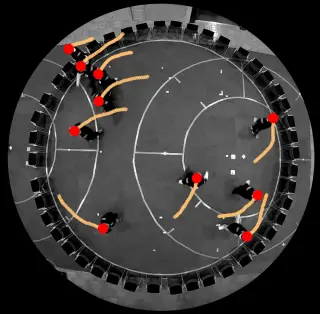
Across studies in Spain and Japan, as well as with people walking alone, humans show a consistent counterclockwise bias when moving in open spaces, not explained by culture or handedness; stronger in children, suggesting a biomechanical or neural basis with possible public-space design implications.
A Nature Communications study across Spain and Japan found that people—whether alone, in crowds, or in schools—tend to turn counterclockwise when changing direction, suggesting a biologically rooted symmetry-breaking rather than a social habit. The bias persisted across cultures and was even stronger in nursery children, with a minority who favored clockwise or showed no bias. While intriguing, researchers caution it is not a universal law and plan follow-up work with virtual reality and more complex scenarios (e.g., emergencies) to uncover origins and applications in crowded spaces.
A Google data editor outlines three revealing search patterns: basic life skills like boiling an egg show a willingness to learn, people increasingly seek meaningful, helping careers over high pay, and searches like 'how to help' reflect compassion and mental-health awareness—proof that behind online noise we share common human concerns.