Tag

Lunar

All articles tagged with #lunar

June’s Strawberry Moon Lights Up Summer Skies This Week
science12 days ago

June’s Strawberry Moon Lights Up Summer Skies This Week

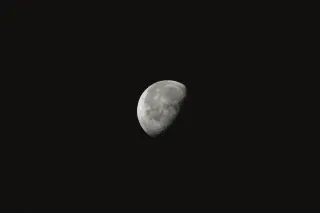
The full strawberry moon—the first full moon of summer—will rise this week and peak at 7:57 p.m. ET on Monday, appearing as a micromoon near apogee. In the Northern Hemisphere it will trace the year’s lowest arc, while in the Southern Hemisphere it will reach its highest. Its color can appear warmer or cooler depending on atmospheric conditions, but the Moon’s actual color doesn’t change. For best viewing, head outside to a dark, unobstructed spot. The name comes from Algonquin berry-harvesting season, with other cultures calling it the hoer or blooming moon. The article also lists six more full moons in 2026 (Buck Moon, Sturgeon Moon, Harvest Moon, Hunter’s Moon, Beaver Moon, Cold Moon) and ties this year’s lunar activity to renewed interest in lunar exploration as NASA’s Artemis program advances.

Moon Biocontainment Plan: Scientists Call for an Automated Lunar Quarantine Lab
space-and-spaceflight18 days ago

Moon Biocontainment Plan: Scientists Call for an Automated Lunar Quarantine Lab

Biologist Frederick Moxley and McGill’s Anthony Ricciardi propose NASA build a self-contained, automated lunar biocontainment facility (BSL-X) on the Moon to quarantine and sterilize potentially hazardous extraterrestrial samples before any Earth return, arguing Earth-based labs may be insufficient to guard against novel alien microbes; they cite a 2018 ISS bacterium mutation as a cautionary example and frame the plan as a precautionary firewall for interplanetary exploration.

policy1 month ago

Report Flags Lunar Mass Drivers as Dual-Use First-Strike Threat

A new American Foreign Policy Council report warns that deploying cargo catapults on the Moon—mass drivers—could be a dual-use technology enabling rapid, potentially undetectable first strikes. It outlines three dangers: direct ground impact from fired payloads, satellite destruction via tight-cone projectiles, and the ability to launch warheads exceeding current reentry limits with low heat signatures, raising concerns about a space-enabled arms race as nations seek a lunar foothold.

New Lunar Trajectory Slashes Fuel Costs by 58.80 m/s
space1 month ago

New Lunar Trajectory Slashes Fuel Costs by 58.80 m/s

Researchers using the theory of functional connections simulated 30 million routes to the Moon and found a more fuel-efficient path that enters the lunar variate from the far side, reducing delta-v by 58.80 m/s and maintaining continuous Earth communication. The findings, based on gravity-assisted trajectories in the Interplanetary Transportation Network, could lower mission costs, though it is an initial result and future work may incorporate solar gravity as lunar missions scale up (e.g., Artemis 2).

Lunar Outpost bets on autonomous Moon infrastructure with Pegasus rover
space1 month ago

Lunar Outpost bets on autonomous Moon infrastructure with Pegasus rover

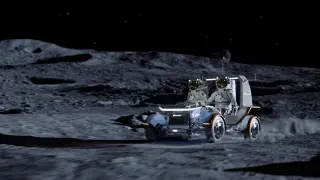
Lunar Outpost, already testing the Eagle rover, has secured about $30 million to develop Pegasus, a smaller, autonomous lunar rover aimed at building a broader Moon infrastructure ecosystem. The company envisions rovers that autonomously construct launch pads, energy storage, habitats, and other facilities, potentially working alongside Artemis astronauts. Pegasus is slated for delivery by 2027 with a Moon launch planned for 2028, aligning with NASA’s Artemis timeline and part of a wider push to enable a sustained human presence on the Moon and multi‑planetary exploration.

Chang'e-5 Moon Samples Uncover Rare-Earth Lunar Minerals
space2 months ago

Chang'e-5 Moon Samples Uncover Rare-Earth Lunar Minerals

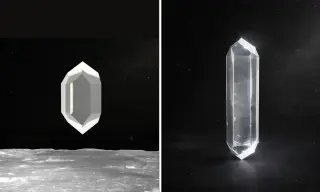
Chinese scientists have identified two previously unknown lunar minerals, magnesiochangesite-(Y) and changesite-(Ce), from Chang'e-5 samples. Both belong to the merrillite group and were officially approved by the International Mineralogical Association, marking a continuation of China’s lunar mineral discoveries. The ultra-rare, micrometer-scale crystals—found in Oceanus Procellarum material and a lunar meteorite—reveal unique crystal structures not seen on Earth and offer new insights into the Moon’s magmatic history and potential rare-earth resources for future in-situ utilization. Scientists used a suite of advanced instruments to confirm the minerals’ composition and structure, underscoring the complexity of lunar soil and its geological diversity.

Moon Trash, Human Heritage: A look at what we left on the Moon
space2 months ago

Moon Trash, Human Heritage: A look at what we left on the Moon

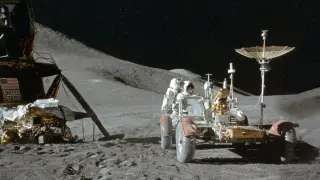
Humans have dumped a surprising amount of material on the Moon—from rocket stages and rovers to sentimental keepsakes (an Apollo 16 family photo, Gene Shoemaker’s ashes, and goodwill messages from 73 nations), commemorative patches, a rumored Moon Museum ceramic wafer, a falcon feather, and even 96 bags of human waste. NASA’s 2012 list tallies about 400,000 pounds of Apollo‑era debris, with additional gear from other programs; retroreflectors remain on the surface for millimeter‑precision distance measurements. As new missions resume lunar exploration and imaging improves, lunar debris management could become a hot topic for future explorers.

Europe to redefine Gateway role as Artemis changes, decision due in June
space3 months ago

Europe to redefine Gateway role as Artemis changes, decision due in June

With NASA suspending work on the lunar Gateway, ESA is assessing how to adjust its three Gateway-related contributions (the European Service Module, I-Hab, Lunar View, and Lunar Link) and will present a plan to the ESA June Council. The evaluation will cover whether ongoing Gateway developments can continue, be repurposed, or reallocated, how work should be performed (in Europe or the U.S.), changes to Artemis 3/4’s architecture, and how astronaut participation and funding already invested will be treated, all while coordinating with Canada, Japan, and the UAE.