
Beetroot Juice Fails to Boost Swim Speeds, Only Eases Perceived Effort
A new meta-analysis confirms that beetroot juice does not improve swimming times or lower blood lactate, though it may slightly reduce how hard the effort feels.

All articles tagged with #meta analysis
A new meta-analysis confirms that beetroot juice does not improve swimming times or lower blood lactate, though it may slightly reduce how hard the effort feels.

A global meta-analysis of 110 randomized trials involving over 22,000 patients found that the antibiotic cefepime was associated with higher all-cause mortality than other beta-lactams, particularly among adults with febrile neutropenia. While the authors did not recommend stopping cefepime, they called for more guidance and research to clarify safety and optimal dosing, noting limitations such as study heterogeneity and proposing explanations like subtherapeutic or toxic drug levels and neurotoxicity; the dosing challenge may partly explain the observed association, and AI could help tailor dosing in the future.

A global meta-analysis of 110 randomized trials (over 22,000 patients) found cefepime associated with higher all-cause mortality within about 30 days compared with other beta-lactam antibiotics, particularly in adults with febrile neutropenia; while not proving causation, potential factors include dosing challenges and neurotoxicity, prompting calls for clearer dosing guidance and further safety research rather than an outright discontinuation of cefepime.

A Bayesian meta-analysis of 110 randomized trials (over 22,000 patients) found cefepime associated with higher all-cause mortality (778 deaths; 6.6%) versus other beta-lactams (6.2%), with a 94.4% probability—and 98.6% in the subset of 73 peer‑reviewed trials—that the drug raises risk. The association was stronger in adults and especially among febrile neutropenia patients. The researchers caution this shows association, not causation, and call for better dosing guidance and further study rather than an outright discontinuation of cefepime.

A meta-analysis of nine randomized trials (over 91,000 adults) found that hypertension patients who take at least 80% of their prescribed blood pressure meds have an 11% lower risk of major cardiovascular events and reduce systolic blood pressure by about 5.2 mmHg, compared with those on placebo or less intensive treatment; those with lower adherence saw no significant risk reduction. The study, soon to be presented at the 2026 European Society of Cardiology Congress and not yet peer‑reviewed, highlights that consistent, sustained medication use yields greater protection and offers strategies to improve adherence (e.g., simplifying regimens, habit stacking, and combination pills).

A large meta-analysis of 74 studies with 4.23 million people found that high levels of physical activity reduce dementia risk over about 10 years (RR around 0.80 for all-cause dementia), with leisure-time activities driving most of this benefit (RR ~0.76). In contrast, occupational physical activity and, in some cases, active commuting were linked to higher dementia risk, likely reflecting confounding factors such as education, job stress, environmental exposures, and reverse causation. The findings imply that not all activity confers the same brain benefits; voluntary, socially and cognitively engaging recreation may offer the strongest protection.

Scientists are debating if exercise can fully offset the health risks of sitting. A large meta‑analysis led by Ulf Ekelund argues that the more you exercise, the less harm sitting does, with heavy exercisers showing only minimal risk even when sitting eight hours or more. Opponents cite wearable data and methodological limits, suggesting that some risk remains despite high activity. The issue isn’t settled, but the practical takeaway is to aim for about an hour of moderate activity daily and to break up long sitting periods, rather than assuming exercise can entirely cancel sitting’s damage.
Regular vitamin C does not reduce the risk of catching a cold, but meta-analyses suggest a modest benefit for those who take it consistently: about 8–14% less severe symptoms in children and adults, and roughly a 15% reduction in days with severe symptoms among groups like athletes and military personnel. Starting vitamin C after symptoms begin provides no benefit. High daily doses (>1,000 mg) can cause GI problems, kidney stones, and drug interactions; upper limits vary by country (US ~2,000 mg; Australia ~1,000 mg), while typical daily needs are far lower (Australia ~45 mg). Since deficiency is rare, most people don’t need supplements—consult a GP if considering it.

Linus Pauling’s 1970s push for mega-doses of vitamin C didn’t turn into a proven cold cure. While some meta-analyses show only modest benefits—regular intake of 1,000 mg+/day may reduce severe cold symptoms by about 15% for certain groups, and some analyses note reduced severity in athletes—there’s no consistent evidence that vitamin C prevents catching a cold or shortens mild illness when started after symptoms begin. Safe upper limits vary by country (US around 2,000 mg/day; Australia ~1,000 mg/day; general daily needs about 45 mg), and high doses can cause GI issues, kidney stones, or interact with other treatments. If considering supplements, discuss with a GP and keep intake well below 1,000 mg/day. Overall, vitamin C is not a cure or a reliable preventive for colds; any benefit is small and conditional.

A large meta-analysis of about 480,000 people across nine studies found that daily stair climbers had a 39% lower risk of death from cardiovascular disease and a 24% lower risk of death from any cause over a median follow-up of 14 years. While the research shows associations rather than causation, stair climbing is a simple, low‑impact activity that can benefit cardiovascular health, with some data suggesting roughly six flights per day may offer the greatest benefit. It’s generally safe for many, but may not be suitable for people with mobility or joint issues; more research is needed to define optimal stair-climbing guidelines.

A global meta-analysis of 30 randomized trials (over 2,500 participants with sleep disturbances) found that high-intensity yoga, performed in 30-minute sessions twice a week for 8–10 weeks, yields the strongest sleep improvements among tested exercise types, beating walking, resistance training, or aerobic exercise; however results vary across studies and more high-quality research is needed.
A meta-analysis of 118,593 men from Israel, the U.S., Brazil, Finland, and Denmark found average testosterone levels declined by about 54% between 1972 and 2019, a finding presented at the European Society of Human Reproduction and Embryology meeting in London.

A 2010 meta-analysis of 148 studies (about 308,849 people) found that weak social connections raise mortality risk by roughly 50% (OR 1.50, 95% CI 1.42–1.59), comparable to smoking 15 cigarettes per day, based on ~7.5 years of follow-up. Although the study examined social relationships rather than loneliness per se, later work refined the distinction and magnitude, and policy responses worldwide—such as UK and Japan appointing loneliness ministers and the US Surgeon General issuing a loneliness advisory—have pushed public health to address loneliness, isolation, and living alone as related yet distinct risk factors.
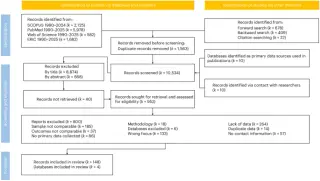
A preregistered systematic review and multilevel meta-analysis of 148 studies (N≈138,446) finds that about 29.9% of early‑career researchers (ECRs) report elevated psychological distress. Depressive symptoms (~28.5% on PHQ‑9) and anxiety symptoms (~27.6% on GAD‑7) are similarly prevalent; suicidal ideation appears in ~17.4%. Symptom severity is generally mild for depression and anxiety and moderate for stress, with substantial heterogeneity across syndromes and scales and limited impact of demographic factors. The study highlights structural stressors in ECR careers and calls for reforms and evidence‑based support services for this group. (COVID-19 era data largely included; samples skew toward higher‑income countries; quality and response rates varied.)

A global meta-analysis of 101 studies including over 4,700 encephalitis survivors finds psychiatric and behavioral problems—most notably depression (~27%) and anxiety (~20–23%)—are as common as neurological deficits like memory loss or seizures and can persist months or years after recovery, regardless of infectious or autoimmune cause. The findings reveal a care gap with few standardized long-term mental-health follow-ups and call for routine neuropsychiatric screening and integration of mental-health services into standard post-encephalitis care.