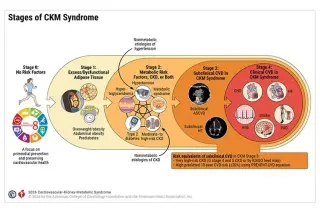
AHA/ACC CKM syndrome guidelines recast metabolic risk as a stage-based, cross-organ issue (heart, kidney, metabolism) to detect and treat early with proactive testing, collaborative care, and preventive, personalized strategies, including GLP-1 and SGLT2 therapies and AI-driven nutrition support.
A dermatologist explains that skin inflammation—especially in psoriasis—can signal systemic inflammation linked to higher heart-disease risk, with psoriasis now listed in American Heart Association guidelines as a risk-enhancing inflammatory condition. Not all inflammatory skin issues carry this risk, but persistent skin changes should prompt medical review for potential links to metabolic syndrome and cardiovascular health.
A large, multi-country meta-analysis of 118,593 men from 1972–2019 found total testosterone declined by 54% worldwide, averaging more than 1% per year and accelerating after 2000, beyond age-related declines; the researchers note obesity and metabolic syndrome could explain part of the drop and highlight potential roles for environmental chemicals, lifestyle factors, and other health trends, with implications for overall male hormonal health and fertility.
The American Heart Association coined CKM syndrome in 2023 to describe the overlap of cardiovascular, kidney, and metabolic diseases driven by excess weight, high blood pressure, and high blood sugar. It’s defined as a four‑stage continuum (Stage 0–Stage 4) with about 90% of Americans on the spectrum; prevention focuses on lifestyle changes (Mediterranean-style diet, physical activity, sleep, avoiding nicotine) and broad‑acting medications (GLP‑1s, SGLT2 inhibitors, nsMRAs) alongside traditional treatments like metformin, statins, and ACE inhibitors to slow progression and reduce hospitalizations. The overarching message is awareness and prevention, rather than overmedicalizing those at risk—including Stage 0 individuals who are at risk but not yet diseased.
CKM syndrome, formalized by the AHA in 2023, is a four-stage framework showing how overweight, high blood pressure, high blood sugar, and reduced kidney function connect cardiovascular, kidney, and metabolic diseases; about 90% of U.S. adults fall somewhere on the spectrum, from risk (Stage 0) to overt disease, with prevention centered on lifestyle changes and newer medications like GLP-1s, SGLT2 inhibitors, and nsMRAs that benefit multiple organs.
The 2026 AHA/ACC/ADA/ASN guideline replaces the 2013 obesity guideline with a living, interdisciplinary framework for cardiovascular-kidney-metabolic (CKM) syndrome, emphasizing early risk detection (PREVENT equations), CKM staging, and routine metabolic and kidney health assessment across cardiology, endocrinology, nephrology, and primary care, with extensive clinician resources and supporting materials.
PMOS—polyendocrine metabolic ovarian syndrome—replaces PCOS to better reflect its metabolic and endocrine nature and reduce misdiagnosis; the rename, published in The Lancet after 14 years of work, aims to improve care. PMOS features irregular periods and excess androgens, can cause acne or hair changes, and is linked to infertility and metabolic risks; treatment focuses on lifestyle changes (diet, exercise, sleep) and personalized options like Metformin, anti-androgens, or hormonal birth control. The change seeks to raise awareness and better tailor care for patients.
Health researchers have renamed PCOS to PMOS (polyendocrine metabolic ovarian syndrome) to better reflect its wide hormonal and metabolic effects; a global consortium says the old name contributed to delayed diagnosis, stigma, and siloed research. The change could alter clinical care by prompting broader metabolic and cardiovascular screening, expand funding beyond reproductive health, and spur new treatments for the roughly 10–13% of reproductive-age women affected.
Medical experts say PCOS should be renamed polyendocrine metabolic ovarian syndrome (PMOS) to capture its wide-ranging effects on metabolic, endocrine, cardiovascular, reproductive, and mental health, with the aim of improving diagnosis, treatment, and research.
A Healthline summary highlights a Nature Metabolism review suggesting that fructose—especially from ultra-processed foods and sugar-sweetened beverages—may drive obesity and metabolic diseases by promoting fat production in the liver and disrupting metabolic pathways, with cautions that whole fruit is fine and a focus on reducing added fructose in processed foods.
A Nature Metabolism review argues fructose acts as a distinct metabolic signal from glucose, promoting fat production and lowering cellular energy, which may contribute to obesity, insulin resistance, and metabolic syndrome. The analysis notes fructose is consumed in common sweeteners like sucrose and high-fructose corn syrup and can also be produced internally from glucose, highlighting health risks beyond calories.
A Nature Metabolism review argues that fructose acts as a metabolic signal that drives fat production and depletes cellular energy, linking it to obesity and metabolic syndrome beyond calories, and noting that the body can generate fructose from glucose while high intake of free sugars remains a global risk.
A Nature Metabolism review argues that fructose acts as a distinct metabolic signal that promotes fat production and energy depletion, beyond simply adding calories; its effects may drive obesity, insulin resistance, and metabolic syndrome, and the authors highlight endogenous fructose production and rising free-sugar intake as ongoing health concerns.
A cross‑sectional NHANES analysis found that about 7.32 hours of weekday sleep is linked to the best estimated glucose disposal rate (eGDR), a marker of insulin sensitivity; sleeping more beyond this threshold is associated with lower eGDR. Weekend catch‑up sleep helped those who slept less than 7.32 hours but may worsen insulin resistance if it exceeds two hours, with stronger effects in women, middle‑aged adults, and those with BMI ≥30. The study cannot prove causation and relies on self‑reported sleep, so results should be interpreted cautiously. The takeaway is to aim for consistent 7–8 hours per night and moderate weekend catch‑up if needed.
In a small study of adults with metabolic syndrome, participants ate 100 g of rolled oats three times daily for 48 hours and saw total cholesterol fall about 8% and LDL drop around 10%, with these effects persisting six weeks after returning to their usual diet. Researchers suggest the changes may stem from gut bacteria metabolizing oats into compounds like ferulic acid that improve cholesterol metabolism. A longer six-week oats-only trial produced smaller, slower benefits. Larger studies are needed to confirm the findings.