Tag

Natural Selection

All articles tagged with #natural selection

Evolution Over Fixed Laws: The Cosmos Emerges From Change
science14 days ago

Evolution Over Fixed Laws: The Cosmos Emerges From Change

Biologist Timothy Jackson argues that the laws of physics are not eternal givens but descriptions of patterns that persist in a fundamentally changing, lawless cosmos. In biology, variation is abundant and inherently unpredictable, yet natural selection produces order. Darwin’s insight shows how variation plus selection explains stable patterns without invoking invariant physical laws, urging a shift from physics-dominated thinking to a biologically grounded metaphysics (biologism) to understand how structured order emerges from change.

Ancient Genome Tracks Rapid Turn in Human Evolution
science27 days ago

Ancient Genome Tracks Rapid Turn in Human Evolution

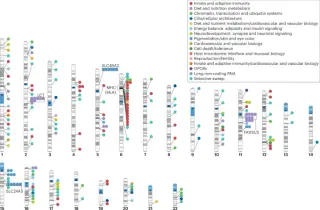
A massive ancient-DNA study analyzing data from more than 10,000 ancient individuals, plus thousands of published and modern genomes, finds that directional natural selection was more active and occurred more recently than previously believed. The analysis identifies 479 gene variants that rose or fell in West Eurasia over the last 10,000 years, with selection intensifying after farming. Although such selection explains only about 2% of genetic changes, many variants tie to traits seen today—like light skin, immune responses, and disease risks—and some gene groups influenced polygenic traits. Caution is urged in linking ancient variants to modern traits, and results are not limited to West Eurasia. The researchers have made data and methods public to extend work to other populations and time periods, with implications for health, disease understanding, and potential gene-therapy considerations.

Ancient DNA Maps the Long Arc of Human Adaptation
science27 days ago

Ancient DNA Maps the Long Arc of Human Adaptation

Nature Genetics’ 2026 review synthesizes how ancient DNA enables direct observation of genetic changes over time, detailing how humans adapted to shifts in diet, mobility, pathogen exposure, and environment; it reviews methods for detecting selection in ancient genomes, assesses the impact of major migrations and admixture, links findings across continents and archaeological contexts, and outlines future challenges and opportunities for using ancient DNA to uncover adaptive insights that aren’t apparent from modern genomes alone.

science1 month ago

Ancient DNA Reveals Rapid Human Evolution After Farming

Harvard-led analysis of nearly 16,000 ancient West Eurasian genomes finds that natural selection accelerated over the last 10,000 years as farming reshaped populations. The study identified 479 gene variants repeatedly favored or opposed, influencing traits such as skin tone and hair color and linked to disease risk, illustrating how modern humans carry evolutionary legacies from agricultural transitions; the dataset is publicly available for broader research.

science1 month ago

Farming Fueled Rapid Human Evolution, Favoring Red Hair and Leaner Bodies

A large ancient-DNA study of nearly 16,000 West Eurasian individuals finds that natural selection accelerated in the last 10,000 years as farming spread, identifying 479 gene variants tied to traits such as red hair, lighter skin, and lower body fat, with some links to modern diseases like type 2 diabetes and schizophrenia; the researchers have made their dataset public to enable broader cross-population analysis.

Ancient DNA reveals a rapid wave of human evolution in the last 10,000 years
science1 month ago

Ancient DNA reveals a rapid wave of human evolution in the last 10,000 years

A Harvard-led study analyzing about 16,000 ancient human genomes (10,000 newly sequenced) finds hundreds of rapid genetic adaptations arising in the last 10,000 years—far more than previously known—many linked to disease risk, body fat, cognitive performance and other traits, with several involving lactose tolerance and red hair. The research suggests a surge in directional selection after the spread of agriculture in West Eurasia, estimating around 500 such adaptive changes in this period. While some variants clearly increased fitness, others may have hitchhiked with beneficial traits. Overall, the findings indicate human evolution is accelerating and can be traced directly through ancient DNA.

Ancient DNA uncovers ongoing human evolution: lighter skin, red hair, and reduced baldness in West Eurasia
science1 month ago

Ancient DNA uncovers ongoing human evolution: lighter skin, red hair, and reduced baldness in West Eurasia

A Nature study analyzing about 16,000 genomes across 18,000 years in West Eurasia shows natural selection acted on hundreds of gene variants, increasing light skin and red hair, boosting resistance to HIV and leprosy, and reducing susceptibility to male-pattern baldness and rheumatoid arthritis. The team’s AGES method reveals that recent human evolution continued beyond prior assumptions, with trait shifts likely tied to changing environments and pathogens; data and methods are openly shared to enable further research.

Ancient DNA Reveals Humans Still Evolving Through Natural Selection
science1 month ago

Ancient DNA Reveals Humans Still Evolving Through Natural Selection

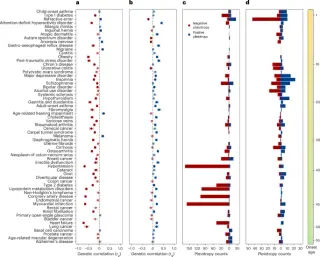
A large-scale study of 15,836 ancient human remains finds 479 genetic variants that appear to have been favored by natural selection in the past 10,000 years, with thousands more likely affected. Notably, a mutation linked to celiac disease emerged about 4,000 years ago and rose in frequency, while variants associated with smoking have become rarer in Europe. Other changes include TYK2-related immune variants and shifts around blood-type genetics, with signals detected in 44 of 563 traits. The findings suggest humans are evolving in ways that are not fully explained by culture or technology, though the exact forces remain unclear.

Ancient genomes reveal a rapid wave of human adaptation after farming
science1 month ago

Ancient genomes reveal a rapid wave of human adaptation after farming

An analysis of 15,836 ancient genomes from western Eurasia identifies 479 gene variants under directional selection since the rise of farming, indicating an accelerated pace of human evolution—especially during the Bronze Age. The shifts touch immunity, skin pigmentation, and traits like baldness, with examples such as variants linked to multiple sclerosis risk, tuberculosis susceptibility, and HIV resistance; researchers distinguished genuine selection from drift by looking for variants that changed consistently across time and groups.