Tag

Observational Study

All articles tagged with #observational study

GLP-1 Diabetes Drugs Hint at Slowing Cancer Spread, Early Observational Findings
health4 days ago

GLP-1 Diabetes Drugs Hint at Slowing Cancer Spread, Early Observational Findings

New findings from the Cleveland Clinic, presented at the ASCO meeting, suggest GLP-1 medications may be linked to reduced metastatic progression in several obesity-related cancers (notably non-small cell lung, breast, colorectal, and liver cancers) when compared with DPP-4 inhibitors. The study is observational and not peer‑reviewed, and it does not prove GLP-1s kill cancer cells or should be used for cancer prevention. Researchers caution that more rigorous, randomized trials are needed before changing cancer treatment guidelines.

GLP-1 diabetes drugs linked to slower cancer progression in early study
health6 days ago

GLP-1 diabetes drugs linked to slower cancer progression in early study

An observational analysis of over 10,000 cancer patients who started GLP-1 drugs after diagnosis found slower progression in four of seven cancers, with the strongest effects in lung and breast cancer, compared with a matched group on DPP-4 inhibitors. The study is not peer‑reviewed and cannot prove causation; randomized trials are needed to confirm any anti‑cancer effects. Researchers discuss possible mechanisms, including tumor GLP-1 receptor interactions, interference with glycolysis, and immune modulation, and conclude GLP-1 drugs appear safe for patients with cancer using them for diabetes or obesity, though they are not a cancer therapy.

Eggs Linked to Lower Alzheimer’s Risk in Large Population Study
health19 days ago

Eggs Linked to Lower Alzheimer’s Risk in Large Population Study

An observational study from Loma Linda University analyzed data from about 40,000 U.S. adults over 65 linked to Medicare, following them for 15 years, and found that higher egg consumption was associated with a lower risk of Alzheimer’s disease; those who ate eggs five or more times per week had a 27% lower risk, while moderate intake (one to three times per month or once weekly) correlated with about a 17% reduction; researchers caution that causation cannot be established, but eggs are rich in brain-supporting nutrients like choline and B12 and can fit into a heart-healthy diet when paired with vegetables, whole grains, and fish.

Omega-3 Supplements Could Accelerate Cognitive Decline in APOE ε4 Carriers, Study Suggests
science25 days ago

Omega-3 Supplements Could Accelerate Cognitive Decline in APOE ε4 Carriers, Study Suggests

An observational analysis of the ADNI cohort (800+ older adults, about half APOE ε4 carriers) found that those taking omega-3 supplements showed faster cognitive decline on MMSE and related tests than non-users, with no clear link to Alzheimer's brain biomarkers; the researchers caution that this is not causal and the sample isn’t representative, highlighting a need for nuanced, dose- and context-dependent research. While some reviews hint at low-dose benefits, high doses might be harmful, suggesting omega-3 should be approached with care and preferably sourced from whole foods until more evidence clarifies its brain effects.

Meat and APOE4: Possible Dementia Risk Reduction Found in Carriers
health1 month ago

Meat and APOE4: Possible Dementia Risk Reduction Found in Carriers

An observational study following 2,157 people over up to 15 years found that eating more meat was linked to a lower dementia risk only among APOE4 carriers; for non-carriers, meat intake showed no overall cognitive benefit. However, a higher ratio of unprocessed to total meat was associated with lower dementia risk in all participants, and higher processed meat intake tended to raise risk. The study does not prove causation and clinicians caution that more research, including trials, is needed before genotype-tailored dietary recommendations can be made.

Shingles vaccine linked to fewer heart complications in people with heart disease
health2 months ago

Shingles vaccine linked to fewer heart complications in people with heart disease

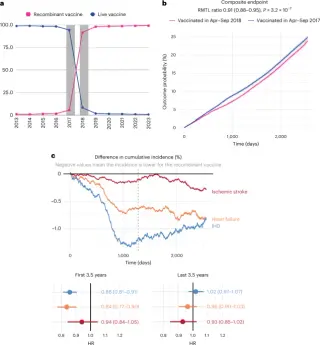
A large observational study of more than 246,000 U.S. adults with established atherosclerotic cardiovascular disease found that receiving at least one shingles vaccine dose (Shingrix or Zostavax) was associated with substantially lower risks of major cardiovascular events within a year, including a 46% drop in major adverse cardiovascular events, 27% fewer heart attacks, 27% fewer strokes, 33% fewer heart failures, and a 61% reduction in death from any cause, compared with unvaccinated peers. The researchers caution that causality cannot be proven from observational data and longer follow-up is needed, but the findings add to evidence that the shingles vaccine may offer broader health benefits and support vaccination guidelines for adults 50 and older, especially those with cardiovascular disease.

Seven hours of sleep linked to lower diabetes risk, study finds
health2 months ago

Seven hours of sleep linked to lower diabetes risk, study finds

A large observational study of about 25,000 people (2009–2023) found that roughly seven hours and 18 minutes of nightly sleep was associated with the lowest insulin resistance, while both shorter and longer sleep linked to worse metabolic markers; weekend catch-up sleep did not offset deficits, and self-reported data limit causal conclusions. Experts say sleep is important for metabolic health but not a standalone solution, with guidance generally suggesting about 7–9 hours of regular, high‑quality sleep to help reduce diabetes risk.

Cannabis Use in Later Life Not Tied to Dementia Risk or Cognitive Decline, Large Study Finds
health2 months ago

Cannabis Use in Later Life Not Tied to Dementia Risk or Cognitive Decline, Large Study Finds

A BMJ Mental Health study using data from UK Biobank and the US Million Veteran Program finds lifetime cannabis use in older adults is not linked to accelerated cognitive decline or higher dementia risk. Across hundreds of thousands of participants, cannabis users showed comparable or better cognitive performance and no increased dementia risk, reinforcing other recent findings that cannabis may not contribute to cognitive aging. The authors emphasize this as a major observational analysis on the topic, while NORML comments urge reframing stereotypes about cannabis use in aging populations.

GLP-1 weight‑loss drugs linked to lower addiction risk in large US study, but causality remains unproven
health2 months ago

GLP-1 weight‑loss drugs linked to lower addiction risk in large US study, but causality remains unproven

A large US study of 606,434 veterans with type 2 diabetes found GLP-1 receptor agonists used for weight management and diabetes were associated with lower risks of developing alcohol, cannabis, cocaine, nicotine and opioid use disorders, and with reduced overdose, emergency visits and deaths among those already using substances. However, the study is observational and cannot establish causation, and more research is needed. Separately, most GLP-1 users regain weight within two years after stopping therapy, with side‑effects and cost contributing to discontinuation, and stigma prompting many to hide their treatment.

DASH Diet Edges Out Other Diets for Slower Cognitive Decline
nutrition-diet3 months ago

DASH Diet Edges Out Other Diets for Slower Cognitive Decline

A large study of over 159,000 participants found the DASH diet had the strongest and most consistent association with lower cognitive decline risk and better cognitive function with age compared with five other dietary patterns. Vegetables and fish were linked to better outcomes, while red/processed meats, fried potatoes, and sugary beverages were linked to worse outcomes, with the wine result needing cautious interpretation. The findings are observational and do not prove causation, but support the idea that diet quality—especially vascular/metabolic health—may influence brain aging.

Old-age longevity hinges on weight and nutrients, not just meat-free eating
health4 months ago

Old-age longevity hinges on weight and nutrients, not just meat-free eating

A Chinese study of over 5,000 adults aged 80+ found non-meat eaters were less likely to reach 100, but this was mainly among those who were underweight; including fish, dairy, or eggs erased the difference. The findings suggest that nutritional needs in very old age—especially protein, calcium, vitamin B12, and vitamin D—along with body weight, influence centenarian odds more than simply avoiding meat. Since it’s an observational study, it shows associations, not causation, and plant-based diets can still be healthy for younger and healthier adults while requiring careful planning later in life.

"Japanese Diet Linked to Reduced Brain Shrinkage in Women, Study Finds"
health-and-wellness2 years ago

"Japanese Diet Linked to Reduced Brain Shrinkage in Women, Study Finds"

A study found that older women who closely followed a traditional Japanese diet had less brain shrinkage compared to those on a Western diet, potentially due to the diet's focus on rice, soybean products, vegetables, fish, and low fat intake. The study, which analyzed data from over 1,600 Japanese adults, highlighted the potential protective effects of the Japanese diet's nutritional components on the aging brain, with no similar association found for men. While the findings suggest a link between diet and brain health, larger, long-term trials are needed to establish a direct causal relationship.

"Comparing Plant-Based Diets for Cardiovascular Health"
health-and-nutrition2 years ago

"Comparing Plant-Based Diets for Cardiovascular Health"

A new observational study suggests that a flexitarian diet, which involves limiting meat intake rather than complete exclusion, is associated with lower cardiovascular risk than an omnivorous diet. The study found that flexitarians and vegans had better cardiovascular health than omnivores, showing lower levels of total cholesterol and LDL cholesterol. The study underscores the benefits of increasing the consumption of plant-based foods in lieu of meat for improving cardiovascular health, but larger studies are needed to confirm these results. Experts suggest that a flexitarian diet may be a more sustainable approach for improving heart health compared to a strictly vegan diet, as it ensures nutrient deficiencies are unlikely and may be simpler to sustain over the long term.

"The Simple Reason Some Kids Learn to Talk Earlier"
child-development2 years ago

"The Simple Reason Some Kids Learn to Talk Earlier"

A recent observational study involving over 1,000 children under the age of four found that the amount of adult talk a child hears is strongly linked to their own speech development, regardless of gender, socioeconomic status, or exposure to multiple languages. The study, conducted across 12 countries and 43 languages, used wearable recorders to collect over 40,000 hours of recordings and found that for every 100 adult vocalizations heard by a child within an hour, the child produced 27 more vocalizations. This suggests that promoting more adult talk around children may prove beneficial for their language development. However, the study's coarse-grained approach may have overlooked some finer details, and further research is needed to understand the intricacies of language development in children.

The Surprising Cancer-Fighting Potential of the 'Useless' Organ
health2 years ago

The Surprising Cancer-Fighting Potential of the 'Useless' Organ

A retrospective study suggests that the thymus gland, often considered "useless" in adulthood, may actually play a crucial role in maintaining adult health. Researchers found that individuals who had their thymus removed faced an increased risk of death from any cause and an increased risk of developing cancer. While the study cannot prove causation, researchers argue that preserving the thymus should be a clinical priority. The thymus is known to play a critical role in developing the immune system in childhood, and its removal can lead to long-term reductions in T-cells and impaired immune response. Further research is needed to understand the mechanisms behind these associations.