Tag

Personality

All articles tagged with #personality

Neuroplasticity Reframes You as a Living System, Not a Fixed Identity
science3 days ago

Neuroplasticity Reframes You as a Living System, Not a Fixed Identity

Neuroplasticity shows the adult brain continually reorganizes itself based on what we practice and attend to, meaning personality is not fixed. By treating anxious patterns as habits rather than identities, the author shifts from a maintenance mindset toward managing a living system in progress, where deliberate attention and repetition can reshape behavior and self-understanding.

The Complex Recipe of Personality: Genes Meet Life Experience
science24 days ago

The Complex Recipe of Personality: Genes Meet Life Experience

New genetic research shows personality is not fixed at birth. Twin studies once suggested substantial heritability, but genome-wide studies now estimate that only about 9–18% of personality variation is explained by common genetic variants, with the rest arising from environmental factors and gene–environment interactions. The idea of a simple “warrior gene” predictor has not held up, and personality appears to be polygenic and poly-environmental, influenced by many small effects across life experiences, including limited impact from major adulthood traumas but possible subtle effects from prenatal stress and foetal programming. Researchers emphasize very large, diverse datasets to uncover the tiny genetic contributions across the Big Five traits.

Rude but smarter: letting AI interrupt and adopt personalities boosts reasoning accuracy
technology2 months ago

Rude but smarter: letting AI interrupt and adopt personalities boosts reasoning accuracy

A study found that giving AI chatbots humanlike social traits—such as interrupting, varying speaking order, and adopting Big Five personality styles—improves their performance on complex reasoning tasks. In experiments with fixed vs dynamic turn-taking and an interrupted-talk setting, accuracy on the Massive Multitask Language Understanding benchmark rose from about 68.7% (fixed order) to 79.2% ( interruption-enabled), especially in tougher scenarios. The researchers suggest that such conversational dynamics can boost collective AI intelligence and may be applicable to real-world collaborative tasks.

Taste and temperament: wine choices reveal personality, study finds
science3 months ago

Taste and temperament: wine choices reveal personality, study finds

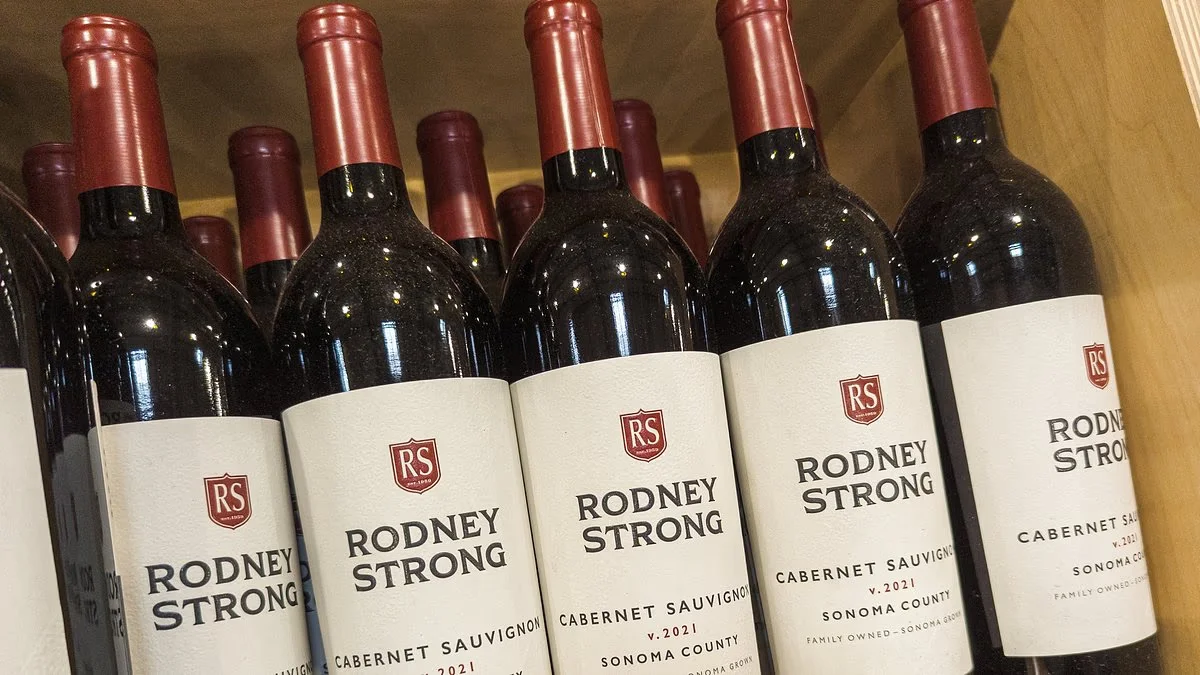
A study analyzing nearly 10,000 online wine reviews with AI linked personality traits to preferred wine alcohol levels. People high in openness and agreeableness tend to favor higher-alcohol wines (e.g., Cabernet Sauvignon, Malbec, Port, Sherry), while those higher in extraversion and neuroticism lean toward lower-alcohol options (Sauvignon Blanc, Pinot Noir, Prosecco). Conscientiousness showed no clear link. The researchers say results could inform personalized wine recommendations and psychographic marketing.

Words as a Mirror: AI Reads Personality from Language
science3 months ago

Words as a Mirror: AI Reads Personality from Language

A University of Michigan study shows generative AI models (e.g., ChatGPT, Claude, LLaMa) can predict personality traits, daily emotions, and behaviors by analyzing people’s own words from diary-like notes and thoughts. AI-based personality ratings closely match or surpass self-ratings and can even align with or outperform close others in predicting life patterns, emotions, and mental-health indicators. While promising, the study notes limitations—relying on self-reports for ground truth and not yet testing across diverse demographics—and calls for further work comparing AI judgments with friends/family and broader outcomes. Published in Nature Human Behavior, the findings suggest language naturally encodes personality signals and that AI can analyze them rapidly.

AI can spontaneously develop personalities with little prompting, study finds
technology4 months ago

AI can spontaneously develop personalities with little prompting, study finds

New research published in Entropy shows that large language models can spontaneously develop distinct 'personalities' when allowed to interact without predefined goals, with behavior shaped by social exchanges and internal memory, loosely tied to Maslow's hierarchy of needs. Experts say this isn’t true consciousness but a pattern arising from training data that could enable more adaptive AI in simulations or companions. It also raises safety concerns about misuse, manipulation, and the potential impact on trust, prompting calls for robust safety objectives, ongoing testing, and governance.

Susie Wiles Criticizes Trump’s Personality Amid White House Damage Control
politics5 months ago

Susie Wiles Criticizes Trump’s Personality Amid White House Damage Control

President Donald Trump defended White House chief of staff Susie Wiles after she described him as having an 'alcoholic's personality,' amid her candid remarks about the administration in Vanity Fair. Trump clarified his own stance on alcohol and personality traits, while Wiles criticized media coverage and shared insights on internal administration dynamics and political strategies.

Microsoft Unveils Mico and New Copilot Features Enhancing AI Interaction
technology7 months ago

Microsoft Unveils Mico and New Copilot Features Enhancing AI Interaction

Microsoft introduces Mico, a friendly, expressive AI character for its Copilot virtual assistant, aiming to balance personality and usefulness while avoiding the pitfalls of past AI prototypes like Clippy. The move reflects a broader industry trend to humanize AI chatbots with varying degrees of personality, tailored to user trust and safety concerns, especially in educational and social contexts.

Gen-Z Dominates Bari’s Picks
culture9 months ago

Gen-Z Dominates Bari’s Picks

The article highlights the vibrant and complex nature of Generation Z, emphasizing their curiosity, social connections, and evolving attitudes towards partying, personality, and technology, while also addressing challenges like dehumanization and changing perceptions of success and adulthood.