Tag

Pipelines

All articles tagged with #pipelines

Hormuz Core, Eurasian Corridors: The New Global Energy Map
world6 days ago

Hormuz Core, Eurasian Corridors: The New Global Energy Map

Western powers are building a network of energy corridors through the Caucasus and Turkey to diversify routes away from the Strait of Hormuz, aiming for redundancy while Hormuz remains crucial for Asia; existing routes are politically constrained, Turkey emerges as a key transit hub, and Iran’s leverage shifts as corridors proliferate, signaling a broader redefinition of global energy security.
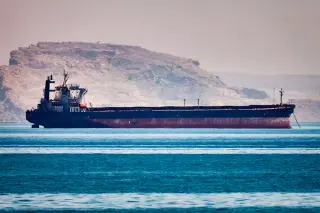
Trump's Oil-Flow Claim Hits Reality Check in Hormuz Strait
world21 days ago

Trump's Oil-Flow Claim Hits Reality Check in Hormuz Strait

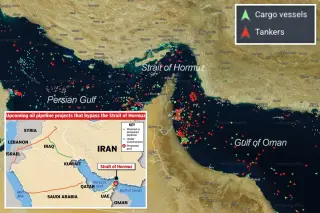
The Trump administration claimed oil flows had returned to normal after rerouting around the Strait of Hormuz, but shipping data show far lower tanker traffic than asserted, with Middle Eastern oil increasingly moved via pipelines and a shadow fleet. Experts say the reality diverges from the narrative and the flow around Hormuz remains constrained and uncertain.

Israel-Gulf Talks Outline Mediterranean Energy Corridor to Bypass Hormuz
middle-east25 days ago

Israel-Gulf Talks Outline Mediterranean Energy Corridor to Bypass Hormuz

Israel and several Gulf states have held meetings to develop routes for Gulf oil and natural gas that bypass the Strait of Hormuz and Bab el-Mandeb, with immediate options like moving oil from Yanbu to Eilat and long-term pipelines from the Gulf to Aqaba and then Eilat. The talks, involving the US, aim to reduce Iran’s leverage and integrate with the India-Middle East-Europe Economic Corridor (IMEC). Proposals claim economic and strategic benefits, though competing routes exist (Turkey, Qatar) and environmental/operational challenges persist; Israel has existing Med-Red links with the UAE, and officials warn that delaying the plan could miss a major energy and geopolitical opening.

Rubio’s Hormuz rethink: is a world beyond the chokepoint even possible?
world1 month ago

Rubio’s Hormuz rethink: is a world beyond the chokepoint even possible?

Rubio floated a permanent shift away from the Strait of Hormuz, arguing regional actors see Iran as a threat, but experts say a Hormuz-free energy map would take decades and trillions, and current pipelines can move only a fraction of the traffic (roughly 9 million bpd vs the strait’s ~20 million bpd). Even with Red Sea routes like Petroline and the UAE’s Abu Dhabi Crude Pipeline, replacing Hormuz would push vulnerability to land and other chokepoints such as Bab al-Mandeb, making a near-term, full bypass unlikely.

Gulf pipeline push to bypass Hormuz as oil tops $100
business1 month ago

Gulf pipeline push to bypass Hormuz as oil tops $100

With the Strait of Hormuz still volatile and Brent around $100 a barrel, Gulf oil producers are racing to build pipelines that route crude around Hormuz via the Red Sea, Suez Canal, and Gulf of Oman. Projects include Saudi Arabia’s East-West line, UAE’s Fujairah expansions, and Iraq’s plans to revive Kirkuk–Baniyas (and potential Basra–Aqaba), illustrating a broad shift to diversify routes even as Red Sea vulnerabilities and regional tensions pose ongoing risk.

Iraq’s Oil Finds a New Highway Through Syria, Skipping Hormuz
world1 month ago

Iraq’s Oil Finds a New Highway Through Syria, Skipping Hormuz

Iraq is shipping fuel oil across thousands of trucks through Syria to bypass the Strait of Hormuz, rapidly elevating Syria as a major regional oil gateway. June volumes suggest roughly a quarter of Middle East fuel shipments are now trucked via Syria and Jordan, signaling a potential shift toward alternate export routes and renewed interest in pipelines like Kirkuk–Baniyas to diversify energy flows amid Gulf tensions.

US oil majors chart new Iraqi export routes to bypass Hormuz
business1 month ago

US oil majors chart new Iraqi export routes to bypass Hormuz

U.S. oil companies signed roughly $60 billion in deals with Iraq to develop alternative oil-export routes, including a Basra–Haditha–Ceyhan/Syria corridor and other pipeline projects, in a bid to reduce reliance on the Strait of Hormuz. Chevron led several agreements to boost production and invest in pipelines. Goldman Sachs estimates regional pipelines could eventually move up to about 14 million barrels per day by 2028, potentially serving a large share of Hormuz traffic, though timelines are measured in years; oil markets have risen on tensions with Iran, with WTI around $88 a barrel after earlier spikes.

Oil pipelines multiply routes, but Hormuz threat endures
business1 month ago

Oil pipelines multiply routes, but Hormuz threat endures

Seven planned pipelines aim to bypass the Strait of Hormuz, potentially boosting Gulf export capacity to around 14 million barrels per day by 2028 (over 60% of pre-war Gulf output). But experts say these routes won't remove risk, since Iran can attack facilities along pipelines and Red Sea transit remains vulnerable to Houthi threats; the U.S. backs Iraq's Kirkuk–Syria–Mediterranean project, while UAE and Saudi expansions via Fujairah and the Red Sea diversify exits.

Chevron, Iraq map Syria route to bypass Hormuz
energy1 month ago

Chevron, Iraq map Syria route to bypass Hormuz

Chevron and Iraq are in advanced talks to form a consortium with TI Capital and the Al-Khayyat brothers to build a pipeline network from southern Iraq through Syria to the Mediterranean, potentially routing Iraqi oil via Kirkuk to Baniyas to bypass the Strait of Hormuz amid disruptions; the plan also involves Basra Oil Company and U.S. connections, with feasibility and security still to be studied.

Gulf oil producers race to bypass Hormuz with pipelines and a new port
world-news1 month ago

Gulf oil producers race to bypass Hormuz with pipelines and a new port

With Iran–linked attacks disrupting traffic through the Strait of Hormuz, Gulf oil producers are rushing to build pipelines and a new port to bypass the chokepoint. The UAE’s 252-mile West-East Pipeline and Iraq’s Basra–Haditha line could move substantial Gulf crude overland, and Goldman Sachs projects bypass capacity of up to 7.3 million barrels per day by 2028, potentially diverting about 45% of pre‑war Persian Gulf exports by 2027. Saudi Arabia is weighing a Red Sea pipeline expansion, while Dubai eyeing a new Arabian Sea port to further reduce Hormuz dependence; nonetheless, Hormuz will remain a major conduit for 7–9 million barrels per day amid regional instability such as Houthi threats near Bab el‑Mandeb.

Oil finds a way: New routes emerge to bypass the Hormuz chokepoint
business1 month ago

Oil finds a way: New routes emerge to bypass the Hormuz chokepoint

Oil markets are accelerating plans to reduce dependence on the Strait of Hormuz, with several pipeline and export projects under development (e.g., UAE West-East, Iraq Basra–Haditha) and a Dubai port initiative. Goldman Sachs estimates capacity could shield more than 45% of pre-war Persian Gulf exports by next year and over 60% by 2028, but 7–9 million barrels per day would still be exposed. While talk of US blockades adds urgency, the industry is already adapting, and a renewed Hormuz disruption would likely reshape but not halt global oil trade, with Qatar LNG and other producers still tied to the strait.)

Gulf Eyes Oil Route Diversification as Hormuz Grip Tightens
world4 months ago

Gulf Eyes Oil Route Diversification as Hormuz Grip Tightens

Even after a US–Iran ceasefire, Hormuz remains a chokepoint as Iran’s IRGC has disrupted shipping, leaving about 11.5 million barrels per day of Gulf output shut and roughly 170 million barrels stranded; roughly 300 million barrels have been removed from global balances, pushing prices toward the mid-90s region, with expectations of around $90/bbl. Gulf producers are pursuing bypass routes and expanded pipelines (Saudi East-West, UAE to Fujairah, Iraq–Turkey, Basra–Aqaba) to diversify exports and reduce Hormuz dependence, though colossal costs, security concerns, and political hurdles remain for a multi-route network.

EPA Narrows States’ Veto Power Over Pipelines and Energy Projects
environment7 months ago

EPA Narrows States’ Veto Power Over Pipelines and Energy Projects

The EPA proposed a rule to narrow Section 401 of the Clean Water Act, limiting states’ and tribes’ ability to block or delay fossil-fuel projects by focusing only on direct water-quality effects and giving them up to one year to act on certification requests, a move aimed at speeding permitting but likely to provoke legal challenges from Democratic officials and environmental groups who warn it could weaken protections.