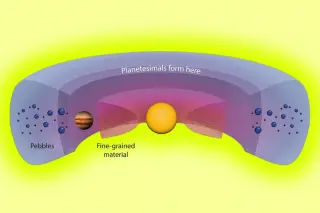
New research on calcium-aluminum-rich inclusions in the Antarctic meteorite DOM 08006 reveals a magnetic field in the early solar system 12 times stronger than Earth's, implying magnetism helped flatten the solar nebula into a protoplanetary disk and aided planet formation alongside gravity.
New origins-conference simulations by Nader Haghighipour use thousands of randomized starting conditions to model terrestrial planet formation, showing Earth at 1 AU often emerges naturally, with Venus and Mars appearing in plausible configurations. The results, produced much faster than past runs, reinforce that Earth is not a fluke and that habitable planets may be common around Sun-like stars.
Astronomers using ALMA found a massive streamer of gas feeding the three-ring protoplanetary disk around the young triple-star GW Orionis in Orion, tipping the outer ring and potentially explaining why some exoplanets have highly misaligned orbits. The streamer spans about 0.2 light-years and transfers angular momentum to the disk, reshaping how planets form in this system. While this could illuminate a mechanism for misaligned planets, researchers caution it’s based on one disk and plan broader surveys to see how common such streamers are.
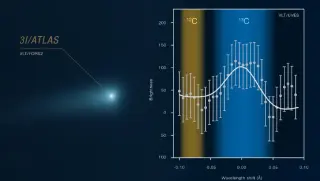
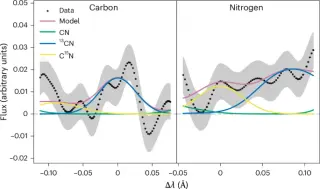
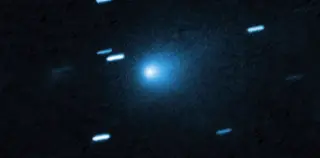
Astronomers using ESO's Very Large Telescope measured carbon and nitrogen isotope ratios in the interstellar comet 3I/ATLAS, finding carbon-12/carbon-13 ~151 and nitrogen-14/nitrogen-15 ~363. These values are higher than typical solar-system comets, suggesting formation in the cold outer disk around an older, metal-poor star, consistent with isotope-selective chemistry in such environments. The results, published online July 6, 2026 in Nature Astronomy, provide a rare glimpse into material from another planetary system and the efficiency of planetesimal formation around ancient stars.
Astronomers measuring CN isotopologues in the interstellar comet 3I/ATLAS find unusually high 12C/13C (~151) and 14N/15N (~363) ratios, higher than Solar System comets and closer to interstellar/outer-disk values, implying 3I formed in the outer disk around an old, low-metallicity star and offering rare clues about planetesimal formation under different stellar environments.
Astronomers using JWST spectroscopy found that interstellar comet 3I/Atlas has a chemical makeup unlike any solar-system object, with high CO2 and low NH3 and distinctive isotope fingerprints (D/H and 12C/13C) indicating formation in a very cold protoplanetary disk around an ancient star roughly 12 billion years ago; as only the third known interstellar object, 3I/Atlas provides a fossil record of planetary systems in the early Milky Way, and upcoming surveys (like NEO Surveyor and the Rubin Observatory) are expected to uncover more such visitors.
Astronomers have detected a prominent ring in the disk around a young star, seen as a likely site where planets form. The ring’s structure and gaps suggest ongoing planet-building activity within a protoplanetary disk, offering new clues about how planetary systems originate, though follow-up observations are needed to confirm active planet formation inside the ring.
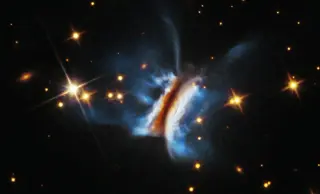
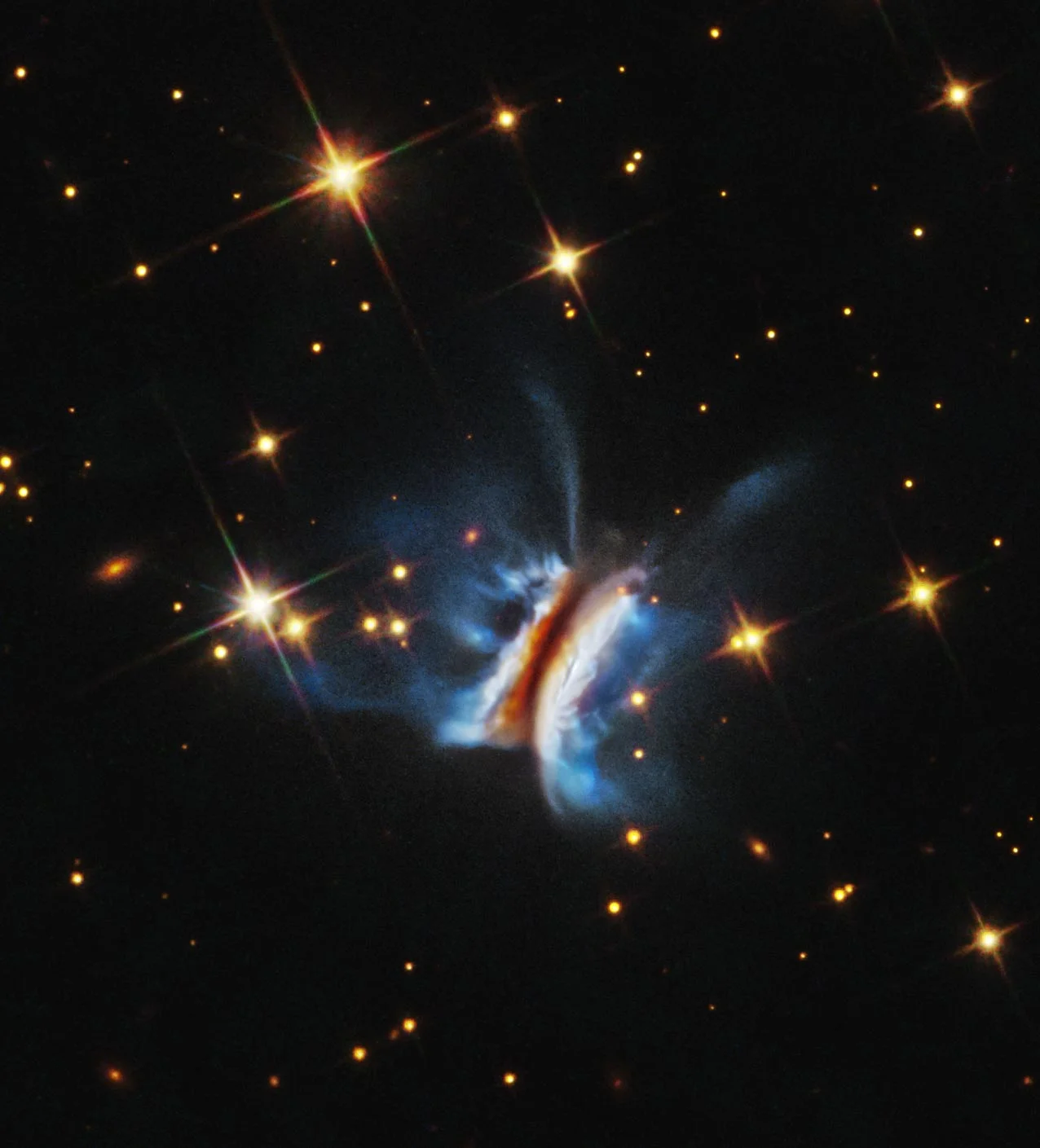
NASA's Hubble Space Telescope captured the sharpest visible-light images yet of a colossal, highly irregular protoplanetary disk around a young star about 1,000 light-years away, nicknamed Dracula’s Chivito. The disk spans roughly 400 billion miles (about 40 times the solar system’s diameter to the Kuiper Belt) and is filled with massive, uneven filaments and wisps, suggesting turbulent accretion or external influences. With a mass estimated at 10–30 Jupiter masses, it could form several giant planets, underscoring that planet formation can be far more chaotic and dynamic than traditional models suggest. Future observations may reveal whether the central star is single or binary and shed light on how such extreme environments shape emerging planetary systems.
ALMA observations of interstellar comet 3I/ATLAS show a deuterium-rich water signature, indicating it formed in a colder, outer region of a protoplanetary disk around another star, making it a time capsule from the galaxy’s early days.
Using JWST's near-infrared imaging, researchers directly imaged 29 Cygni b and found it metal-rich with an orbit aligned to its star, consistent with formation in a protoplanetary disk via rapid accretion; at about 15 Jupiter masses it’s a planet, not a star.
Using JWST imaging of 29 Cygni b, a ~15-Jupiter-mass exoplanet about 133 light-years away, researchers find the planet is unusually metal-rich and its orbit aligns with its star, suggesting it may have formed in a protoplanetary disk via bottom-up accretion rather than simple direct collapse. This links the formation of some of the Milky Way’s most massive planets to the same disk-based processes that birth smaller worlds.
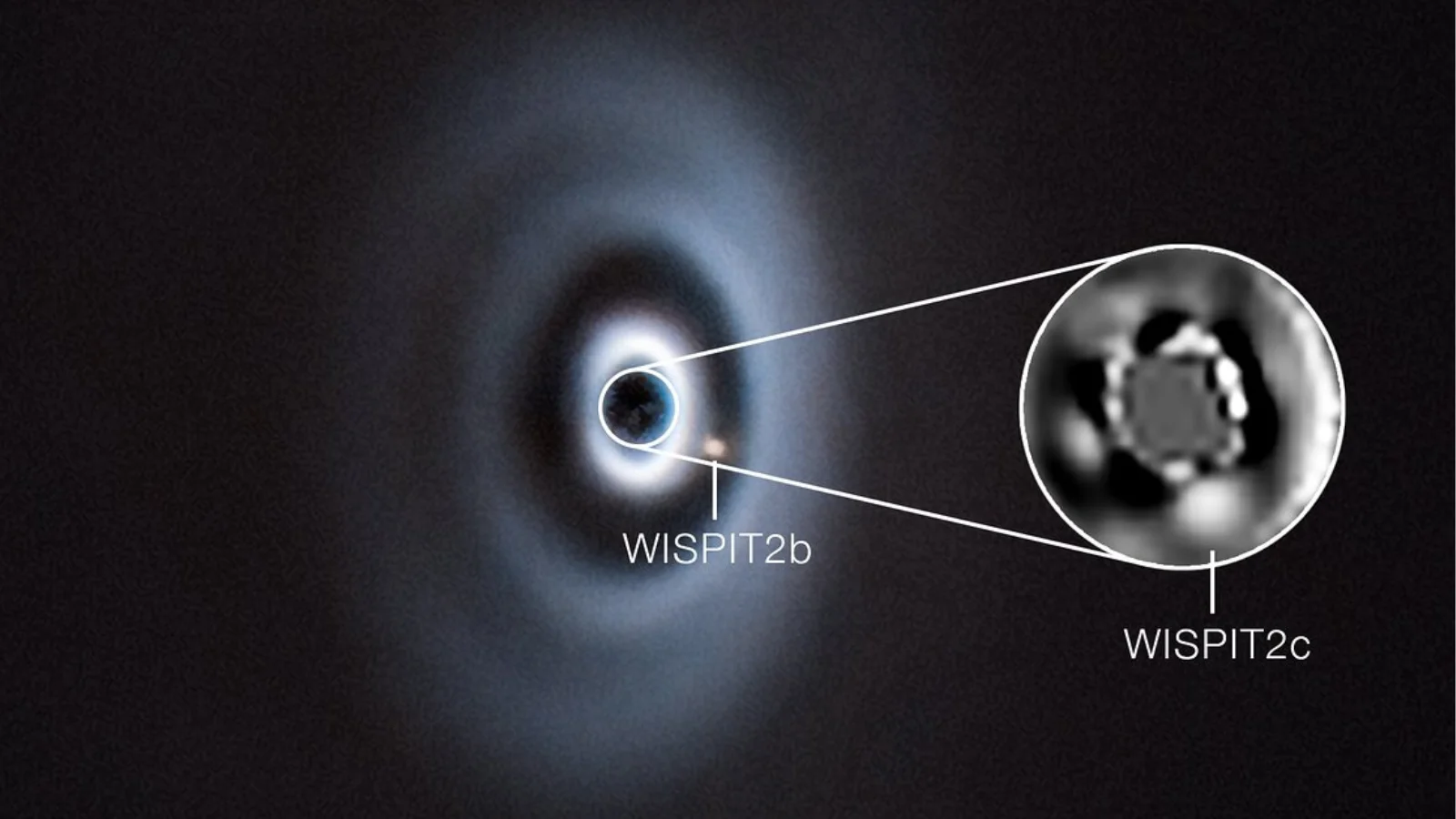
Astronomers directly observed two planets forming around the very young star WISPIT 2, about 437 light-years away. A distant giant, WISPIT 2b, sits at 57 AU with ~5 Jupiter masses, while a closer planet, WISPIT 2c, lies at 14 AU with 8–12 Jupiter masses. The system’s disk shows multiple rings and gaps, hinting at a possible third planet and offering a rare glimpse into how our Solar System may have formed; future imaging with the Extremely Large Telescope could reveal more.
Astronomers studying the young star WISPIT 2, located about 437 light-years away and ~5.4 million years old, have directly detected two forming planets—WISPIT 2b and WISPIT 2c—in the star’s surrounding protoplanetary disk, carving gaps as they grow. Hints of a third planet farther out have researchers hopeful, and the system offers a rare look at how solar systems like our own form; observations via the VLT (with SPHERE and GRAVITY+ upgrades) suggest future clues may be revealed by the ELT.
NASA’s Hubble Space Telescope has captured the largest known protoplanetary disk around the young star IRAS 23077+6707 (nicknamed Dracula’s Chivito), extending about 400 billion miles—roughly 40 times the Solar System’s diameter. Seen nearly edge-on in visible light, the disk is unusually turbulent and asymmetric, with filament-like features on one side and a sharp edge on the other, hinting at dynamic infall of material and environmental interactions. With an estimated mass 10–30 times Jupiter’s, the system may host a large planetary system and provides a valuable laboratory for understanding planet formation in extreme conditions.
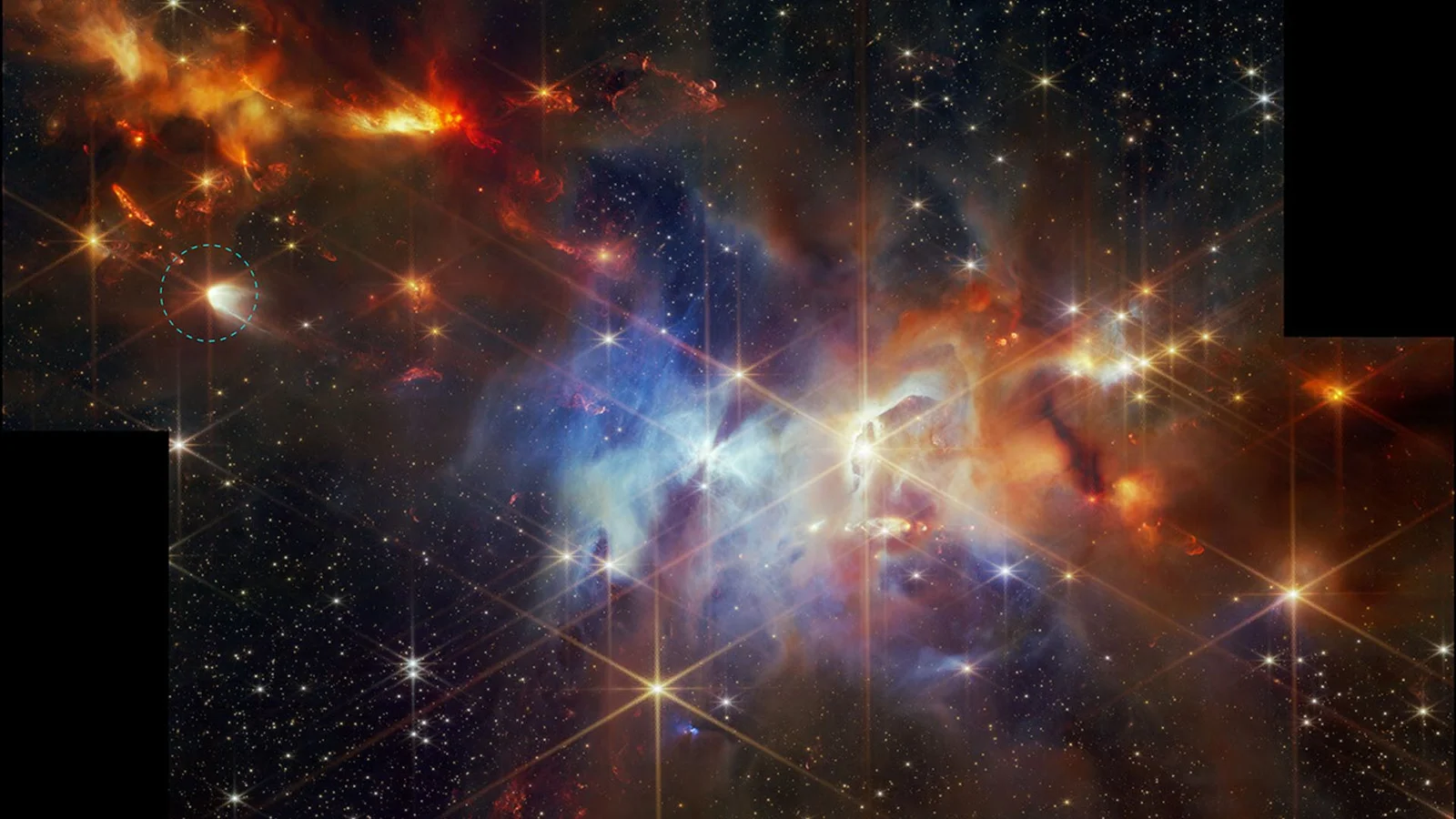
NASA’s James Webb Space Telescope mapped where crystalline silicates form around the young star EC 53 in the Serpens Nebula and showed these minerals being carried outward by winds into the outer, planet-forming disk. EC 53 undergos ~18-month bursts lasting about 100 days, forging silicates in hot regions and launching them into cooler outer regions, effectively seeding the outer disk with components that icy comets may carry—providing a direct link between crystal formation and distribution in early planetary systems. The findings, published in Nature, help explain how comets at the solar system’s edge could form.