Tag

Randomized Controlled Trial

All articles tagged with #randomized controlled trial

Ten Minutes to a Brighter Mood: Brief Online Interventions Cut Depression After One Month
health1 month ago

Ten Minutes to a Brighter Mood: Brief Online Interventions Cut Depression After One Month

Researchers tested 12 self-guided, under-10-minute online interventions with 7,505 adults; while most participants felt hopeful immediately after, only two—Interactive Cognitive Reappraisal and Finding Focus—produced a small, ~4% greater reduction in depressive symptoms after one month compared with a control, suggesting brief, scalable tools can provide modest, accessible support but are not a substitute for therapy.

Brief online exercises yield small but real depression relief in a large trial
health1 month ago

Brief online exercises yield small but real depression relief in a large trial

In a large randomized trial with 7,505 American adults, researchers tested 12 self-guided, under-10-minute online interventions for depression. Most boosted immediate hope and motivation, but only two—Interactive Cognitive Reappraisal and Finding Focus—produced meaningful depression reductions after one month, about 4% more than the control. Despite the small average effects, the free, brief format offers global scalability that could expand access to evidence-based support and complement traditional treatments where therapy is scarce or costly.

Imagery Rescripting: A Defender Rewrites Childhood Memories to Relieve Fear of Failure
psychology1 month ago

Imagery Rescripting: A Defender Rewrites Childhood Memories to Relieve Fear of Failure

A three-arm randomized trial with 180 young adults found that imagery-based therapies—imagery exposure, standard imagery rescripting with a defender, and a delayed version—significantly reduced fear of failure and negative emotions, and dampened physiological stress when recalling harsh childhood memories, with effects lasting at least six months. Benefits were strongest when a prediction error or surprise occurred during rescripting; the delayed variant did not outperform standard Imagery Rescripting.

Two Days of Oats Trim LDL Cholesterol by 10% and Rewire Gut Bacteria
health-and-medicine1 month ago

Two Days of Oats Trim LDL Cholesterol by 10% and Rewire Gut Bacteria

A two-day, calorie-restricted, oat-dominant diet reduced LDL cholesterol by 10% in people with metabolic syndrome, with modest weight loss and lower blood pressure, and benefits persisted six weeks. The effect appears linked to changes in gut bacteria and their metabolites; a longer, less intensive oat plan yielded smaller gains.

One Short DMT Dose Sparks Lasting Depression Relief in Phase IIa Trial
health1 month ago

One Short DMT Dose Sparks Lasting Depression Relief in Phase IIa Trial

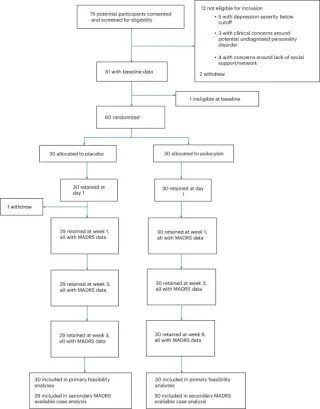
A Phase IIa randomized trial found that a single 21.5 mg IV dose of DMT, producing a ~25-minute psychedelic experience, yielded rapid and durable antidepressant effects in adults with moderate-to-severe treatment-resistant depression—MADRS scores dropped more than placebo within one week and effects persisted up to six months for some participants; efficacy correlated with the intensity of the peak experience, and the brief session could be more cost-effective and easier to implement than longer psychedelic therapies, though larger trials are needed and use is restricted to controlled clinical settings with professional support.

"Optimizing Nitroglycerin Dosage: The Case for High Doses"
medical-research2 years ago

"Optimizing Nitroglycerin Dosage: The Case for High Doses"

A recent randomized controlled trial compared high dose intravenous nitroglycerin to low dose for treating sympathetic crashing acute pulmonary edema (SCAPE) and found that high dose nitroglycerin resulted in significantly improved outcomes, with 65% of patients experiencing symptom resolution at 6 hours compared to 12% in the low dose group. The study, although small and single-center, suggests that higher doses of nitroglycerin may be more effective in managing SCAPE, potentially prompting a change in practice while awaiting larger studies.

Vitamin D Supplements: A Promising Defense Against Cardiovascular Events
health2 years ago

Vitamin D Supplements: A Promising Defense Against Cardiovascular Events

A randomized controlled trial called the D-Health Trial investigated the effects of monthly vitamin D supplementation on major cardiovascular events in older adults. The trial involved 21,315 participants aged 60-84 years and found that vitamin D supplementation might reduce the incidence of major cardiovascular events, particularly among those taking cardiovascular drugs at baseline. However, the absolute risk difference was small, and further evaluation is needed to determine the role of vitamin D supplementation in preventing or treating cardiovascular disease.

Naltrexone Benefits Cirrhotic Patients with AUD.
health2 years ago

Naltrexone Benefits Cirrhotic Patients with AUD.

Naltrexone can be safely administered to patients with alcohol use disorder (AUD) and compensated cirrhosis to help them achieve abstinence and decrease craving, according to the first randomized controlled trial. After 3 months, 64% of patients who received naltrexone were abstinent from alcohol, compared with 22% of patients who received placebo. Naltrexone was found to be safe for patients with compensated cirrhosis. The study showed that patients who consumed fewer than 17 drinks per month at baseline were more likely to achieve abstinence.

The Harmful Dominance of Ultra-Processed Foods in American Diets.
health2 years ago

The Harmful Dominance of Ultra-Processed Foods in American Diets.

Ultra-processed foods, which make up nearly 60% of what the typical adult eats and nearly 70% of what kids eat, have been linked to health concerns ranging from increased risk of obesity, hypertension, breast and colorectal cancer to dying prematurely from all causes. A randomized controlled trial found that people on an ultra-processed diet ate about 500 calories per day more than when they were on an unprocessed diet and gained weight and body fat. Researchers are still not completely sure what it is about this category of food that appears to make us sick, but they are exploring the highly processed nature of these foods as a possible cause.