Tag

Relativity Space

All articles tagged with #relativity space

Impulse Space Joins US Military Launch Race with Helios Kick-Stage
technology2 days ago

Impulse Space Joins US Military Launch Race with Helios Kick-Stage

US Space Force expands Phase 3 to add Impulse Space and Relativity Space to Lane 1, bringing newer entrants into high-energy GEO-capable launches. Impulse Space, though focused on in-space propulsion, plans to use its Helios kick-stage to boost payloads up to 9 km/s delta‑V and integrate with boosters from Falcon 9, ULA, Rocket Lab, Relativity Space, and more; it must demonstrate Helios in flight before it can win task orders, with launches expected 18–24 months after award. The company shipped a Helios run tank for testing and reports good Deneb engine progress, aiming for a 2027 debut on Falcon 9. Lane 1 exists to diversify competition, while Lane 2 covers established providers like SpaceX and ULA.


Space Force broadens security-launch roster with Relativity Space and Impulse Space
military3 days ago

Space Force broadens security-launch roster with Relativity Space and Impulse Space

The U.S. Space Force added Relativity Space and Impulse Space to the National Security Space Launch Phase 3 Lane 1 pool, expanding pre-qualified options for lower-risk national-security missions; Relativity Space’s Terran R is a mid-lift candidate, while Impulse Space provides orbital transfer vehicles and the Helios upper stage to complement a partner launcher, signaling a shift to integrated transport services and greater commercial competition; Lane 2 remains for the military’s most demanding, fully certified missions.

Relativity Space to Build NASA’s 2028 Mars Orbiter in Private-Public Pact
space22 days ago

Relativity Space to Build NASA’s 2028 Mars Orbiter in Private-Public Pact

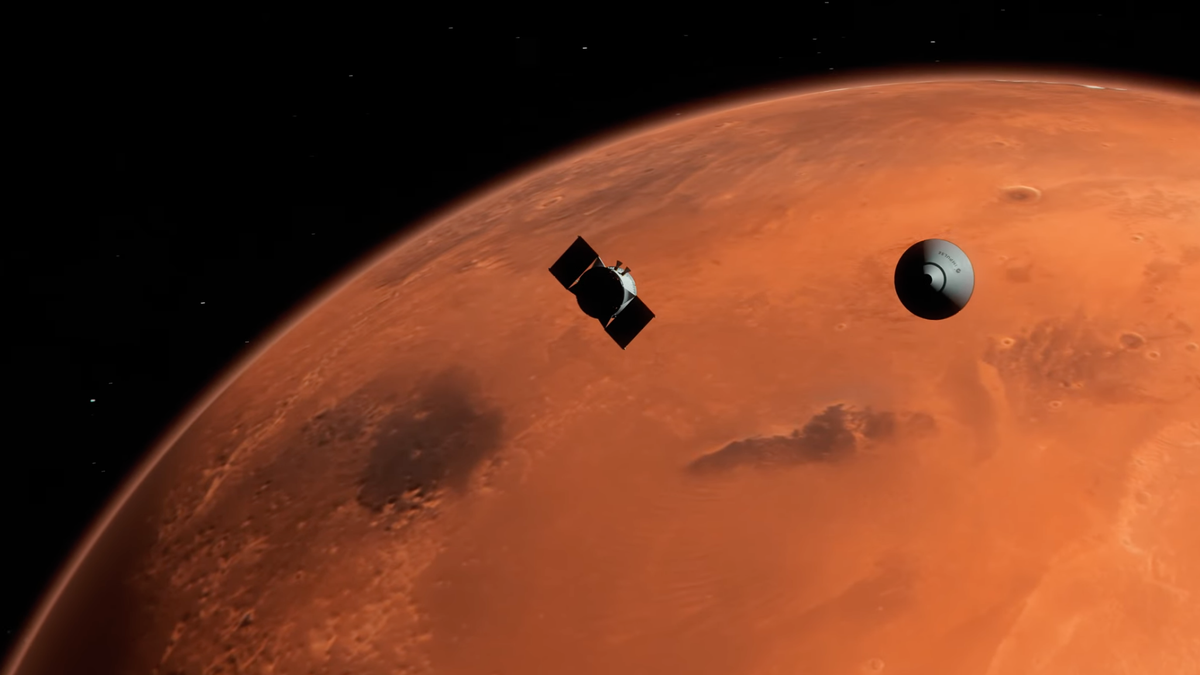
NASA has announced a public-private partnership with Relativity Space to design, build, and launch the Aeolus Mars orbiter in 2028. The mission will carry four instruments to measure Mars’ winds, temperatures, dust and clouds, providing daily global atmospheric data to improve models and reduce risks for future robotic and crewed missions. The spacecraft will be designed and built at NASA’s Ames Research Center in California and integrated with Relativity’s Terran spacecraft, despite Relativity’s Terran 1 previously failing to reach orbit; the venture aims to operate for at least one Martian year (~687 Earth days).

Pad rebuild, Mars mission, and trademark shake-ups headline this Rocket Report
space22 days ago

Pad rebuild, Mars mission, and trademark shake-ups headline this Rocket Report

Blue Origin has begun rebuilding its Florida launch pad after a New Glenn explosion and plans to fly again by year-end, while Relativity Space unveils an Interplanetary Sciences Program aiming for a 2028 Mars orbiter on Terran R; Latitude changes the Zephyr name due to trademark risk, Zhuque-2E upper stage breaks up in orbit, Japan’s H3 returns to flight, AST SpaceMobile’s satellites ride a SpaceX Falcon 9, and Ariane 6 advances for Amazon’s launcher needs.

Schmidt-backed Relativity Space targets privately funded Mars orbiter for 2028 with NASA Aeolus instruments
space23 days ago

Schmidt-backed Relativity Space targets privately funded Mars orbiter for 2028 with NASA Aeolus instruments

Relativity Space, led by Eric Schmidt since 2025, said it will privately build and fly a Mars orbiter in 2028 carrying NASA’s Aeolus atmospheric instruments and serving as a communications relay, funded by an unnamed philanthropic backer. The spacecraft would ride Relativity’s Terran R rocket, its first orbital launcher, which has yet to reach orbit (Terran 1 flew once and failed). NASA Ames will design and operate the payload, while Relativity would own the orbiter and manage the relay. If Terran R reaches orbit on schedule, a 2028 Mars transfer window could be feasible, but any slip would push the mission back. The plan tests a bold private‑public science push and raises governance questions if a private relay becomes the Mars data link.

Relativity Space Advances Private Mars Orbiter as Proof-of-Concept for Interplanetary Missions
space24 days ago

Relativity Space Advances Private Mars Orbiter as Proof-of-Concept for Interplanetary Missions

Relativity Space unveils an Interplanetary Sciences Program to privately pursue planetary missions, beginning with a 2028 Mars science and telecommunications orbiter that will carry NASA Ames atmospheric profiling gear and a radar for subsurface mapping, serve as a high-bandwidth communications node with AI-ready compute, and be launched on the Terran R, funded by an undisclosed philanthropic source as a proof-of-concept for future solar-system missions.

2026 Mars Landing Targeted by Private Space Company.
space3 years ago

2026 Mars Landing Targeted by Private Space Company.

Relativity Space and Impulse Space are planning to become the first commercial venture to land on Mars and launch regular missions to create a "constant supply chain to Mars." They aim to send at least one mission for every launch window, which opens up every 26 months. The companies hope to make transport to Mars more affordable and open up new possibilities for space exploration.

Impulse and Relativity aim for 2026 Mars lander launch.
space3 years ago

Impulse and Relativity aim for 2026 Mars lander launch.

Impulse Space and Relativity Space are targeting a 2026 launch for the first commercial robotic Mars lander mission, with plans for a regular series of such missions every 2.2 years. The companies aim to offer a catalog of different payload options and leverage designs and technologies developed for NASA’s InSight Mars lander. NASA is seen as one potential customer of those landers, and the companies want to demonstrate that there are companies both interested in and able to take on Mars missions.

"Revolutionizing Space: Relativity's Innovative Approach"
aerospace3 years ago

"Revolutionizing Space: Relativity's Innovative Approach"

Relativity Space, a California-based aerospace startup, is using 3D printing, robotics, and machine learning to manufacture cheaper and quicker-to-manufacture rockets for future missions to the moon and Mars. The company recently launched its first 3D-printed rocket and is continuing to test its technology. Relativity Space aims to challenge Elon Musk's SpaceX and is among a number of commercial entrants testing rockets that can carry payloads to orbit and ultimately complete missions. The company has secured $1.3 billion in funding and is valued at $4.2 billion.

NASA's Innovative Alloy Enables 3D Printed Rocket Launch by Relativity Space
space-technology3 years ago

NASA's Innovative Alloy Enables 3D Printed Rocket Launch by Relativity Space

Relativity Space launched the Terran 1, the first test rocket made entirely from 3D-printed parts, incorporating nine 3D-printed engines built using an innovative copper alloy known as Glenn Research Copper (GRCop), capable of withstanding temperatures nearing 6,000 degrees Fahrenheit. Developed at NASA’s Glenn Research Center, GRCop alloys offer high strength, thermal conductivity, and creep resistance, allowing them to tolerate temperatures up to 40% higher than traditional copper alloys. The GRCop alloys pair very well with the latest additive manufacturing methods, such as laser powder bed fusion and directed energy deposition, which can be used to build GRCop parts for many aerospace applications.

Relativity Space shifts focus to larger reusable rocket after shelving Terran 1.
space3 years ago

Relativity Space shifts focus to larger reusable rocket after shelving Terran 1.

Relativity Space has decided to retire its Terran 1 small launch vehicle after a single flight that failed to reach orbit, focusing its resources on a revised version of its larger Terran R rocket. The new Terran R design is a somewhat more conventional approach where only the first stage is recovered by landing on a ship downrange from the launch site, like SpaceX’s current Falcon 9 and other vehicles in development, such as Blue Origin’s New Glenn.

Relativity Space shifts focus to larger reusable rocket with new 3D-printing approach.
space3 years ago

Relativity Space shifts focus to larger reusable rocket with new 3D-printing approach.

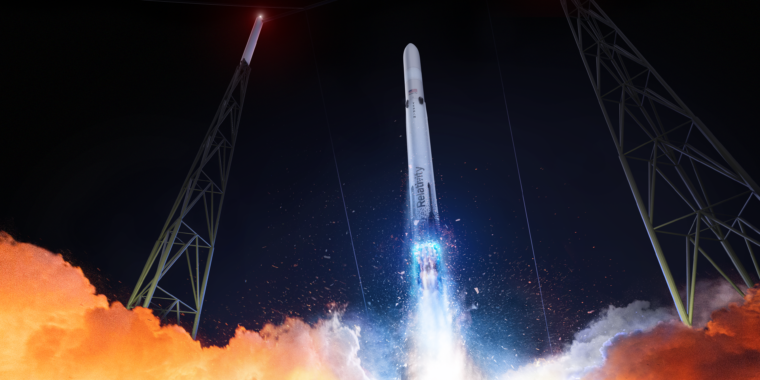
Relativity Space is moving on from its Terran 1 rocket after its debut launch failure and is now focusing on developing the Terran R rocket, which will be significantly larger and more powerful. The Terran R will have a fully expendable version capable of lifting 33.5 metric tons and a reusable version capable of 20 re-flights with a payload capacity of 23.5 metric tons to low-Earth orbit. The rocket will be powered by 13 Aeon engines and will land on a drone ship in the Atlantic Ocean. Relativity Space plans to launch the Terran R in 2026.

Relativity Space shifts focus to larger reusable rocket after Terran 1 launch.
space3 years ago

Relativity Space shifts focus to larger reusable rocket after Terran 1 launch.

Relativity Space is shifting its focus to its larger reusable rocket, Terran R, after the first launch of its 3D-printed Terran 1 rocket failed to reach orbit. The company is blending its 3D-printing approach with traditional metal-bending techniques to accelerate work on Terran R, which is expected to debut in 2026. Relativity has won launch deals from seven customers worth over $1.6 billion for future flights on Terran R, which can launch up to 33,500 kilograms and is above SpaceX's Falcon 9 rocket in terms of capability.

3D-printed rocket launches and failures in the news.
space-industry3 years ago

3D-printed rocket launches and failures in the news.

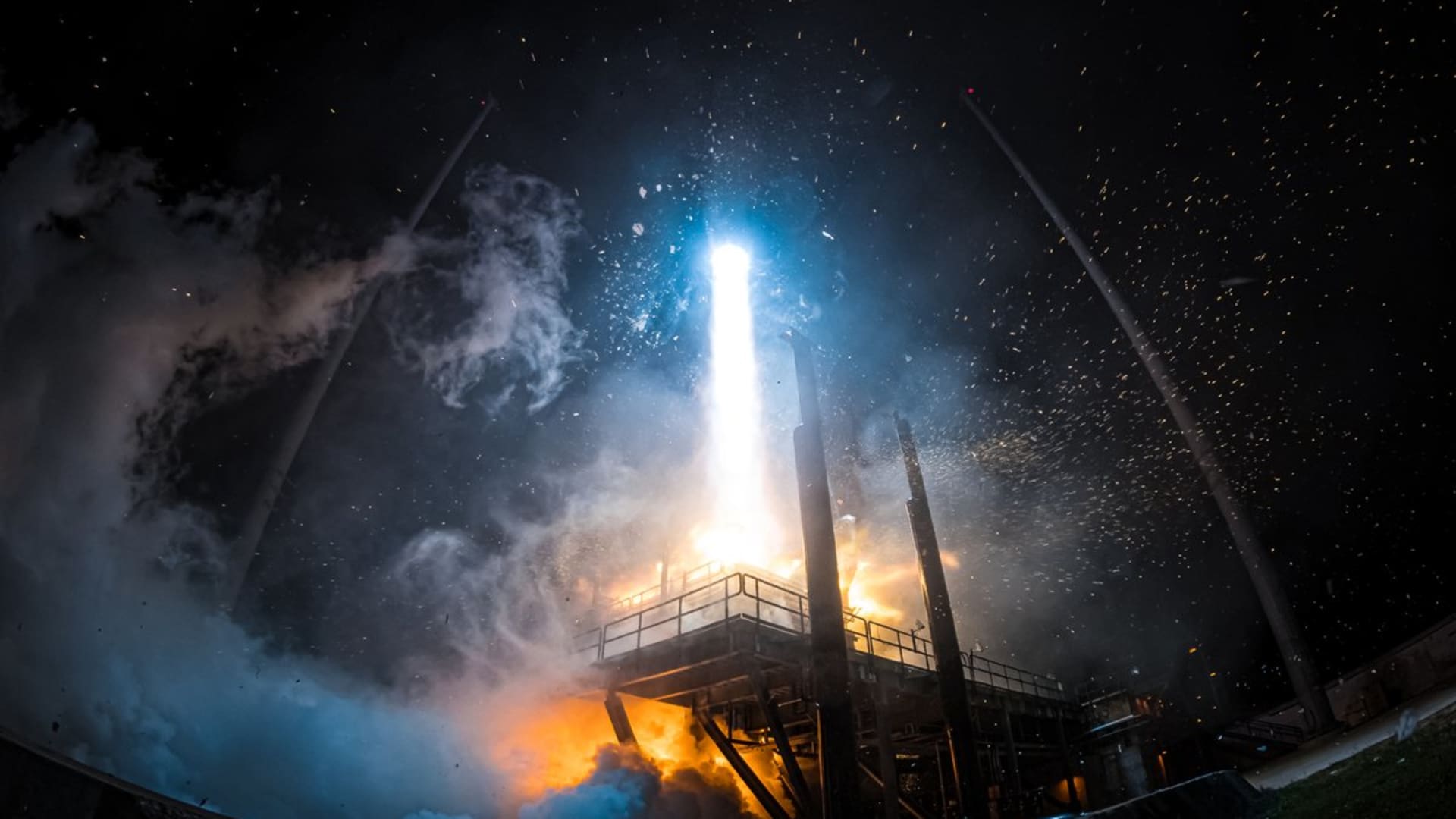
Relativity Space successfully launched its Terran 1 rocket on its third attempt, but the second-stage engine failed to ignite. Virgin Orbit may receive a $200 million investment from an investor named Matthew Brown. Innospace, a South Korean startup, successfully launched its Hanbit-TLV rocket, marking the first successful launch of a space launch vehicle in the Korean private sector. Stoke Space shared photos of its "hopper" vehicle that will test the ability of its second stage to land. Isar Aerospace provided an update on engine testing for its Spectrum rocket, while OHB announced it wants to no longer hold a majority stake in Rocket Factory Augsburg.