Internal Russian defense documents reveal a 2024 contract for 90 advanced missile launchers destined for Iran, contradicting US claims of minimal Russian support. The deal, linked to the LMUR guided missile, highlights deepening military ties between Moscow and Tehran despite Western sanctions and diplomatic tensions.
Leaked documents from Russian defense firm Vympel reveal a 2024 agreement to supply Iran with 90 advanced missile launchers for Mi-28 helicopters. The deal, designated 'K-10', contradicts US claims of minimal Russian support for Tehran. While delivery remains unconfirmed, the revelation highlights deepening military ties between Moscow and Tehran amid ongoing US operations in the Middle East.
Leaked commercial documents reveal that Russian defense firm Vympel agreed to produce 90 advanced guided missile launchers for Iran between 2024 and 2025. This contradicts President Trump’s recent assertions that Moscow is providing minimal support to Tehran. The revelation emerges amid a US midterm election landslide for Democrats and ongoing diplomatic tensions between Washington, Moscow, and Kyiv.
Leaked Russian defense documents indicate Moscow agreed to supply Iran with 90 launchers for advanced guided missiles, contradicting US claims of minimal support. The records, obtained by Ukrainian intelligence firm Dallas Analytics, detail a 2024-2025 production schedule for the LMUR missile system, highlighting deepening military ties despite Russian production constraints.
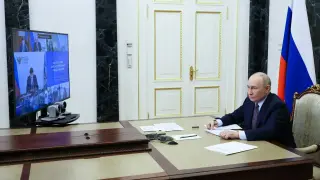
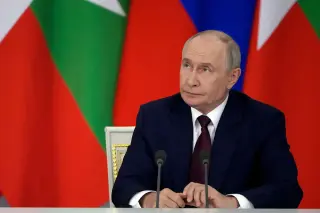
Russian President Vladimir Putin held talks with Iranian security official Mohsen Rezaei to discuss regional stability and strategic cooperation. Simultaneously, Turkey and Iran are investigating a deadly shooting incident along their shared border. Moscow has advised its citizens to avoid travel to Iran due to fears of renewed conflict, while analysts debate the extent of Russian and Chinese support for Tehran amid potential regime instability.
Russia and Iran are deepening nuclear cooperation despite international isolation. Moscow is continuing construction at the Bushehr plant and has agreed to build a new $25 billion facility at Sirik. This expansion occurs as the IAEA faces severe restrictions on inspecting Iranian sites, raising non-proliferation concerns.
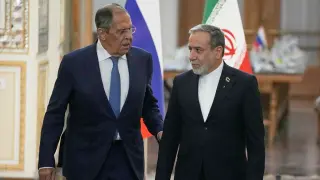
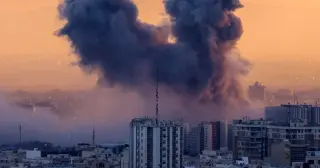
Russian Foreign Minister Sergey Lavrov reaffirmed Moscow's full support for Iran during a visit to Tehran, contradicting President Donald Trump's recent claims that Russia is doing little to help Tehran. Lavrov described Iran's cause as 'just' and pledged to maintain economic and investment ties, including the Bushehr nuclear plant and railway projects. This diplomatic push occurs amid ongoing US-Israeli strikes on Iran, which began in February 2026, and escalating tensions in the Strait of Hormuz. While Trump has eased sanctions on Russia to stabilize fuel prices and preserve Ukraine peace talks, he criticized Moscow for not supporting Iran more actively. Meanwhile, Houthi attacks on Saudi Arabia have intensified, prompting US security warnings for Americans in the Middle East.
Russian Foreign Minister Sergey Lavrov is visiting Tehran to discuss regional security and potential mediation, as Gulf states press Moscow to curb Iranian attacks. Simultaneously, Houthi strikes in Yemen and threats to shipping in the Strait of Hormuz have driven oil prices near five-month highs, despite recent US efforts to ease sanctions on Russian energy.
Russian President Vladimir Putin conveyed Tehran’s conditions for ending the Iran war to President Donald Trump following a meeting in Turkmenistan. This diplomatic move coincides with a new U.S. waiver allowing Russian diesel exports to stabilize global energy prices, a move Ukraine condemned as prolonging the war. Simultaneously, escalating Houthi attacks on Saudi airports have prompted Trump to consider direct U.S. military involvement in Yemen.
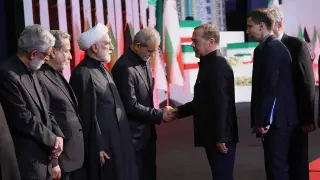
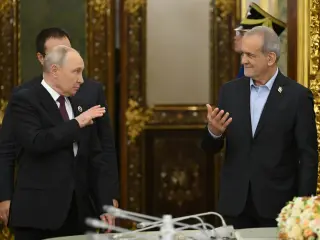
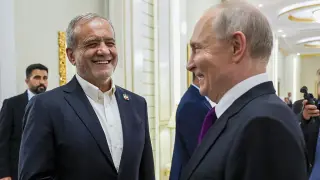
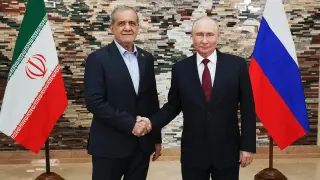
Vladimir Putin pledged to help end the war between the US and Iran during a meeting with Iranian President Masoud Pezeshkian in Turkmenistan. While Moscow positions itself as a potential mediator, Russia continues its fifth-year invasion of Ukraine. The two leaders discussed deepening strategic ties, including military cooperation and trade, despite ongoing US attacks on Iranian targets.
Russian President Vladimir Putin pledged to 'do everything' to help end the US-led war on Iran during a meeting with Iranian President Masoud Pezeshkian in Turkmenistan. The talks occurred on the sidelines of the Commonwealth of Independent States summit, highlighting deepening Moscow-Tehran ties. While Trump claims 'productive' US-Iran talks are ongoing, Pezeshkian described negotiations as 'meaningless' due to continued US attacks. Russia has offered to mediate the conflict, reinforcing its strategic partnership with Iran amid heavy Western sanctions.
A leaked 44-page Russian government document outlines a comprehensive 2024-2026 cooperation plan with Iran, focusing on alternative financial systems, nuclear energy, and infrastructure to bypass Western sanctions.
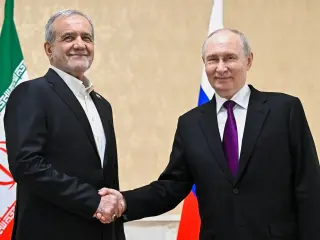
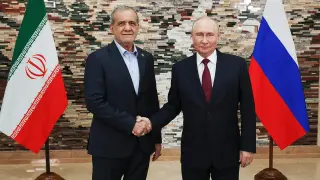
Russian President Vladimir Putin and Iranian President Masoud Pezeshkian met at the Shanghai Cooperation Organization summit in Bishkek, Kyrgyzstan, to reaffirm a deepening strategic alliance. Putin pledged full solidarity with Tehran as the U.S. continues military strikes against Iran. Experts describe the partnership as mutually dependent, with Russia providing military technology and political cover, while Iran supplies missile capabilities. The U.S.-Iran conflict has evolved into a 'test of will,' with Iran leveraging the Strait of Hormuz to disrupt global trade despite U.S. air and sea dominance.
At the Shanghai Cooperation Organization summit in Bishkek, Kyrgyzstan, Russian President Vladimir Putin and Iranian President Masoud Pezeshkian reaffirmed their alliance against U.S. economic pressure. Pezeshkian thanked Moscow for wartime support and declared that the two nations would collaborate to bypass unilateral American sanctions. Putin acknowledged a recent but fragile ceasefire between Iran and the U.S., pledging continued assistance to Tehran. The meeting underscores a deepening strategic partnership between Moscow and Tehran as both nations face mounting Western pressure.
US and European officials state that Russia is providing Iran with satellite surveillance and signals intelligence. This aid is believed to help Tehran locate US forces and jam American weapons during ongoing airstrikes. While the Kremlin denies sharing weapons, President Trump has downplayed the intelligence sharing, contrasting with Defense Secretary Pete Hegseth’s testimony that Russia is enabling Iranian actions.