Tag

Space Economy

All articles tagged with #space economy

SpaceX Goes Public: What $2,000 Could Grow Into
markets3 days ago

SpaceX Goes Public: What $2,000 Could Grow Into

SpaceX recently began trading (SPCX) with shares around $150 after a volatile debut; the street is mixed but mostly bullish, with six major banks setting buy-like targets near $210 (implying ~40% upside in a year) and Morgan Stanley suggesting as high as $300. CFRA, however, assigns a sell rating with a ~$115 target, underscoring the high-risk nature of valuing a company whose upside rests on future Starlink revenue, Starship economics, and Musk’s AI-satellite ambitions. An investor’s $2,000 stake is therefore a bet on whether SpaceX’s long‑term catalysts materialize, rather than a guaranteed win, and it should be sized to reflect substantial uncertainty and potential post-IPO selling pressure.

Space-Based AI Data Centers: The Economic Bet
business24 days ago

Space-Based AI Data Centers: The Economic Bet

SpaceX’s IPO windfall is accelerating plans for orbital AI data centers, with players like Blue Origin and Google pursuing space-based compute and large facilities. Yet economists say current costs aren’t yet competitive with Earth-based centers. Proponents argue perpetual solar power and potentially cheaper launch costs could shift the economics in coming years, while regulatory, environmental, and public pushback add risk. Numerous pilots and partnerships (Terafab, Starcloud, Rendezvous Robotics) are underway, but a clear path to profitability remains speculative.

Mueller's Impulse Space Aims to Taxi the Cosmos
money1 month ago

Mueller's Impulse Space Aims to Taxi the Cosmos

Tom Mueller—SpaceX’s former propulsion chief—founded Impulse Space to build in-space taxis that move satellites and cargo between orbits, with Mira and Helios vehicles designed to cut orbital transfers from months to about a day using in-house methane/oxygen propulsion. Impulse has raised roughly $1B and is valued around $4.3B as U.S. Space Force and NASA funding push a growing space economy; Helios aims for 4-ton payloads with first flight in 2027, while Mira has logged successful deployments despite a recent hiccup. The piece underscores both the promise of faster orbital logistics and the risk of competition from SpaceX as the fiscal and industrial scaffolding for a space economy expands.

Two Space Stocks to Watch as Space Economy Expands Before SpaceX IPO
business1 month ago

Two Space Stocks to Watch as Space Economy Expands Before SpaceX IPO

With SpaceX’s IPO anticipated on June 12 and PwC forecasting a $2 trillion space economy by 2040, AST SpaceMobile (ASTS) and Intuitive Machines (LUNR) stand out. ASTS aims to provide direct-to-cellular broadband from large LEO satellites and has deals with AT&T, Verizon, and Vodafone, planning 45–60 satellites this year despite a setback from Blue Origin’s New Glenn. LUNR is a vertically integrated space contractor winning major government contracts (SDA and NASA CLPS), lifting Q1 revenue to $186.7 million and carrying a backlog over $1.1 billion, signaling strong near-term revenue potential.

NASA opens JPL management to bids, forcing Caltech to compete for control
space1 month ago

NASA opens JPL management to bids, forcing Caltech to compete for control

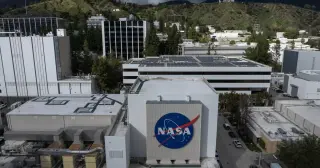
NASA will open the Jet Propulsion Laboratory’s management to competitive bidding for the first time, meaning Caltech must compete to keep control of the lab it has run since 1958; the 10-year contract is worth up to $30 billion and runs through September 30, 2028, as part of a broader NASA reorganization aimed at boosting efficiency and mission outcomes.

Space as a Service: Invest in Networks, Not Just Rockets
opinion2 months ago

Space as a Service: Invest in Networks, Not Just Rockets

The article argues that space is shifting from one-off hardware bets to a networked, service-based model. With thousands of satellites and fleets like Starlink, space infrastructure now provides ongoing connectivity, Earth observation, and secure communications. Investors should focus on companies that own or operate space networks and deliver recurring revenue (not just single-component suppliers), diversify across the value chain to reduce risk, and push for clear regulatory rules to enable long-term planning as the space economy could reach trillions by 2035.

Low Earth Orbit Emerges as a Global Infrastructure Boom
business3 months ago

Low Earth Orbit Emerges as a Global Infrastructure Boom

Low Earth Orbit is rapidly maturing from a niche tech domain into a strategic, multi-decade infrastructure play, with more than $45 billion invested in 2025 and over $400 billion in the space economy since 2009. Major players like SpaceX, Amazon, Blue Origin, Nvidia, and Eutelsat/OneWeb are expanding constellations and exploring orbital computing, signaling a new era of rapid connectivity, AI-enabled orbit infrastructure, and potential public-market opportunities. Regulators warn that governance must evolve from GEO-era rules to safely manage security, sovereignty, and space debris as commercial operators become the primary users of space.

SpaceX Prepares for Starship's 6th Test Flight with Innovative Launch Techniques
technology1 year ago

SpaceX Prepares for Starship's 6th Test Flight with Innovative Launch Techniques

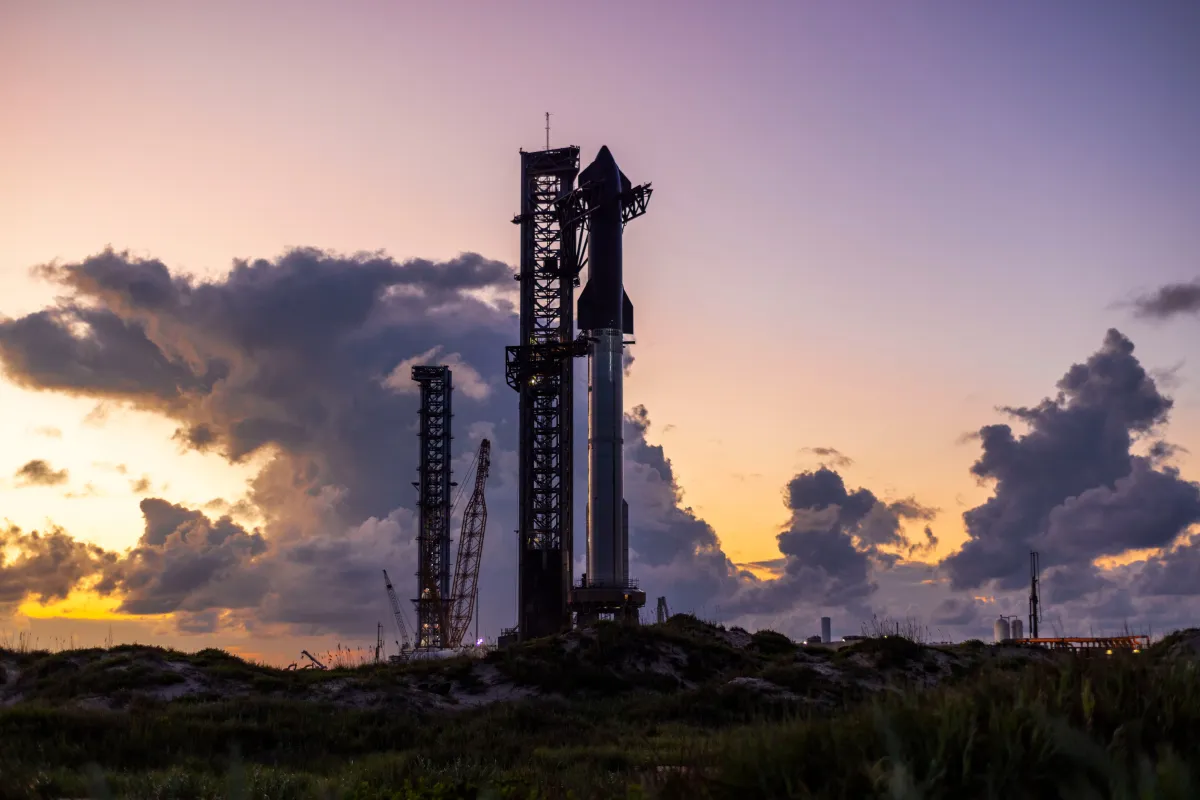
SpaceX's Starship, the largest and most powerful rocket ever built, aims to revolutionize the space economy by enabling fully reusable launches and potentially reducing costs to $2-3 million per launch. Originally conceived to facilitate interplanetary travel, Starship is crucial for NASA's Artemis program, which plans to land humans on the moon. Despite setbacks, including recent test failures, SpaceX is pushing forward with plans for Mars missions, with the next test flight scheduled for November 18. The rocket's development is supported by SpaceX's Starlink revenue and a $4 billion NASA contract.

"Establishing Ground Rules for Billionaires' Space Exploration"
space-exploration2 years ago

"Establishing Ground Rules for Billionaires' Space Exploration"

Billionaires like Elon Musk and Jeff Bezos are leading the charge in space exploration, with plans to industrialize the moon, asteroids, and Mars. However, there are currently no hard rules or regulations in place to govern these activities. As the space economy continues to grow, experts emphasize the need for governments to establish ground rules to prevent potential issues such as commercialization of celestial bodies and destabilization of the global economy. While existing space treaties provide some guidance, they lack enforceability, prompting calls for new regulations to govern the burgeoning deep-space industry.

"Northrop Grumman Chosen to Develop Lunar Railroad for US Government"
space-technology2 years ago

"Northrop Grumman Chosen to Develop Lunar Railroad for US Government"

DARPA has chosen Northrop Grumman to develop a "lunar railroad" concept as part of its 10-Year Lunar Architecture (LunA-10) Capability Study, aiming to facilitate sustained economic development on the moon. The envisioned network could transport humans, supplies, and resources for commercial ventures, contributing to a space economy for the United States and international partners. Northrop Grumman's study will define interfaces and resources required to build the lunar rail network, establish foreseeable risks, and explore concepts for constructing and operating the system with robotics. The selected companies will share their work at the Lunar Surface Innovation Consortium Spring Meeting next month and write up final reports to be released in June.

"Former Blue Origin President Leads Interlune's Helium-3 Moon Mining Mission"
space-exploration2 years ago

"Former Blue Origin President Leads Interlune's Helium-3 Moon Mining Mission"

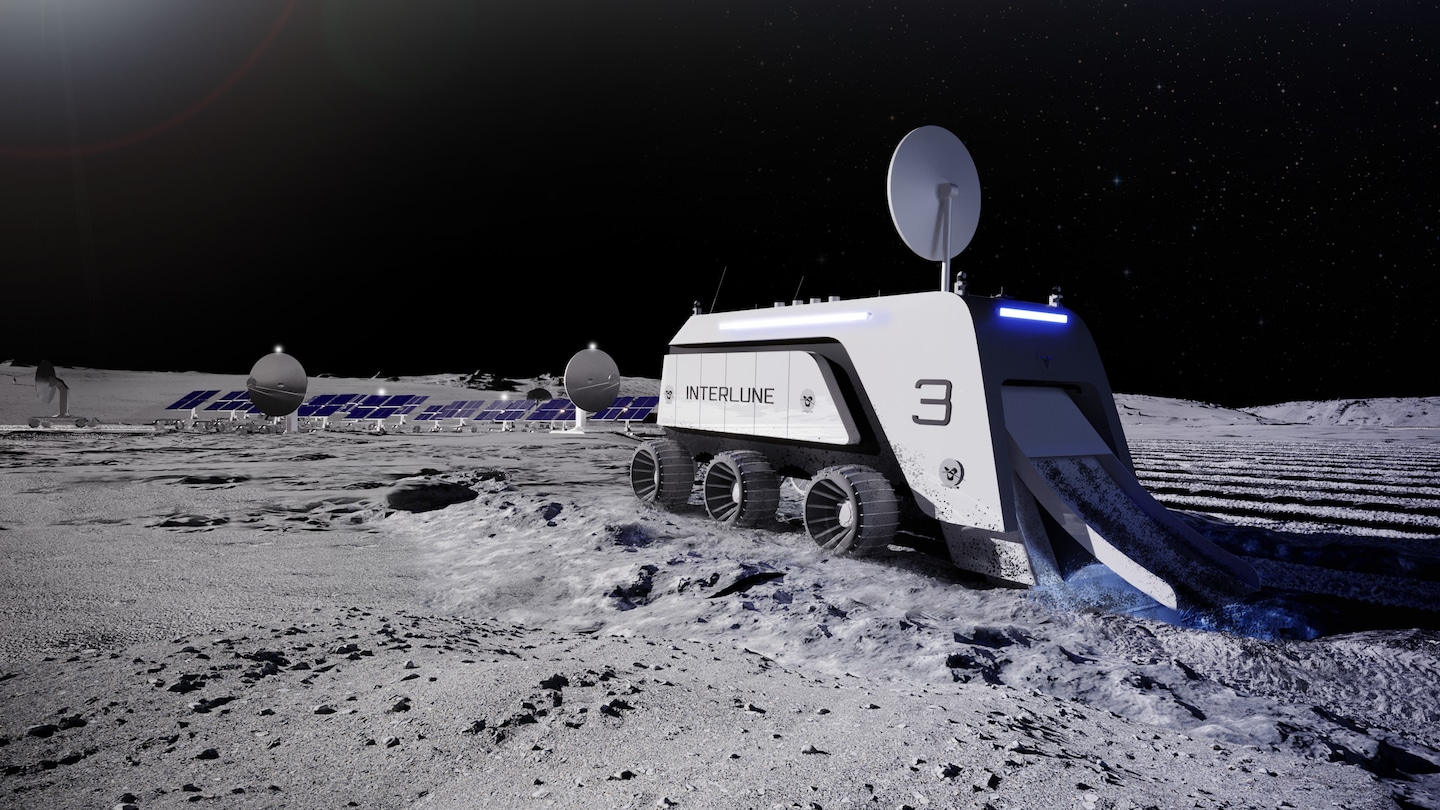
Former Blue Origin employees have founded a company, Interlune, to mine helium-3 on the moon and sell it on Earth, raising $15 million in funding. Helium-3, a rare isotope, is abundant on the moon's surface and has potential applications in quantum computing and fusion energy. With NASA's Artemis Program investing in lunar exploration, Interlune aims to capitalize on the growing interest in space resources, although significant technical and market challenges remain.

"Former Blue Origin President's Interlune Raises Millions for Helium-3 Moon Mining Mission"
space-exploration2 years ago

"Former Blue Origin President's Interlune Raises Millions for Helium-3 Moon Mining Mission"

Interlune, a private venture founded by former Blue Origin executives and an Apollo astronaut, has announced plans to mine the moon for Helium-3, a resource scarce on Earth but abundant on the moon. The company has raised $18 million and aims to develop technology to harvest and bring back lunar materials, with a focus on serving the quantum computing industry. Despite challenges and the need for new technologies, Interlune intends to conduct a prospecting mission by 2026 and hopes to begin full-scale operations by 2030. The company's funding round was led by venture capital firm Seven Seven Six, reflecting the growing appeal of the space sector to investors.

"New Space and Planetary Science Caucus Formed by Lawmakers"
space-and-planetary-science2 years ago

"New Space and Planetary Science Caucus Formed by Lawmakers"

Lawmakers have relaunched the bipartisan Planetary Science Caucus in Congress, led by Rep. Judy Chu and Rep. Don Bacon, to focus on advancing policies and federal investment in space science, including supporting research and exploration of space, tracking and mitigating near-Earth objects, searching for life in the solar system and beyond, and raising awareness of the economic benefits of space science and technology development. The caucus will also address budgetary scrutiny of major NASA endeavors and support the commercial space industry, amid a growing global space economy and a new space race involving nations like China, Russia, and India.

"Private U.S. Moon Lander Successfully Enters Lunar Orbit Ahead of Historic Landing Attempt"
space-exploration2 years ago

"Private U.S. Moon Lander Successfully Enters Lunar Orbit Ahead of Historic Landing Attempt"

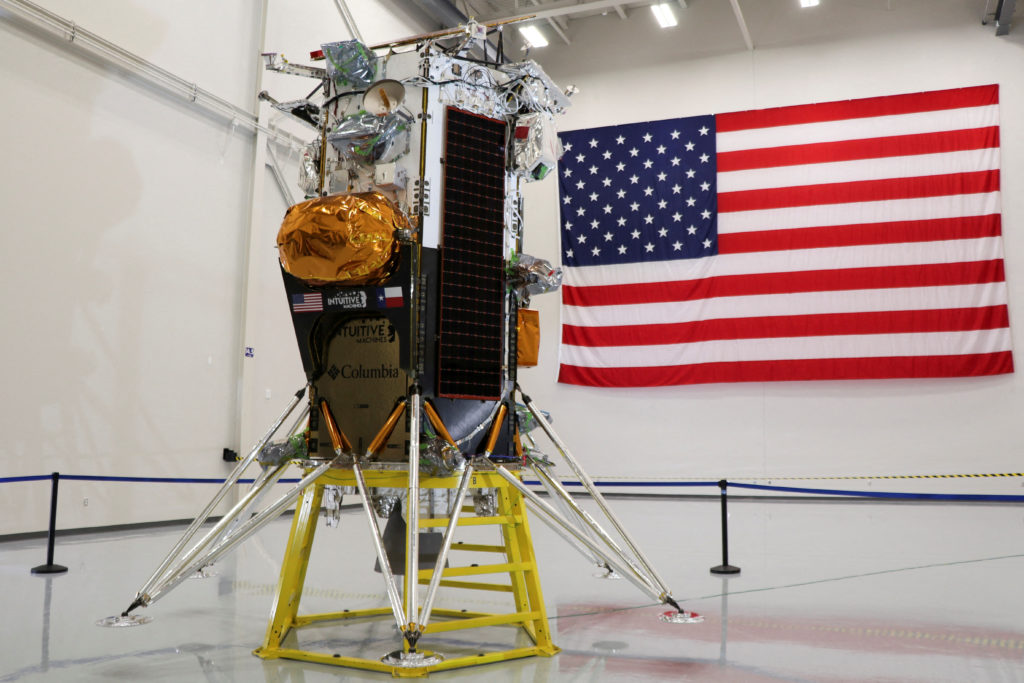
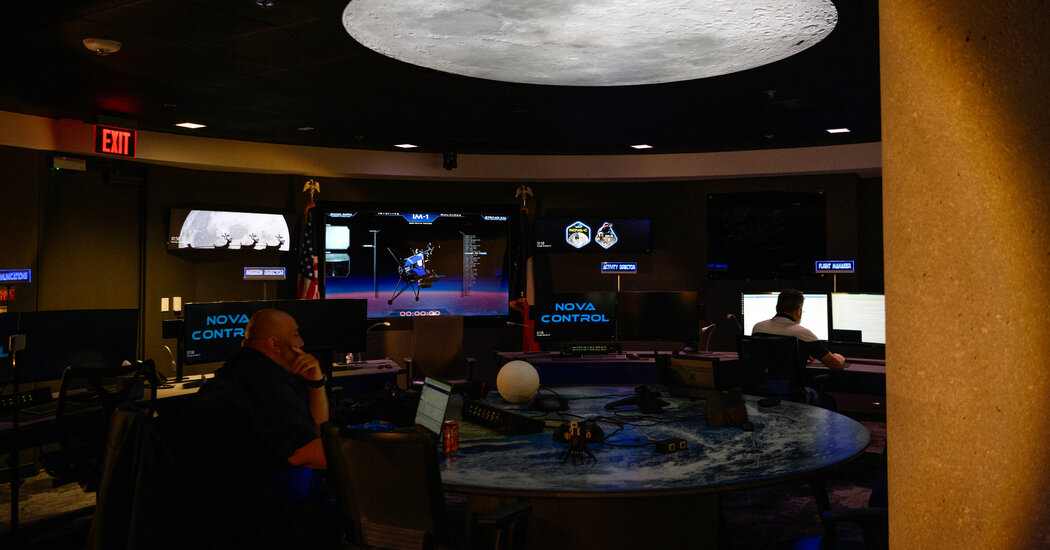
A private U.S. lunar lander, Intuitive Machines' Odysseus, has successfully reached low lunar orbit ahead of attempting a landing near the moon's south pole, a crucial maneuver that will occur on the moon's far side. If successful, this would mark the first private moon landing and the return of the U.S. to lunar exploration since the Apollo program. The mission, part of a NASA program to kickstart the lunar economy, carries experiments from NASA and other clients and aims to explore the prime real estate near the moon's south pole, believed to hold frozen water.

"Revolutionizing Space Exploration: Kam Ghaffarian's Moonshot Innovations"
business2 years ago

"Revolutionizing Space Exploration: Kam Ghaffarian's Moonshot Innovations"

Kam Ghaffarian, a billionaire space entrepreneur, is leading multiple companies focused on ambitious space projects, including sending a lander to the moon, building a space station, designing advanced nuclear reactors, and studying faster-than-light travel technology. His ventures are crucial in the partnership between NASA and private industry, commercializing space activity in ways that other prominent figures in the space industry have not pursued.