Tag

Spudcell

All articles tagged with #spudcell

SpudCell exposes how close we are to synthetic life—and how far we still are
science1 month ago

SpudCell exposes how close we are to synthetic life—and how far we still are

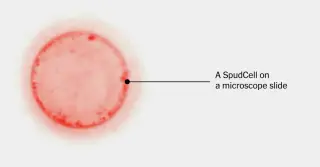
Scientists announced on July 2, 2026 that they created SpudCell, the first synthetic cell built from purified, nonliving components. While it can feed, grow, replicate genetic material and undergo a cell-like division, it is not autonomous: it relies on laboratory conditions and ongoing input of molecular machinery, and it cannot reproduce indefinitely. The milestone helps researchers study core cellular processes—membranes, gene expression, energy use, and growth—while offering potential safe, simplified platforms for disease research, drug delivery, and environmental sensing. It also highlights ongoing debates about what constitutes life, and underscores the need for safety, governance, and ethical oversight in synthetic biology.

Lab-made SpudCell: lifelike but not autonomous
science1 month ago

Lab-made SpudCell: lifelike but not autonomous

Scientists report SpudCell, a bottom‑up synthetic cell built from 36 purified enzymes and a fatty membrane with a minimal genome, which can feed, grow, and divide in a dish. However, it cannot produce its own energy, lacks full ribosomal machinery, and relies on externally supplied fats, sugars, and enzymes; its genome is distributed on plasmids and cell division can be imperfect. Described as a proof‑of‑principle rather than a living, autonomous organism, the work could someday enable new on‑demand chemical or pharmaceutical production, but peer review is pending and some scientists urge caution about hype and autonomy claims.

SpudCell: Minnesota researchers unveil a near-life synthetic cell built from nonliving components
science1 month ago

SpudCell: Minnesota researchers unveil a near-life synthetic cell built from nonliving components

University of Minnesota researchers report the creation of SpudCell, a life-like synthetic cell assembled from nonliving components that can grow, replicate its DNA and divide under lab conditions, featuring a 90,000-base-pair genome. After five generations, only about 30% of daughter cells inherited the complete synthetic genome, underscoring current limits. Published as a bioRxiv preprint (not peer-reviewed), the work marks a milestone toward artificial life but the cells require external nutrients and strict lab conditions and are far from self-sustaining, prompting ongoing biosafety and biosecurity discussions.

SpudCells Divide Briefly, Offering Clues About Minimal Life
science1 month ago

SpudCells Divide Briefly, Offering Clues About Minimal Life

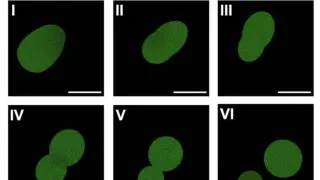
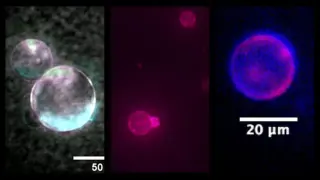
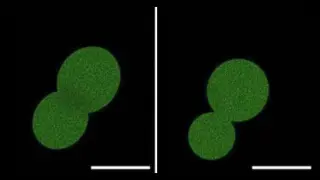
A Minnesota team built a simplified, membrane-encased system that imports nutrients and uses viral components to copy DNA, creating 'SpudCells' that feed, grow, and undergo a few rounds of division before genome pieces drift and are lost; the division is driven by merging with a food membrane and pore-protein clumping, enabling natural selection in this engineered protocell—useful for studying origin-of-life questions but not a true primitive cell.

SpudCell: first synthetic cell built from non-living components completes a full life cycle
science1 month ago

SpudCell: first synthetic cell built from non-living components completes a full life cycle

Scientists report creating SpudCell, the first synthetic cell assembled from non-living components that can grow, divide, and complete a life cycle using a 90-kilobase genome; while not yet peer‑reviewed and not truly self-sustaining or evolvable, the work provides a programmable chassis for future bioengineering and explorations of what defines life.

SpudCell: Open-source synthetic cells to run tiny, low-carbon factories
technology1 month ago

SpudCell: Open-source synthetic cells to run tiny, low-carbon factories

Scientists unveiled SpudCell, a bottom-up synthetic cell that can feed, grow and reproduce, designed to function as a tiny, open-access biofactory for sustainable materials and drugs. With Biotic hosting its patent and the University of Minnesota license, the project aims to democratize access to micro-scale bioengineering to accelerate low-carbon manufacturing, while prompting debates over governance, ethics and biosafety.

Researchers Build the First Synthetic Cell From Nonliving Chemistry
science1 month ago

Researchers Build the First Synthetic Cell From Nonliving Chemistry

Scientists have built SpudCell, a synthetic cell assembled from nonliving chemical components that can feed, grow and replicate for about five generations; though far simpler than natural cells and requiring externally supplied ribosomes, the work marks a milestone in synthetic biology toward understanding life's origins and enabling future bioengineering, with safety safeguards discussed and the core technology to be shared openly via Biotic.

SpudCell: the Open-Source Synthetic Cell That Feeds, Grows and Divides
science1 month ago

SpudCell: the Open-Source Synthetic Cell That Feeds, Grows and Divides

Scientists at the University of Minnesota created SpudCell, a manmade, liposome-encased system that can feed, grow, reproduce and compete for nutrients using a 36-gene gene set derived from a virus and E. coli; though not fully alive, it shows key life‑like traits and can evolve in mixed cultures. Researchers aim to add ribosomes and longer-term self-replication, and they've launched Biotic—a nonprofit to foster open collaboration while addressing biosafety.