Tag

Tess

All articles tagged with #tess

Twice-Earth-Sized Hot Sub-Neptune TOI-5734 b Uncovered
space1 month ago

Twice-Earth-Sized Hot Sub-Neptune TOI-5734 b Uncovered

An international team using TESS and HARPS-N confirmed TOI-5734 b, a hot sub-Neptune about 2.1 Earth radii and 9.1 Earth masses orbiting the young K-dwarf TOI-5734 every 6.18 days at roughly 0.06 AU (about 106 light-years away). With an equilibrium temperature around 688 K, the planet lies near the upper edge of the radius valley and is likely rocky with a largely stripped atmosphere, though a water-world scenario cannot be ruled out. The discovery, described in a February 2026 arXiv paper (DOI 10.48550/arxiv.2602.18108), leveraged three TESS sectors and HARPS-N data to illuminate atmospheric loss and inward migration in close-in exoplanets.

Astronomers Spot the Tiniest Packed Quadruple Star System
space-and-spaceflight1 month ago

Astronomers Spot the Tiniest Packed Quadruple Star System

Using NASA’s TESS data from 2019–2024, astronomers identified TIC 120362137 as the most compact 3+1 quadruple star system: an eclipsing binary eclipsed by a third star, plus a distant fourth star with a 1,045.5‑day orbit—the shortest outer period observed in such a configuration. The inner three stars are packed within Mercury’s orbital distance while the outer companion sits near Jupiter’s orbit. The team’s models suggest the inner trio will merge into a white dwarf in ~300 million years, leaving a double white-dwarf system with a ~44‑day orbit.

Record-breaking four-star system packs inner trio inside Mercury’s orbit
astronomy1 month ago

Record-breaking four-star system packs inner trio inside Mercury’s orbit

Astronomers using NASA’s TESS have found TIC 120362137, the most compact known 3+1 quadruple star system: a tightly bound inner triple is orbited by a distant fourth star, with the outer companion about the distance of Jupiter from the Sun, while the inner trio would fit inside Mercury’s orbit. This rare architecture helps scientists study how such systems form and stay stable, and simulations predict the system will eventually merge into two white dwarfs in a ~44-day orbit, a scenario described in Nature.

Distant Star Hosts a Nearly Five-Jupiter-Mass Gas Giant in a 180-Day Orbit
astronomy1 month ago

Distant Star Hosts a Nearly Five-Jupiter-Mass Gas Giant in a 180-Day Orbit

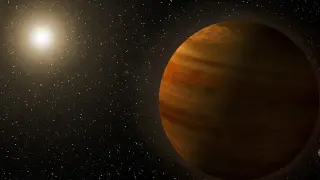
Astronomers using NASA's TESS have discovered TIC-65910228 b, a gas giant with about 4.8 Jupiter masses and a radius near 1.08 Jupiter radii, orbiting a metal-rich sun-like star 864 light-years away. The planet completes an ~180.5-day orbit at ~0.7 AU, placing it in the warm-Jupiter regime. Follow-up with NGTS, HARPS, and CORALIE confirmed the transit and radial-velocity signals, while atmospheric studies remain challenging but possible with next-generation telescopes. The system may also host moons or rings, making TIC-65910228 b a compelling target for future exploration.

TESS probes interstellar visitor 3I/ATLAS to reveal its spin
space2 months ago

TESS probes interstellar visitor 3I/ATLAS to reveal its spin

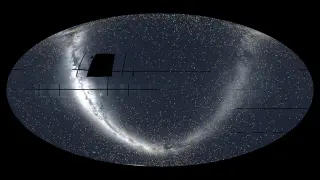
NASA's exoplanet-hunting telescope TESS observed interstellar comet 3I/ATLAS during Jan. 15–22, compiling a 28‑hour sequence to study the comet’s activity and rotation. The object appeared at about magnitude 11.5, and MIT researcher Daniel Muthukrishna stitched the observations into a video showing its trajectory as it leaves the solar system. Although TESS briefly entered safe mode, causing a time jump, the January data are publicly available, and scientists hope to infer how fast the nucleus spins and how dust and gas are shed from the comet.

NASA's Open-Source AI Flags 7,000 Exoplanet Candidates in TESS Sweep
science2 months ago

NASA's Open-Source AI Flags 7,000 Exoplanet Candidates in TESS Sweep

NASA released ExoMiner++, an open-source AI trained on Kepler and TESS data, which identified more than 7,000 exoplanet candidates from the first TESS data run by analyzing transit signals to separate real planets from false positives; the model’s open availability on GitHub aims to accelerate discovery and collaboration ahead of future missions like the Roman Space Telescope.

NASA's ExoMiner++ AI Expands Exoplanet Search Across Kepler and TESS
space2 months ago

NASA's ExoMiner++ AI Expands Exoplanet Search Across Kepler and TESS

NASA’s ExoMiner++ AI, trained on both Kepler and TESS data, identified ~7,000 exoplanet candidates from TESS in its latest run, expanding on the earlier ExoMiner success that validated 370 exoplanets from Kepler. The tool is open-source on GitHub, enabling researchers to search freely for planets in the growing public data, with future work aimed at extracting signals directly from raw data and informing upcoming missions like the Roman Space Telescope.

Nearby Star Hosts Newly Discovered Super-Earth Exoplanet
science9 months ago

Nearby Star Hosts Newly Discovered Super-Earth Exoplanet

Astronomers using NASA's TESS have discovered a super-Earth exoplanet, TOI-1846 b, orbiting a nearby M dwarf star about 154 light years away. The planet is roughly twice Earth's size, four times its mass, and likely water-rich, orbiting its star every 3.93 days. The discovery adds to TESS's catalog of over 7,600 candidate exoplanets and highlights the potential for further studies to determine its composition.

Citizen Scientists and Astronomers Discover a Massive New Gas Giant Exoplanet
science9 months ago

Citizen Scientists and Astronomers Discover a Massive New Gas Giant Exoplanet

NASA's TESS spacecraft, with the help of citizen scientists, discovered a rare, cool, and massive exoplanet called TOI-4465 b, located 400 light-years away. This gas giant, six times the mass of Jupiter, orbits its star at a relatively distant and elliptical orbit, making it an intriguing target for future study, especially with the James Webb Space Telescope. The discovery highlights the importance of global collaboration and citizen science in advancing astronomical research.