Tag

Triassic

All articles tagged with #triassic

Triassic Two-Legged Crocodile Relative Unearthed in New Mexico
science1 day ago

Triassic Two-Legged Crocodile Relative Unearthed in New Mexico

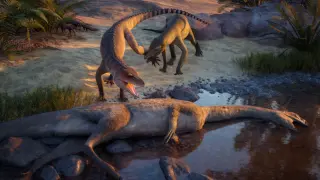
Paleontologists described Labrujasuchus expectatus, a new shuvosaurid archosaur from Hayden Quarry in northern New Mexico, about 212 million years old. This toothless, bipedal relative of crocodile ancestors helps fill a 10-million-year gap with Shuvosaurus and Effigia, reinforcing the idea that western North America hosted an endemic, morphologically conservative group of small, two‑legged archosaurs during the Triassic; the study was published online May 26, 2026 in the Journal of Vertebrate Paleontology.

Crocodile kin beats dinosaurs to beaked, two-legged form by 212 million years
science3 days ago

Crocodile kin beats dinosaurs to beaked, two-legged form by 212 million years

A new species, Labrujasuchus expectatus, from Ghost Ranch, NM, shows a two‑legged, toothless‑beaked crocodile relative that looked like a small theropod dinosaur but wasn’t a dinosaur. Dated to about 212 million years ago in the Late Triassic, it demonstrates convergent evolution—crocodile lineages and later dinosaurs independently arriving at a similar beaked, two-legged form under comparable ecological pressures. The find highlights how the crocodile branch explored a variety of body plans long before dinosaurs dominated the terrestrial fauna.

Triassic 'witch croc' from Ghost Ranch reveals a bipedal, toothless crocodile relative
science4 days ago

Triassic 'witch croc' from Ghost Ranch reveals a bipedal, toothless crocodile relative

A NHMLAC-led team describes Labrujasuchus expectatus, a beaked, toothless, bipedal crocodile-relative from the Late Triassic found at Ghost Ranch, New Mexico. Though its look mirrors dinosaurs, it’s still crocodile-line, illustrating convergent evolution and filling a gap between earlier and later shuvosaurs.

1.2-Meter Triassic Amphibian Preserved in Garden Wall
science23 days ago

1.2-Meter Triassic Amphibian Preserved in Garden Wall

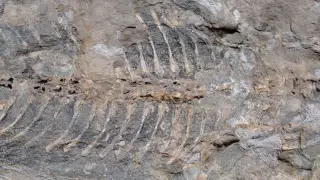
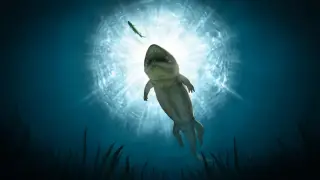
A 240-million-year-old temnospondyl amphibian, Arenaerpeton supinatus, was identified from a near-complete skeleton with skin impressions found inside a Sydney garden wall; about 1.2 meters long, it lived in Triassic freshwater and bore fang-like teeth, with the preservation of soft tissue offering rare insights into ancient amphibians and Australia’s fossil heritage.

Undergrad Uncovers Hidden Late-Triassic Carnivore, Redrawing Dino History
science27 days ago

Undergrad Uncovers Hidden Late-Triassic Carnivore, Redrawing Dino History

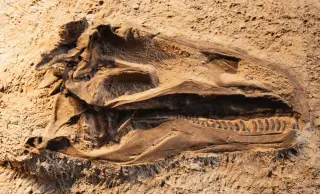
A deformed late-Triassic skull, once dismissed, was reassembled with CT scanning by Virginia Tech undergraduate Simba Srivastava, revealing Ptychotherates bucculentus, a previously unknown carnivorous dinosaur. The discovery, published in Papers in Palaeontology, suggests early dinosaurs diversified earlier than thought and that the Herrerasauria lineage persisted longer in the American Southwest, reshaping our understanding of dinosaur evolution before T. rex.

Girl on a UK beach uncovers jaw of giant Triassic ichthyosaur
animals1 month ago

Girl on a UK beach uncovers jaw of giant Triassic ichthyosaur

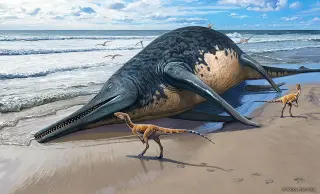
On a Somerset beach, 11-year-old Ruby Reynolds and her father found jaw fragments dating to about 202 million years ago, leading scientists to name Ichthyotitan severnensis, a colossal ichthyosaur potentially around 82 feet long—the largest marine reptile known—based on skeletal jaw evidence; the discovery, described in PLOS ONE, highlights how citizen science and coastal erosion can rewrite natural history.

Ghost Ranch fossil gains a name, revealing a new Triassic crocodylomorph
science1 month ago

Ghost Ranch fossil gains a name, revealing a new Triassic crocodylomorph

A fossil from Ghost Ranch, New Mexico, has been identified as a new genus and species of crocodylomorph, Eosphorosuchus lacrimosa, dating to the Late Triassic. Discovered in 1948 and stored in the Peabody Museum basement for about 75 years, it was previously mislabeled as Hesperosuchus agilis. Detailed comparison revealed a shorter snout, a reinforced skull, and a powerful bite, suggesting distinct ecological niches for two crocodylomorphs coexisting in the same environment and underscoring early diversification of crocodile relatives.

Ancient Crocodile Relative Built for Speed Found in England
archaeology2 months ago

Ancient Crocodile Relative Built for Speed Found in England

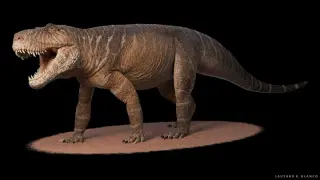
A 215-million-year-old crocodylomorph fossil unearthed in Gloucestershire has been identified as a new genus and species, Galahadosuchus jonesi, revealing a slender, upright, cursorial predator built for land speed rather than swimming and expanding our view of Late Triassic crocodile diversity ahead of the Triassic–Jurassic extinction.

Ancient crustacean with formidable jaws unearthed in Early Triassic China
science2 months ago

Ancient crustacean with formidable jaws unearthed in Early Triassic China

Researchers describe Yunnanocyclus fortis, a near-complete Early Triassic crustacean from the Guiyang biota in Guizhou, China, notable for preserved appendages and unusually robust mandibles that are highly mineralized. Three specimens reveal a broader distribution for cyclidans, extending into eastern Tethys, and support an early diversification after the Permian–Triassic extinction.

11-year-old uncovers colossal Triassic sea titan on Somerset beach
animals2 months ago

11-year-old uncovers colossal Triassic sea titan on Somerset beach

On a Somerset beach in 2020, 11-year-old Ruby Reynolds and her father found jawbone fragments that led scientists to identify Ichthyotitan severnensis, a giant ichthyosaur potentially about 82 feet long. Further fossils confirmed a whale-sized marine reptile from the Triassic, offering insights into ancient oceans and showing how a shoreline discovery can rewrite natural history.

Ancient Relatives of Dinosaur-Resilient Fish Discovered
science5 months ago

Ancient Relatives of Dinosaur-Resilient Fish Discovered

A new study reexamines over 50 fossils from the Late Triassic period in Britain, revealing they are ancient coelacanths, related to modern species, and correcting past mislabeling. These findings shed light on the diversity and ecology of coelacanths just before the end-Triassic extinction, emphasizing the importance of museum collections in scientific discovery.

Ancient Long-Necked Dinosaur Fossil Discovered in Argentina
science7 months ago

Ancient Long-Necked Dinosaur Fossil Discovered in Argentina

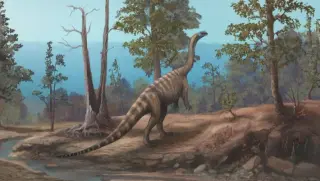
Argentinian scientists discovered a nearly complete skeleton of Huayracursor jaguensis, one of the world's oldest dinosaurs from the late Triassic period, providing valuable insights into early dinosaur evolution. The small herbivore, about two meters long and 18 kilograms, was found at high altitude in the Andes and dates back approximately 230-225 million years.