Stocks fell on Aug. 11 as hopes for a U.S.-Iran deal faded, with the Dow sinking over 180 points and the S&P 500 and Nasdaq retreating, while gold settled at a two‑month high amid caution ahead of inflation data.
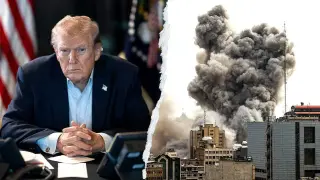
At halfway through a 60-day U.S.–Iran negotiating window, tensions have surged as Iran attacks ships and Washington conducts a broad strike campaign; Trump warns he could finish it off if diplomacy fails, even as officials say Iran remains open to a deal. With oil waivers revoked, a naval blockade back in place and 30 days left, the coming weeks will determine whether pressure yields an agreement or a broader war.
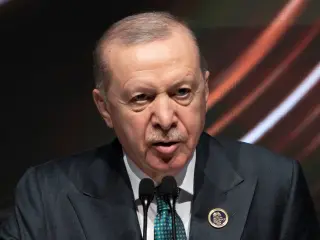
Turkish President Erdogan said lasting Middle East peace requires regional support and warned Israel must not be allowed to undermine the US-Iran deal. He criticized the current Israeli government as war-addicted, while noting indirect US-Iran talks in Qatar and a U.S.-brokered MoU that envisions a 60-day ceasefire, reopening the Strait of Hormuz, steps on Iran’s nuclear program, and a timetable for a final agreement amid tit-for-tat attacks between the US and Iran.
GCC states welcome a US-Iran memorandum of understanding as a pragmatic move to end the war and deter Tehran’s drone-and-proxy capabilities, signaling a shift toward diplomacy and regional mediation led by Qatar; they seek a broader security framework beyond nuclear constraints, while remaining wary of Hormuz-control issues and the unsettled dynamics with Israel and Tehran.
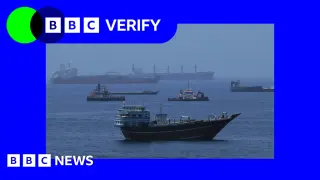
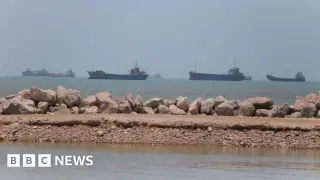
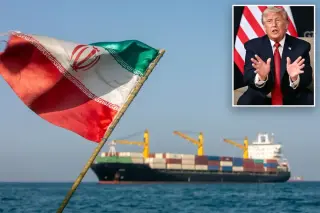
Since the US-Iran deal aimed at ending the conflict, the Strait of Hormuz has seen renewed shipping, with 172 vessels crossing and 42 on Saturday; more than 200 tankers remain waiting inside the strait as sanctions relief allows Iranian crude sales for 60 days. Traffic includes both resumed normal trade and some previously sanctioned tankers and LNG shipments, but overall crossings are still well below the pre-war daily average. The transit regime is being enforced by Iran’s PGSA with permit requirements, and mine concerns plus conflicting statements about the strait’s status continue to influence route choices and caution.
Israel says the new U.S.-Iran understandings and a deconfliction framework for Lebanon risk legitimizing Tehran's influence, constraining Israeli freedom to strike Hezbollah, and complicating Biden-era efforts to weaken Hezbollah, as negotiators pursue a staged Israeli withdrawal from southern Lebanon in exchange for Lebanese army deployment.
In Switzerland, the U.S. and Iran laid out a 60-day road map toward a final agreement amid tensions from Trump’s threats; in the U.K., Prime Minister Keir Starmer announced he will resign, triggering a leadership contest likely to be led by Andy Burnham. The roundup also highlights renewed calls for stricter safety regulations in extreme sports after three fatal accidents and notes Iran’s ongoing World Cup campaign despite logistical hurdles.
Lebanon says overnight Israeli strikes killed at least 18 in the south as Israel reports four of its soldiers killed by Hezbollah; the IDF says it hit about 80 Hezbollah targets and killed dozens, while Hezbollah says it ambushed an Israeli group and destroyed three tanks. The fighting unfolds despite a US-Iran deal intended to end hostilities and defend Lebanon’s sovereignty, though Israel says its conflict with Hezbollah is separate from the war on Iran. Lebanon’s health ministry cites about 3,912 dead and 11,699 wounded since the latest round began, with roughly a million displaced.
The US has ended its naval blockade of Iran after a signed memorandum of understanding to halt hostilities and reopen the Strait of Hormuz, while Iran’s Supreme Leader expressed initial disagreement but allowed the deal to proceed; the MoU ties any benefits to full compliance, including destroying Iran’s stockpile of enriched uranium and ending support for proxy groups, and envisages a 60-day window for further talks and a $300 billion reconstruction fund, amid ongoing regional tensions with Israel and Hezbollah.
Live updates show Israeli strikes in southern Lebanon killing three people as Hezbollah fighters clash with the Israeli military; despite the US-Iran agreement to end the war on all fronts, Trump calls for a complete ceasefire on all fronts. The US ends its blockade of the Strait of Hormuz, a 60-day window to reach a final Iran deal begins, and EU and Israeli leaders react as diplomacy continues amid regional tensions.
Israel reacted with disbelief to Trump’s preliminary U.S.-Iran agreement to end the war, arguing it achieves none of Israel’s war aims, could constrain its leverage in Lebanon, and may empower Tehran financially and militarily as U.S. forces withdraw; analysts call it a “catastrophic capitulation” that leaves Israel weaker on missiles, proxies like Hezbollah, and the nuclear issue, with Netanyahu largely silent while others condemn the deal.
Gulf Arab states are frustrated that a preliminary US-Iran peace deal does not address Iran's missiles or drones, raising doubts about Washington's ability to guarantee regional security and prompting leaders to consider bolstering air defenses and diversifying alliances.
The memorandum of understanding with Iran confirms toll-free passage through the Strait of Hormuz for 60 days and notes that fees could be applied later; Trump downplayed the step, saying you can’t cover everything in a document and that common sense will prevent tolls, even as Iran says it will start charging after 60 days. The toll-free window, along with related controls and plan to manage traffic, is expected to keep shipping well below prewar levels (roughly 40% within a month). The announcement contributed to a drop in crude prices and energy markets. The memo also mentions sanctions relief prospects, a minimum standard for uranium dilution, and Lebanon’s territorial integrity, while Iran and Oman discuss new traffic-oversight authorities. Sanctions relief and asset unfreezing remain on the table pending the deal’s signing.
Five vague passages in the 14-point US-Iran memorandum of understanding, signed to guide 60 days of negotiations on ending Iran’s nuclear program and reopening the Strait of Hormuz, worry critics. They cover Lebanon and sovereignty, non-interference, possible fees for maritime services in the Strait, and the use of frozen Iranian assets with an unclear funding source (reported as up to $300 billion for reconstruction). The lack of enforcement mechanisms, timing for fund release, and how future protests or opposition movements would be treated all raise questions about how the deal would be implemented and who would enforce it.
The Iran Update analyzes leaked text of a US-Iran Memorandum of Understanding that could grant Iran substantial economic relief (potentially up to $300 billion) and enable reconstitution of missile, drone, and nuclear programs, with a 60-day negotiation window and potential staged sanctions relief. The MoU reportedly allows immediate or rapid lifting of sanctions on ports and oil exports, contingent on a final nuclear agreement addressing HEU enrichment, and includes ambiguities about the Strait of Hormuz that Iran could interpret as maintaining control over shipping. Iran portrays the MoU as a victory and a codification of battlefield gains, while warning against Israeli and Lebanese actions; the report also notes ongoing regional dynamics, including Iraqi militia integration efforts and continued tension with Hezbollah and Israel. A correction update revises ISW-CTP’s map of Hezbollah attacks in Lebanon.