Tag

Volcanology

All articles tagged with #volcanology

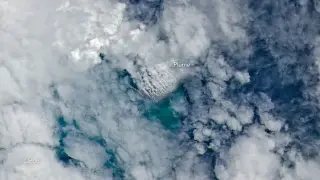
Iceland’s Quiet Undersea Volcanoes Turn Explosive
earth-science4 days ago

Iceland’s Quiet Undersea Volcanoes Turn Explosive

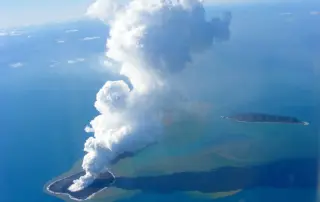
Geophysicists aboard the Meteor on Expedition M201 found flat-topped, submerged volcanoes along the Reykjanes Ridge off Iceland, indicating that mid-ocean ridges can erupt explosively at shallower depths when seawater flashes to steam; a mechanism that may explain phantom islands like Surtsey and suggests future surface eruptions could occur as ice and pressure conditions change.

Campi Flegrei’s Self-Accelerating Unrest Points Toward Major Shift Near Naples
science9 days ago

Campi Flegrei’s Self-Accelerating Unrest Points Toward Major Shift Near Naples

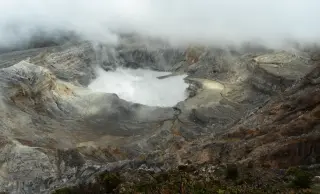
A preprint analysis finds Campi Flegrei, the Naples-area caldera, is showing a self-reinforcing acceleration in seismic activity and ground uplift, suggesting a potential major geological shift could occur around 2030–2034. While not a specific eruption forecast, the pattern raises significant risk to nearby residents and underscores the need for ongoing monitoring and improved predictive models.

Ancient undersea slab keeps Bermuda afloat, study finds
world17 days ago

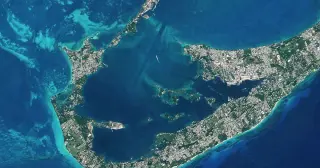
Ancient undersea slab keeps Bermuda afloat, study finds

Scientists used more than two decades of seismic data to map Bermuda’s subsurface and found a light, ~12-mile-thick slab of ancient rock beneath the island. Formed 30–35 million years ago, this slab floats under the crust and keeps Bermuda elevated above the sea without current volcanism, explaining the island’s buoyancy and challenging the classic mantle plume model. The findings tie Bermuda’s uplift to broader mantle convection processes and link to the region’s gravity and magnetic anomalies around the Bermuda Rise.

Volcano Forecasting: The Quest for Weather‑Style Warnings
science22 days ago

Volcano Forecasting: The Quest for Weather‑Style Warnings

Scientists are inching toward weather‑style forecasts for volcanic eruptions, but predicting eruptions with that level of certainty remains challenging because magma sits deep and each volcano is unique. Advances in seismology, ground deformation monitoring, gas measurements, and machine learning are enabling earlier warnings and more detailed volcano models. Projects like Ex-X and SZ4D seek to uncover the governing physics, improve data collection, and develop archetype volcano models that could one day output probabilistic eruption forecasts days or weeks in advance, but achieving a generalized, reliable forecast will require decades of data and a far more extensive global monitoring network.

Yellowstone Magma Flows as a Broad, Slow River Beneath North America
science1 month ago

Yellowstone Magma Flows as a Broad, Slow River Beneath North America

A new Science study argues Yellowstone’s volcanism is driven by a broad, slow-moving flow of hot rock beneath North America, forming a connected magma system rather than a single deep chamber, with eastward mantle motion tied to Farallon Plate remnants—reshaping how scientists understand eruptions, which remain unpredictable and not overdue.

Dormant Giant Under Tuscany: Seismic Mapping Reveals Massive Underground Magma
science1 month ago

Dormant Giant Under Tuscany: Seismic Mapping Reveals Massive Underground Magma

Scientists using seismometers mapped a vast underground magma reservoir beneath Tuscany, Italy—comparable in size to Yellowstone’s magmatic system—yet with no eruptions. The dormant chamber, detected to a depth of 15 kilometers, could inform geothermal development and mineral exploration while raising questions about why it has remained inactive.

Orpheus VTOL Aims to Probe Mars’ Hidden Volcanoes for Life Signs
space1 month ago

Orpheus VTOL Aims to Probe Mars’ Hidden Volcanoes for Life Signs

Researchers from the SETI Institute unveiled Orpheus, a vertical-takeoff hopper designed to explore Mars’ volcanic regions—Cerberus Fossae and Cerberus Tholus—by accessing deep pits and caves to search for biosignatures, using onboard tools like a color camera, near-infrared spectrometer, and ground-penetrating radar, in hopes of finding signs of life beneath the surface where conditions may be more hospitable.

Scientists Unveil New Seismic Method to Predict Mount Etna Eruptions
science7 months ago

Scientists Unveil New Seismic Method to Predict Mount Etna Eruptions

Scientists have developed a new method to predict eruptions at Mount Etna by monitoring the b value, which measures earthquake magnitudes, allowing earlier warnings of potential eruptions based on crustal stress changes and magma movement, potentially providing critical lead time for nearby communities.

Mount Etna's Recent Eruptions: Spectacular and Powerful Events
science1 year ago

Mount Etna's Recent Eruptions: Spectacular and Powerful Events

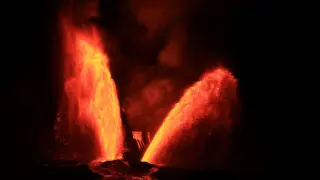
A recent eruption at Italy's Mount Etna produced a large ash cloud and lava flows, but caused no injuries or major disruptions. The event was more explosive than a typical Strombolian eruption, which is characterized by small rock and cinder bursts. Volcanologists classify eruptions by explosiveness, with Strombolian being mild, and more explosive types like Plinian causing widespread destruction. Monitoring techniques such as seismic activity, ground deformation, and gas analysis help forecast eruptions, though predicting exact timings remains challenging. Improved monitoring has increased our awareness of eruptions, but the frequency has not necessarily increased.

Dormant Supervolcano Threatens Global Chaos with Awakening Signs
science1 year ago

Dormant Supervolcano Threatens Global Chaos with Awakening Signs

The Phlegraean Fields supervolcano near Naples, Italy, is showing signs of increased activity, with the Solfatara crater emitting large amounts of carbon dioxide. Researchers, led by volcanologist Gianmarco Buono, are studying these emissions to distinguish between gases from magma and those from other geological processes. Understanding these emissions is crucial for predicting volcanic activity and ensuring public safety. The study highlights the importance of monitoring volcanic gases to better assess potential risks and was published in the journal Geology.