Tag

Planetary Alignment

All articles tagged with #planetary alignment

Tri-State Sky Show: Partial Eclipse, Perseid Shower, and a Six-Planet Dawn Parade
science13 days ago

Tri-State Sky Show: Partial Eclipse, Perseid Shower, and a Six-Planet Dawn Parade

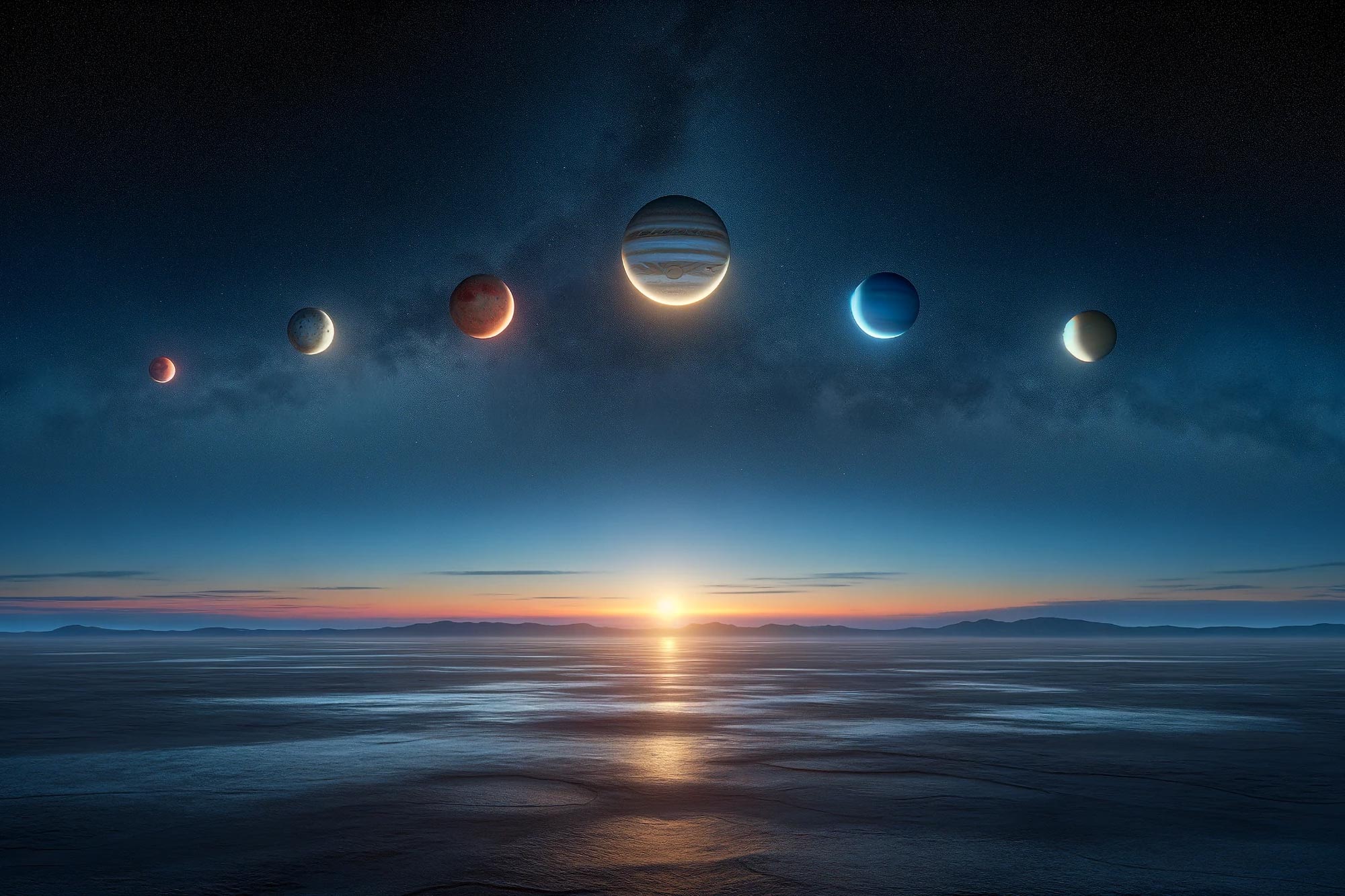
NYC and the tri-state area will see a 9% partial solar eclipse, the Perseid meteor shower peaking in the predawn hours, and a parade of six planets in the predawn sky, weather permitting and away from city lights. For best views, seek dark locations before sunrise and use safe viewing methods for the eclipse; the event will offer a rare, multi‑part celestial display across a single morning.


Celestial trifecta set to dazzle: six-planet dawn, sunset eclipse, and Perseids on Aug. 12, 2026
news27 days ago

Celestial trifecta set to dazzle: six-planet dawn, sunset eclipse, and Perseids on Aug. 12, 2026

On Aug. 12, 2026, skywatchers will witness a rare triple-header: a six-planet alignment before sunrise, a total solar eclipse at day’s end creating a sunset-like glow, and the Perseid meteor shower peaking near the new Moon, delivering dark skies and ideal conditions for observers and photographers.

Six-Planet Night Sky Parade Graces February Evenings
space5 months ago

Six-Planet Night Sky Parade Graces February Evenings

Six planets—Jupiter, Saturn, Venus, Mercury, Neptune and Uranus—will be visible at once in the early-evening sky over the next few days, a rare alignment last seen with all seven last year and not due again until 2040. Neptune and Uranus require binoculars or a telescope, while Venus will be the brightest and Mercury the faintest near the horizon. The best viewing windows are after sunset (about 5:45 pm UK / 6:00 pm US), with the lineup forming a curved arc across the western sky; the pattern differs in the southern hemisphere. NASA has released new sonifications from the Chandra X-ray Observatory for Jupiter, Saturn, and Uranus. The Moon will also be visible, and observers should avoid looking at the Sun through binoculars or telescopes.

Jupiter Dazzles at Its Brightest This Weekend
science1 year ago

Jupiter Dazzles at Its Brightest This Weekend

Jupiter is currently at opposition, making it the brightest and closest it will be until 2033, visible all night in the eastern sky. This astronomical event occurs every 13 months when Earth passes between Jupiter and the Sun, similar to a full moon. Jupiter will remain prominent in the night sky throughout the month, gradually moving higher above the horizon each evening. Clear skies this weekend offer an excellent opportunity for skywatchers to observe the planet.

"Stunning Planetary Parade Captured in Rare Alignment"
science-and-astronomy2 years ago

"Stunning Planetary Parade Captured in Rare Alignment"

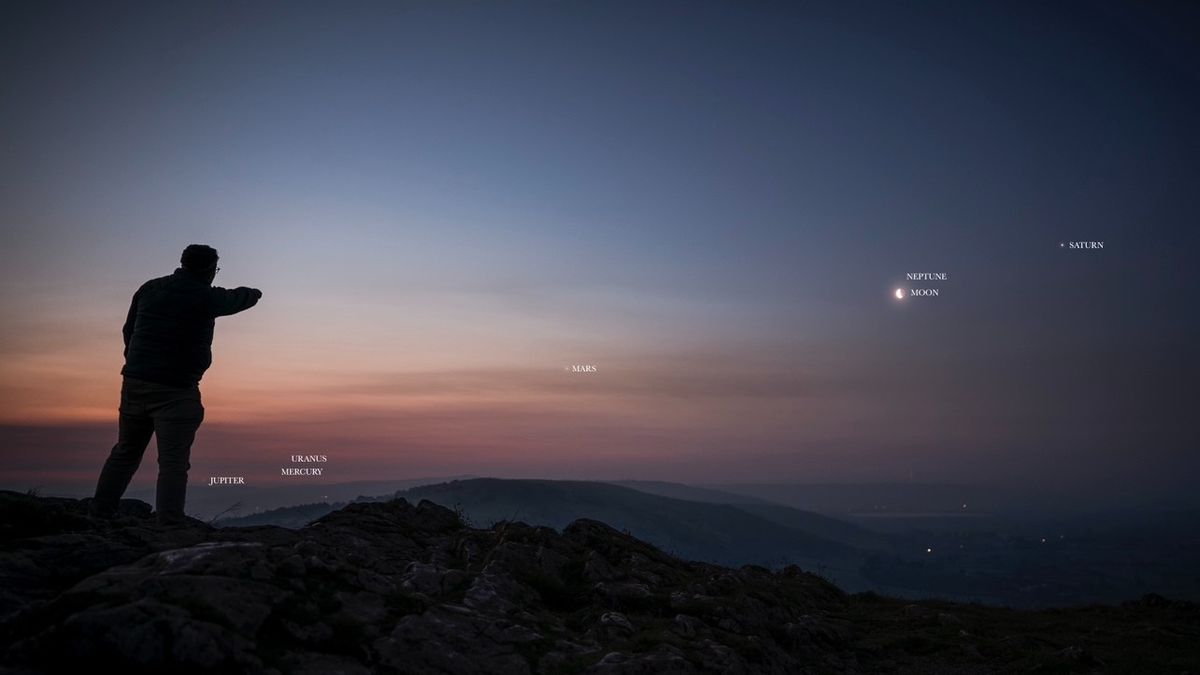
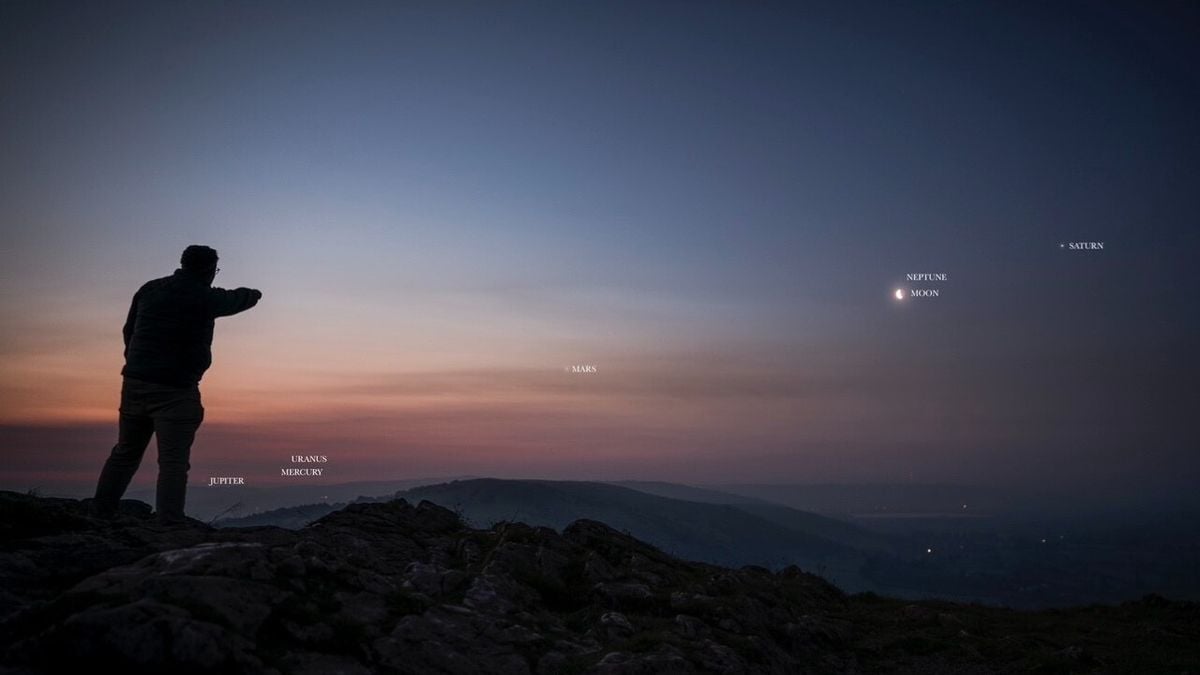
Astrophotographer Josh Dury captured a rare "parade of planets" on June 1, showing six planets—Mercury, Mars, Jupiter, Saturn, Uranus, and Neptune—aligned in the predawn sky over The Mendip Hills in the U.K. The stunning image, created using composite long exposures, also features a crescent moon and highlights the vast distances between the planets despite their apparent proximity from Earth's perspective.

"Stunning Planetary Parade Captured Amid Upcoming Alignments"
science-and-technology2 years ago

"Stunning Planetary Parade Captured Amid Upcoming Alignments"

Astrophotographer Josh Dury captured a stunning composite image of a planetary alignment featuring Jupiter, Uranus, Mercury, Mars, Neptune, Saturn, and a crescent moon from Crooks Peak in Somerset, England on June 1, 2024. Despite the alignment being overhyped for naked-eye viewing, Dury used multiple exposures to highlight the planets' positions, showcasing the beauty and scale of the cosmos.

"Rare Six-Planet Alignment to Grace Morning Sky on June 3rd"
science-and-astronomy2 years ago

"Rare Six-Planet Alignment to Grace Morning Sky on June 3rd"

On June 3, a rare alignment of six planets—Mercury, Mars, Jupiter, Saturn, Uranus, and Neptune—will be visible shortly before sunrise from dark, elevated locations with minimal light pollution. While Mars and Saturn can be seen with the naked eye, optical aids like telescopes or high-powered binoculars are needed to view Uranus and Neptune. This uncommon event offers a captivating sight for stargazers, weather permitting.

Six-Planet Alignment to Dazzle Morning Sky on June 3rd
astronomy2 years ago

Six-Planet Alignment to Dazzle Morning Sky on June 3rd

On June 3, 2024, six planets—Jupiter, Mercury, Uranus, Mars, Neptune, and Saturn—will align in the morning sky, creating a rare planetary parade. While Mars and Saturn will be visible to the naked eye, the other planets will require a telescope due to their proximity to the horizon and the rising sun's light. Another similar event is expected on August 28, 2024.