Tag

Crescent Moon

All articles tagged with #crescent moon

Crescent Moon Guides the Brilliant Venus in Monday Evening Sky
science25 days ago

Crescent Moon Guides the Brilliant Venus in Monday Evening Sky

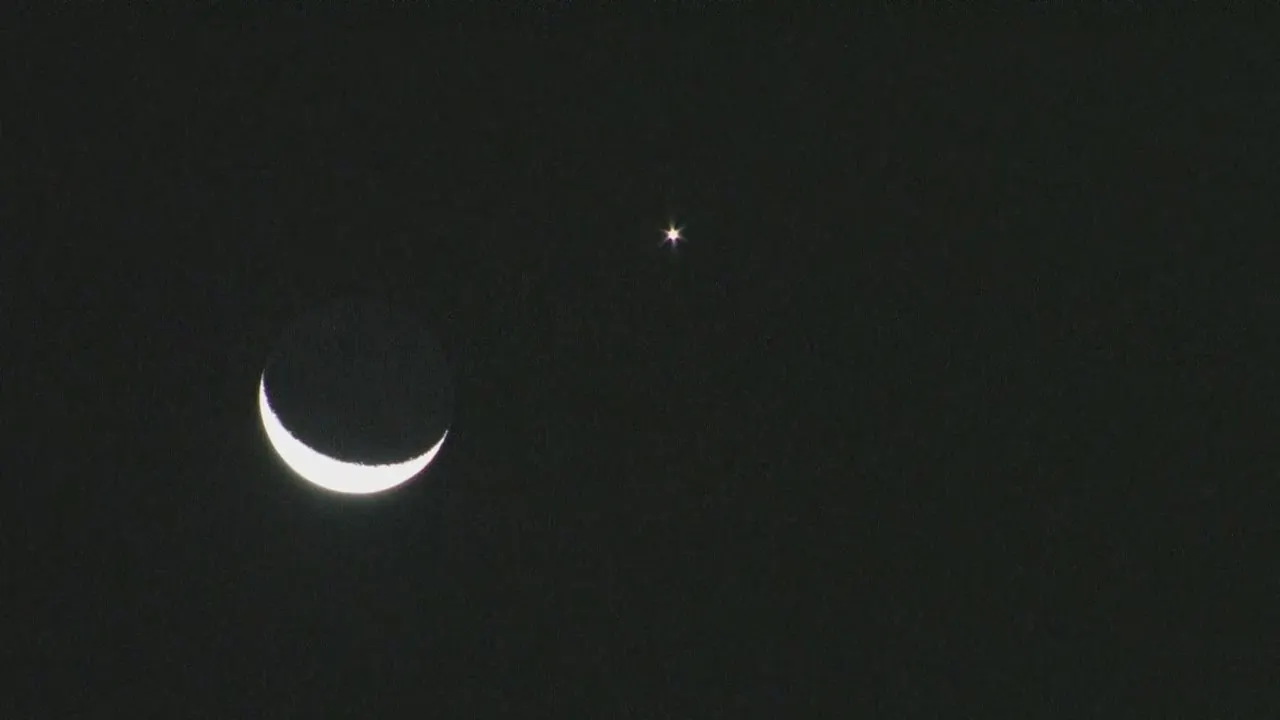
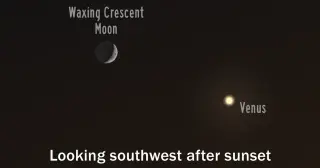
Look west just after sunset Monday to spot a slim crescent Moon near brilliantly bright Venus, which will reach its greatest brightness around Sept. 18 (about magnitude -4.8). In Raleigh, sunset is around 7:23 PM, so find a clear western horizon and enjoy the close pairing, though the objects are millions of miles apart in space (Moon ~240,000 miles from Earth; Venus tens of millions of miles away). Venus’ crescent phase (~25% illuminated) will be easier to see with a telescope or binoculars, and nearby guide stars Spica (to the right) and Antares (to the left) can help with orientation.
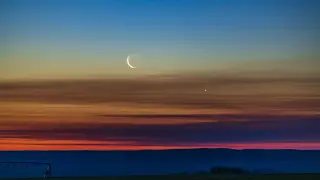
Twilight duet: Venus and a razor-thin Moon light up the western sky on May 18
space4 months ago

Twilight duet: Venus and a razor-thin Moon light up the western sky on May 18

On May 18, Venus will appear alongside a slender crescent Moon in the western sky after sunset. The Moon will be brighter than Venus (magnitude about -7.1 vs -4.0) because of its larger apparent size, though they’re not physically close; they’ll be roughly 3 degrees apart (about one-third of a fist at arm’s length). Venus’ evening visibility is improving in May, with the planet setting around 10:50 p.m. local time, and the close pairing offers a striking twilight sight for skywatchers.

Moonlight Meets the Seven Sisters: A Western Sky Show Tonight
space6 months ago

Moonlight Meets the Seven Sisters: A Western Sky Show Tonight

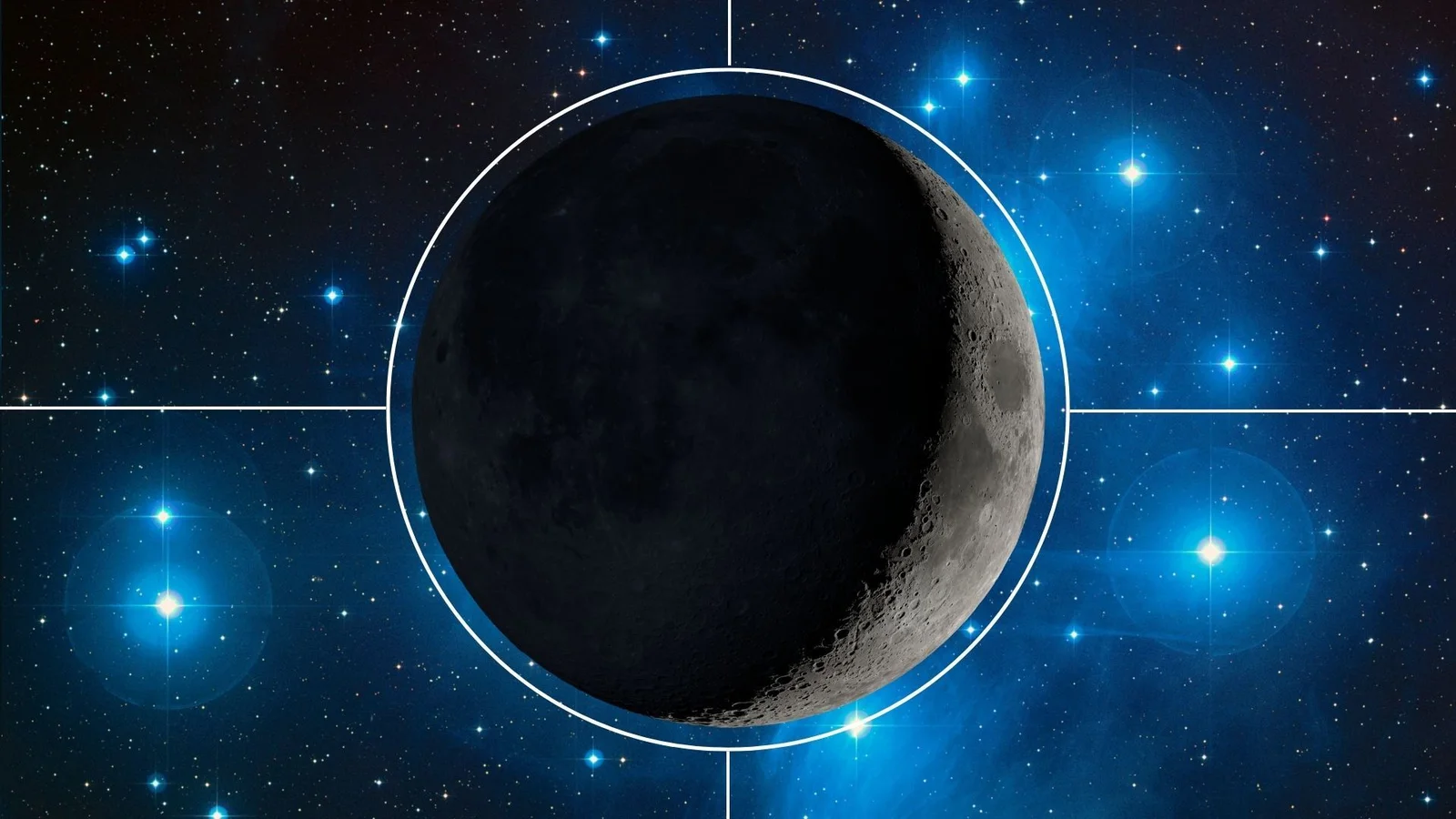
Space.com reports a waxing crescent Moon will skim the Pleiades (the Seven Sisters) tonight and tomorrow (Mar. 22–23), visible in the western sky after sunset about five degrees from the cluster; look for Aldebaran and the Hyades nearby, with Venus near the horizon and Jupiter shining overhead in Gemini. By March 23 the Moon moves above the Pleiades, hinting at another night-sky highlight in the days ahead. A pair of binoculars or a small telescope helps reveal the cluster’s stars.

Mars Nears Crescent Moon at Sunset on August 26
science1 year ago

Mars Nears Crescent Moon at Sunset on August 26

On August 26, observers can see Mars and a thin crescent moon close together in the western sky at sunset, with the moon less than 6 degrees to the lower left of Mars, and the constellation Virgo nearby. Using binoculars, viewers can also spot lunar features like Mare Crisium and Mare Fecunditatis, along with stars Spica and Porrima. The scene offers a great opportunity for skywatching and astrophotography before the moon moves away from Mars the following night.

"Planetary Spectacle: Jupiter, Mars, and Saturn Light Up the Night Sky"
astronomy2 years ago

"Planetary Spectacle: Jupiter, Mars, and Saturn Light Up the Night Sky"

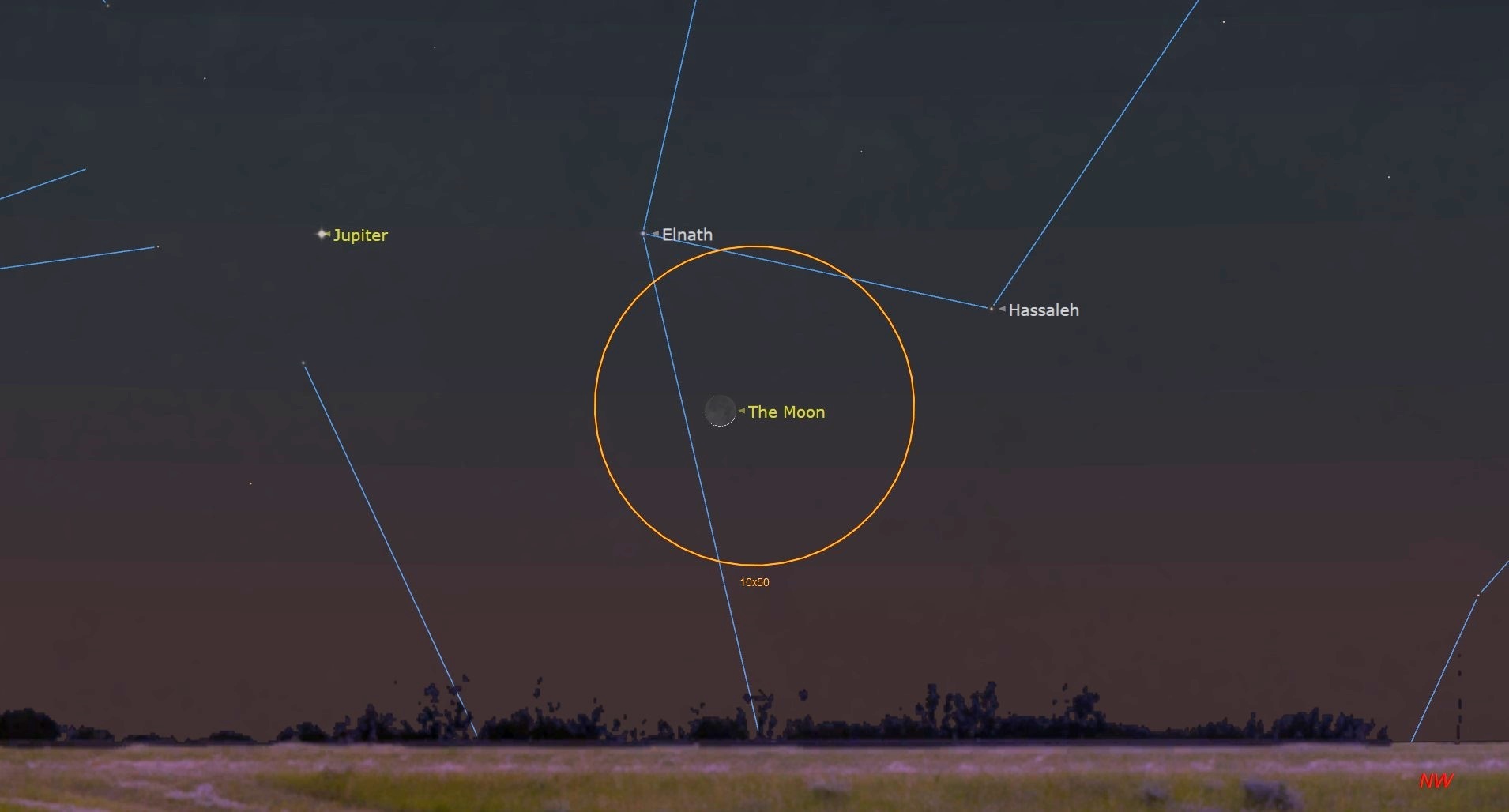
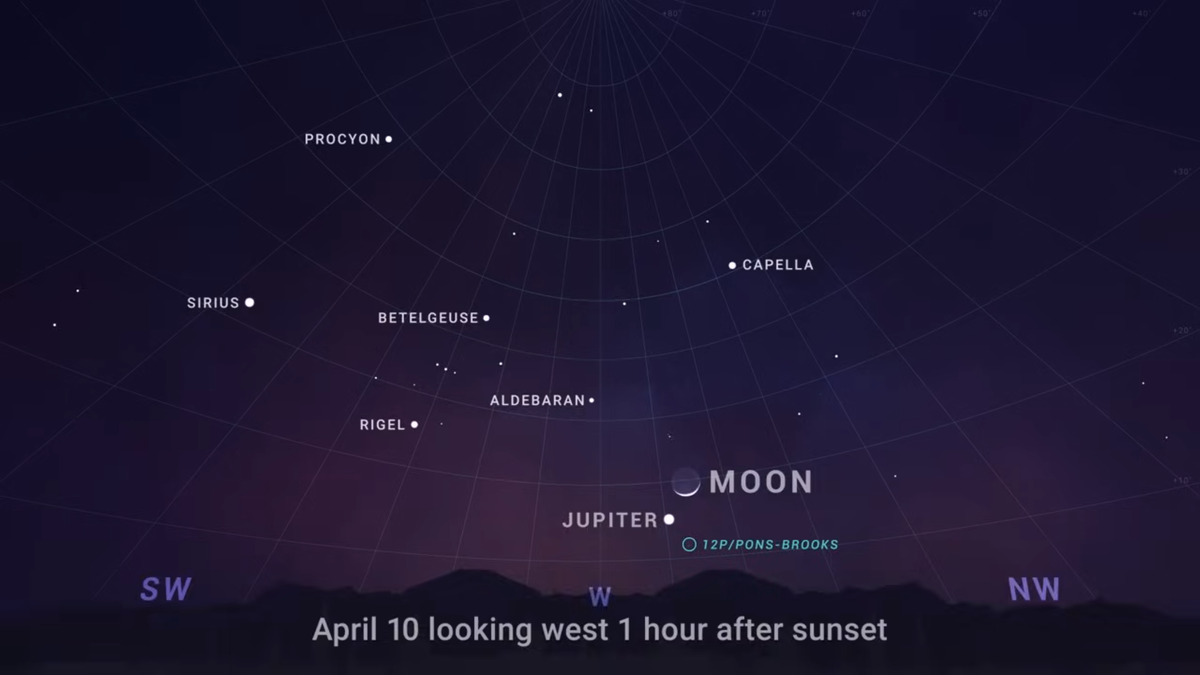
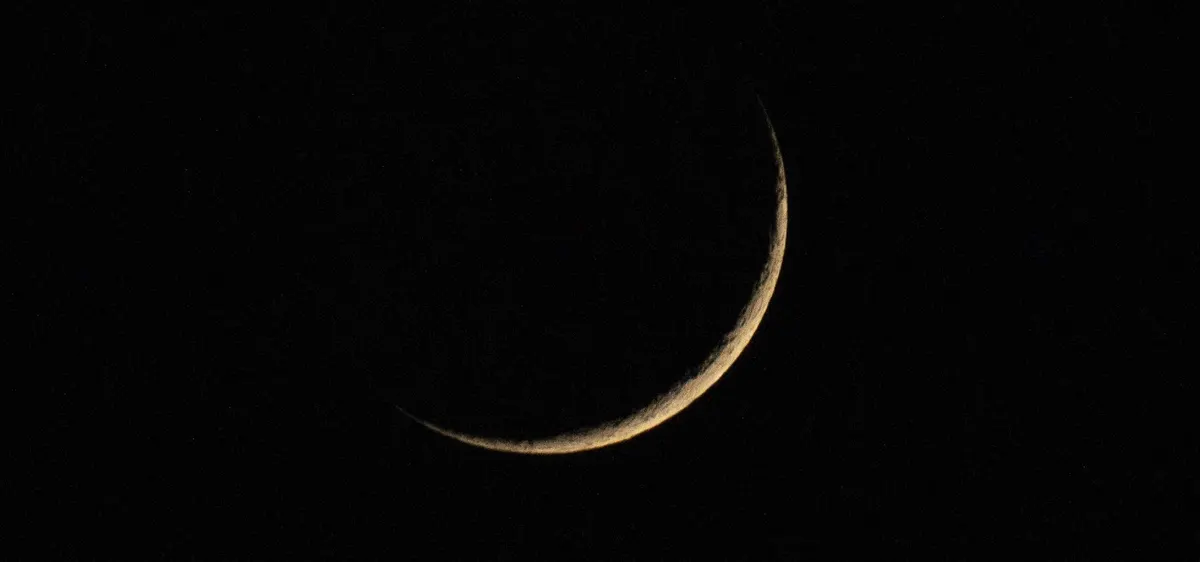
On April 10, 2024, skywatchers can witness Jupiter near a crescent moon in the evening sky, while Mars and Saturn will be visible in the early morning hours. The two planets will appear close to each other, with Jupiter leaving the evening sky soon. Additionally, the phenomenon known as "Earthshine" can be observed on the moon, and comet 12P/Pons-Brooks may also be visible. Jupiter will gradually become harder to see in the evening sky before transitioning into the morning sky in June.

Ramadan 2024: Global Observance and Start Date Explained
religion-middle-east2 years ago

Ramadan 2024: Global Observance and Start Date Explained

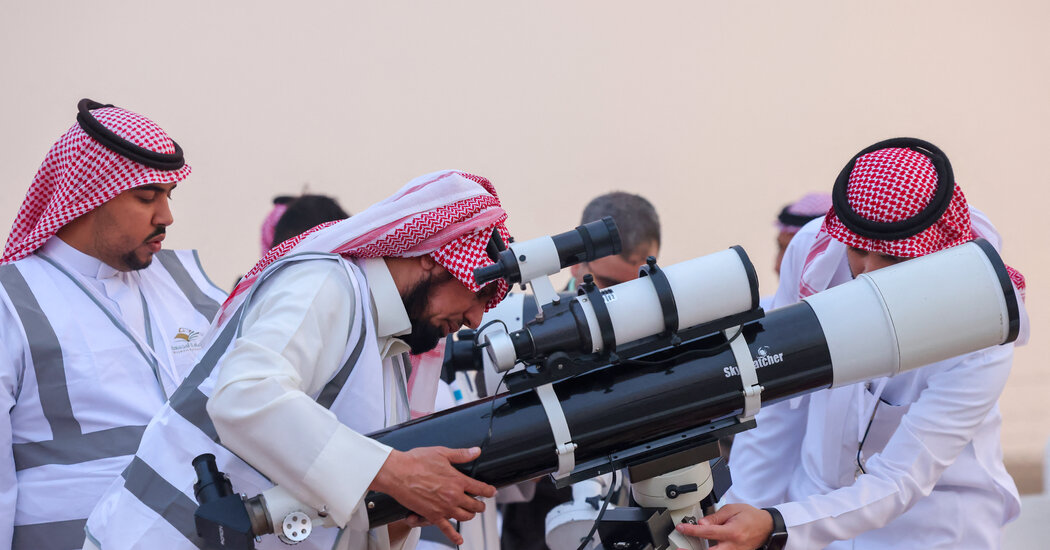
The start date of Ramadan varies from country to country due to the sighting of the new moon by local Islamic authorities, marking the beginning of the ninth month in the traditional Hijri calendar. Factors such as observation methods and weather conditions contribute to the variation, leading to countries like Saudi Arabia and Oman beginning Ramadan about 24 hours apart. In Southeast Asia, several countries will observe Ramadan from Tuesday, providing extra preparation time for millions of Muslims in the region.

"Crescent Moon Aligns with Jupiter in Spectacular Night Sky Display"
astronomy2 years ago

"Crescent Moon Aligns with Jupiter in Spectacular Night Sky Display"

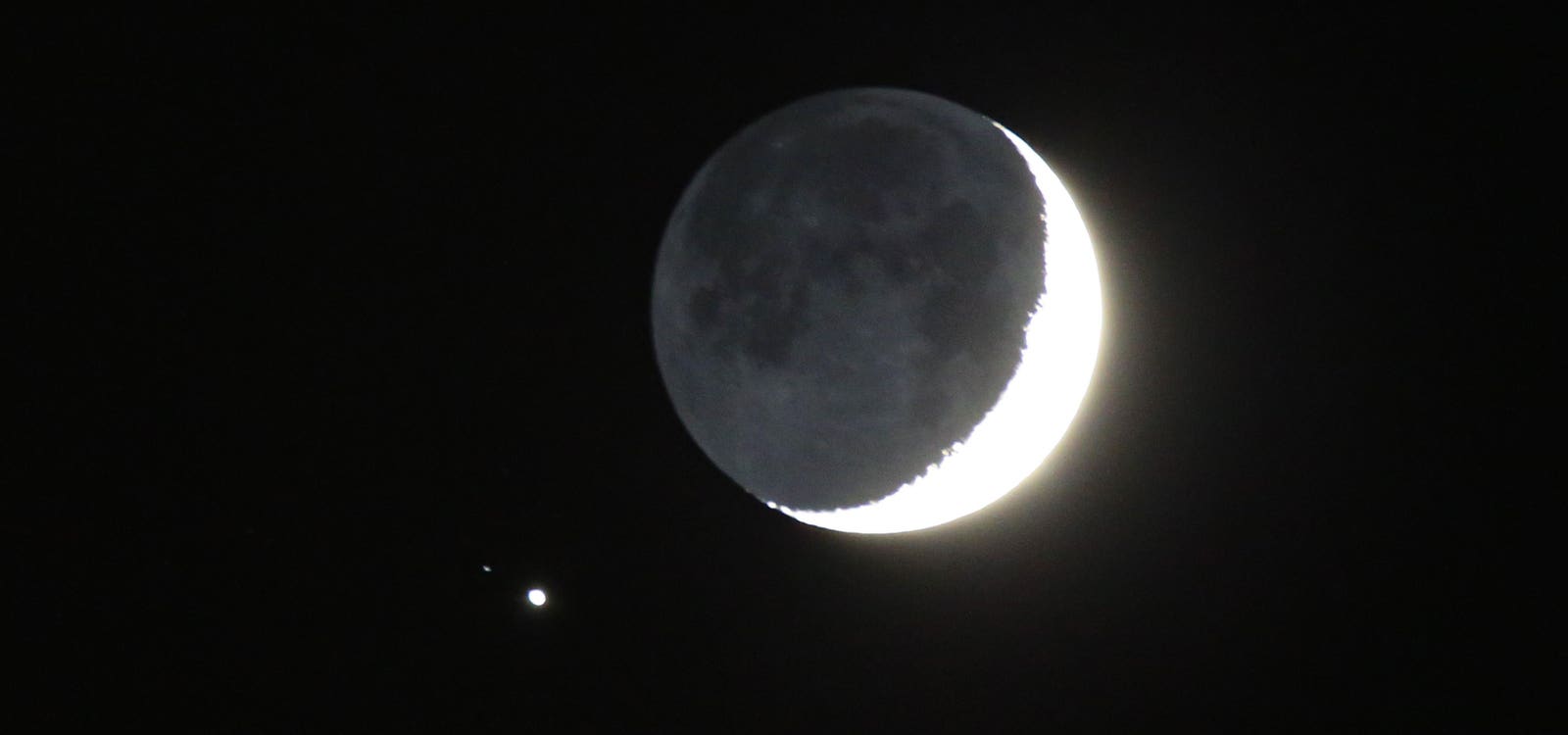
This week's night sky offers stargazers the chance to witness a series of celestial events, including the appearance of a crescent moon alongside Jupiter. The moon will display Earthshine, sunlight reflected from Earth onto its surface, and will grow in size as the week progresses. Additionally, the First Quarter Moon and the Pleiades open cluster will be visible on Friday. Stargazers can also use NASA's new app to spot the International Space Station and learn about the moon's libration.

Celestial Spectacles: Halley's Comet, Solar Eclipse, and Annular Eclipse Illuminate the Night Sky
astronomy3 years ago

Celestial Spectacles: Halley's Comet, Solar Eclipse, and Annular Eclipse Illuminate the Night Sky

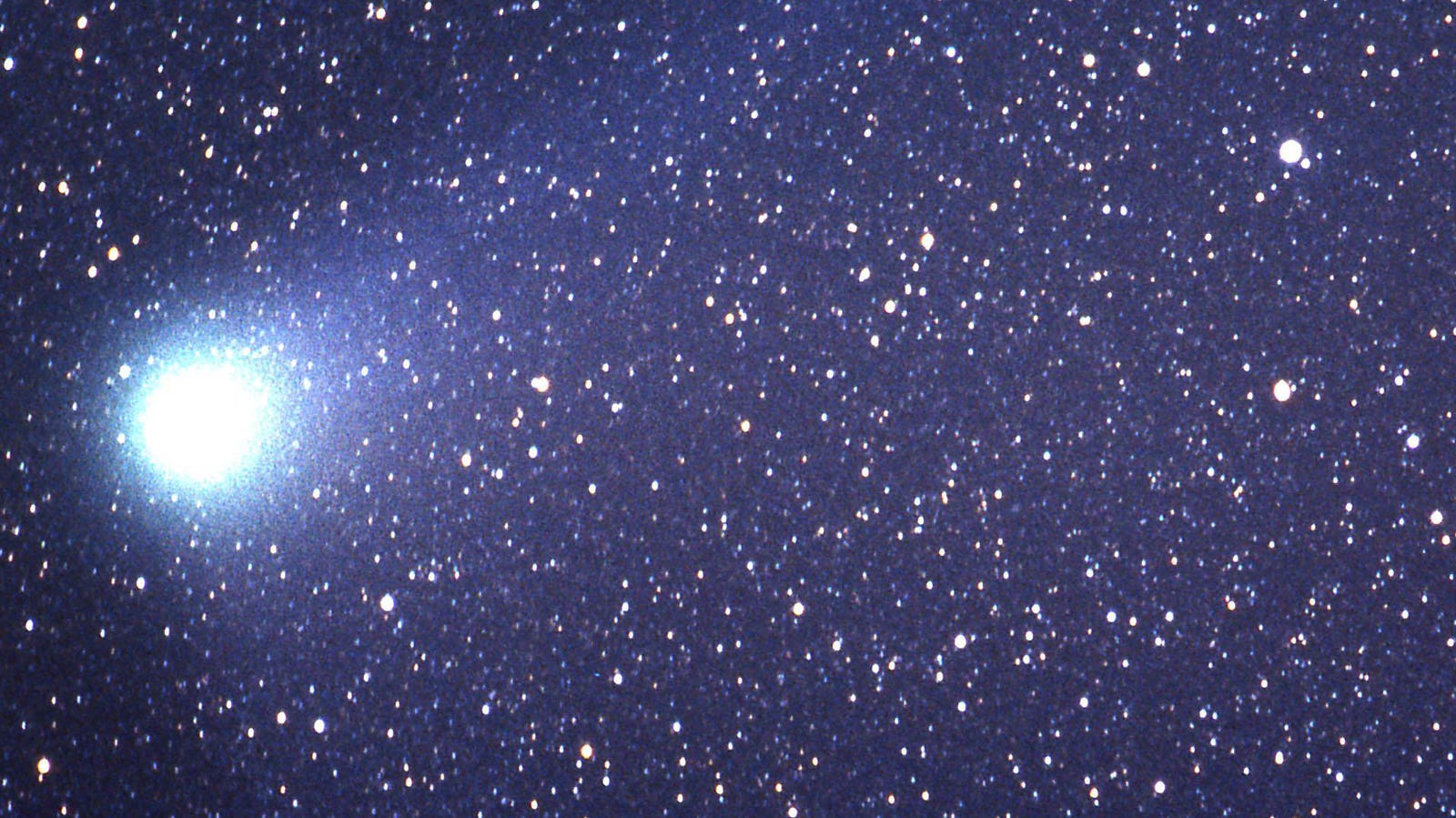
This week's night sky offers several celestial highlights, including a slim crescent moon, the Orionid meteor shower caused by Halley's comet, and the opportunity to see the Magellanic Clouds in the southern hemisphere. Stargazers can spot the crescent moon approaching Antares, the brightest star in Scorpius, and witness "Earthshine" on the moon. The Orionid meteor shower will peak on Saturday, with the potential to see 10-20 shooting stars per hour. Additionally, the dwarf planet Eris reaches opposition, and the Magellanic Clouds provide a stunning sight for those in the southern hemisphere.

Celestial Spectacle: Venus and Crescent Moon's Mesmerizing Dance
astronomy3 years ago

Celestial Spectacle: Venus and Crescent Moon's Mesmerizing Dance

A crescent moon and the bright planet Venus will be visible in the eastern sky on Tuesday, October 10, appearing just 5 degrees from each other. The moon will be between the two brightest stars in the constellation Leo, Algieba and Regulus. On Wednesday and Thursday, the crescent moon will become slimmer as it approaches its new-moon phase, when it will eclipse the sun on Saturday, October 14.

Celestial Delights: A Week of Crescent Moon, Planets, and Perseids
astronomy3 years ago

Celestial Delights: A Week of Crescent Moon, Planets, and Perseids

This week, stargazers in the northern hemisphere can enjoy the New Moon, which provides optimal conditions for stargazing. Additionally, the annual Perseids meteor shower has begun and will peak on August 12-13, offering the chance to see between 100 and 150 shooting stars. There are also opportunities to observe a young crescent moon near Mercury, Venus, Mars, and other planets throughout the week. However, it is important to take precautions when observing the sun, as it is currently at its most active phase.