Arizona State University researchers found that some ground-level fog droplets host actively growing bacteria—particularly methylobacteria—that consume formaldehyde, turning fog into tiny temporary ecosystems that can reduce airborne pollutants and potentially influence atmospheric chemistry and climate.
A UC Riverside study found that heavily used high-puff disposable e-cigarettes accumulate toxic aldehydes in remaining liquid, including methylglyoxal and formaldehyde, which caused notable damage to human lung cells; methylglyoxal was significantly more toxic than acetaldehyde. Results suggest puff count and device use cycle dramatically affect chemical exposure, calling for regulatory testing across full device lifespans and caution in consumer use of high-puff devices.
Researchers analyzing the 2022 Hunga Tonga eruption found unusually high formaldehyde in the plume, indicating methane was being rapidly destroyed by chlorine radicals formed in sunlight-activated reactions. The study demonstrates a natural methane-removal pathway in volcanic plumes and quantifies about 900 metric tons per day of methane destroyed—far less than the eruption’s total methane output—while suggesting chlorine-mediated methane destruction could inform future atmospheric cleanup research, though practical application remains uncertain.
In a controlled sealed-chamber study, five plant species on an active living wall removed 96-98% of common indoor pollutants within 24 hours, with peace lilies delivering especially strong reductions. Real-world results may vary due to room conditions and airflow, so plants should supplement—not replace—HEPA filtration and proper ventilation, though thriving greenery can still support well-being.
A ProPublica analysis reveals that residents in three Knox County zip codes near the University of Tennessee, Whittle Springs, and Lonsdale face a one in 46,000 chance of developing cancer due to formaldehyde exposure. This chemical, prevalent in various industries, poses significant health risks, including respiratory and reproductive issues. While Knox County's cancer risk from formaldehyde is higher than average, it remains within the EPA's acceptable range. The analysis highlights formaldehyde's widespread use and its impact on air quality and public health.
A ProPublica analysis reveals that formaldehyde, a chemical linked to cancer and other health issues like asthma and reproductive problems, poses a significant risk in St. Louis, Missouri. The city has 21 of the 23 most at-risk ZIP codes for formaldehyde-related cancer in the state. Despite its widespread use in industries such as furniture making and food sterilization, the American Chemistry Council argues that existing regulations are sufficient to mitigate health risks. However, the report suggests that public health risks from formaldehyde are more severe than commonly understood.
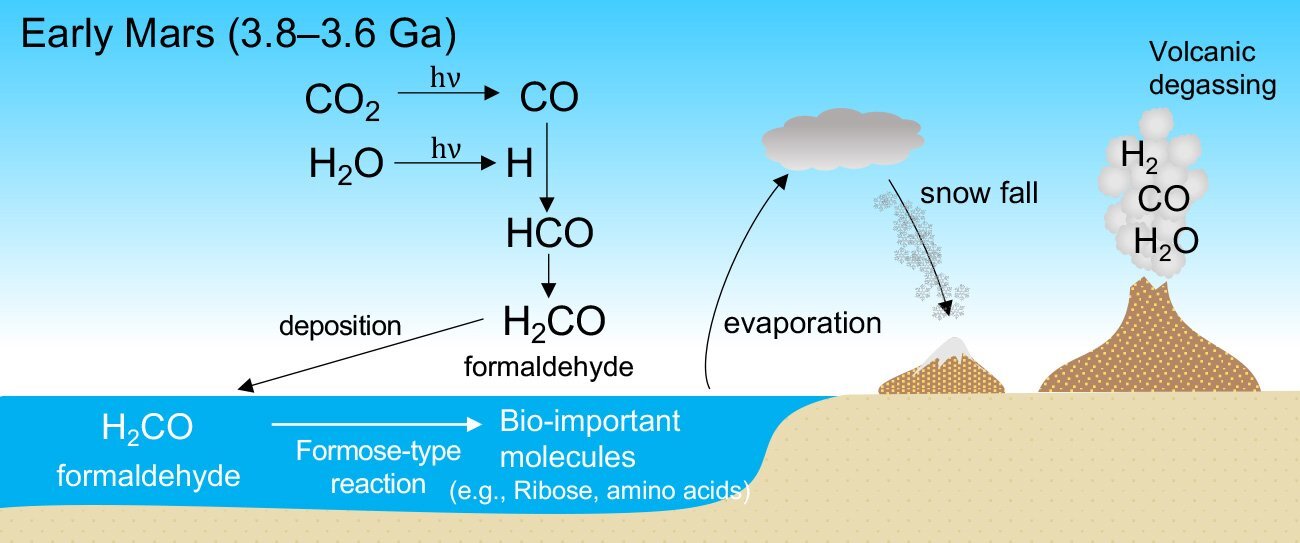
Researchers from Tohoku University propose that organic materials on Mars might have originated from atmospheric formaldehyde, suggesting the planet’s early atmosphere could support the formation of life-essential biomolecules. New findings indicate Mars’ ancient atmosphere, rich in formaldehyde, could have supported the creation of organic materials essential for life, shedding light on the planet’s potential for past habitability. Scientists simulated the potential atmospheric composition of early Mars and found that it could have provided a continuous supply of formaldehyde, potentially leading to the creation of various organic compounds, broadening our understanding of the planet’s ancient capacity to sustain life.
Scientists have discovered that formaldehyde on Mars may have played a crucial role in the creation of organic material necessary for life, potentially indicating that life once thrived on the planet during its early aqueous period. Research suggests that Mars, with its warm atmosphere and presence of certain gases, could have been conducive to the formation of biomolecules. The study also indicates the possibility of a steady source of crucial sugars on early Mars, particularly during certain historic periods, pointing to the potential existence and flourishing of life on the Red Planet.
Researchers propose that formaldehyde, which could have formed in the ancient Martian atmosphere, may have played a crucial role in the creation of molecules essential for life in the planet's oceans. This suggests a plausible pathway for life's ingredients on Mars during its wet period, although there is currently no evidence to confirm this. The study provides valuable insights into the chemical processes that may have occurred on ancient Mars, offering clues to the possibility of past life on the planet, and researchers plan to search for isotopic ratios of carbon in surviving organic molecules to determine if this pathway was indeed responsible for the formation of essential molecules.
New research suggests that organic materials discovered on Mars may have originated from atmospheric formaldehyde, offering insights into the possibility of past life on the red planet. Scientists from Tohoku University simulated the early Martian atmosphere and found that it could have provided a continuous supply of formaldehyde, potentially leading to the creation of various organic compounds. This study broadens our understanding of Mars' ancient capacity to sustain life and paves the way for further analysis of organic materials present early in the planet's history.
The FDA is tentatively scheduled to propose banning formaldehyde in hair straightening products, a move that comes after years of rising concern over the health effects of these products, particularly among Black women. However, advocates and scientists argue that the proposed regulation is too little, too late, as it fails to address the broader array of hazardous chemicals in hair products targeted at African Americans. Studies have linked these products to hormone-driven cancers, prompting calls for further FDA investigation and regulation. While the FDA's response is seen as a step in the right direction, critics argue that it does not go far enough to protect public health.
The FDA is proposing a ban on chemical relaxers with formaldehyde, a product popular in the Black community for straightening hair. The ban is supported by some local salon owners and Congresswomen who are concerned about the health risks associated with these products, including the potential for cancer. However, there are differing opinions among stylists, with some supporting the ban and others arguing that relaxers can be used safely with proper care. The FDA will make a decision after public comment, and if the proposal becomes a rule, it will take effect in April 2024.
A recent study published in Science reveals that formaldehyde, a common environmental hazard found in household products, polluted air, and construction materials, can modify the epigenetic patterns of cells. The research shows that formaldehyde inhibits the production of S-Adenosyl-L-Methionine (SAM), a molecule that regulates epigenetic activity. This leads to a loss of methylation of histones, which control the function of thousands of genes. The study highlights the carcinogenic properties of formaldehyde and emphasizes the need for policies to reduce exposure to this toxic substance.
The Food and Drug Administration (FDA) is planning to ban hair-straightening products that contain or emit formaldehyde, a chemical linked to an increased risk of uterine cancer. Studies have also linked these products to breast and ovarian cancer. The proposed ban would target hair-straightening and hair-smoothing products marketed in the United States and is expected to take effect in April 2024. The products are often marketed to Black women, and the increase in uterine cancer rates has been steepest among women of color. The FDA's expanded oversight authority now requires manufacturers to register their sites and disclose ingredients, but new products will not typically undergo agency review before being marketed. The agency encourages consumers to read labels, avoid products with formaldehyde, and report adverse reactions.
Scientists have identified high levels of formaldehyde, a toxic chemical naturally produced by cells, as a potential cause of ageing. Researchers from Cornell, Oxford, Cambridge, and Cancer Research UK are investigating the mechanisms behind formaldehyde production and exploring the development of drugs to lower its levels. A recent study found that formaldehyde damages DNA, leading to accelerated ageing in blood stem cells. The team is also examining if other chemicals contribute to ageing and how to prevent their accumulation. While formaldehyde alone may not be the sole cause of ageing, this research highlights the body's production of measurable chemicals that can lead to significant health problems.