Tag

Health Data

All articles tagged with #health data

Personalizing Google's Health App: A Practical Setup Guide
technology1 month ago

Personalizing Google's Health App: A Practical Setup Guide

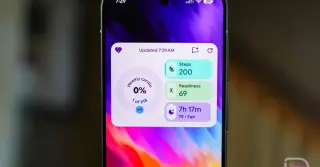
A practical guide to configuring Google's new Health app: customize the Today page tiles by deleting and re-adding items (drag rearrangement isn’t supported yet), repeat the same cleanup on the Health tab for a tailored data view, and on Android add the (non-customizable) Google Health widget for quick metrics. The article frames these steps as part of Google’s ongoing updates after replacing Fitbit, aimed at improving usability.

Oura Ring 5 Slashes Size by 40% and Ups Health Capabilities
technology1 month ago

Oura Ring 5 Slashes Size by 40% and Ups Health Capabilities

Oura’s Ring 5 is 40% smaller than Ring 4, thanks to redesigned internals that shrink signal paths from 18 to 12 and boost LEDs for better readings across skin tones. It comes in sizes 6–13 (Ring 4 offered 4–15) and includes a charging case that can keep it powered for about a month. Hardware updates accompany Health Radar, AI-assisted guidance via Counsel Health, GLP-1 Insights, Health Records, and Live Activity on iPhone, among other features. Pre-orders are live with shipping starting June 6; pricing starts at $399 (base), $499 for additional finishes, $99 for the charging case, and a $6/month or $70/year subscription.

Meta's Muse Spark Prompts Health Data Uploads, Stoking Privacy and Safety Fears
technology3 months ago

Meta's Muse Spark Prompts Health Data Uploads, Stoking Privacy and Safety Fears

WIRED tests Muse Spark, Meta's health-focused AI, which encourages users to paste lab results and biometric data for analysis, but privacy risks loom since data can be stored to train models and used for ads, HIPAA protections don’t apply to consumer AI, and experts warn the tool is not a doctor and can give risky guidance (including an extreme fasting plan).

Garmin health data gets an AI chat bridge
technology3 months ago

Garmin health data gets an AI chat bridge

Garmin is developing a third‑party Garmin Chat Connector to link Garmin Connect data with AI assistants such as ChatGPT and Claude, enabling natural‑language questions about sleep, workouts, and recovery. The system, a cloud‑hosted MCP server, securely connects data via a token‑based URL and exposes 16 data tools across five categories; it is not an official Garmin product and is nearing completion as part of a broader move toward conversational health analytics.

Ultrahuman Ring Pro offers 15-day battery and live health AI
technology4 months ago

Ultrahuman Ring Pro offers 15-day battery and live health AI

Ultrahuman unveils Ring Pro, its third-gen smart ring, with up to 15 days of battery life and 250 days of on-device health history, plus a Pro Charging Case that adds ~45 more days and stores a year of data. The ring features a redesigned heart-rate sensor, faster processor, and improved safety features. Preorders are $479, US availability is blocked due to Oura patent issues, and shipments start in March. The Jade real-time biointelligence AI platform will roll out globally, offering health insights and, in future updates, smart-home controls and services.

AI Health Tools Read My Apple Watch Data—And The Results Were All Over the Map
technology5 months ago

AI Health Tools Read My Apple Watch Data—And The Results Were All Over the Map

The author tested OpenAI's ChatGPT Health and Anthropic's Claude by uploading a decade of Apple Health data (and later medical records) to obtain a simple cardiac-health grade. Outputs swung widely—ChatGPT gave an F, then a D after adding records; Claude varied between C and B—driven by noisy VO2 max estimates and changing resting heart-rate data. Experts say the analyses are not medical advice, and privacy promises to protect data aren’t HIPAA-covered. While AI health tools could unlock insights, the article argues they’re not ready for personal clinical decisions and should mainly support prepping for a doctor visit.

Fitbit Launches AI-Powered Personal Health Coach
technology10 months ago

Fitbit Launches AI-Powered Personal Health Coach

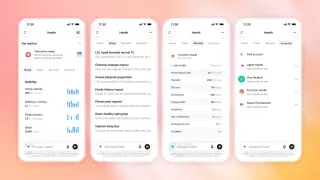
Fitbit's app is being redesigned with a new AI-powered Personal Health Coach, built with Google's Gemini, offering personalized health and fitness guidance, better data visualization, and customization features, available in an open beta for Fitbit Premium subscribers, with a focus on scientific research and partnerships to ensure reliable health advice.

The Clear Limitations of AI Fitness Summaries
technology1 year ago

The Clear Limitations of AI Fitness Summaries

The article criticizes the current state of AI-generated fitness summaries from wearables, highlighting their superficiality, lack of context, and limited usefulness, especially in complex scenarios like injuries. Despite widespread adoption and positive user feedback, the summaries often fail to provide meaningful insights or actionable advice, revealing the limitations of AI in understanding nuanced health data. The author suggests that these features are more about marketing than delivering real value, and hopes for more personalized, insightful AI in the future.

23andMe's Revival: Fortune 500 Backing Sparks New Auction
business1 year ago

23andMe's Revival: Fortune 500 Backing Sparks New Auction

The article reflects on the collapse of 23andMe, emphasizing lessons for the future of consumer genomics, including the importance of clinician partnerships, the limitations of HIPAA compliance, and the need for better governance and transparency of health data. It highlights the company's strategic missteps and the broader implications for health data ownership, trust, and regulation in the evolving digital health landscape.

"The Impact of Fitness Tracker Data on Health: Unveiling the Truth About Wearables"
health-and-fitness2 years ago

"The Impact of Fitness Tracker Data on Health: Unveiling the Truth About Wearables"

The increasing availability of fitness trackers and wearables has provided users with an overwhelming amount of health data, but experts caution that more data does not necessarily lead to better health outcomes. While these devices offer a range of measurements from heart rate to sleep time, not all data is considered helpful, and the real impact depends on the individual wearer. Additionally, many of these devices are not regulated by the FDA, and some claims about their capabilities have been cautioned against.