Tag

Radiation

All articles tagged with #radiation

Artemis II’s Avatar organs aim to map cosmic health risks before astronauts reach deep space
science1 day ago

Artemis II’s Avatar organs aim to map cosmic health risks before astronauts reach deep space

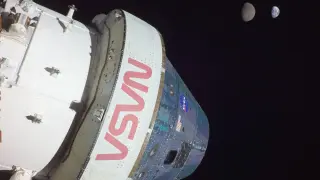
NASA’s Artemis II carries USB-sized “avatar” organ chips made from astronauts’ bone marrow to simulate organs and study how space radiation and microgravity affect health. The AVATAR study seeks early, personalized health data from blood, saliva, sleep and immune biomarkers to tailor medical kits for long missions, while researchers track the RIDGE hazards of space travel to better prepare for future lunar and Mars exploration.

Moon Living: The Biology Challenge of a Sustained Lunar Outpost
science3 days ago

Moon Living: The Biology Challenge of a Sustained Lunar Outpost

NASA's Artemis program plans a sustainable lunar outpost, with Artemis II validating life-support and deep-space operations ahead of longer stays. Living on the Moon will challenge every body system due to one-sixth gravity, intense space radiation, lunar dust, extreme temperature shifts, isolation, and confinement, so countermeasures—such as exercise, personalized nutrition, artificial gravity trials, radiation shielding, habitat design using lunar soil, lunar agriculture, and continuous health monitoring—will be critical to keep crews healthy and to inform future missions to Mars.

Moon base ambitions collide with radiation, dust and unknowns
space14 days ago

Moon base ambitions collide with radiation, dust and unknowns

NASA and its partners aim to establish a sustained human presence on the Moon within the next decade, including a permanent lunar base tied to the Artemis program and private-sector plans. But scientists warn the Moon’s harsh environment—razor-sharp dust, relentless cosmic radiation, and low gravity—presents significant health and engineering risks, with unresolved questions about habitat design, life support, water and ice resources, and construction methods. A data-driven, cautious approach is needed before rushing into a lunar colony, as much depends on learning more about the Moon itself.

Peet Opens Up About Early-Stage Breast Cancer in Personal Essay
entertainment20 days ago

Peet Opens Up About Early-Stage Breast Cancer in Personal Essay

Actress Amanda Peet reveals in a New Yorker essay that she was diagnosed with hormone-receptor-positive, HER2-negative breast cancer (Stage I); after routine checkups and an ultrasound biopsy, an MRI confirmed a mass, with a second, benign lesion later discovered. She underwent a lumpectomy followed by radiation and describes the emotional toll while her parents were in hospice care on opposite coasts.

Radiation-Eating Fungus Could Grow Into a Living Shield for Spacecraft
science1 month ago

Radiation-Eating Fungus Could Grow Into a Living Shield for Spacecraft

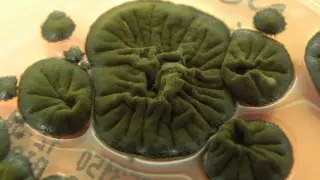
Researchers studying Cladosporium sphaerospermum—an often-black fungus—found it not only tolerates radiation but may grow toward it and form biomass that, in tests aboard the ISS, accumulated faster (about 21% more quickly than Earth controls) under space conditions. Melanin-rich fungi could help absorb radiation, suggesting a potential “living shield” concept for future spacecraft, possibly combined with local materials in ISRU. The work, conducted in a CubeLab on the ISS, is a proof-of-principle with limitations (small payload, controlled Petri dish setup) and does not demonstrate radiosynthesis; further experiments are needed to assess reliability across conditions and particle types.

Mars Living Isn’t Front-Page Frontier: Sci-Fi’s Survival Myths Debunked
space1 month ago

Mars Living Isn’t Front-Page Frontier: Sci-Fi’s Survival Myths Debunked

Space.com debunks five common sci-fi myths about living on Mars: that colonies can easily thrive on the surface, that humanity could just terraform the planet, that low gravity is harmless, that Martian soil can support easy farming, and that the main challenge is simply getting there. In reality, viable settlements would likely be buried underground or in lava tubes with hermetically sealed habitats, requiring thick radiation shielding, closed-loop life support, and abundant energy. The Martian atmosphere is extremely thin and lethal without a suit, oxygen must be generated, and surface conditions are brutal (cold, radiation, low pressure). Growing food faces toxic perchlorates in soil, so hydroponics or bioengineered solutions are needed. Psychological stresses from isolation and long travel times add equal weight to physical survival. Overall, any real Mars settlement would demand centuries of Earth-provided resources and massively engineered habitats, making true “colonization” far more complex than sci-fi suggests.

Deep-Sea Archaea Survive Extreme Radiation: A Byproduct of Hydrothermal Vent Life
science1 month ago

Deep-Sea Archaea Survive Extreme Radiation: A Byproduct of Hydrothermal Vent Life

Scientists report Thermococcus gammatolerans, an archaeon living near Guaymas Basin vents, can endure gamma radiation up to 30,000 grays—far more than lethal human doses. Its radiation tolerance isn’t due to extra DNA repair genes but likely arises from the harsh vent environment, which reduces oxidative damage and enables rapid repair, suggesting the trait is a byproduct of hydrothermal-vent life rather than a specialized adaptation.

Space Reproduction Faces Serious Biological Hurdles
science1 month ago

Space Reproduction Faces Serious Biological Hurdles

A new paper argues that long-duration spaceflight could impair fertility, gamete quality, and embryonic development due to space radiation and microgravity, with potential epigenetic and heritable risks for offspring; experts call for a formal reproductive health framework and ethical guidelines for space research, even though reproduction in space is not currently advocated.

Space reproduction policy must catch up with exploration, experts urge
health2 months ago

Space reproduction policy must catch up with exploration, experts urge

An international study warns that the space environment—microgravity, cosmic radiation, and circadian disruption—poses risks to fertility and pregnancy, highlighting a lack of standardized policies for reproductive health in space as commercial and governmental missions expand. Researchers call for urgent international collaboration to establish ethical guidelines and protective standards for astronauts, noting that assisted reproductive technologies could assist future research but have not enabled human pregnancy in space.

NASA Twin Study: Space Alters Gene Activity and Telomeres, Most Changes Rebound
science2 months ago

NASA Twin Study: Space Alters Gene Activity and Telomeres, Most Changes Rebound

NASA's twin study compared Scott Kelly in orbit with his Earthbound brother Mark to isolate space effects; researchers found rapid gene-expression shifts and heightened immune activity in Scott, with telomere elongation in space that shortened after return; radiation caused more DNA damage and repair signals in Scott than Mark; by six to eight months post-mission, most gene-expression changes had reverted, indicating reversibility but signaling potential long-term risks for future long-duration missions such as cardiovascular strain, vision problems, and cancer risk.

Space Reproduction Put on Hold as Experts Warn of Safety Risks
sciencespace2 months ago

Space Reproduction Put on Hold as Experts Warn of Safety Risks

A new report in Reproductive BioMedicine Online warns that reproducing in space is far from safe due to radiation, microgravity, and lunar dust, which may affect fertility, pregnancy, and offspring. It calls for a global ethical framework, better shielding, medical countermeasures, and advanced assisted reproduction tools before any long-duration missions, effectively delaying space births until safeguards are in place.

Ethics and safety blueprint urged for human reproduction in space
space2 months ago

Ethics and safety blueprint urged for human reproduction in space

Space researchers say there is no current consensus or standards for reproductive health beyond Earth. A new study calls for international collaboration to map risks (cosmic radiation, microgravity, isolation) and to establish ethical guidelines and governance before any space-based conception or related research, highlighting gaps as humanity plans longer stays in space and commercial ventures expand.

Experts Call for Global Framework on Reproduction in Space
space2 months ago

Experts Call for Global Framework on Reproduction in Space

A panel of experts warns that long-duration spaceflight poses significant risks to fertility and embryonic development, and current data are too scarce to guide safety. They urge creating an international framework to study reproductive health in space, develop protective measures and fertility-preservation methods, and establish clear ethical guidelines, while making clear that actual in-space human reproduction is not planned and research will rely on simulations and non-human models.