Tag

Magma Ocean

All articles tagged with #magma ocean

Ancient lava world TOI-561 b cloaked in a surprising thick atmosphere
space20 days ago

Ancient lava world TOI-561 b cloaked in a surprising thick atmosphere

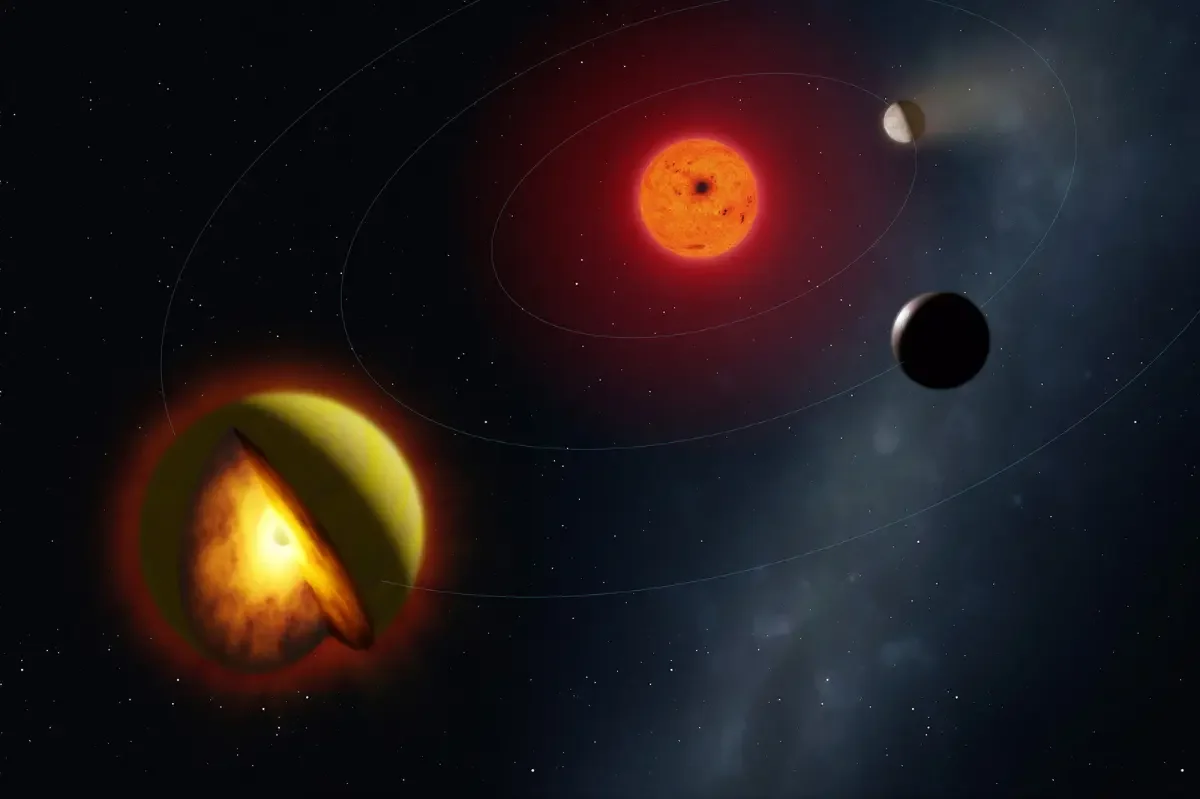
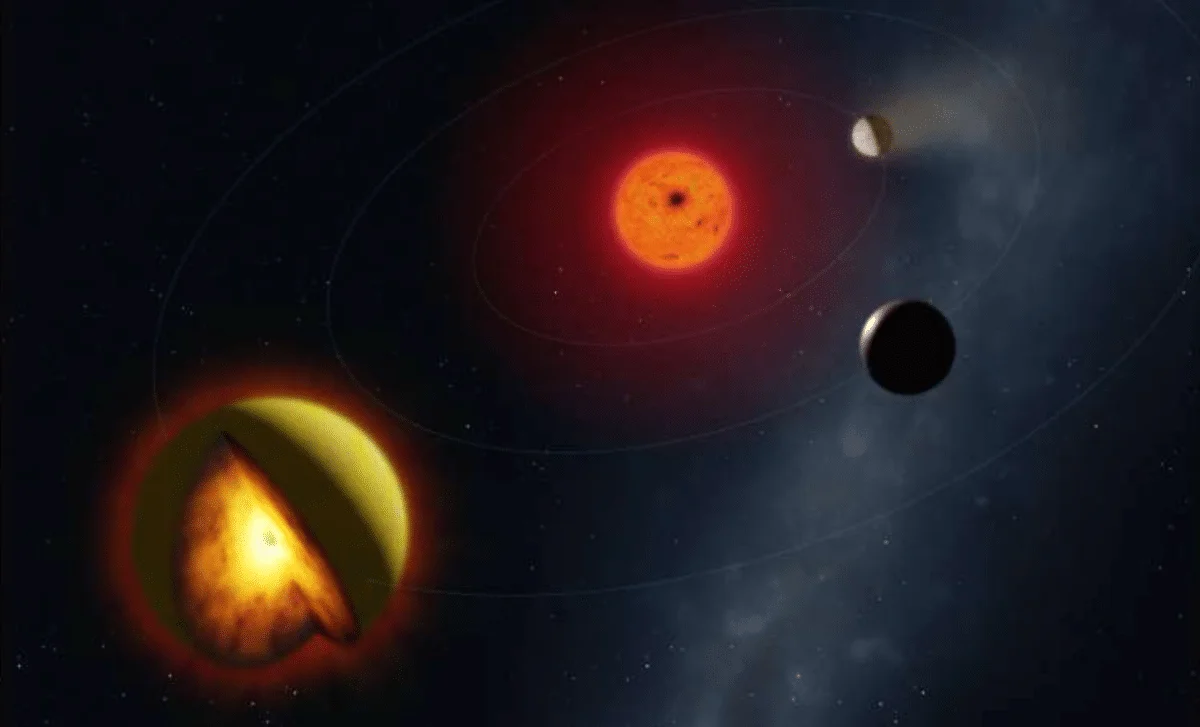
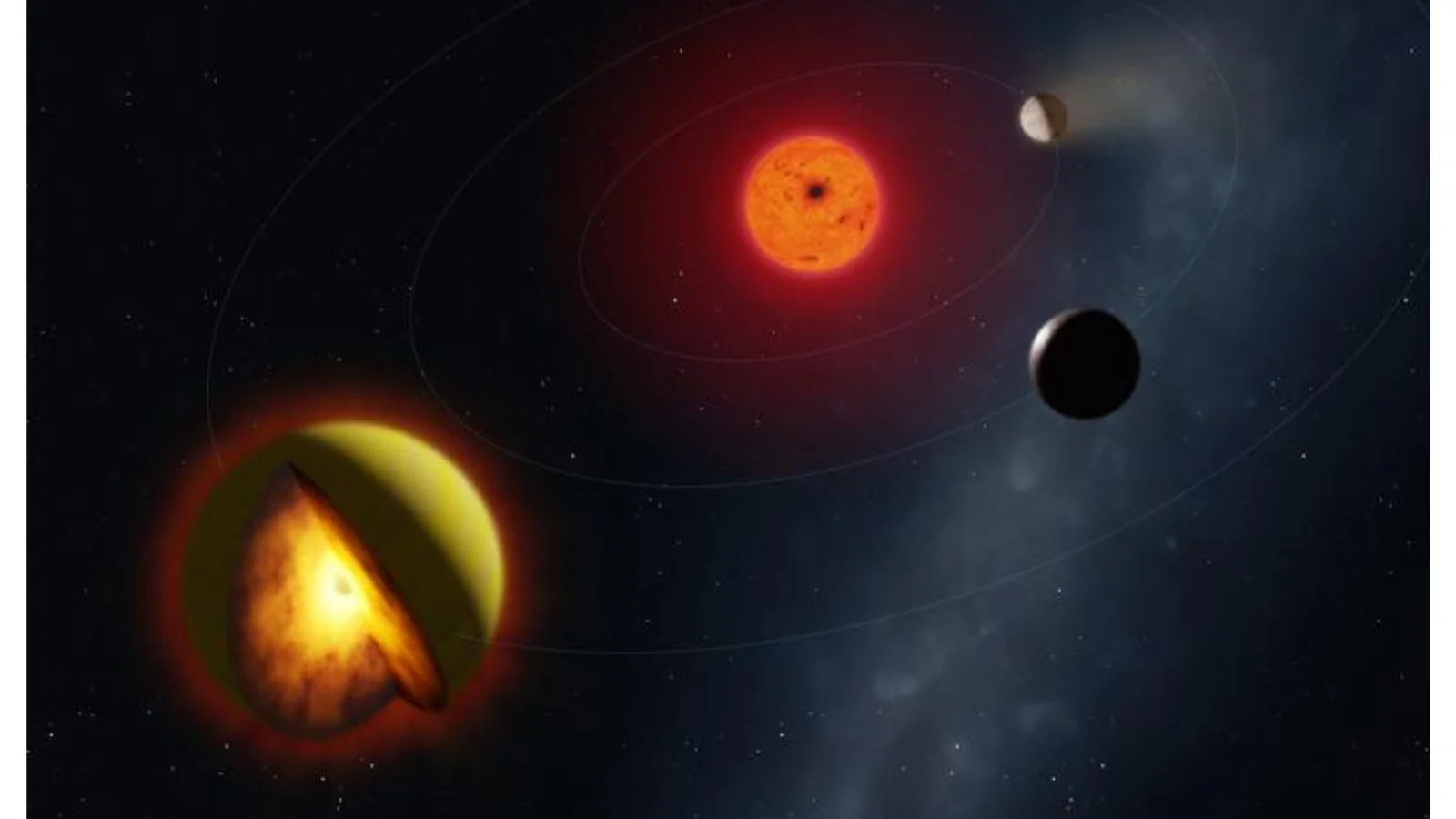
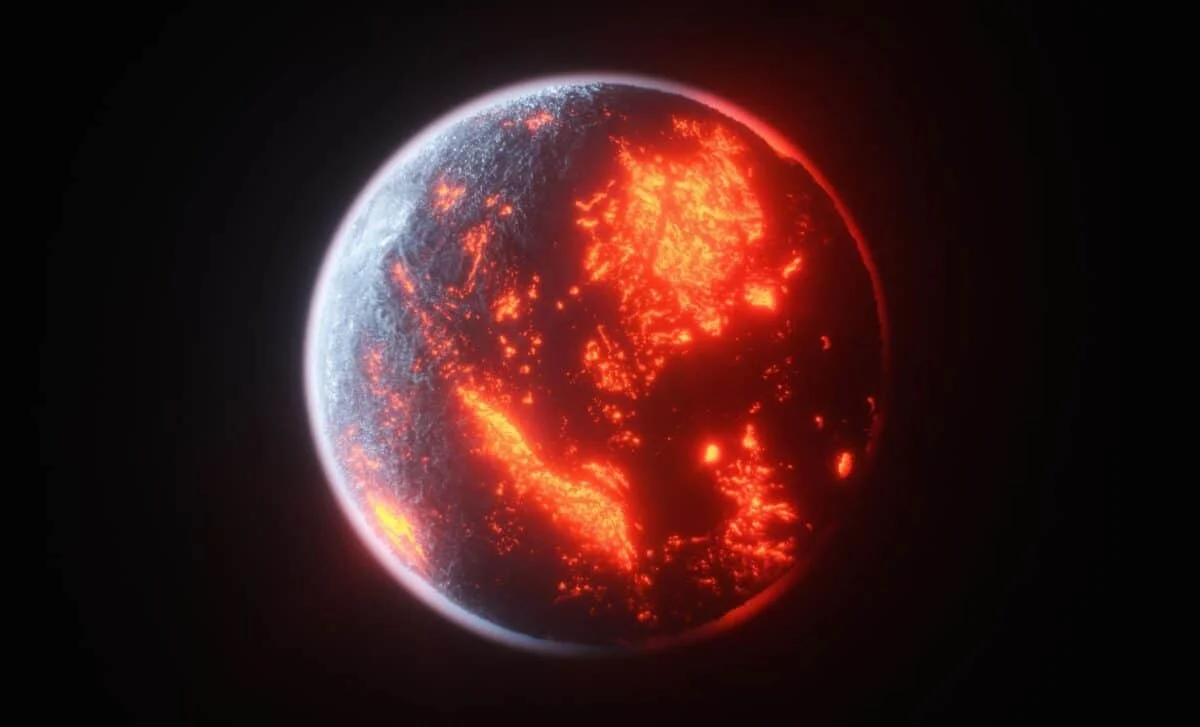
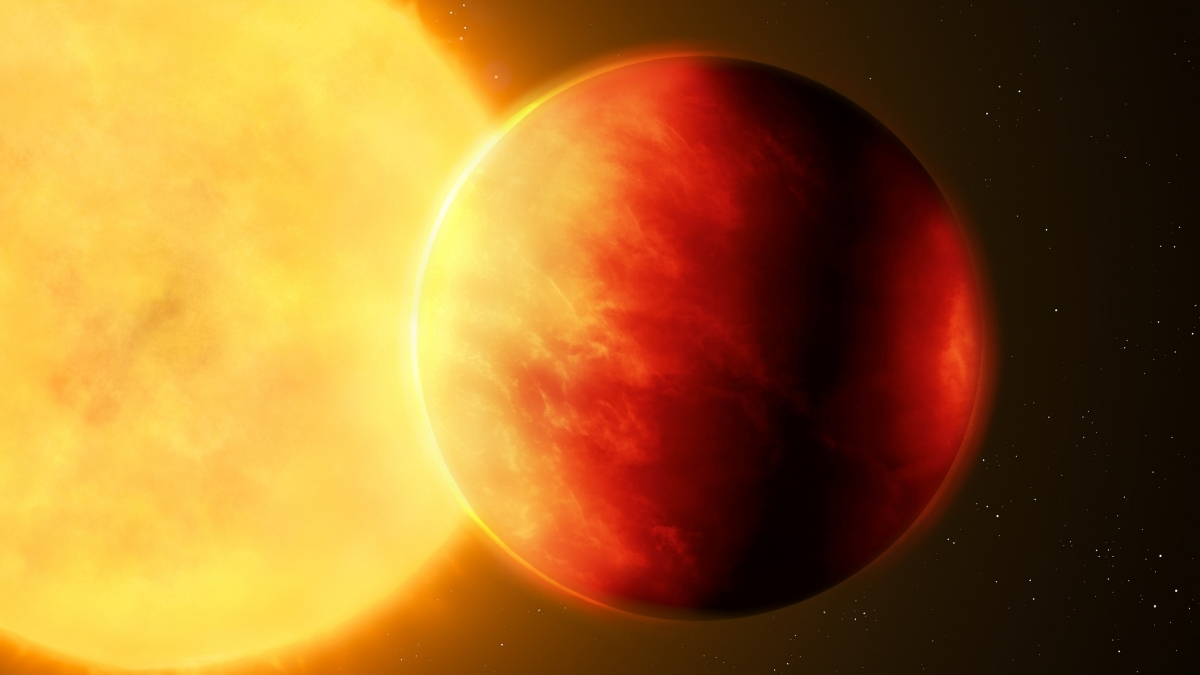
NASA’s James Webb Space Telescope detected signs of a relatively thick atmosphere around TOI-561 b, an ultra-hot, short-period rocky planet likely with a magma ocean. The planet’s dayside is cooler than a bare rock would be, indicating heat is redistributed by a volatile-rich atmosphere—potentially with water vapor and silicate clouds—challenging expectations that such extreme worlds would lose their atmospheres. The atmosphere may also help explain TOI-561 b’s lower-than-expected density, suggesting a recycling system between the magma ocean and the atmosphere and classifying the world as a “wet lava world.”

Sulfur-Scented Exoplanet Redefines Planet Types
space24 days ago

Sulfur-Scented Exoplanet Redefines Planet Types

Scientists using JWST have identified L 98-59 d, a 1.6× Earth-radius exoplanet 35 light-years away with a global magma ocean that stores sulfur, producing a sulfur-rich atmosphere including hydrogen sulfide; its low density and molten interior challenge existing small-planet categories. Computer models trace its five-billion-year evolution from a volatile-rich world that cooled and shrank while preserving sulfur, implying more exotic planet types exist—though the planet is unlikely to host life.

New exoplanet L 98-59 d unveils sulfurous magma oceans
space-exploration24 days ago

New exoplanet L 98-59 d unveils sulfurous magma oceans

Scientists using the James Webb Space Telescope and ground facilities have identified L 98-59 d as a new exoplanet with a sulfur-rich atmosphere and a semi-molten magma-ocean interior, a world that is unusually low in density for its size and unlike previously known rocky or watery planets. The study, published in Nature Astronomy, suggests a broader diversity of planet types and raises questions about other exotic, pungent planets, though the conditions are unlikely to support Earth-like life.

JWST uncovers a sulfur-rich lava-ocean exoplanet, redefining planet types
astronomy25 days ago

JWST uncovers a sulfur-rich lava-ocean exoplanet, redefining planet types

Space-based and ground observations reveal L 98-59 d as a 1.6× Earth's size exoplanet with a global magma ocean and a sulfur-rich atmosphere likely dominated by hydrogen sulfide and sulfur dioxide, suggesting it formed from a larger sub-Neptune and cooled over billions of years. This lava-world represents a new class of planets and highlights the surprising diversity of worlds beyond our solar system.

Lava-World Exoplanet Points to a New Class of Planets
astronomy26 days ago

Lava-World Exoplanet Points to a New Class of Planets

New JWST observations and simulations identify L98-59d as a 1.6 Earth-radius exoplanet with a global magma ocean, a molten core, surface temperatures near 1900°C, and a hydrogen-sulfide atmosphere shaped by strong tidal forces; this suggests molten planets may be more common than thought and that some planets in the habitable zone might not be habitable after all.

Webb Telescope Discovers Unexpected Atmosphere on Hot Lava Exoplanet
science3 months ago

Webb Telescope Discovers Unexpected Atmosphere on Hot Lava Exoplanet

A new study reveals that the ancient exoplanet TOI-561 b, despite its extreme proximity to its star and high temperatures, has retained a thick atmosphere, challenging previous assumptions about hot, rocky planets and suggesting complex interactions between its surface and atmosphere. The planet's unique characteristics, including its low density and potential volcanic activity, are being studied using JWST data, providing new insights into planetary evolution in the early universe.

Webb Telescope Reveals Intense Volcanic Activity on Jupiter’s Moon Io
science5 months ago

Webb Telescope Reveals Intense Volcanic Activity on Jupiter’s Moon Io

Scientists using NASA's Juno data have found that Jupiter's moon Io is emitting hundreds of times more heat than previously estimated, mainly from localized volcanic sources, challenging the idea of a global magma ocean beneath its surface. This new understanding results from analyzing different infrared spectral data, revealing that Io's volcanoes have hot outer rings and cooler centers, which significantly increases the estimated heat flux. The findings suggest that previous models based solely on certain infrared bands may have underestimated Io's thermal output, but do not definitively rule out the existence of a magma ocean. Future missions may provide more detailed insights into Io's intense volcanism.

Scientists Discover Earth's 'Missing Nitrogen' in Unexpected Location
science8 months ago

Scientists Discover Earth's 'Missing Nitrogen' in Unexpected Location

Scientists have discovered that a significant portion of Earth's missing nitrogen is likely stored in its core, having been sequestered during the planet's early magma ocean phase due to nitrogen's strong affinity for iron under high pressure, which explains the low nitrogen levels in Earth's mantle and helps understand planetary formation and habitability.

"Ancient Layer Discovered Deep Within Earth"
science1 year ago

"Ancient Layer Discovered Deep Within Earth"

New research suggests that the mysterious D" layer deep within Earth may have formed from an ancient magma ocean, influenced by water, which led to the creation of iron-magnesium peroxide. This iron-rich phase could explain the layer's unevenness and the presence of ultra-low velocity zones, providing insights into Earth's early history and internal structure.

Mapping the Fiery Landscape: Unveiling Jupiter's Moon Io's Active Volcanoes
science-and-astronomy2 years ago

Mapping the Fiery Landscape: Unveiling Jupiter's Moon Io's Active Volcanoes

Scientists have created the first global map of volcanic activity on Jupiter's moon Io using data from NASA's Juno probe. The map reveals 266 active volcanic hotspots, shedding light on the moon's inner mechanics and suggesting the presence of a global magma ocean beneath its surface. The study also found that Io's poles are unusually warm and that the volcanoes at the north pole are more energetic than those at the south pole. The findings provide valuable insights into the extreme volcanic activity on Io, which is primarily caused by tidal heating from Jupiter.