Tag

Pandemic Preparedness

All articles tagged with #pandemic preparedness

West Coast Flu Surge Defies Traditional Seasonal Patterns
health6 days ago

West Coast Flu Surge Defies Traditional Seasonal Patterns

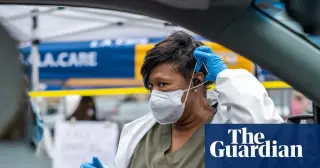
Flu season is starting earlier than usual in the US, with an early surge of H1N1 virus concentrated on the West Coast. Experts note this breaks the typical pattern where flu spreads from the South to the West later in the season. While it is too early to predict the full season's severity, the H1N1 strain is considered potentially more transmissible. Doctors urge immediate vaccination, as the vaccine takes two weeks to become effective and offers protection even if strains are mismatched.

U.S. Withholds Plague Response Amid Uncertainty Over Russian Lab Death
global-health7 days ago

U.S. Withholds Plague Response Amid Uncertainty Over Russian Lab Death

The U.S. government is delaying a formal response to a potential plague outbreak in Russia due to conflicting information regarding the cause of a researcher's death. While a worker at the Anti-Plague Research Institute of Siberia and the Far East died of pneumonia, officials have not confirmed if the strain was natural, genetically altered, or antibiotic-resistant. Experts emphasize that accurate diagnosis is critical before implementing travel advisories or border controls, as current reports suggest the infection has not spread beyond the lab.

H1N1 Variant Drives Unusually Early Flu Surge in Pacific Northwest
health7 days ago

H1N1 Variant Drives Unusually Early Flu Surge in Pacific Northwest

Influenza activity is starting weeks earlier than usual in the Northern Hemisphere, with the Pacific Northwest leading the surge. H1N1 now accounts for 96% of subtyped US cases, driven by a concerning mutation (G155E) that may evade existing immunity. While national activity remains low, local emergency room visits in Washington have jumped sevenfold compared to last year, prompting experts to advise immediate vaccination rather than waiting for the traditional October window.

AlphaFold Database Expands to Cover Viral Protein Complexes for Pandemic Preparedness
science-and-technology19 days ago

AlphaFold Database Expands to Cover Viral Protein Complexes for Pandemic Preparedness

The AlphaFold Protein Structure Database has added over 8,000 predicted structures for viral protein dimers, covering 23 virus families that infect humans. This expansion, part of a new pandemic preparedness portal, aims to provide researchers with 3D models of viral interactions to accelerate drug and vaccine development. The initiative involved global collaborations, including Nvidia and Google DeepMind, and addresses a previous gap in the database where viral proteins were often poorly represented due to complex genetic sequences.

Equitable Vaccine Sharing Could Save 2.7 Million Lives in Future Flu Pandemic
global-health21 days ago

Equitable Vaccine Sharing Could Save 2.7 Million Lives in Future Flu Pandemic

A new report by the NUS-Lancet PRIME Commission finds that distributing pandemic vaccines based on population size rather than purchasing power could save an additional 2.7 million lives globally, though it would increase deaths in high-income nations. The study, which models a hypothetical influenza A outbreak, argues that a 'whole-of-society' approach to preparedness is essential to protect vulnerable communities and build trust before the next crisis.

CDC Airport Air Sampling Detects SARS-CoV-2 in 98% of Samples
public-health25 days ago

CDC Airport Air Sampling Detects SARS-CoV-2 in 98% of Samples

A CDC-led study published in PLOS Global Public Health found that air sampling at four major US airports detected SARS-CoV-2 in 98.3% of samples and influenza A in 17.2% between 2023 and 2024. The research suggests that monitoring air in congregate areas like airports can identify respiratory pathogens from diverse populations, including asymptomatic individuals, complementing wastewater surveillance. While influenza detection correlated with wastewater and clinical data, SARS-CoV-2 positivity did not align well with other metrics. The findings indicate that air monitoring could inform mitigation strategies such as enhanced ventilation and resource allocation for future pandemic preparedness.

Hantavirus Outbreak as Global Wake-Up Call for Pandemic Prep
health4 months ago

Hantavirus Outbreak as Global Wake-Up Call for Pandemic Prep

An Andes hantavirus outbreak linked to the MV Hondius shows how a zoonotic virus with potential human-to-human transmission could become a global threat, but experts say it’s unlikely to become a pandemic due to known transmission dynamics and a rapid WHO-led response. The episode nonetheless highlights gaps in global health security—revisions to the International Health Regulations, the Pandemic Agreement, and funding gaps among major powers—and underscores the need to improve indoor air quality, strengthen transparent communication, and research ecological drivers of spillover to prevent faster, future outbreaks.

Outbreaks intensify as preparedness lags, experts warn
health4 months ago

Outbreaks intensify as preparedness lags, experts warn

A Global Preparedness Monitoring Board report warns that climate change, conflict, and geopolitical fragmentation make infectious disease outbreaks more frequent and damaging, while investments in preparedness and equitable vaccine access lag. PPE shortages and testing delays are hampering responses to Ebola in the DRC and hantavirus cases, highlighting the need for a permanent pandemic-risk monitoring body, a binding pandemic treaty to ensure equitable access to vaccines, tests and medicines, and steady financing to improve readiness and trust in public health.

US public health gaps leave nation unprepared for future outbreaks, experts warn
health4 months ago

US public health gaps leave nation unprepared for future outbreaks, experts warn

US public health has weakened since Covid, with staffing losses, funding cuts and testing/output bottlenecks that hinder outbreak response. Misinformation and eroding trust complicate risk communication, while global vaccine equity and international collaboration are at risk due to reduced federal leadership. Experts urge pre-bunking myths, clearer messaging, and renewed investment in public health infrastructure and international partnerships to be ready for a next pandemic potentially as bad as or worse than Covid within 25 years.

NIAID told to scrub biodefense and pandemic language from its website
health7 months ago

NIAID told to scrub biodefense and pandemic language from its website

Emails show four NIAID staffers were ordered to remove the words “biodefense” and “pandemic preparedness” from the institute’s site, a move experts say could hamper future infectious-disease readiness amid a broader NIH reorganization and workforce cuts; the change signals a deprioritization of these traditional research pillars, potentially weakening the U.S. response to evolving pathogens.

NIAID Reframes Mission, Downgrading Pandemic Prep and Biodefense
science8 months ago

NIAID Reframes Mission, Downgrading Pandemic Prep and Biodefense

Nature reports that the US National Institute of Allergy and Infectious Diseases will deprioritize biodefense and pandemic preparedness, scrubbing those terms from its pages as it shifts toward basic immunology and other domestic infectious-disease work. About a third of its $6.6 billion budget funds emerging infectious diseases and biodefense, and the move accompanies leadership changes and a review of grant portfolios, raising concerns about readiness for evolving pathogens.

Six years after COVID-19, global pandemic preparedness shows gains but remains fragile
health8 months ago

Six years after COVID-19, global pandemic preparedness shows gains but remains fragile

Six years after the WHO declared COVID-19 a Public Health Emergency of International Concern, the world has strengthened preparedness through measures like the WHO Pandemic Agreement, IHR amendments, and the Pandemic Fund, plus expanded surveillance and vaccine/biotech capacity; however, progress is uneven and fragile, underscoring the need for sustained global collaboration to prevent the next pandemic.