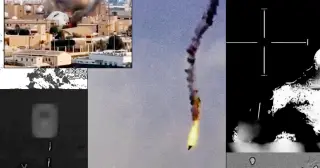
The United States conducted strikes against Iranian rocket launchers located in the Strait of Hormuz, reflecting ongoing military action in the Persian Gulf and signaling heightened tensions in the region.
Gasoline prices in the U.S. remain stubbornly above $4 per gallon in August 2026, driven not by ordinary supply-demand dynamics but by geopolitics in the Persian Gulf. The Strait of Hormuz remains effectively closed, tensions with Iran persist, and U.S. naval escorts are moving ships through the region, keeping prices high. AAA puts the national average around $4.06/gal and GasBuddy around $4.09; diesel is rising sharply, and Brent crude trades around the upper $90s. With energy stocks buoyant and no negotiations in sight to end the conflict, prices have risen about 45% in 2026 (up 10% since July 4), suggesting the price picture could stay elevated regardless of seasonal demand.
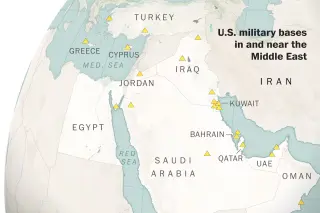
The Pentagon is assessing its U.S. military footprint in the Middle East as the Iran war potentially winds down, including whether to rebuild strike-damaged bases and where troops might be relocated (with discussions about moving assets to safer locations like Jordan or Israel). The informal review, described by eight people familiar with the matter and not yet formal, reflects a broader debate over defense posture, whether to prioritize homeland defense, and the financial implications of base reconstruction.
The article surveys five real-world locations proposed for the Garden of Eden—Southern Mesopotamia near the Tigris and Euphrates, a now-submerged Persian Gulf landscape, the Armenian highlands, the Nile Valley in Africa, and northwestern Iran near Tabriz—explaining how biblical clues about four rivers inform these theories while noting Eden also functions as a symbolic ideal beyond a physical place.
U.S. oil output is set to rise only modestly next year, with smaller producers drilling more while majors like Exxon and Chevron keep plans unchanged amid uncertainty from the Middle East conflict. The EIA now expects output to top about 14 million barrels per day, a gain from earlier expectations, but the war is unlikely to allow the United States to capture significant market share from Persian Gulf producers.
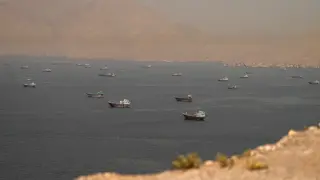
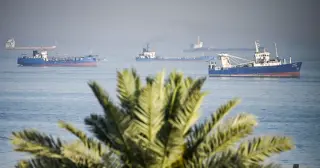
After a preliminary U.S.-Iran agreement to lift movement restrictions, ships began transiting the Strait of Hormuz—25 vessels moved in a day, the most in weeks, though about 550 ships remain stranded as authorities weigh safety measures for secure passage through the strait.
An opinion piece argues the Gulf can no longer treat Tehran’s threat as manageable; Tehran’s missiles, economic pressure, and actions around the Strait of Hormuz demonstrate an existential challenge, prompting a shift from passive diplomacy toward active alignment with the Iranian people, Israel, and the United States to counter Tehran and safeguard regional prosperity.
The U.S. military says Iranian drones launched toward the Strait of Hormuz were shot down, marking a continuation of heightened tensions between Tehran and Washington in the Persian Gulf.
A Quincy Institute analysis says Trump appears set to revive hostilities with Iran within 48 hours, after threats on Truth Social and perceived failed escalations. Tehran reportedly believes a new war could force stronger negotiating leverage, and its plans reportedly include broad retaliation against US allies and interests—potentially targeting UAE data centers, Trump's business interests, and widening the conflict to the Red Sea and critical fiber-optic cables. While escalatory dynamics are dangerous, the author cautions that renewed war is not inevitable and depends on misperceptions of how it might improve negotiating positions.
The United States faces pressure to secure buy-in from Gulf partners—Saudi Arabia, the United Arab Emirates, Qatar and others—as the protracted war with Iran strains regional alliances and risks Gulf infrastructure and vital assets, including the Strait of Hormuz.
UKMTO warns the Strait of Hormuz is effectively closed under a “dual blockade”—Iran’s naval actions and a US-led blockade—causing traffic to plummet from about 3,000 monthly crossings to roughly 150 in March and leaving around 20,000 mariners stranded aboard vessels. With the strait carrying about a quarter of global seaborne oil and no viable alternative routes, energy markets face price spikes and potential shortages, fueling what the IEA calls the greatest energy security challenge in history.
An exclusive NBC News report says Iran inflicted far more damage on American military bases and equipment in the Persian Gulf than publicly acknowledged, with repair costs potentially running into billions of dollars.
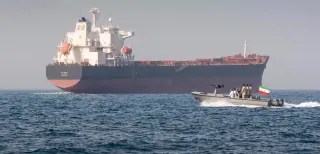
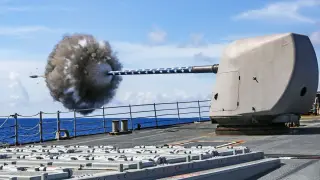
The USS Spruance fired its 5-inch MK 45 deck gun at the Iranian cargo ship Touska on April 19, marking the first time a U.S. warship used a deck gun against another vessel in nearly four decades (the 1988 Praying Mantis engagement). Touska was not sunk but boarded and seized, and the broader Iran-US naval clash remains context for ongoing tensions in the Persian Gulf.
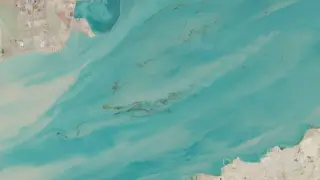
New satellite imagery shows multiple oil spills in the Persian Gulf following strikes on oil facilities and ships linked to Iran and its adversaries, raising alarms of an environmental catastrophe that could harm marine life, coastal livelihoods, and desalination plants as cleanup remains challenging amid ongoing conflict.
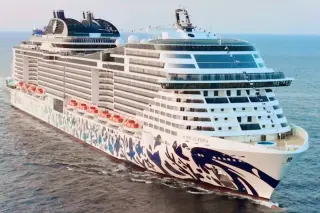
Six cruise ships evacuated from the Gulf have moved through the Strait of Hormuz in a coordinated convoy, establishing a safe corridor that enables a return to regular Europe-bound sailings in May as operators redeploy their fleets.