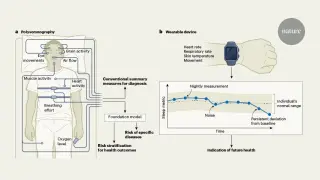
New research indicates that artificial intelligence can extract predictive health signals from a single night of sleep data. Two major studies published in 2026 suggest that physiological patterns during sleep, such as electrocardiogram (ECG) readings and sleep stage data, can forecast future cardiovascular events and mortality years before clinical symptoms appear. These findings imply that standard sleep tests could evolve into powerful diagnostic tools for early disease detection.
The FDA has approved Xocova, a new oral medication designed to prevent COVID-19 infection after direct exposure. Available for individuals aged 12 and older, the drug significantly reduces the risk of contracting the virus if taken within three days of contact with an infected person. While it offers a new layer of protection, experts emphasize that it is not a substitute for vaccination and is intended for specific high-risk exposure scenarios rather than general preventive use.
A large observational study of nearly 100,000 adults found that sleeping fewer than five hours per night is associated with a higher risk of 37 diseases. Conversely, greater time spent in REM sleep was linked to significantly lower risks for conditions like dementia and Parkinson’s disease. The research suggests that a sleep duration of six to eight hours per night offers the lowest overall disease risk for middle-aged and older adults.
Major nonprofit health systems including Northwestern Medicine, Weill Cornell, and Mayo Clinic have launched cash-pay longevity clinics offering comprehensive assessments for approximately $5,500 annually. These programs aim to provide detailed data on aging trajectories and physical fitness, moving beyond standard primary care. While proponents argue this offers a rigorous scientific approach to preserving healthspan, critics question the alignment of high out-of-pocket costs with nonprofit charitable missions and warn that many offered tests lack sufficient evidence to prove they improve health outcomes.
Dr. Michael Hall, a Miami Beach longevity physician, has outlined ten core principles for extending healthy years, arguing that basic lifestyle habits are more effective than expensive supplements or biohacks. His framework, detailed in his new book 'Infinite Youth,' prioritizes sleep, movement, strength, real food, purpose, social connection, challenge, curiosity, and maintaining physiological resilience. While Hall emphasizes accessible, low-cost strategies, other experts like Dr. Pamela Brar of Mayo Clinic and Dr. Ariela Orkaby of Mass General Brigham highlight the distinction between lifespan and healthspan, noting that healthspan typically peaks in the mid-60s. They recommend following established guidelines such as the American Heart Association’s Life Essential 8, which include nutritious diets, exercise, and quality sleep. Meanwhile, scientists are exploring whether aging itself can be treated as a medical condition, with researchers at Albert Einstein College of Medicine and Columbia University investigating biological markers to intervene before age-related diseases develop. Although clinical trials for human longevity interventions are not yet complete, experts agree that foundational habits like sleep, exercise, and social connection remain the most reliable methods for extending healthy years.
Bryan Johnson, the 49-year-old founder of the 'Don't Die' movement, has been diagnosed with autoimmune gastritis, a chronic condition where the immune system attacks stomach lining cells. Despite the incurable nature of the disease, Johnson views the diagnosis as a validation of his longevity philosophy rather than a failure. He spends over $2 million annually on extreme health interventions and maintains a medical concierge team to monitor his body. Critics celebrated his diagnosis, which Johnson interprets as evidence that his presence in the public sphere provokes strong reactions. He argues that early detection through intensive tracking allows for better management of such conditions, aligning with his broader goal of extending human lifespan.
A new international study published in The New England Journal of Medicine finds that silent atherosclerosis, or artery-clogging plaque, is far more common in young adults than previously believed. Among 16,800 participants with no known heart disease, 57% had detectable plaque, with about 1 in 13 adults aged 18 to 29 affected. The findings suggest that traditional risk assessments often miss early disease, highlighting the need for earlier detection and lifestyle interventions to prevent heart attacks and strokes.
A large international study published in The New England Journal of Medicine reveals that silent atherosclerosis is far more common in young adults than previously believed. Using advanced imaging on over 16,800 healthy participants in Denmark and Spain, researchers found that 57.1% of adults aged 18 to 70 had detectable artery plaque. Notably, approximately 1 in 13 adults under 30 showed signs of the condition despite having no symptoms or known cardiovascular disease. The findings suggest that traditional risk scores fail to identify many individuals with existing disease, highlighting the need for earlier detection methods.
A new wave of medical guidance and clinical trials is pushing for wider adoption of risk-reducing salpingectomy, a procedure that removes fallopian tubes to prevent ovarian cancer. While evidence suggests this surgery can cut cancer risk by nearly 80%, it remains underutilized due to a lack of routine clinical counseling and patient awareness. Recent updates from the American College of Obstetricians and Gynecologists (ACOG) and new trials like the SOROCk study aim to bridge this gap by offering alternatives to immediate surgical menopause.
Indian medical experts are urging a shift from reactive treatment to proactive prevention for heart disease, particularly among young adults. Data from Telangana shows that nearly 60% of cardiac emergencies in 2025 involved individuals aged 31 to 60, with urban areas bearing the highest burden. Cardiologists highlight that high-stress lifestyles, poor diets, and lack of physical activity are driving this trend. Experts recommend annual health screenings for blood pressure, sugar, and lipids starting at age 18, alongside lifestyle changes, to address the growing risk of cardiovascular disease in younger demographics.
Recent large-scale studies and cardiologist advice suggest that 7,000 daily steps, not 10,000, is the optimal target for reducing mortality and heart disease risk. This figure, roughly 3-3.5 miles, offers significant health benefits for adults over 50, including fewer falls, and is achievable through consistent, moderate-intensity walking.
The American Heart Association and American College of Cardiology released updated dyslipidemia guidelines in March 2026, replacing the 2018 version. The new rules emphasize earlier screening and more aggressive, personalized treatment to reduce lifetime cardiovascular risk. Key changes include universal screening for lipoprotein(a), the use of new biomarkers like apolipoprotein B, and the adoption of the PREVENT-ASCVD risk calculator. Clinicians are now encouraged to use coronary artery calcium scans and specific lifestyle interventions to tailor care to individual patient profiles.
A new meta-analysis published in the BMJ identifies brisk walking and jogging as the most effective exercises for maintaining bone mineral density (BMD) across multiple skeletal sites. The study, which analyzed data from 18,429 individuals aged 40 and older across 124 trials, found that approximately 600 MET-minutes per week (equivalent to 2–3 hours of brisk activity) is the threshold for meaningful bone benefits. While combined aerobic and resistance training also showed positive results, their effects were limited to fewer skeletal areas. Benefits were more pronounced in middle-aged individuals with a healthy BMI, whereas older adults and those with obesity showed reduced responsiveness. The findings suggest that accessible, low-cost exercise can serve as a clinically meaningful adjunct to pharmacotherapy for preventing age-related bone fragility, though the researchers caution that evidence confidence is low to moderate.
A large-scale UK study finds that higher REM sleep is associated with a reduced risk of 83 diseases, while 6-8 hours of total sleep offers the best overall protection.
A large observational study published in the European Heart Journal finds that exposure to light levels exceeding 3 lux during sleep is associated with adverse structural changes in the heart and a higher risk of cardiovascular events. The research, led by Tulane University, analyzed data from over 11,000 UK Biobank participants who wore wrist sensors for one week and underwent cardiac MRI scans three years later. Results indicate that nighttime light exposure, even at levels comparable to moonlight, correlates with thickened heart muscles and reduced pumping efficiency. While the study cannot prove causation, experts suggest that simple measures like using blackout curtains and warm-colored lighting may help mitigate these risks.