Tag

Redshift

All articles tagged with #redshift

Euclid Discovers 31 Ancient Quasars, Revealing Fast-Growing Black Holes in the Early Cosmos
space4 hours ago

Euclid Discovers 31 Ancient Quasars, Revealing Fast-Growing Black Holes in the Early Cosmos

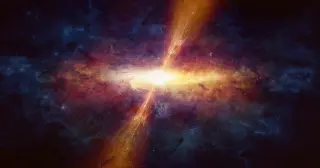
ESA’s Euclid space telescope found 31 ancient quasars dating to redshift 6.6–7.8, including two record-holders at z=7.77 and z=7.69, making them the oldest seen. Each hosts a billion-solar-mass black hole, existing when the universe was under a billion years old. The haul doubles the known number of such quasars and demonstrates Euclid’s unexpected capability to census the early cosmos, though how these enormous black holes formed so quickly remains a major puzzle. This is just the first major result from a six-year survey that could uncover many more distant quasars.

Redshift: Immersive JWST visuals, Artemis 2 audio, and Pink Floyd collide in NYC art show
entertainment1 month ago

Redshift: Immersive JWST visuals, Artemis 2 audio, and Pink Floyd collide in NYC art show

At Heft Gallery in New York City, Ashley Zelinskie and DJ illich Mujica staged Redshift, an immersive audiovisual work that fuses JWST imagery, NASA-inspired sound design, and spoken-word samples (including Pink Floyd) to explore light as sound and the cosmos’ redshift, using the Volumes listening system after a Golden Record opening.

Webb’s Little Red Dots Spark New Theories on Black Hole Birth
space3 months ago

Webb’s Little Red Dots Spark New Theories on Black Hole Birth

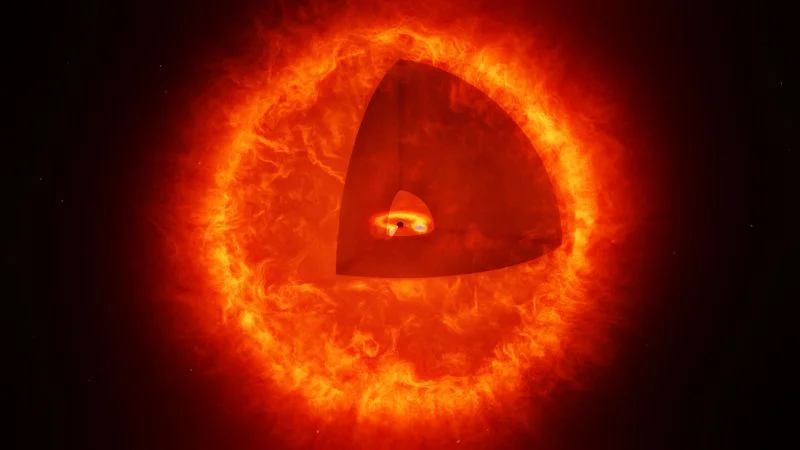
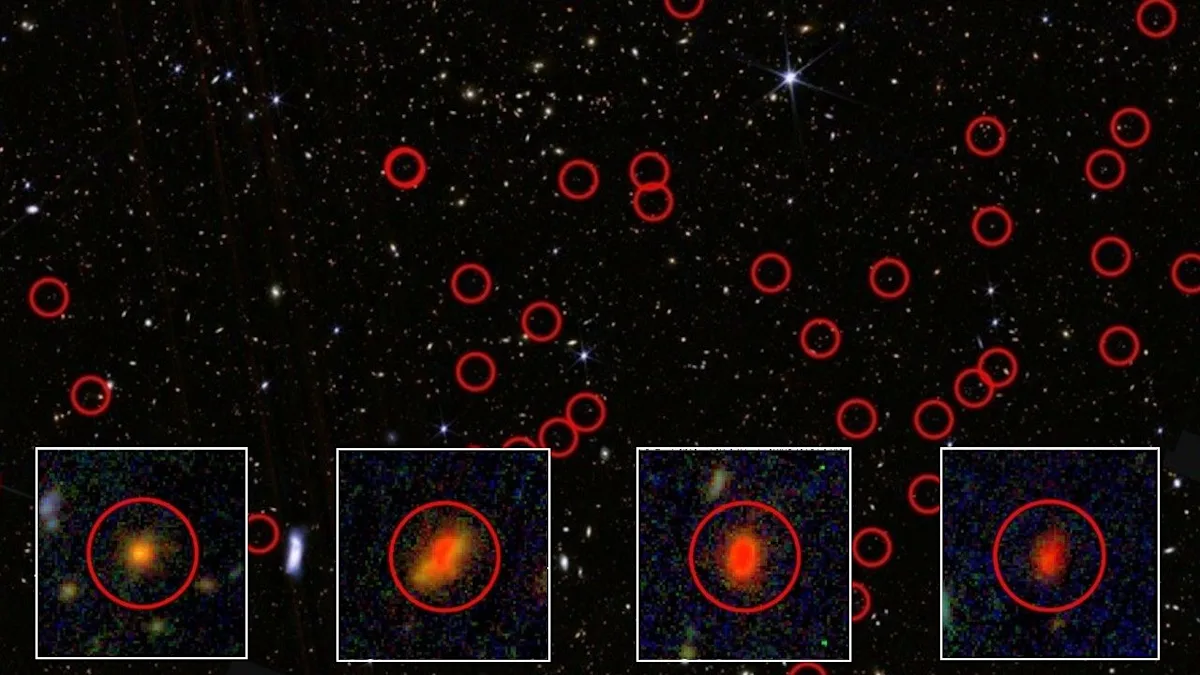
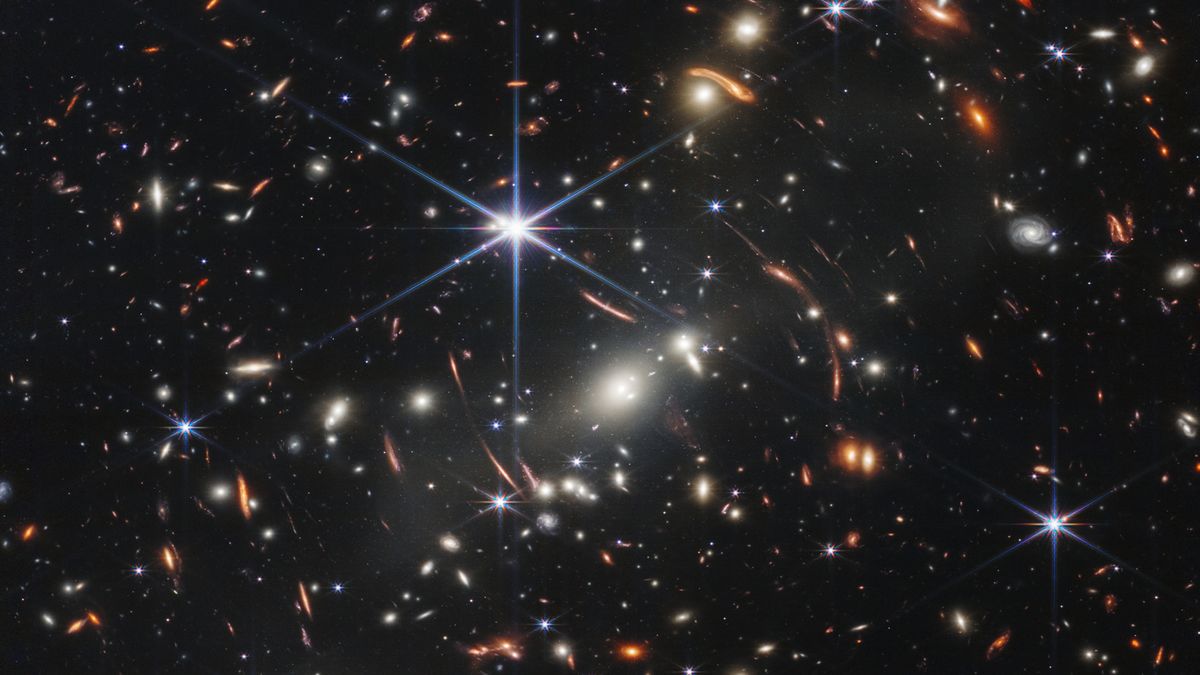
The James Webb Space Telescope has captured hundreds of tiny red dots in deep-field images whose nature remains mysterious; early ideas centered on distant galaxies or dust-enshrouded black holes, but current thinking leans toward growing black holes surrounded by dense hydrogen gas, or even a new class called black hole stars (quasi-stars). A notable case nicknamed “The Cliff” challenges previous explanations and hints at exotic physics, but most LRDs are extremely distant and consensus awaits more nearby examples and data to settle their origins.

Webb Spots MoM-z14, the Galaxy Born 280 Million Years After the Big Bang
space5 months ago

Webb Spots MoM-z14, the Galaxy Born 280 Million Years After the Big Bang

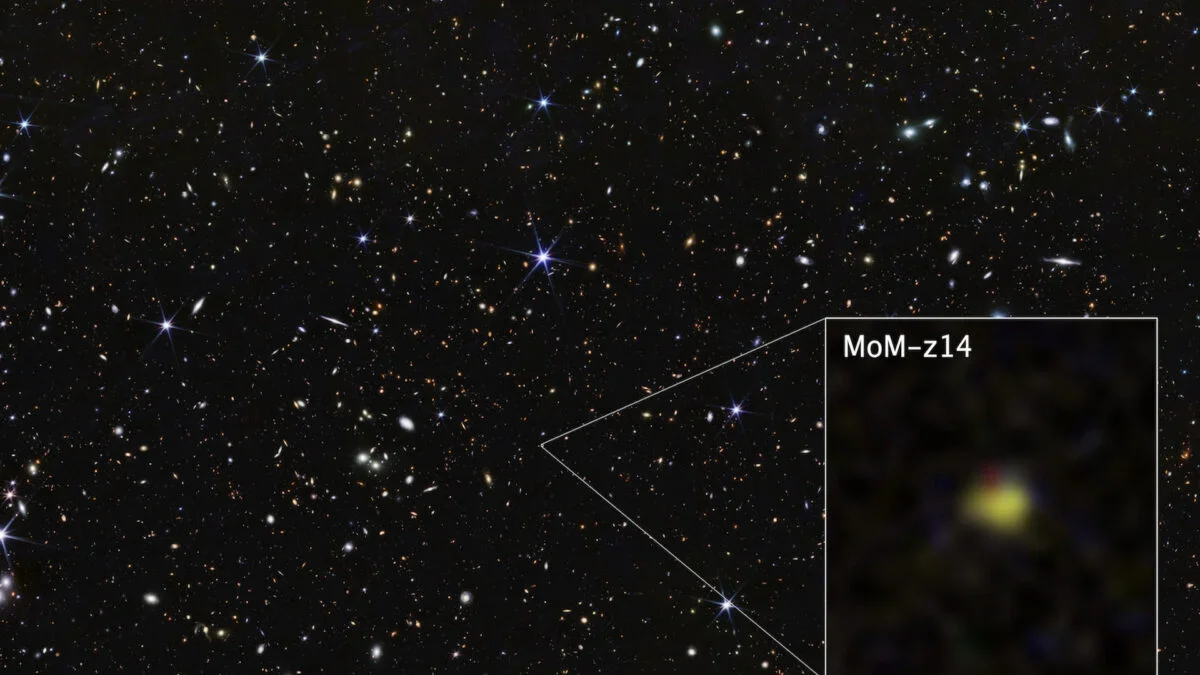
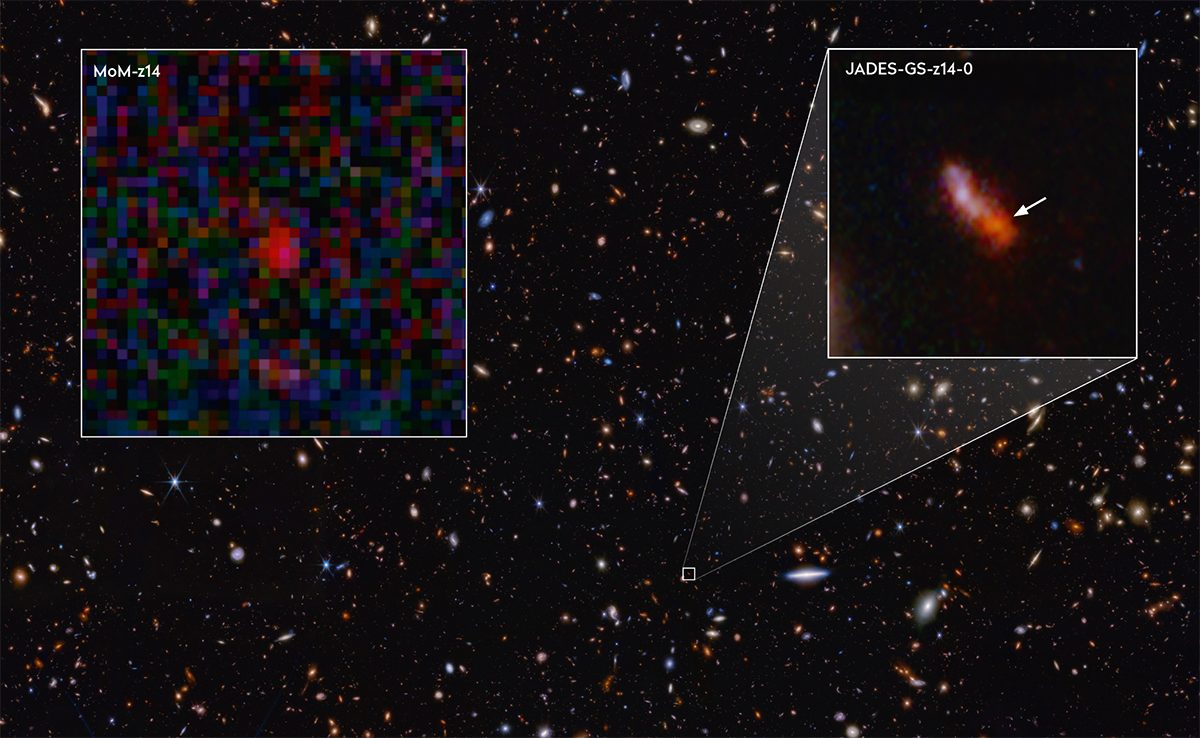
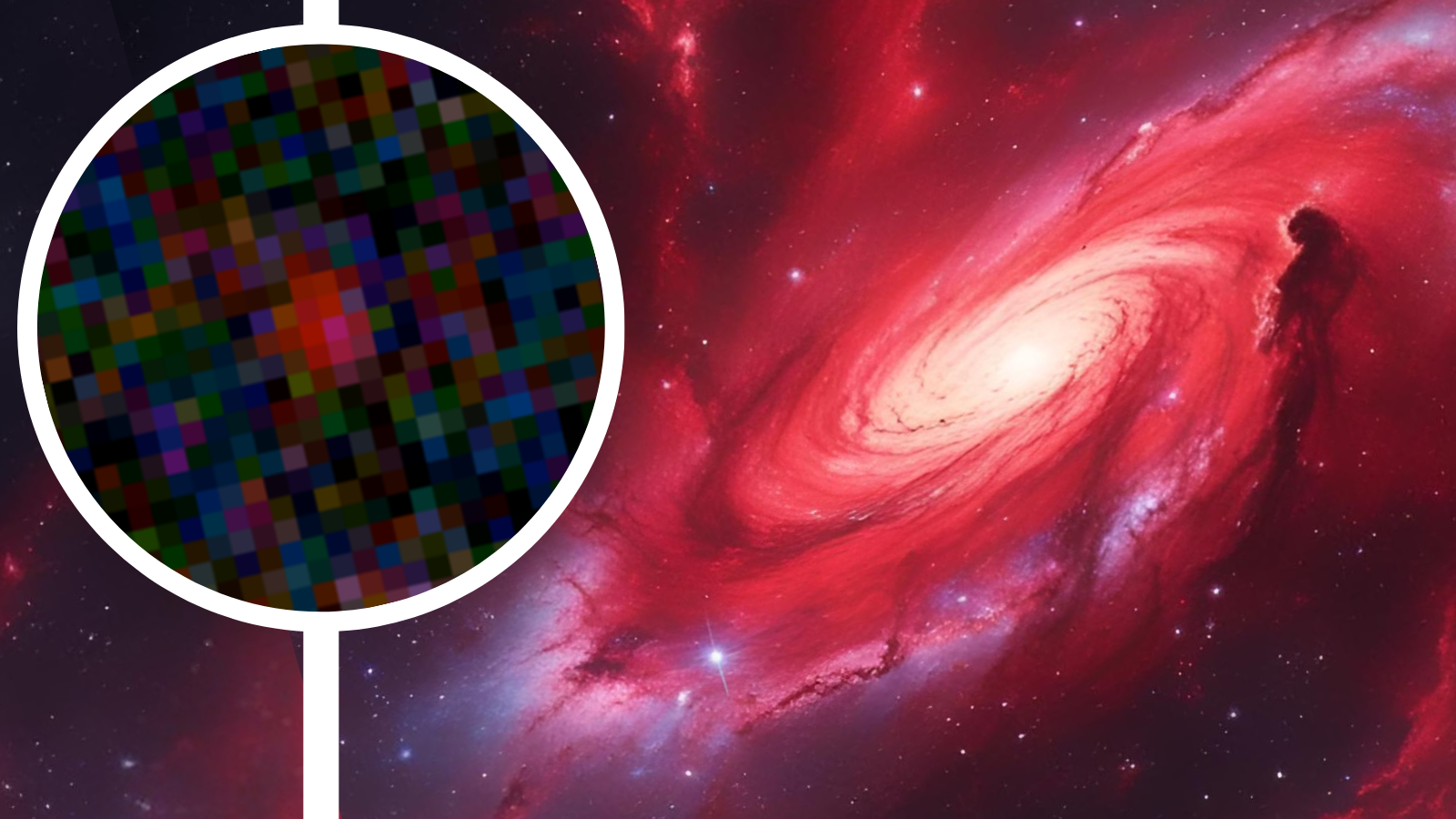
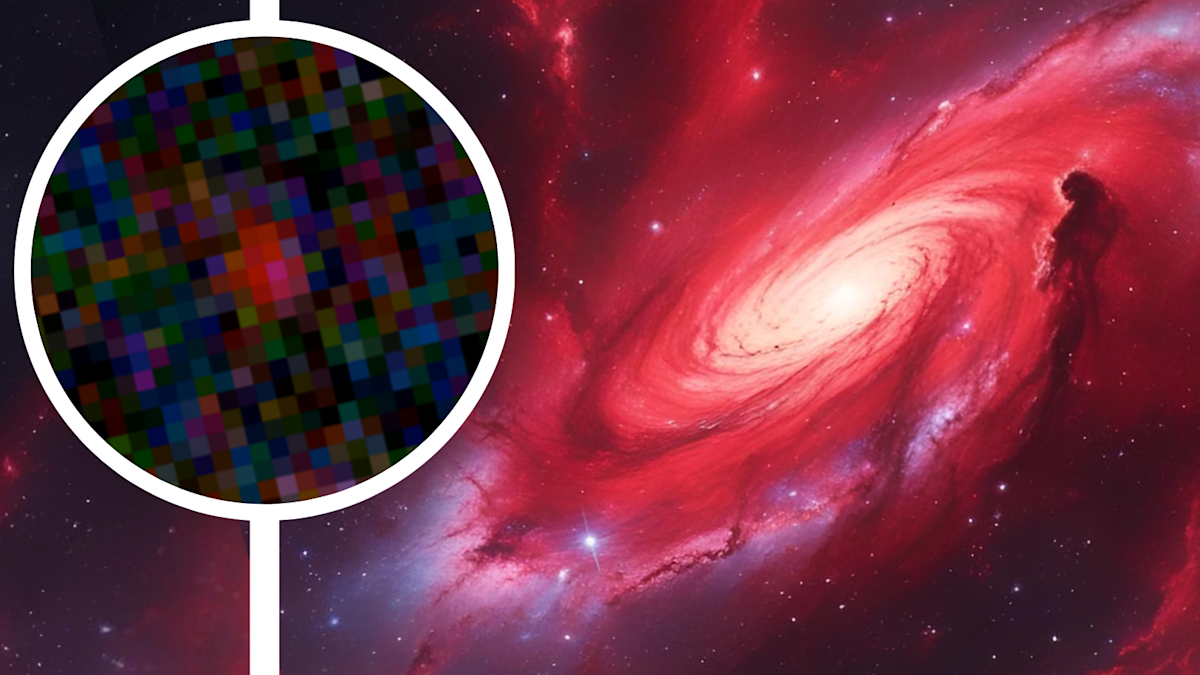
NASA’s James Webb Space Telescope has confirmed MoM-z14 as the most distant galaxy observed to date, with a redshift of 14.44 implying its light has traveled about 13.5 billion years—roughly 280 million years after the Big Bang. The galaxy is exceptionally compact yet luminous, about 50 times smaller than the Milky Way, signaling intense early star formation and raising questions about nitrogen production in the infant universe. It surpasses the previous record holder and demonstrates Webb’s power to illuminate the cosmos’s infancy and refine models of early galaxy growth.

James Webb Telescope uncovers ancient pristine galaxies supporting Big Bang theory
science11 months ago

James Webb Telescope uncovers ancient pristine galaxies supporting Big Bang theory

The James Webb Space Telescope has discovered the most distant galaxy ever observed, MoM-z14, which existed just 280 million years after the Big Bang, revealing a surprisingly rich population of early galaxies and heavier elements, and indicating that the universe's earliest structures are more complex and abundant than previously thought.

JWST Unveils Unexpected Light and Monster Galaxies in Distant Universe
science1 year ago

JWST Unveils Unexpected Light and Monster Galaxies in Distant Universe

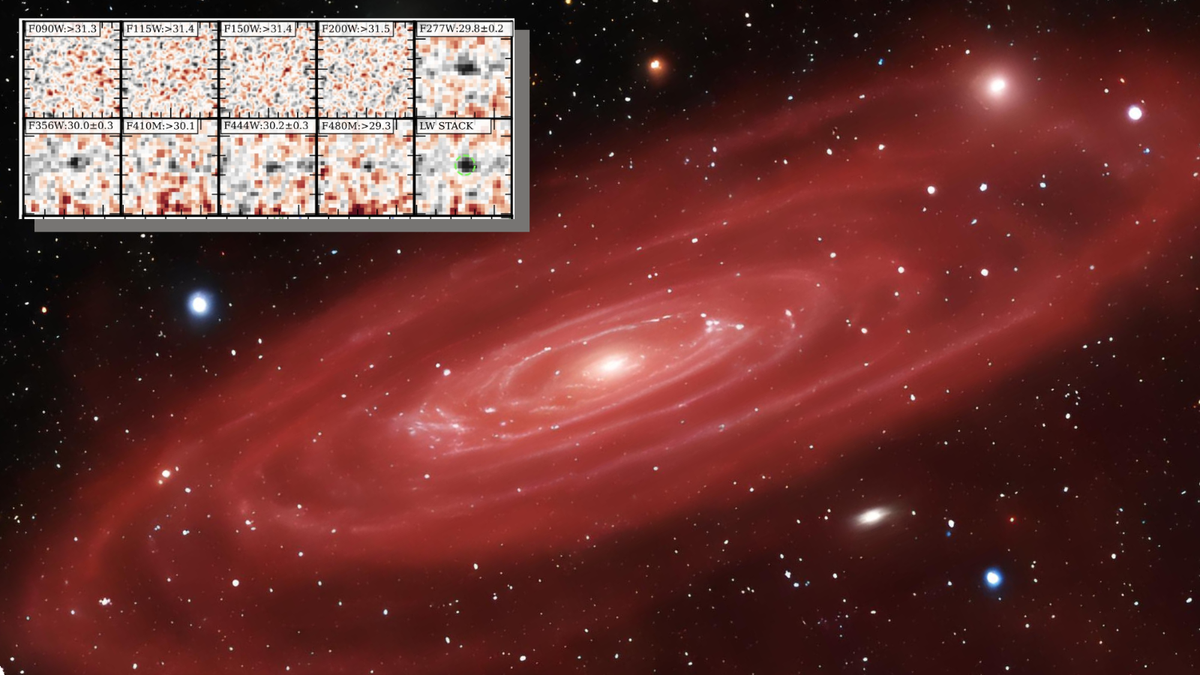
The James Webb Space Telescope (JWST) may have identified the most distant galaxies ever observed, potentially dating back to just 200 million years after the Big Bang. These five candidate galaxies, part of the GLIMPSE project, exhibit high redshifts between z = 16 and z = 18, indicating their extreme distance and age. The discovery was aided by gravitational lensing from the galaxy cluster Abell S1063, allowing JWST to detect these faint, early galaxies. Confirmation of these findings could provide new insights into the universe's early evolution.

"Galaxy Colors Reveal Their Cosmic Distances, New Model Shows"
science2 years ago

"Galaxy Colors Reveal Their Cosmic Distances, New Model Shows"

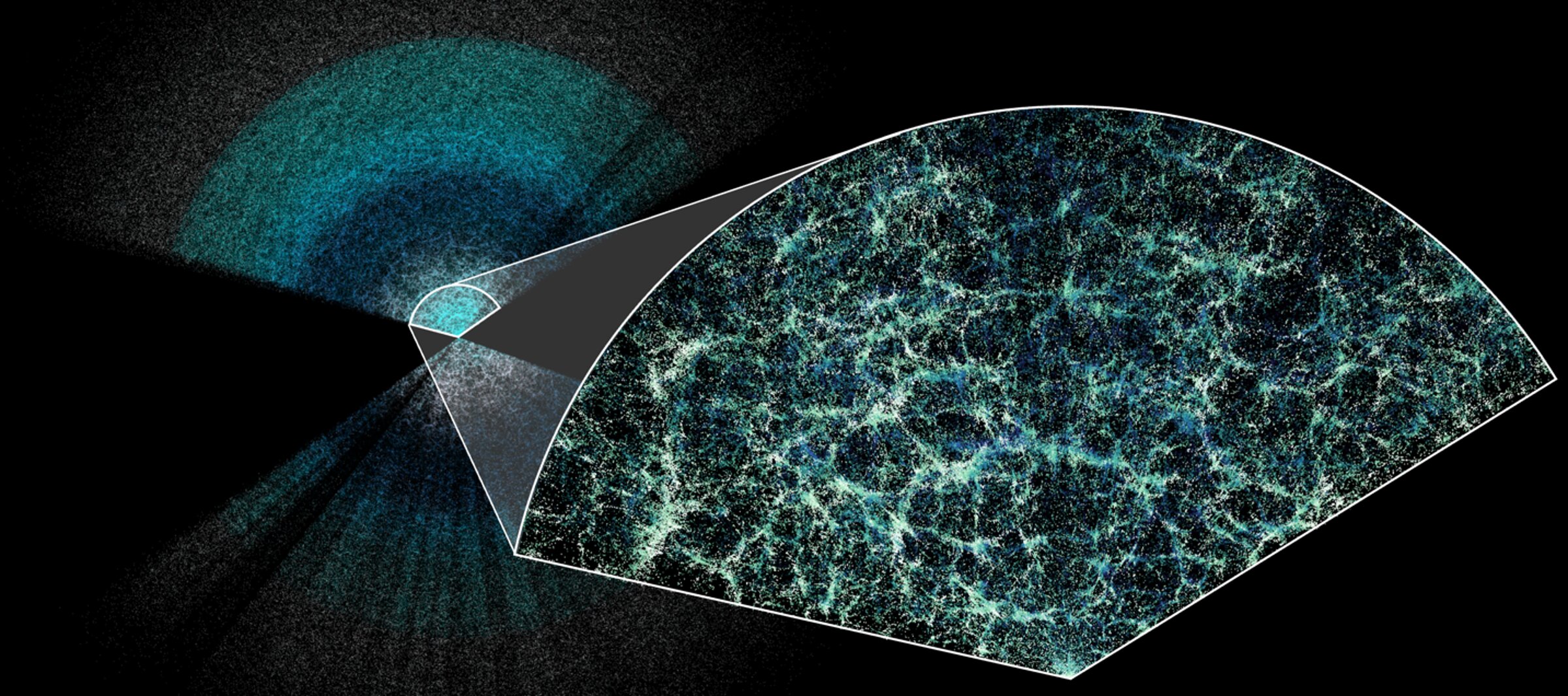
Researchers from Ludwig Maximilian University have developed a model that uses the color of galaxies to determine their distance, aiding in the measurement of cosmic structures. By analyzing data from the Dark Energy Spectroscopic Instrument and the KiDS-VIKING survey, they found a relationship between a galaxy's color and its redshift. This model helps in understanding the large-scale structure of the universe and the interplay between dark matter and dark energy.

"Ancient Light Source That Ignited the Universe Discovered"
science-and-space2 years ago

"Ancient Light Source That Ignited the Universe Discovered"

The James Webb Space Telescope (JWST) has discovered early galaxies that initially seemed to challenge the Big Bang theory due to their unexpected size and brightness. However, more precise measurements have shown these galaxies to be less extraordinary than first thought, aligning with current cosmological models. While JWST's findings raise intriguing questions about early galaxy formation, they do not "break" the Big Bang theory, but rather enhance our understanding of the universe's early stages.

Webb Telescope Discovers Most Distant Galaxy Ever
science-and-technology2 years ago

Webb Telescope Discovers Most Distant Galaxy Ever

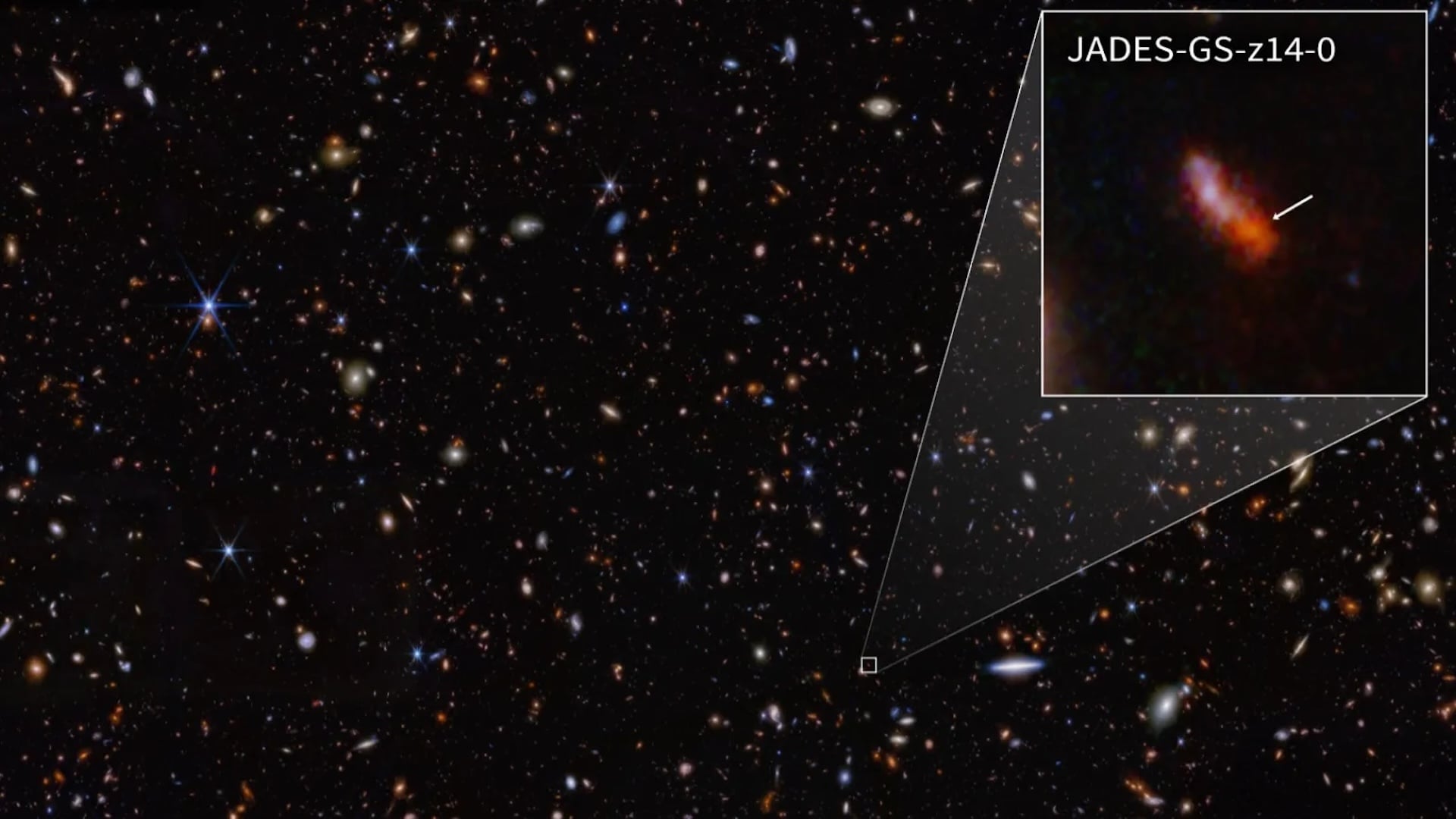
The James Webb Space Telescope has captured the most distant known galaxy, JADES-GS-z14-0, dating back to less than 300 million years after the big bang. Using its Near-Infrared Spectrograph, scientists measured the galaxy's redshift at 14.32, breaking previous records. The discovery provides new insights into the early universe, revealing unexpected characteristics and suggesting the presence of multiple generations of massive stars. The findings are still under study and have not yet been peer-reviewed.