Tag

Serotonin

All articles tagged with #serotonin

Childhood Trauma Rewires Gut Signaling via New Brain–Gut Pathways
health1 month ago

Childhood Trauma Rewires Gut Signaling via New Brain–Gut Pathways

Two Gastroenterology studies link early-life stress and prenatal exposure to serotonin-altering medications with changed gut-brain signaling and increased digestive symptoms. In mice, gut-specific serotonin signaling and the vagus nerve modulate anxiety, pain, and motility, with sex hormones shaping sex-dependent effects; in humans, large datasets show maternal depression and early adversity double the risk of functional GI disorders and GI symptoms in children. While observational, findings highlight potential gut-focused treatments and the importance of supporting maternal mental health to protect gut–brain health in offspring.

Serotonin May Accelerate Mitral Valve Degeneration, Paving Way for Risk Testing
health1 month ago

Serotonin May Accelerate Mitral Valve Degeneration, Paving Way for Risk Testing

New multicenter data link reduced serotonin transporter (SERT) activity and SSRI use with faster progression of degenerative mitral regurgitation (DMR); animal models show serotonin-related valve thickening, and a 5-HTTLPR long-long genetic variant appears to heighten risk by increasing valve cell response to serotonin and collagen buildup. Findings suggest potential for genetic risk testing to identify patients who may need earlier surgery and point to new therapeutic targets (e.g., HTR2B), while SSRIs remain generally safe for most people.

Serotonin Pathway Tied to SSRI-Linked Tinnitus, Hinting at Targeted Therapies
science1 month ago

Serotonin Pathway Tied to SSRI-Linked Tinnitus, Hinting at Targeted Therapies

New mouse research identifies a specific serotonin-driven circuit from the dorsal raphe nucleus to the auditory system that, when elevated, induces tinnitus-like behavior; turning off this circuit reduces symptoms, providing a potential path to precision drugs that keep antidepressant benefits without worsening tinnitus. The findings help explain why some people on SSRIs experience tinnitus and emphasize the need for clinicians to balance mood relief with ear-related side effects rather than stopping medication abruptly.

Gut microbes could be quietly steering what you crave
health1 month ago

Gut microbes could be quietly steering what you crave

New evidence suggests gut bacteria may influence what we crave. In mice, transferring different microbiomes altered protein vs. carbohydrate preferences, likely via serotonin production linked to tryptophan levels. A 2025 Nature Microbiology study also ties a gut bacterium to reduced sugar cravings through a GLP-1 pathway. Experts caution that human eating is shaped by culture and other factors, so more research is needed to confirm similar effects in people.

Parasites spark a two-step gut–brain chat between epithelial cells to curb appetite
science2 months ago

Parasites spark a two-step gut–brain chat between epithelial cells to curb appetite

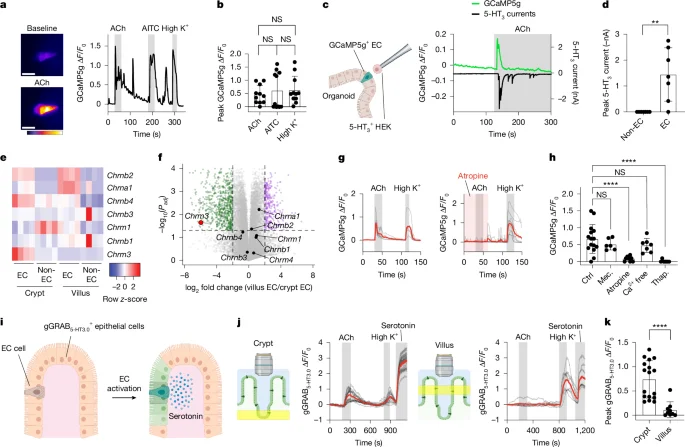
New research reveals a two-phase, paracrine dialogue between gut tuft cells and serotonergic enterochromaffin (EC) cells that links parasite detection to brain signaling and feeding behavior. Tuft cells release acetylcholine (ACh) in an acute, parasite-triggered fashion and also a constitutive leak during type 2 inflammation; both modes can activate EC cells, but only sustained ACh release raises serotonin enough to stimulate vagal afferents and suppress food intake. This epithelial crosstalk couples type 2 immune responses with sensory signaling to drive gut–brain communication and protective behaviors during parasitic infections, explaining progression from asymptomatic to symptomatic disease.

Magic mushrooms' effects may hinge on a multi-compound entourage, not just psilocybin
psychopharmacology2 months ago

Magic mushrooms' effects may hinge on a multi-compound entourage, not just psilocybin

A Scientific Reports study using computational modeling suggests eight bioactive compounds in psilocybin-producing mushrooms may interact with brain targets and produce effects via an entourage effect, with some compounds potentially binding serotonin receptors even more strongly than psilocybin and beta-carbolines inhibiting monoamine oxidase A to prolong serotonin signaling; results are theoretical and based on simulations, and experimental work including cerebral organoids is planned to validate them.

Psilocin variants promise depression relief without psychedelic trip
science2 months ago

Psilocin variants promise depression relief without psychedelic trip

Scientists engineered five psilocin derivatives designed to activate serotonin receptors and release psilocin more slowly, aiming to reduce psychedelic side effects. In mouse studies, the lead compound 4e crossed the blood-brain barrier and produced a lower, longer-lasting brain psilocin level with significantly fewer psychedelic-like head twitches compared with psilocybin, suggesting the possibility of safer, psychedelic-inspired antidepressants. More research is needed to assess safety and effectiveness in people.

Sleep deprivation triggers brain–gut signals that damage gut stem cells
health3 months ago

Sleep deprivation triggers brain–gut signals that damage gut stem cells

New research in Cell Stem Cell shows sleep deprivation in mice activates a brain-to-gut signaling cascade via the vagus nerve, triggering a surge of serotonin in the gut that damages intestinal stem cells and impairs the gut’s regenerative capacity. The study links insomnia to gut dysfunction and suggests acetylcholine from the vagus nerve drives serotonin release, highlighting potential therapeutic targets to protect gut health in sleep-disordered individuals.

Light-Activated Amino Acids Yield Psychedelic-Style Brain Drugs Without Hallucinations
neuroscience4 months ago

Light-Activated Amino Acids Yield Psychedelic-Style Brain Drugs Without Hallucinations

UC Davis researchers developed a light-driven method that combines amino acids with tryptamine and, after UV exposure, reshapes them into new molecules that activate the serotonin 5-HT2A receptor and may offer psychedelic-like brain benefits without altering perception. In mice, the leading compound fully activated 5-HT2A but did not induce hallucinogenic behaviors (head-twitch responses), leading researchers to pursue further studies on how other serotonin receptors might modulate or suppress perceptual effects.

Scientists Reveal Serotonin's Potential Role in Cancer
health6 months ago

Scientists Reveal Serotonin's Potential Role in Cancer

Recent research reveals that serotonin, beyond its role in mood regulation, may influence cancer development by interacting with DNA and activating cancer-related genes. Scientists are exploring targeted epigenetic therapies and ways to modulate serotonin levels, such as using SSRIs, to potentially improve cancer treatment outcomes. Understanding serotonin's diverse functions could lead to more precise therapies in the future.