Tag

Sherloc

All articles tagged with #sherloc

Mars rocks harbor robust organic carbon, but life remains unproven
space2 hours ago

Mars rocks harbor robust organic carbon, but life remains unproven

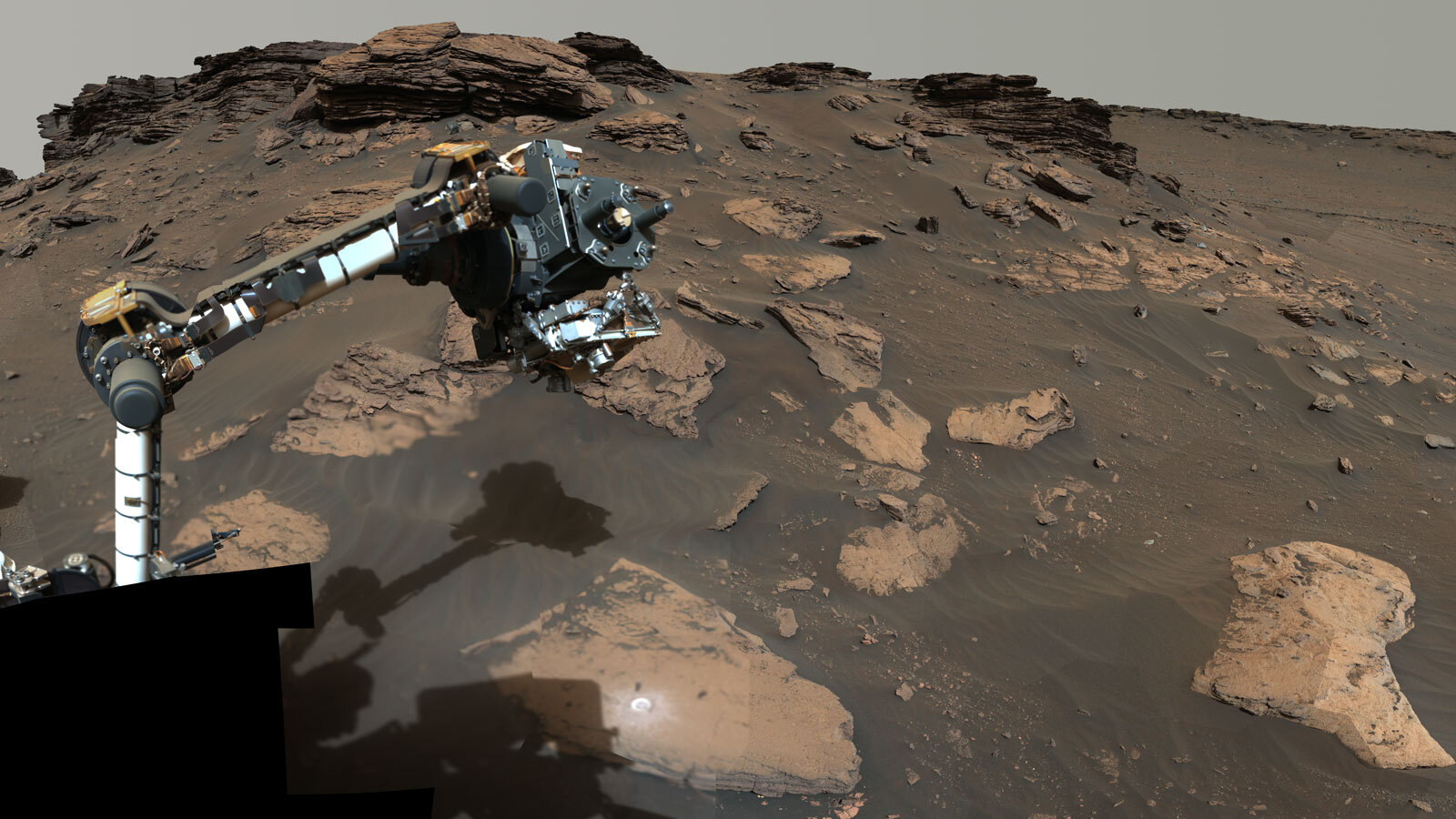
NASA’s Perseverance rover has detected macromolecular carbon—durable, complex organic matter—in two ancient mudstones in Jezero crater, identified by the SHERLOC spectroscopy instrument. The rocks—Cheyava Falls and a formation at the Bright Angel outcrop—show organics associated with different mineral settings, suggesting multiple organic-forming processes over time. While this represents the most extensive organic detection on Mars to date, the findings do not prove biology; the origin could be abiotic. Also, a 2026 funding shift means Mars Sample Return is unlikely this decade, so the cores remain on Mars for now.

Martian rock at Bright Angel carries surface carbon; origin remains unclear
science-space20 days ago

Martian rock at Bright Angel carries surface carbon; origin remains unclear

NASA’s Perseverance rover detected a shallow surface presence of macromolecular carbon on a Martian rock at Bright Angel in Jezero Crater using the SHERLOC UV Raman spectrometer. While the compound resembles terrestrial kerogen, researchers caution it could be biotic or abiotic, and have ruled out instrument artefacts and Earth contamination. The carbon appears associated with carbonate/sulfate minerals at one target and with silicate-rich sediment at another, suggesting multiple emplacement events over geologic time. Definitive biogenic origin remains uncertain until samples are returned to Earth for isotopic and chirality analyses.

Mars Rock Reveals Complex Organics: Fresh Clues in Jezero Crater
space28 days ago

Mars Rock Reveals Complex Organics: Fresh Clues in Jezero Crater

NASA’s Perseverance rover detected macromolecular carbon (MMC), a complex organic matter, in two Bright Angel mudstones at Jezero crater using the SHERLOC instrument, marking the most robust organic signal there to date and the first MMC identified on Martian rock surfaces. While intriguing, MMC can form through both biological and non-biological processes, so this does not prove past life; definitive testing would require returning samples to Earth, a plan hampered by political issues. Curiosity has also found organics elsewhere on Mars, underscoring ongoing interest in whether ancient microbes once inhabited the planet.

NASA’s Perseverance Rover Continues Exploring a Tiny Maze on Mars
science1 year ago

NASA’s Perseverance Rover Continues Exploring a Tiny Maze on Mars

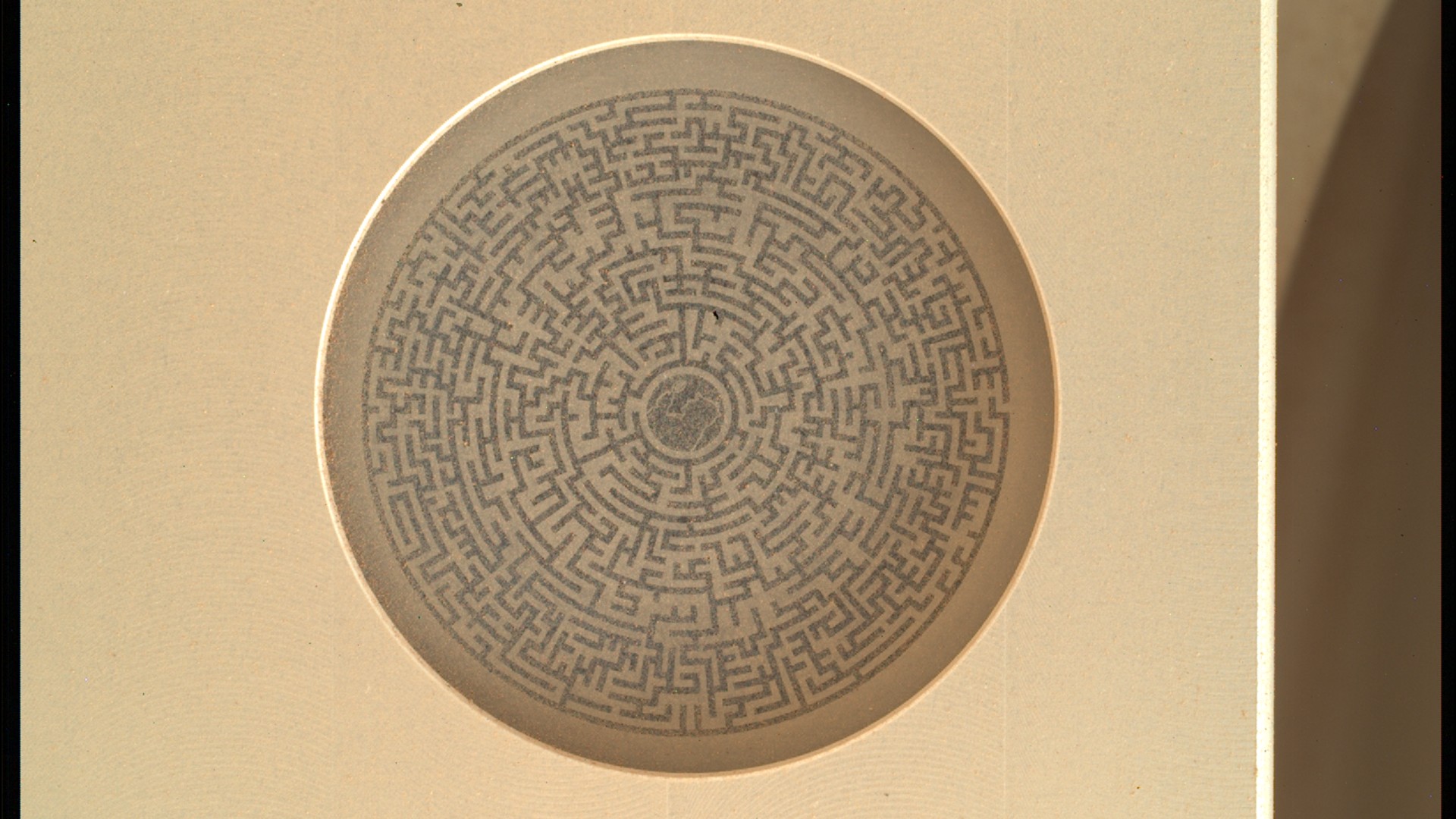
NASA's Perseverance rover is repeatedly photographing a tiny, intricate maze on a metallic calibration plate on Mars, which is part of the SHERLOC instrument used to search for signs of ancient life. The maze helps calibrate the rover's laser and imaging systems with high precision, and the plate also tests materials for future human missions, blending scientific purpose with hidden storytelling elements.

NASA's Perseverance Rover Focuses on Mars' Mysterious Maze
science1 year ago

NASA's Perseverance Rover Focuses on Mars' Mysterious Maze

NASA's Perseverance rover repeatedly photographs a maze on its SHERLOC calibration target, which is used to calibrate its spectroscopic instruments for detecting organic compounds and minerals on Mars. The maze, made of chrome lines on silica glass, helps ensure precise laser focus and positioning, and features a Sherlock Holmes portrait as a fun nod and functional marker. The calibration target also includes materials for testing spacesuit durability and supporting science for future human exploration.

"Troubleshooting Mars: NASA's Perseverance Rover's SHERLOC Dust Dilemma"
spacescience2 years ago

"Troubleshooting Mars: NASA's Perseverance Rover's SHERLOC Dust Dilemma"

NASA's Perseverance rover on Mars is facing a dust cover issue with its SHERLOC instrument, hindering data collection operations. Engineers are working to stabilize the cover, which remains partially open and interferes with the instrument's functionality. Despite this setback, the rover continues its mission, exploring the Red Planet and conducting various scientific analyses to search for signs of ancient microbial life and pave the way for human exploration of Mars.

"NASA's Perseverance Rover Faces Technical Challenges on Mars"
spacetech2 years ago

"NASA's Perseverance Rover Faces Technical Challenges on Mars"

NASA's Perseverance rover is facing issues with its SHERLOC instrument, which may prevent it from using its laser to zap rocks due to a malfunctioning dust cover. Engineers are working to resolve the problem, but if unsuccessful, the rover has other instruments like WATSON, SuperCam, and PIXL that can still perform spectroscopy. This comes as the Mars helicopter Ingenuity sustained rotor damage and was retired, while Perseverance celebrates its 1000th Martian day, well past its initial mission expectancy.

"Perseverance Rover Illuminates Mars, Unveiling Clues to Ancient Life"
space3 years ago

"Perseverance Rover Illuminates Mars, Unveiling Clues to Ancient Life"

NASA's Perseverance rover, equipped with the SHERLOC instrument, has potentially discovered a diverse collection of organic molecules on Mars, which could be the building blocks of ancient life. SHERLOC uses a technique called the Raman effect to analyze the chemical makeup of rocks and determine if they contain organics. The instrument's findings are crucial for the Mars Sample Return campaign, a joint effort by NASA and ESA to bring back samples from Mars for further study on Earth. The scientists are still unsure whether the detected molecules originated from biological or geological sources, but the discoveries are promising and contribute to the ongoing search for signs of ancient microbial life on the Red Planet.

"Perseverance Rover's Exciting Martian Discoveries: Ancient Riverbeds and Organic Molecules"
space3 years ago

"Perseverance Rover's Exciting Martian Discoveries: Ancient Riverbeds and Organic Molecules"

NASA's Perseverance rover, equipped with the SHERLOC instrument, has potentially discovered a diverse collection of organic molecules on Mars, which are considered the building blocks of life. The instrument analyzes the chemical makeup of rocks by studying how they scatter light, providing valuable data on the presence of organics and minerals. The findings have sparked excitement among scientists, although it remains unclear whether the molecules originated from biological or geological sources. The ultimate goal of the mission is to collect samples that could confirm the presence of organics and potentially ancient microbial life on Mars.