Medical experts advise that propping up the head during sleep can alleviate symptoms of sleep apnea and acid reflux but may worsen neck strain and spinal alignment. The optimal approach depends on individual health conditions, requiring a balance between respiratory benefits and musculoskeletal risks.
Elevating your upper body can alleviate acid reflux and snoring, but improper positioning causes neck pain. Experts recommend a 10-30 degree incline using wedge pillows or bed risers rather than stacking standard pillows, which forces the neck into a harmful flexed position.
A new study indicates that individuals with a common sleep disorder face a 26% higher risk of stroke. The findings highlight the critical link between sleep quality and cardiovascular health, suggesting that untreated sleep issues may significantly contribute to cerebrovascular events.
Recent research indicates that obstructive sleep apnea (OSA) in older adults often presents with memory loss and poor concentration rather than typical daytime sleepiness. This atypical presentation can lead to misdiagnosis as age-related cognitive decline or dementia. Experts warn that untreated OSA disrupts deep sleep, potentially allowing amyloid plaques to accumulate in the brain. While OSA does not guarantee dementia, treating it with CPAP therapy may reverse cognitive symptoms, as seen in a case study involving a 66-year-old patient.
A new study finds women with macromastia have higher rates of chronic migraine, neck pain, and sleep apnea. Researchers suggest mechanical strain may link breast size to these conditions, though more evidence is needed.
A new study published in Headache: The Journal of Head and Face Pain finds that women with macromastia (enlarged breasts) have significantly higher rates of chronic migraine, neck pain, cervical radiculopathy, and obstructive sleep apnea. The retrospective analysis of 687 women at Stanford Medical Center clinics showed that macromastia was associated with a 40% higher prevalence of chronic migraine, double the rate of neck pain, and a 54% higher likelihood of sleep apnea. While the study does not prove causation, it suggests that macromastia may contribute to broader health issues beyond physical discomfort. Lead author Kristyn Pocock emphasizes the need for comprehensive evaluations for women experiencing these symptoms. Preliminary evidence indicates that breast reduction surgery may help alleviate some symptoms, but larger studies are needed to confirm these benefits.
A new study finds that women with abnormally large breasts (macromastia) face significantly higher risks of chronic migraines, neck pain, sleep apnea, and spinal nerve compression. While macromastia is often viewed as a cosmetic issue, the research suggests it may contribute to broader neurological and musculoskeletal health problems. The findings highlight the need for more comprehensive medical evaluations for women with this condition.
A new study reveals that women with macromastia, a condition involving abnormally large breasts relative to their frame, face significantly higher risks of chronic migraines, obstructive sleep apnea, and cervical radiculopathy. Researchers found that these women were 40% more likely to suffer from chronic migraines and nearly 50% more likely to experience sleep apnea compared to those without the condition. While neck pain and backaches are commonly associated with larger breast size, the neurological connections were less anticipated. The study, which analyzed health records of 687 women treated at headache and neurology clinics, suggests that macromastia may impact broader health aspects beyond cosmetic concerns. Lead author Kristyn Pocock emphasized the need for comprehensive evaluations to address these symptoms. Although macromastia is common, its severe form, gigantomastia, is rare, with only about 300 documented cases globally. Treatment options include medication and surgery, with breast reduction often recommended for symptom relief. The findings highlight the importance of recognizing macromastia as a medical condition with potential neurological implications.
Sleeping next to a snorer can fragment your sleep, leaving you tired, unfocused and irritable; while simple snoring can be addressed with lifestyle changes, persistent snoring may signal sleep apnea requiring medical assessment (CPAP or other treatments); distinguishing between snoring and sleep apnea and seeking help can protect both sleep and relationships.
Britain’s dentists say bruxism (teeth grinding) is rising, particularly among younger patients, likely linked to stress; about a quarter of people may grind at times, often without realizing it until symptoms like worn teeth, headaches, or jaw pain appear. While night guards help, experts urge addressing underlying causes such as sleep disorders (OSA) and stress, using a multidisciplinary approach that can include CPAP/MAD devices, physiotherapy, and cognitive-behavioral therapy alongside dental care. Some patients even use jaw-relaxing Botox. Bruxism can have negative impacts but may also aid saliva production and digestion, so treatments aim to reduce harm while treating root causes.
Waking up two or more times at night to urinate, or nocturia, affects many adults over 50 and can disrupt sleep, increasing fall risk and signaling possible conditions such as sleep apnea, restless legs syndrome, diabetes, an enlarged prostate, or certain medications; it’s worth medical evaluation to identify the cause, with practical steps like timing fluids, limiting alcohol before bed, and ensuring home safety.
People with obstructive sleep apnea often wake at night to urinate because apneas create negative chest pressure that stretches the heart atria and triggers atrial natriuretic peptide (ANP), along with other hormonal changes; the resulting nocturnal diuresis and brief arousals can feel like a full bladder. Effective treatment of OSA (e.g., CPAP) can reduce or stop these nocturnal trips. The column also notes that asymptomatic urinary infections in a 97-year-old generally shouldn’t be treated and routine testing without symptoms is not recommended unless specific exceptions apply.
GLP-1 medications, originally developed for type 2 diabetes and obesity, are being studied for broader health benefits beyond weight loss, including better sleep, more energy, and improvements in liver and kidney health; evidence suggests both weight-dependent and weight-independent effects due to anti-inflammatory actions and multi-organ receptor activity. Strongest trial data show reduced sleep-disordered breathing in obesity and improved liver inflammation, while potential benefits for addiction and fertility remain uncertain and require caution. Side effects, cost, and variability in response mean that more research is needed to identify who benefits most and optimal dosing.
Medicare’s 18-month GLP-1 Bridge offers weight-loss drugs for about $50 a month, but anyone with an FDA-approved medical indication for GLP-1s (like sleep apnea or diabetes) is redirected to costly Part D plans, leaving potentially 5.9 million beneficiaries excluded and highlighting a gap between cost relief and real medical need.
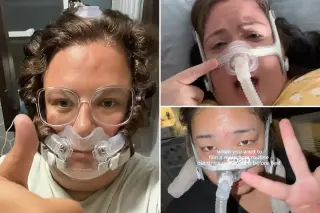
The New York Post highlights the ‘CPAP baddies’ movement, where young people use TikTok to glamorize CPAP masks and push back against the stigma around sleep apnea therapy. Supported by ResMed, the trend aims to normalize CPAP use, raise awareness of obstructive sleep apnea, and encourage treatment—often turning a medical device into a source of pride, with online virality and in-person events helping reduce barriers to adherence.