Tag

Spacetime

All articles tagged with #spacetime

Photon’s Billion-Ly Journey Ends in Zero Time
space26 days ago

Photon’s Billion-Ly Journey Ends in Zero Time

A photon crossing a billion light-years experiences no elapsed time—time is relative to speed and path, a consequence of special relativity that makes moving clocks run slower (time dilation). The article explains this with light clocks and the Hafele–Keating experiment, notes how GPS corrections rely on the same physics, and shows that curved spacetime preserves zero proper time along null paths, meaning light’s journey can span ages for Earthbound observers while remaining instantaneous for the photon itself.

Time Dilation Made Simple: How Speed Alters Time and Space
science1 month ago

Time Dilation Made Simple: How Speed Alters Time and Space

Time is relative: moving through space changes how much time passes and how distances are measured, so fast travelers experience less elapsed time than those at rest, while light’s speed stays constant for all observers; massive objects can’t reach light speed, but time dilation and length contraction arise from different paths through spacetime, with practical implications from GPS accuracy to understanding simultaneity across moving frames.

Spacetime crystals could spawn miniature black holes
space2 months ago

Spacetime crystals could spawn miniature black holes

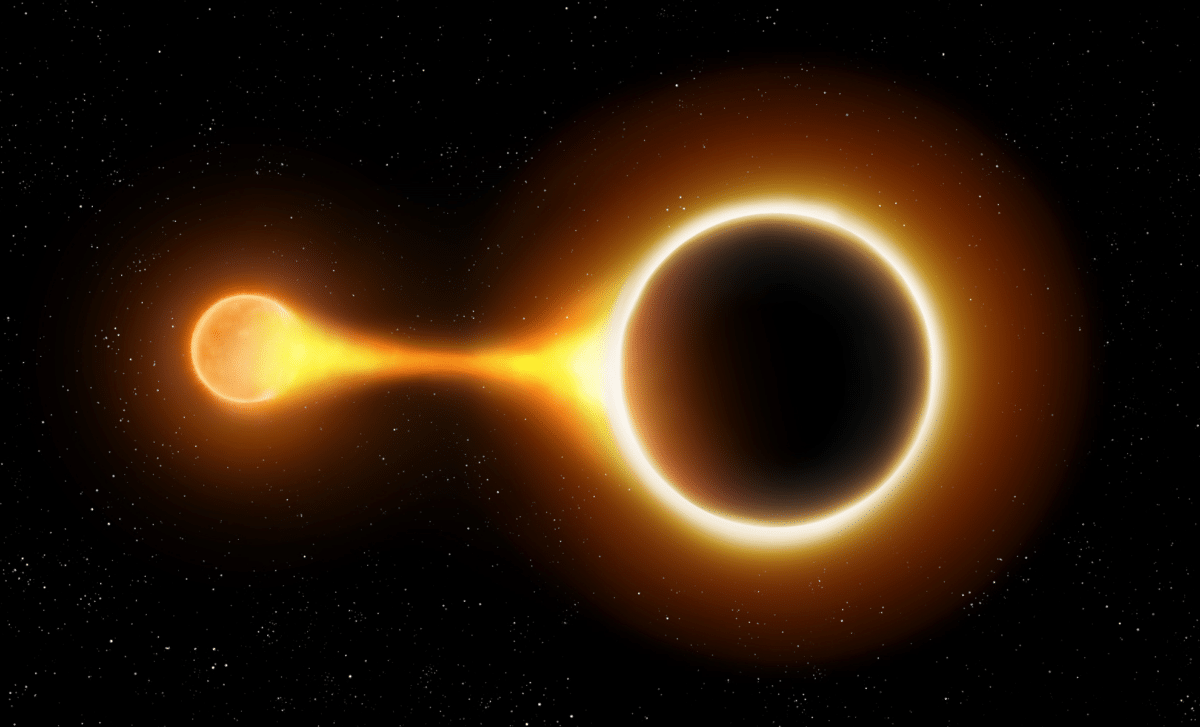
Goethe University and TU Wien physicists propose that if spacetime can crystallize into a regular four‑dimensional lattice, a tiny energy perturbation could trigger a critical collapse that births microscopic black holes. Their work provides simple, exact solutions to Einstein’s equations for this process and suggests a possible primordial-black-hole pathway, but it does not prove such holes exist and notes they would evaporate quickly via Hawking radiation.

Fractal Spacetime Could Trigger Tiny Black Holes, New Math Suggests
science3 months ago

Fractal Spacetime Could Trigger Tiny Black Holes, New Math Suggests

Physicists describe a spacetime “crystal” forming at the critical collapse threshold of black hole formation, where curvature repeats in a discrete self-similar pattern. A small energy perturbation can tip this crystal into a micro black hole. By formulating Einstein’s equations in many dimensions, researchers derived analytic descriptions of these fractal structures and found the same patterns persist even in lower dimensions, offering a new analytic framework for extreme-gravity phenomena. Published in Physical Review Letters.

Quantum Spacetime Alters Particle Paths, Rewriting Geodesics
science5 months ago

Quantum Spacetime Alters Particle Paths, Rewriting Geodesics

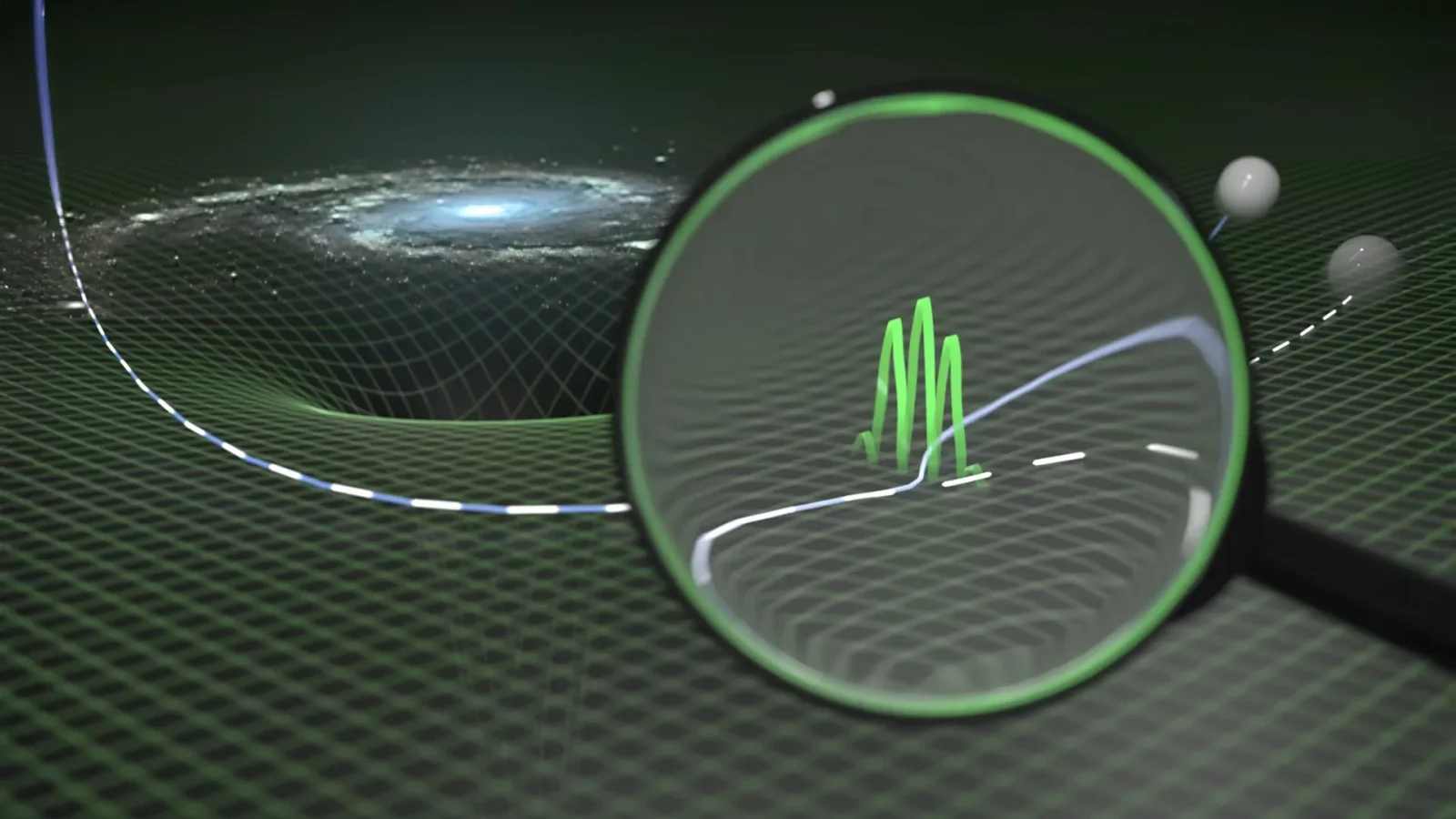
Vienna University of Technology researchers quantized the spacetime metric to derive the q-desic equation, showing that in a quantum spacetime particles need not follow classical geodesics; while deviations from ordinary gravity are vanishingly small, including the cosmological constant can produce noticeable differences at cosmological scales, potentially offering an observational path to test quantum gravity.

Q-Desic: A Quantum Twist on Spacetime Opens Doors to Quantum Gravity Tests
science5 months ago

Q-Desic: A Quantum Twist on Spacetime Opens Doors to Quantum Gravity Tests

Vienna University of Technology researchers derive a q-desic equation by quantizing the spacetime metric in a simple gravitational field, predicting that quantum spacetime can subtly alter particle trajectories. The deviations are minuscule on small scales, but when the cosmological constant is included they become significant at cosmological distances, potentially offering an observable to test and distinguish quantum gravity theories using astronomical data.

Gravity Emerges from Quantum Entropy: A Bold Entropic View of the Universe
science7 months ago

Gravity Emerges from Quantum Entropy: A Bold Entropic View of the Universe

A new theory proposes gravity is not fundamental but emerges from entropy, specifically quantum relative entropy, with spacetime acting as a quantum operator and a G-field linking matter and geometry. The approach aims to reconcile general relativity and quantum mechanics, potentially offering a fresh view on dark matter and the cosmological constant, though the idea remains unproven.

Entropy Could Be Gravity’s Hidden Origin, Pointing Toward Quantum Gravity
science7 months ago

Entropy Could Be Gravity’s Hidden Origin, Pointing Toward Quantum Gravity

A new theory by physicist Ginestra Bianconi suggests gravity may emerge from entropy, potentially reconciling Einstein’s general relativity with quantum theory. By treating spacetime as a quantum operator and describing an entropic action that couples matter to geometry through a G-field, the framework aims to yield a small cosmological constant and offer a candidate explanation for dark matter. While intriguing, the idea remains speculative and requires substantial further work to confirm its viability as a unified theory of physics.