Tag

Superconductivity

All articles tagged with #superconductivity

Knee relief breakthrough, room-temperature superconductivity, and cosmic enigmas this week
science3 days ago

Knee relief breakthrough, room-temperature superconductivity, and cosmic enigmas this week

This This Week in Science roundup covers six stories: a minimally invasive knee treatment using dissolvable gel beads that block new nerve growth to OA pain, potentially halving knee pain over a year; a new world record for superconductivity at ambient pressure and higher temperatures; two patients with severe autoimmune disease achieving remission after alloHCT (donor stem cell reboot of the immune system); JWST-detected a mysterious chemical signature on Pluto and Titan; a lab analog simulating Hawking radiation backreaction in a black-hole-like system; and evidence that a fast-mimicking diet may reduce gum disease-related inflammation, highlighting links between diet, inflammation, and oral health. Watch the TWIS video recap for highlights.

Ambient-Pressure Superconductivity Achieved in Hg1223 via Pressure-Quenching
science7 days ago

Ambient-Pressure Superconductivity Achieved in Hg1223 via Pressure-Quenching

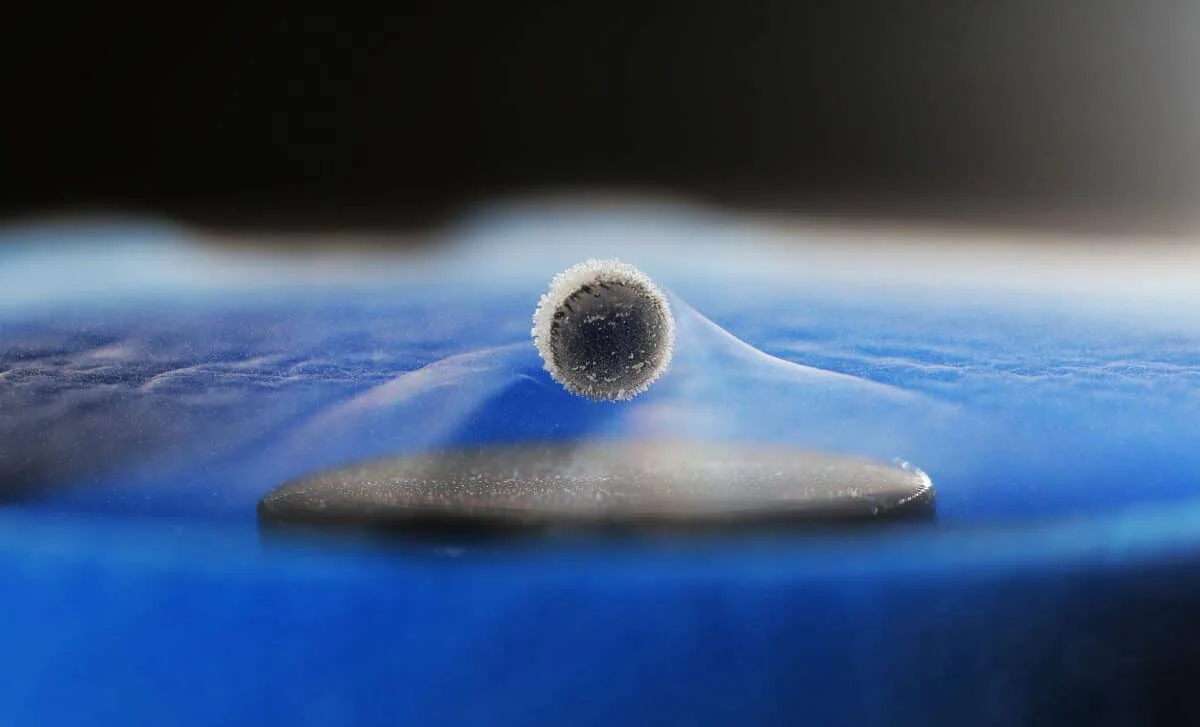
Physicists achieved a metastable superconducting state in the cuprate Hg1223 at ambient pressure by rapidly releasing pressure after compressing it to 30 GPa in a diamond-anvil cell, reaching roughly −122 °C—the highest ambient-pressure superconducting temperature to date; confirmed by Advanced Photon Source analysis and reported in PNAS, this advances the quest for room-temperature superconductivity but practical devices remain distant.

Fuel-Free Boost: Orbital Test Validates Superconducting Supertorquer
technology8 days ago

Fuel-Free Boost: Orbital Test Validates Superconducting Supertorquer

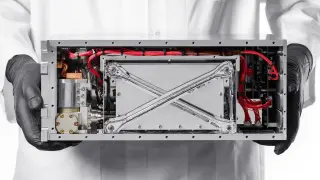
Zenno Astronautics’ Supertorquer, a compact superconducting-magnet thruster, was tested in orbit aboard the Mira satellite to demonstrate propulsion and attitude control using Earth’s magnetic field with no propellant. Powered by solar energy and cooled by space-based heat rejection, energizing the superconducting coils creates a controllable magnetic thrust. The first orbital test succeeded, and the company envisions larger systems for docking, close-proximity operations, and even radiation shielding via magnetic fields.

Graphene's layered superconductivity defies field norms, strengthens when pushed
science12 days ago

Graphene's layered superconductivity defies field norms, strengthens when pushed

MIT researchers report multiple superconducting states in rhombohedral graphene layers (4- and 5-layer stacks); notably, some states are enhanced by magnetic fields, raising the transition temperature from about 55 millikelvin to ~90 millikelvin and increasing the sustainable current by 50–60%, with the outcome depending on electron density and field orientation. This challenges the usual view that magnetic fields destroy superconductivity and may have implications for quantum computing, though experiments still require ultra-cold conditions and specialized setups.

science15 days ago

Field-Driven Superconductivity Emerges Across Rhombohedral Graphene Stacks

Researchers report field-enhanced and field-induced superconductivity in rhombohedral tetralayer and pentalayer graphene, with three distinct superconducting states in the pentalayer that endure in-plane fields up to 8.5 tesla (well beyond the Pauli limit). Unlike Bernal bilayer graphene, the pentalayer also shows out-of-plane field effects, and the effects emerge at relatively low gate voltages due to flatter band dispersion. Proximitized spin–orbit coupling further yields new superconductors without adding disorder, establishing a new family of magnetic-field–boosted superconductors in high-quality rhombohedral graphene and opening paths toward realizing topological states and non-Abelian quasiparticles via interface engineering.

Ambient-Pressure Superconductivity Breaks 30-Year Temperature Barrier
science16 days ago

Ambient-Pressure Superconductivity Breaks 30-Year Temperature Barrier

Researchers from the University of Houston and Argonne National Laboratory achieved superconductivity at 151 kelvin (-190°F) under ordinary pressure by applying a brief high-pressure pulse to the cuprate Hg-1223 and then rapidly decompressing it while cold, trapping a metastable state with a higher Tc that persists after pressure is removed. This breaks the long-standing 133 K ambient-pressure record and suggests pressure may not be required to reach higher temperatures, enabling study with standard lab instruments and guiding future efforts toward room-temperature superconductivity.

Substrate Sculpting Boosts Ultrathin Superconductors Toward Practical Electronics
science26 days ago

Substrate Sculpting Boosts Ultrathin Superconductors Toward Practical Electronics

Chalmers University researchers show that nanoscale sculpting of the substrate beneath an ultrathin cuprate superconducting film creates an interfacial electronic landscape that stabilizes superconductivity at higher temperatures and under strong magnetic fields, a design principle that could accelerate practical superconducting electronics, energy systems, and quantum devices.

Ambient-Pressure Breakthrough Pushes Superconductivity Toward Practical Use
science3 months ago

Ambient-Pressure Breakthrough Pushes Superconductivity Toward Practical Use

Researchers at the University of Houston report a new ambient-pressure superconductivity record of 151 K using a pressure-quench approach that first applies high pressure to raise Tc, then rapidly returns to normal pressure to lock in the enhanced superconducting state, potentially accelerating the path to practical, energy-saving technologies though room-temperature, ambient-pressure superconductivity remains distant.

Cavity engineering reshapes superconductivity at a buried interface
science4 months ago

Cavity engineering reshapes superconductivity at a buried interface

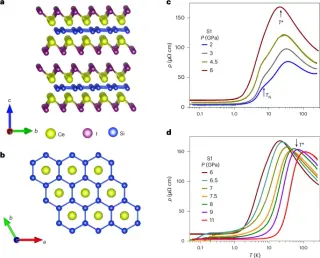
Researchers build a resonant hyperbolic cavity by placing hexagonal boron nitride on the molecular superconductor κ-(BEDT-TTF)2Cu[N(CN)2]Br and observe a resonant coupling between hBN’s hyperbolic modes and the C=C stretching mode linked to superconductivity, causing a strong, spatially selective suppression of the local superfluid density at the hBN/κ-ET interface (about 50% in several devices) at 2 K. Non‑resonant controls (RuCl3/κ-ET and hBN/BSCCO) show little or no effect, indicating the suppression is tied to the resonant cavity. The work demonstrates a ground-state modification via dark cavity engineering and suggests a general approach to tailoring electronic phases without external driving.

Triplet superconductors inch toward breakthrough for quantum tech
science4 months ago

Triplet superconductors inch toward breakthrough for quantum tech

NTNU researchers report that the NbRe alloy may exhibit triplet superconductivity, a spin-carrying form that could enable zero-resistance spin currents and boost quantum computing. If independently verified, this would be a major advance for spintronics and quantum devices, though further tests are needed. The material also superconducts at about 7 Kelvin, a relatively high temperature for this field.

Terahertz microscope unmasks quantum vibrations of superconducting electrons
science5 months ago

Terahertz microscope unmasks quantum vibrations of superconducting electrons

MIT researchers developed a terahertz microscope that uses spintronic emitters and a Bragg mirror to compress terahertz light to micron-scale spots, enabling imaging of the collective terahertz oscillations of superconducting electrons in BSCCO at cryogenic temperatures and overcoming the diffraction limit—a breakthrough for studying quantum modes in materials with potential implications for room-temperature superconductivity and terahertz devices.