Tag

Technosignatures

All articles tagged with #technosignatures

Webb Dismisses Two Dyson Sphere Candidates as Background Galaxies
science1 day ago

Webb Dismisses Two Dyson Sphere Candidates as Background Galaxies

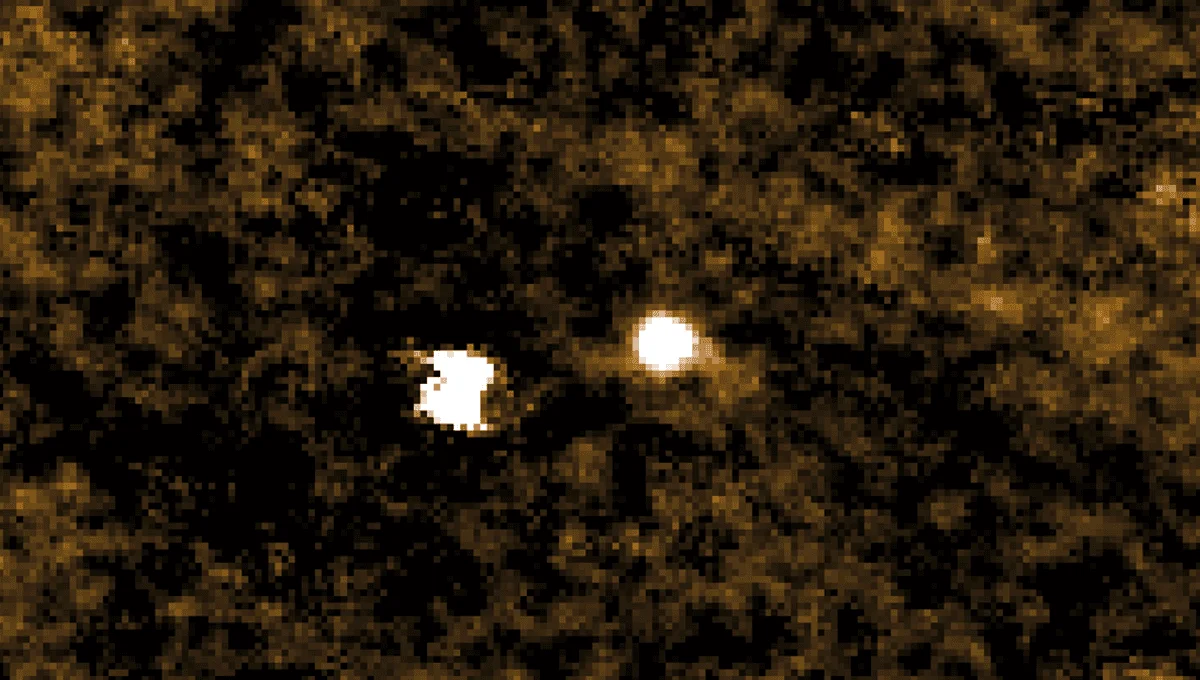
NASA's James Webb Space Telescope, in Project Hephaistos, studied two M-dwarf stars previously flagged for potential Dyson Spheres and found the infrared excess arose from background galaxies, not megastructures; the two candidates are ruled out, highlighting the difficulty of technosignature searches and the potential for future higher-resolution infrared surveys in the 2030s to separate signals from foreground/background sources.

JWST Finds Two Dyson-Sphere Candidates Were Just Galaxies Aligned Behind Stars
space1 month ago

JWST Finds Two Dyson-Sphere Candidates Were Just Galaxies Aligned Behind Stars

Astronomers used the James Webb Space Telescope to test two strong Dyson-sphere candidates by hunting for the telltale mid-infrared waste heat that would accompany a megastructure around a star. After sifting through about five million Milky Way stars and confirming the most promising cases, JWST revealed that both candidates were actually distant galaxies almost perfectly aligned behind foreground stars, producing the infrared excess. One is a hot dust-obscured galaxy; the other a dusty starburst. While the false positives rule out these two Dyson-sphere interpretations, they refine search methods and lay groundwork for future telescopes with adaptive optics to separate stars from background galaxies.

Noosignatures: A New Middle Ground in the Search for Extraterrestrial Intelligence
science1 month ago

Noosignatures: A New Middle Ground in the Search for Extraterrestrial Intelligence

A new framework called noosignatures, grounded in Assembly Theory, seeks detectable traces of intelligence that lie between life and radio signals, using physical residues and signals (like tools, architecture, or agricultural impacts) as evidence; the idea aims to broaden astrobiology into a continuum of intelligent activity, though it remains nascent and methodologically challenging.

No Alien Signals Detected in 3I/ATLAS Scan
space2 months ago

No Alien Signals Detected in 3I/ATLAS Scan

A team from SETI Institute and Breakthrough Listen used the Allen Telescope Array to scan 3I/ATLAS across a wide range of radio frequencies, filtering 74 million raw hits down to about 2 million candidates and then to 211 signals; none exhibited artificial signatures and all were attributed to radio-frequency interference. The result provides no evidence of alien technosignatures in this interstellar object but demonstrates that current technology can detect signals if present and supports continuing searches for technosignatures in future observations.

Astronomers Hunt for Technosignatures as Interstellar Comet 3I/ATLAS Passes Earth
science8 months ago

Astronomers Hunt for Technosignatures as Interstellar Comet 3I/ATLAS Passes Earth

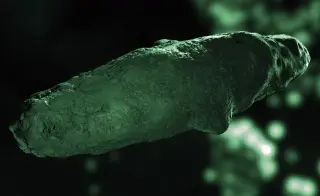
During its closest approach to Earth, the interstellar comet 3I/ATLAS was observed by the Breakthrough Listen project for signs of alien technosignatures, but no credible signals were detected. Simultaneously, another team estimated the comet's size to be around 1 km based on its non-gravitational acceleration, confirming its natural cometary nature. The efforts highlight ongoing searches for extraterrestrial signals and detailed studies of interstellar objects.

High Radio Emission Galaxies May Host Advanced Civilizations
science11 months ago

High Radio Emission Galaxies May Host Advanced Civilizations

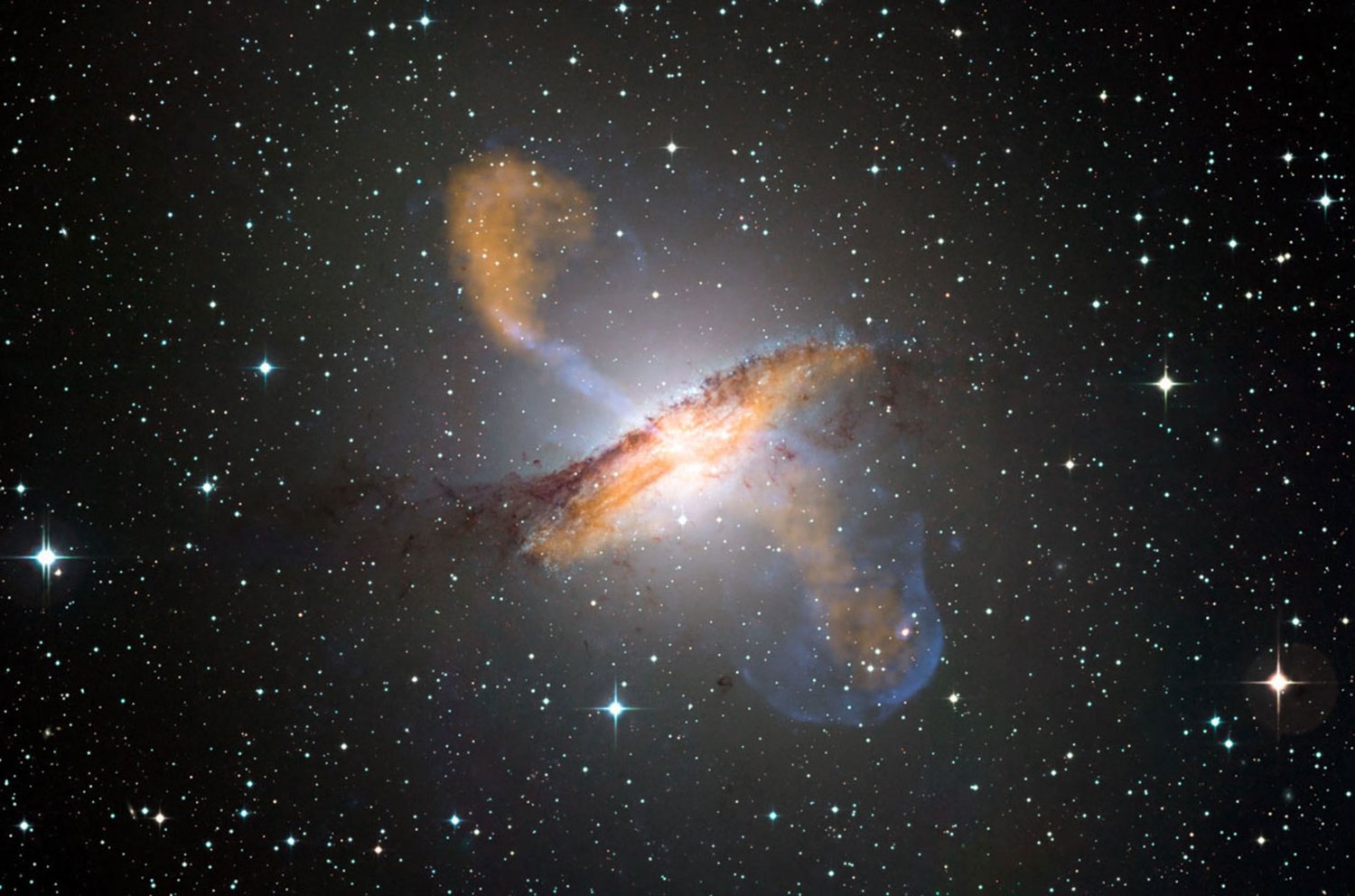
Scientists suggest that galaxies with high radio emissions could harbor advanced civilizations, but such galaxy-spanning ETIs are extremely rare, with less than 1 in 100,000 large galaxies potentially hosting them. The research uses models to set upper limits on the prevalence of these civilizations based on radio observations, and proposes expanding searches to other frequencies and technosignatures beyond radio waves.

Spider Stellar Engine: Galactic Travel for Binary Stars
science-and-technology1 year ago

Spider Stellar Engine: Galactic Travel for Binary Stars

Clement Vidal's research explores the concept of a "spider stellar engine," where advanced civilizations could use binary star systems, specifically spider pulsars, as propulsion systems to migrate across galaxies. This involves using the pulsar's radiation to evaporate its companion star, generating thrust. Vidal suggests that these systems could emit technosignatures, offering potential evidence of extraterrestrial engineering. While speculative, the idea encourages further investigation into observable technosignatures from such systems.

"Revolutionary Tech and AI Boost Search for Alien Life"
science-and-technology2 years ago

"Revolutionary Tech and AI Boost Search for Alien Life"

Breakthrough Listen, the largest scientific program dedicated to finding alien civilizations, is set to revolutionize the search for extraterrestrial life with new technologies like the Square Kilometre Array and the Vera Rubin Observatory. These advancements, combined with AI, will allow scientists to detect unintentional transmissions from alien civilizations, such as radar or TV signals, marking a significant shift from previous methods that focused on deliberate signals. The new tools and techniques are expected to provide unprecedented sensitivity and data, potentially leading to the first evidence of intelligent life beyond Earth.

Astronomers Seek Signs of Terraformed 'Snowball' Earths
science-and-technology2 years ago

Astronomers Seek Signs of Terraformed 'Snowball' Earths

Astronomers are exploring the possibility of detecting alien civilizations by looking for technosignatures of artificial greenhouse gases used to terraform or prevent ice ages on distant planets. Using computer models, researchers simulated planetary spectra to identify gases like hexafluoroethane and sulfur hexafluoride, which could be detectable with the James Webb Space Telescope. This approach may offer a better chance of finding terraformed planets than detecting industrial pollution.

"Searching for Alien Technology in a Perfectly Synchronized Solar System"
astronomyspace2 years ago

"Searching for Alien Technology in a Perfectly Synchronized Solar System"

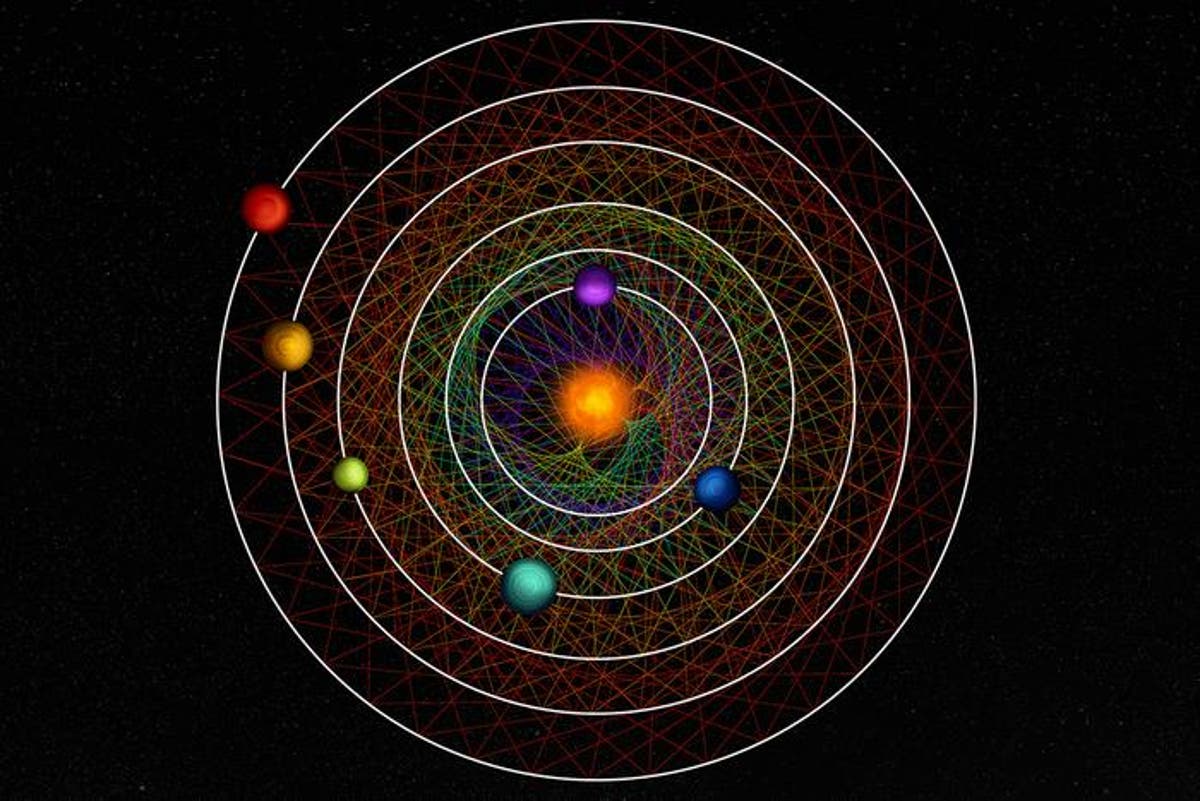
Scientists are investigating a solar system 100 light years away with six perfectly synchronized planets orbiting an orange dwarf star, suggesting they have remained undisturbed for a billion years. They are searching for signs of alien technology, or technosignatures, using radio signals, as the planets may have liquid water and could potentially harbor alien life. While no signals were found in the current study, the unique solar system remains an intriguing target for future searches.

"SETI Institute's Innovative Ellipsoid Technique for Alien Signal Detection"
science-and-technology2 years ago

"SETI Institute's Innovative Ellipsoid Technique for Alien Signal Detection"

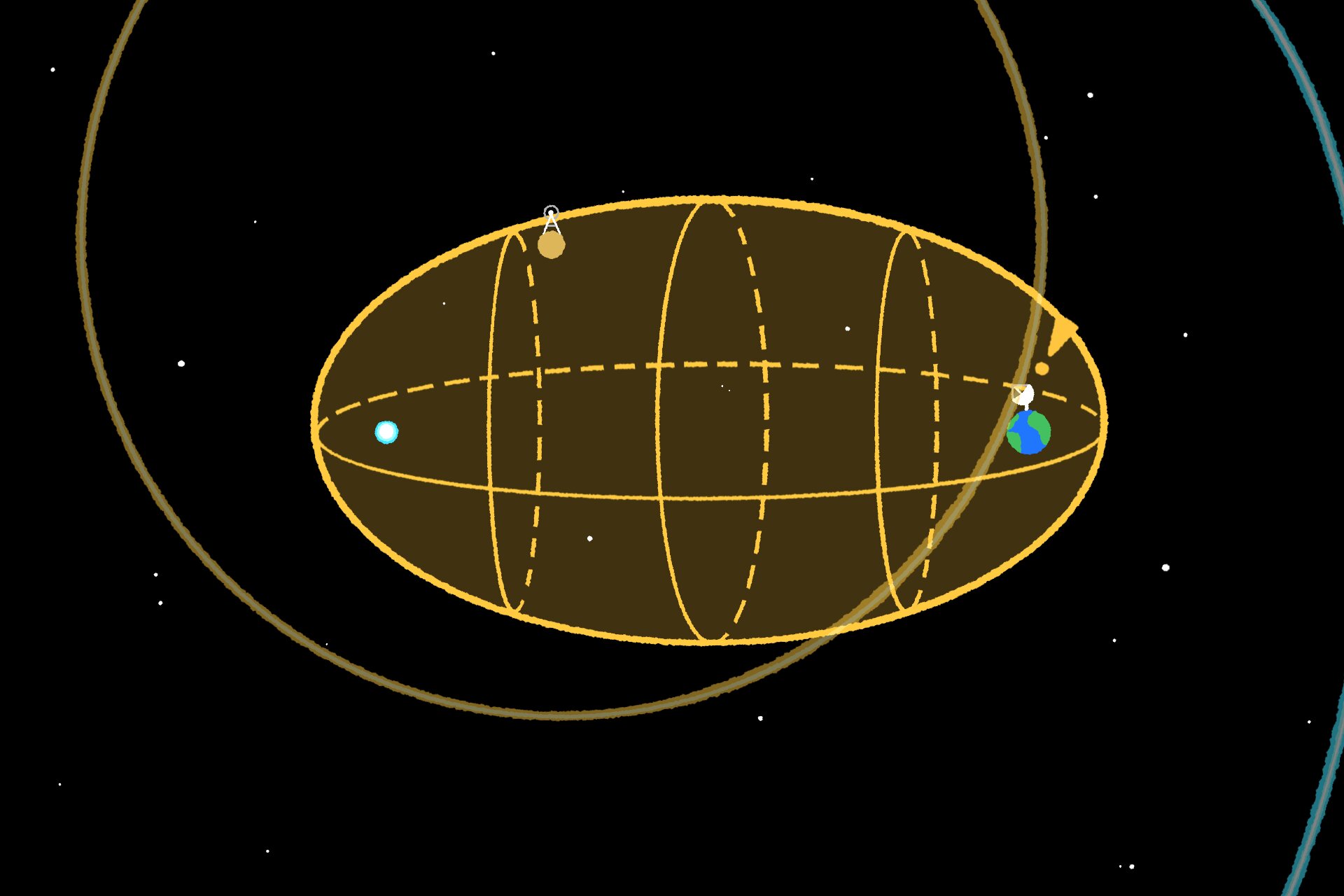
Researchers from the SETI Institute, Berkeley SETI Research Center, and the University of Washington have developed the SETI Ellipsoid technique, which uses observations from the TESS mission to identify potential signals from advanced civilizations in the cosmos. This method leverages continuous, wide-field sky surveys to enhance the detection of potential signals and compensates for uncertainties in the estimated time-of-arrival of such signals. The study identified 32 prime targets within the SETI Ellipsoid in the southern TESS continuous viewing zone, demonstrating the feasibility of cross-matching distance measurements with time-domain surveys like TESS to enhance monitoring and anomaly detection capabilities in SETI research.

"Breakthrough Listen: Searching Galaxies for Signals of Advanced Civilizations"
science-and-technology2 years ago

"Breakthrough Listen: Searching Galaxies for Signals of Advanced Civilizations"

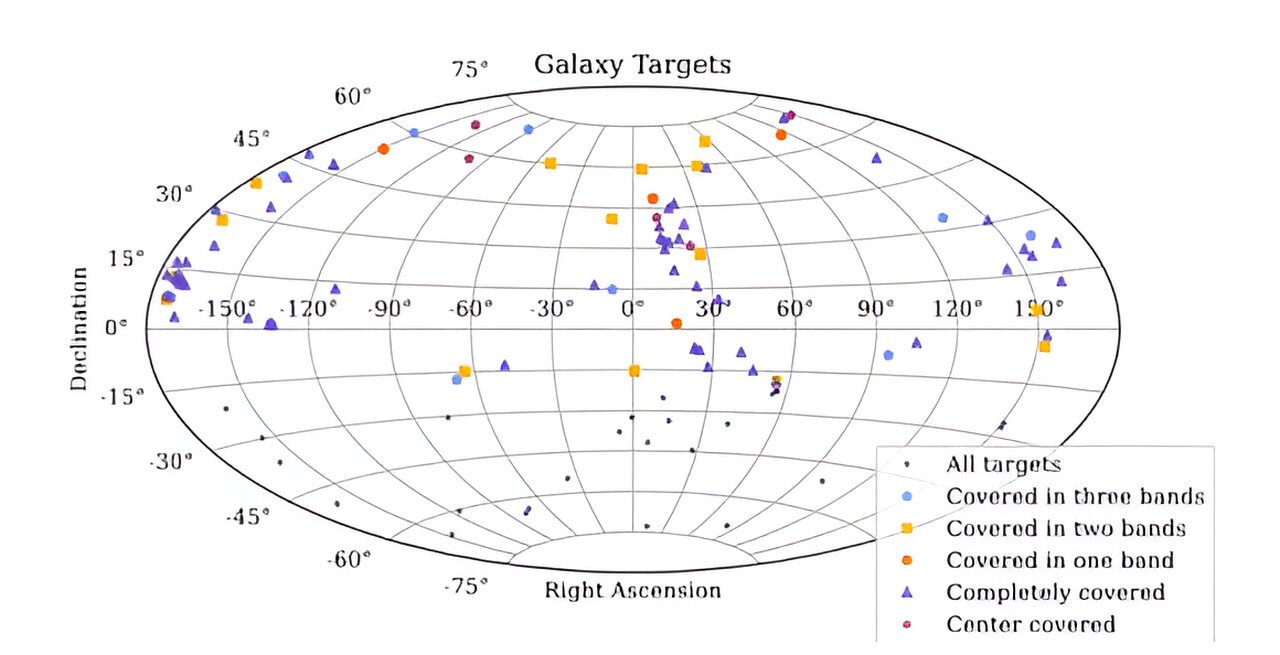
Breakthrough Listen, the most ambitious Search for Extraterrestrial Intelligence (SETI) experiment to date, has conducted a radio technosignature search of the centers of 97 nearby galaxies using the Robert C. Byrd Green Bank Telescope. Unfortunately, no compelling evidence of extraterrestrial intelligence was found. The experiment focused on galaxies rather than individual stars, allowing for the search of millions of stars and potentially millions of stellar systems with planets. The team used a narrowband Doppler drift search at four frequencies and established constraints on the data to look for possible transmitters with the equivalent isotropic radiated power of 10,000 zetawatts. Although no technosignatures were detected, this survey represents a landmark in SETI research and will inform future searches by Breakthrough Listen.