Tag

Neanderthal

All articles tagged with #neanderthal

Ancient Neanderthal Variant Promotes Extra Muscle in Some Modern Humans
science12 days ago

Ancient Neanderthal Variant Promotes Extra Muscle in Some Modern Humans

A Neanderthal variant of the growth hormone receptor (GHR) in modern humans boosts growth hormone signaling, with cells showing ~40% faster growth after hormone exposure and carriers gaining about 270 g more muscle on average. The variant's frequency varies by population (rare in Europeans, higher in parts of South and East Asia; ~24% in a Pakistani cohort). The effect appears during puberty rather than birth, contributing to a stockier build but not fully explaining Neanderthal anatomy; nearby genetic differences may also influence the traits.


Ancient Neanderthal Variant Still Shapes Muscles and Jaws in Modern Humans
anthropology17 days ago

Ancient Neanderthal Variant Still Shapes Muscles and Jaws in Modern Humans

A study comparing modern and Neanderthal genomes found a Neanderthal variant of the growth hormone receptor that enhances growth signaling and persists in non-African populations, especially in some South and East Asian groups where about 20% carry it. Carriers tend to be taller and heavier due to increased muscle mass, and exhibit Neanderthal-like jaw traits (shorter mandibular ramus, higher overbite, shorter tooth roots). Effects emerge around puberty, with lab experiments showing faster cell growth and stronger signaling in cells with the Neanderthal receptor. The variant is one of many factors influencing body shape and is not the sole determinant of the modern human physique.

Ancient Neanderthal DNA Linked to Subtle Height and Muscle Gains in Modern Humans
genetics19 days ago

Ancient Neanderthal DNA Linked to Subtle Height and Muscle Gains in Modern Humans

Researchers traced two amino-acid changes in the Neanderthal version of the growth hormone receptor, which likely entered modern human genomes through interbreeding about 47,000 years ago. In large biobank analyses (over 1.1 million adults), carriers of this Neanderthal-derived variant are on average about 0.3 cm taller and have about 0.25 kg more muscle mass than non-carriers; the variant is common in South Asia (~20%) and East Asia (~15%), but rare in Europe and absent in sub-Saharan Africa. Laboratory tests with mouse cells showed the Neanderthal receptor promotes more cell growth, supporting a molecular pathway for the observed physical differences.

Ancient 'ghost' lineages embedded in every human genome, new study finds
science25 days ago

Ancient 'ghost' lineages embedded in every human genome, new study finds

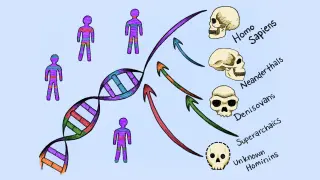
A new method scans 500+ present‑day human genomes and reconstructs ancestral genealogies to reveal two previously unknown archaic lineages contributed to modern humans: a widespread 'ghost' lineage that left about 0.5%–1% of genomes in all people (likely from Homo heidelbergensis) and a 'super‑archaic' lineage dating to around 1.8 million years ago that is found in Oceanian genomes within Denisovan DNA at about 0.002%, implying interbreeding with extinct relatives far earlier in our history. The approach does not require fossil DNA and reinforces a view of human evolution as a web of repeated interbreeding rather than a simple branching tree. Published in Science (2026) by Moorjani and colleagues.

Neanderthal Fetus Mirrors Modern Babies, but Limbs Hint at Faster Prenatal Growth
science1 month ago

Neanderthal Fetus Mirrors Modern Babies, but Limbs Hint at Faster Prenatal Growth

High‑resolution micro-CT study of Sesselfelsgrotte Neanderthal remains shows an eight‑months‑along fetus whose skeleton resembles a modern human fetus, with limb bones forming somewhat faster than the skull; two other young Neanderthals’ teeth reveal early signs of a metabolic bone disease, suggesting a systemic mineral metabolism disruption between late pregnancy and early childhood. The researchers caution that the data are fragmentary and comparisons rely on modern humans, so the exact pace of Neanderthal development remains uncertain.

Neanderthal romance debunked by DNA, archaeology says
science1 month ago

Neanderthal romance debunked by DNA, archaeology says

A new analysis cautions that the uneven distribution of Neanderthal DNA in modern humans cannot prove romantic attraction or social life between Neanderthals and Homo sapiens. The proposed 'partner preference' is a possible, not definitive, explanation, with biology, migration, and sex-biased demography also at play. Archaeology from El Sidrón suggests female mobility (patrilocality), while Goyet hints at violence or cannibalism, showing that social structures can shape genetic signals. Overall, genetics alone can’t reconstruct Neanderthal society and must be interpreted alongside archaeological and anthropological context.

Northwestern Europe’s Neanderthals Revealed as a Connected Regional Population, DNA Study Finds
anthropology2 months ago

Northwestern Europe’s Neanderthals Revealed as a Connected Regional Population, DNA Study Finds

A Nature study sequenced 27 Neanderthals from Belgium and France (plus a high-quality genome from a 45,000-year-old Goyet Cave individual) and found that late Neanderthals in northwestern Europe formed a connected regional population with close ties across the region. Belgian specimens show no signs of mating among close relatives, and none of the Neanderthal genomes carry recent human DNA, suggesting asymmetry with modern humans. There is no evidence that harmful mutations accumulated over time, indicating extinction was not simply due to genetic deterioration; the final chapter of Neanderthal life in this region remains open, highlighting regional diversity and connectivity prior to their disappearance around 40,000 years ago.

Neanderthal Baby Growth Parallels Modern Humans, with Early Metabolic Clues
archaeology2 months ago

Neanderthal Baby Growth Parallels Modern Humans, with Early Metabolic Clues

High‑resolution micro-CT analysis of three juvenile Neanderthal remains from Sesselfelsgrotte (about 90,000–50,000 years old) shows bone growth patterns akin to modern human fetuses, including prenatal development around eight to nine months of gestation, with long bones developing faster than the jaw. The teeth reveal interglobular dentine defects indicating metabolic stress during late pregnancy to early childhood, potentially vitamin/metabolism-related deficiencies, representing the oldest evidence of metabolic bone disease in a non-modern human lineage.

Ancient 430,000-Year-Old Wooden Digging Stick Found in Greece Rewrites Prehistoric Tool History
archaeology3 months ago

Ancient 430,000-Year-Old Wooden Digging Stick Found in Greece Rewrites Prehistoric Tool History

Archaeologists at Marathousa 1 in southern Greece unearthed two wooden tools dating to about 430,000 years ago, including an 81 cm alder digging stick—the oldest handheld wooden tool known—suggesting Homo heidelbergensis or early Neanderthals used wood alongside stone tools in a glacial lakeshore habitat and expanding our view of early technology.

Neanderthal Infants Grew Faster Than Modern Humans, Study Finds
science3 months ago

Neanderthal Infants Grew Faster Than Modern Humans, Study Finds

The Amud 7 Neanderthal infant from Amud Cave in Israel—dated to about 51,000–56,000 years ago and the most complete Neanderthal infant skeleton found—shows Neanderthal babies grew their bodies faster than modern human babies, with rapid somatic growth outpacing tooth development (teeth suggested an age closer to six months, vs. about 13.7 months for bone growth). This accelerated early growth, including larger skulls, likely reflects an evolutionary strategy to adapt to harsh environments, with growth trajectories eventually converging with Homo sapiens.

Hahnöfersand Skull Reclassified as Modern Human, Debunking Hybrid Narrative
science4 months ago

Hahnöfersand Skull Reclassified as Modern Human, Debunking Hybrid Narrative

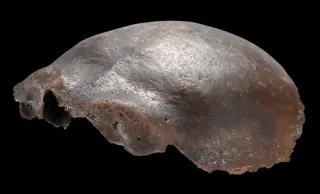
A 7,500-year-old skull from Hahnöfersand, once thought to be a Neanderthal–modern human hybrid, has been reclassified as fully consistent with Homo sapiens and dated to the Mesolithic. New morphometric analysis shows no intermediate traits, overturning decades of hybrid interpretation and reshaping understanding of post‑Ice Age human variation in Europe.

Neanderthal Infant Amud 7 Reveals Rapid Early Growth
science4 months ago

Neanderthal Infant Amud 7 Reveals Rapid Early Growth

A remarkably complete Neanderthal infant fossil, Amud 7, dating to 51,000–56,000 years ago, shows a dental age of about 5–6 months but skeletal and brain development like a 12–14‑month‑old, revealing a rapid early growth pattern and an age paradox that appears biologically rooted; findings, based on 111 bones and published in Current Biology, suggest Neanderthal infants grew quickly and began early solid foods around five to six months, with similar patterns seen in other Neanderthal children.

Rapid Early Growth: Neanderthal Infants Reached Toddler Size by Six Months
science4 months ago

Rapid Early Growth: Neanderthal Infants Reached Toddler Size by Six Months

Analysis of Amud 7, a six‑month‑old Neanderthal infant from Israel, shows the baby’s body and brain were already the size of a modern one‑year‑old (about 880 cc), indicating Neanderthals grew up much faster in the first years of life. The rapid early growth was likely fueled by high caloric needs and early solid-food introduction around five–six months, helping Neanderthals reach physical independence in harsh Ice Age conditions. This pattern appears consistent across other Neanderthal infants, though by about age seven their developmental trajectory converges with Homo sapiens, suggesting differences in life-history timing rather than overall brain/body size. The findings point to regulatory differences in shared genes guiding development rather than a wholly separate genetic blueprint.

125,000-Year-Old Neanderthal Bone-Grease Factory Found in Germany
archaeology5 months ago

125,000-Year-Old Neanderthal Bone-Grease Factory Found in Germany

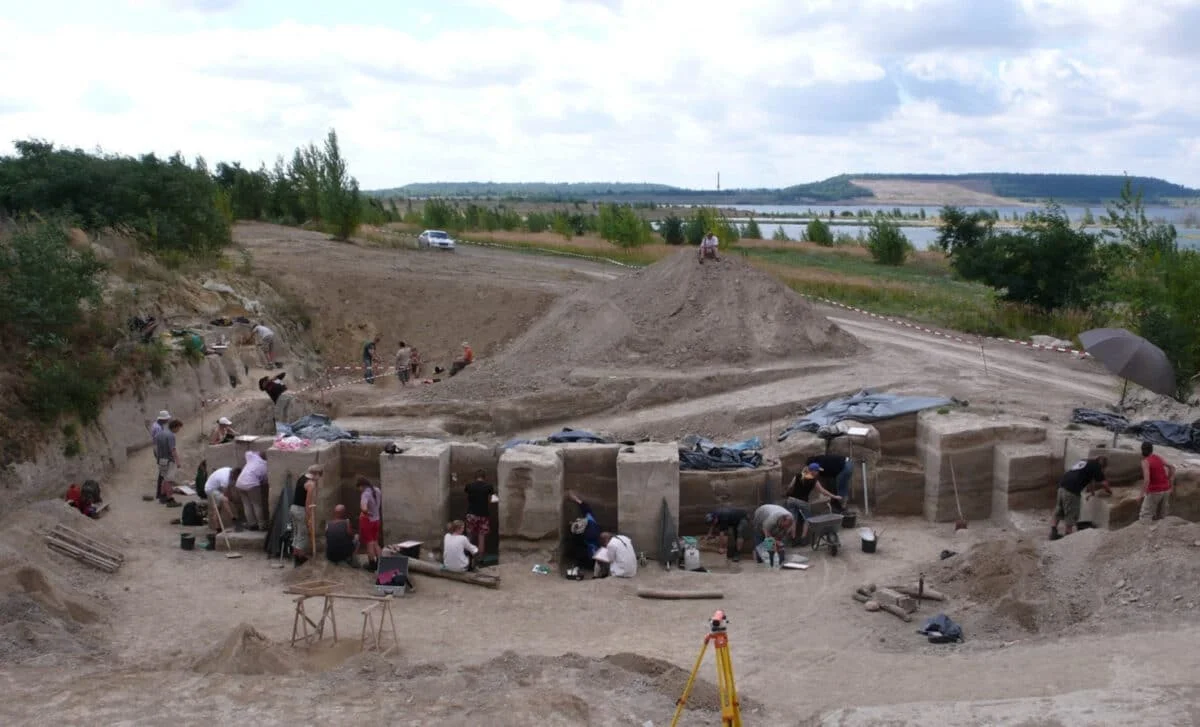
Researchers at Neumark-Nord, Germany, uncovered a multi-step Neanderthal bone-grease operation dating to about 125,000 years ago, including breaking bones, grinding fragments, and boiling them to render fat from at least 172 mammals. The site suggests deliberate, landscape-scale resource management with caching and transport of carcass parts, revealing advanced subsistence planning well before modern industry.